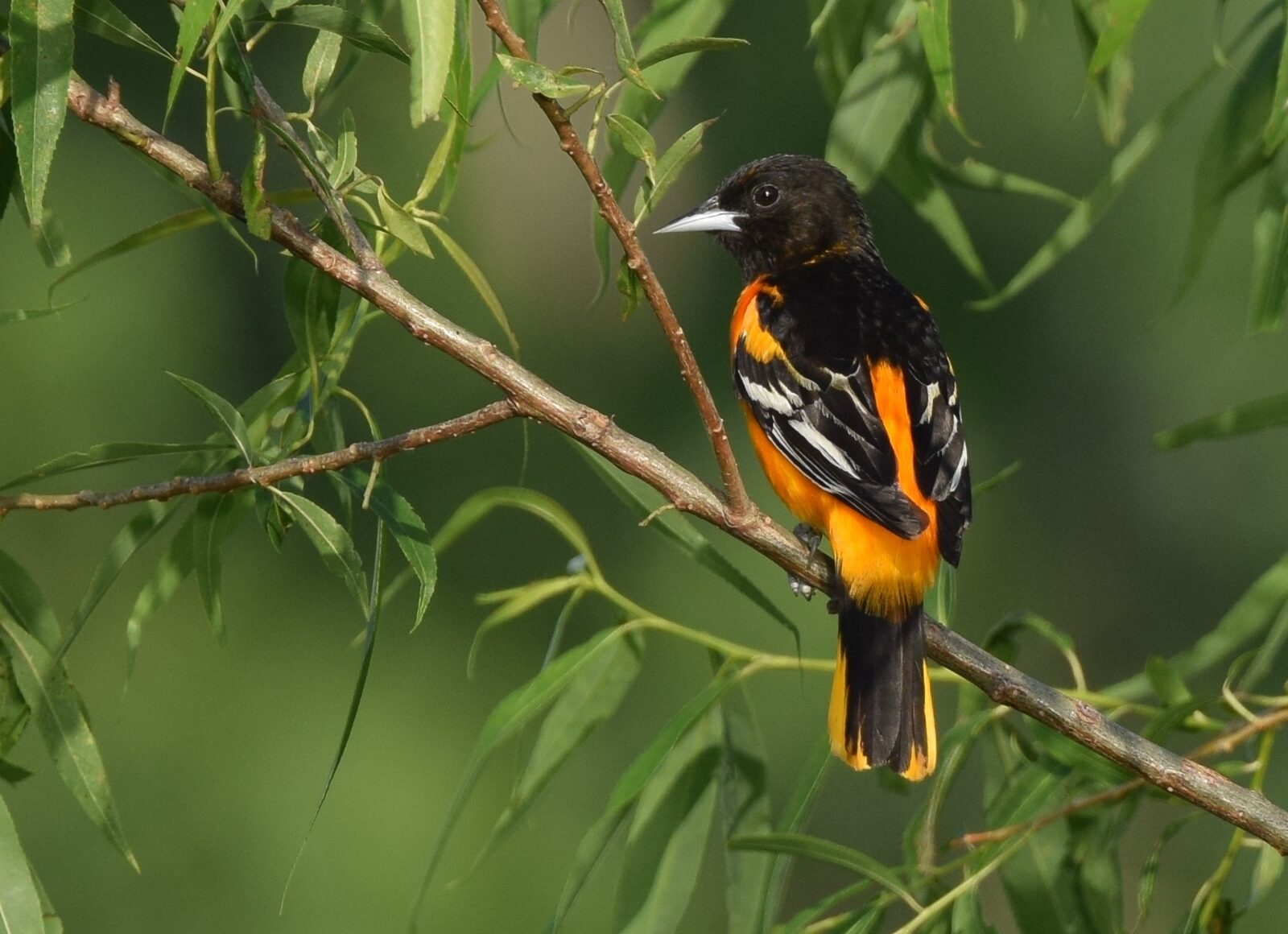
Baltimore oriole
Icterus galbula
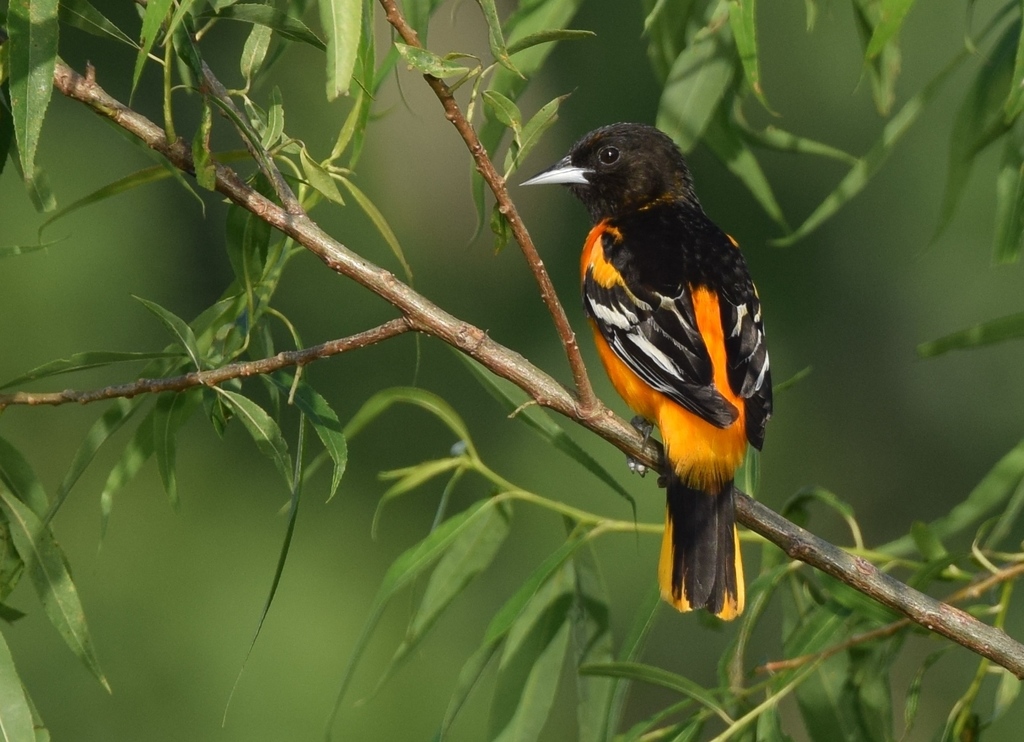
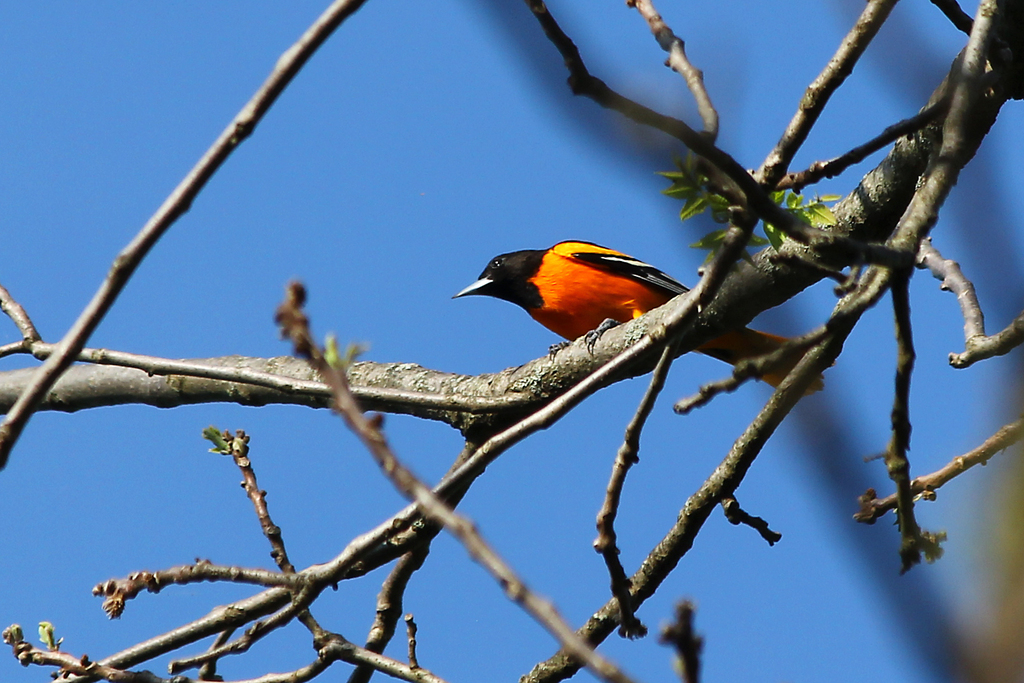
The male is flame orange and black and weaves a hanging nest.
- Status
- Least Concern IUCN Red List
- Eats
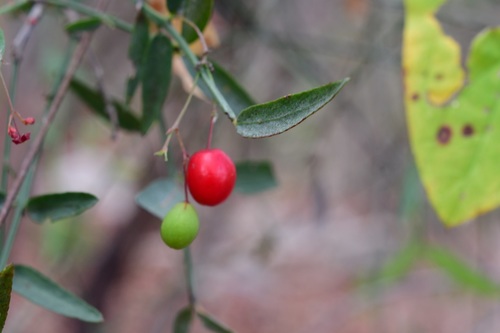
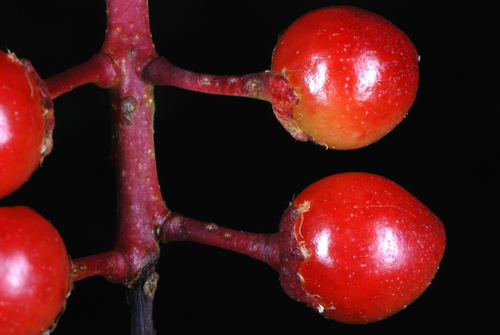
- snake berry, xylosma panamensis, black cherry and 239 more
- Eaten by
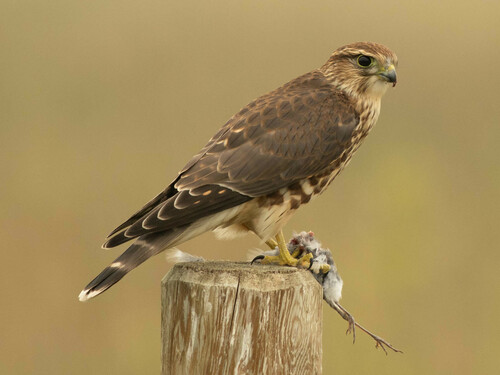
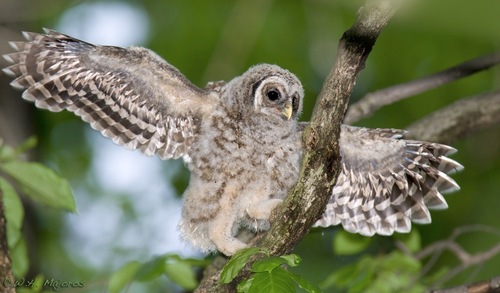
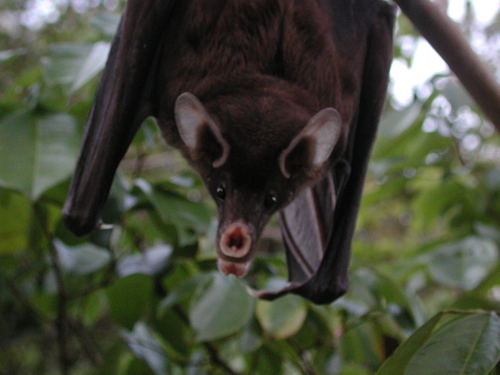
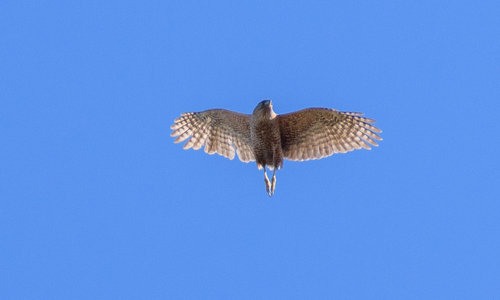
- merlin, barred owl, spectral bat
- Where
- 41 countries
On 4Planet Atlas it is among the wildlife people record most around New York, Ottawa and Toronto, and 1 more of the cities we cover.
People have shared 4,097,657 records of the baltimore oriole with GBIF, from 41 countries, most of them from United States, Canada and Costa Rica. Records collected by GloBI show it eating 242 different kinds of animals and plants, and being eaten by 6.
What the baltimore oriole eats, and what eats it
Studies have recorded it eating 242 kinds of animals and plants, and 6 kinds of animals eating it. Tap any of them to follow the food chain.
- Plants 225
- Insects 6
- Birds 1
 Baltimore oriole
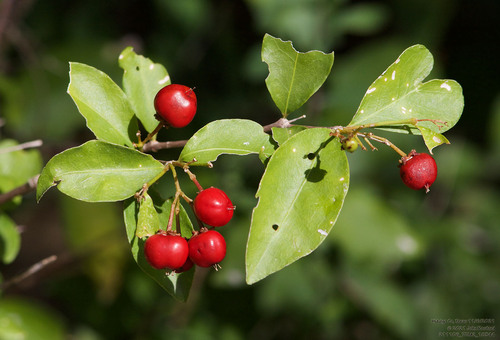
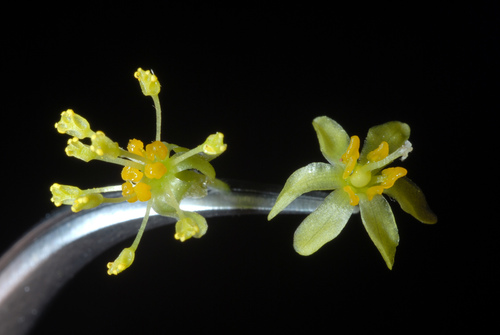

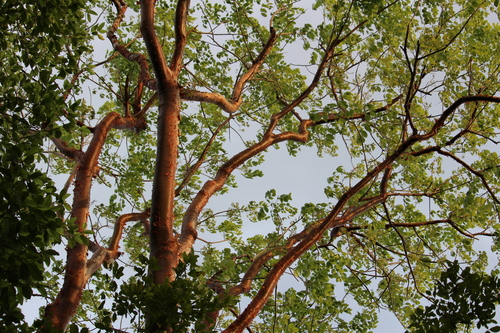

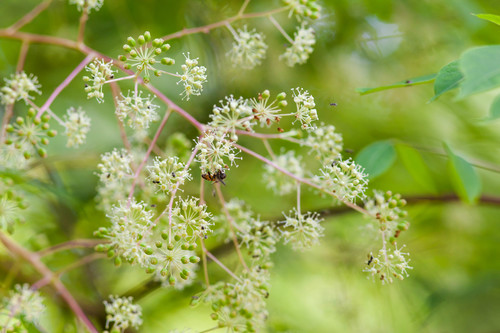
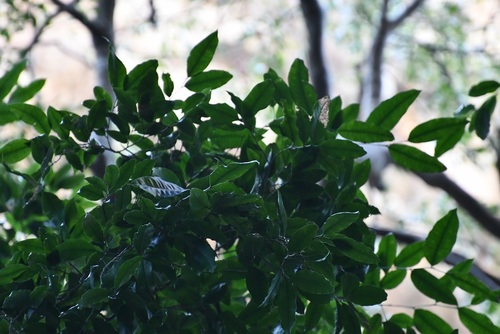
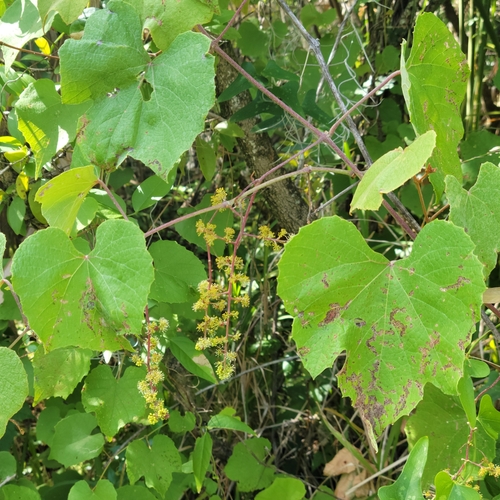
Records from studies worldwide, collected by GloBI. They include animals eaten as carrion, and they are not everything it eats in one place.
Where people see the baltimore oriole
People have shared 4,097,657 records from 41 countries.
Near a city: New York, Ottawa, Toronto, Washington, D.C..
Records show where people have seen it and shared it, not its full range. Country names open their page in Atlas.
When it is seen
Records per month in the northern hemisphere. More people outdoors also means more records.
Watch and listen
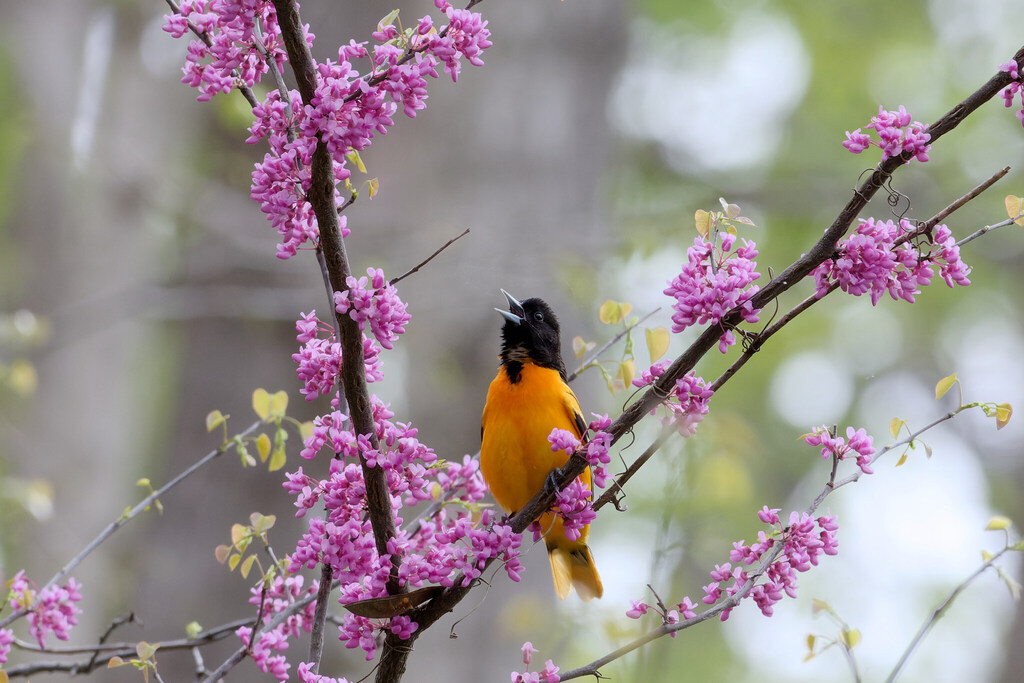
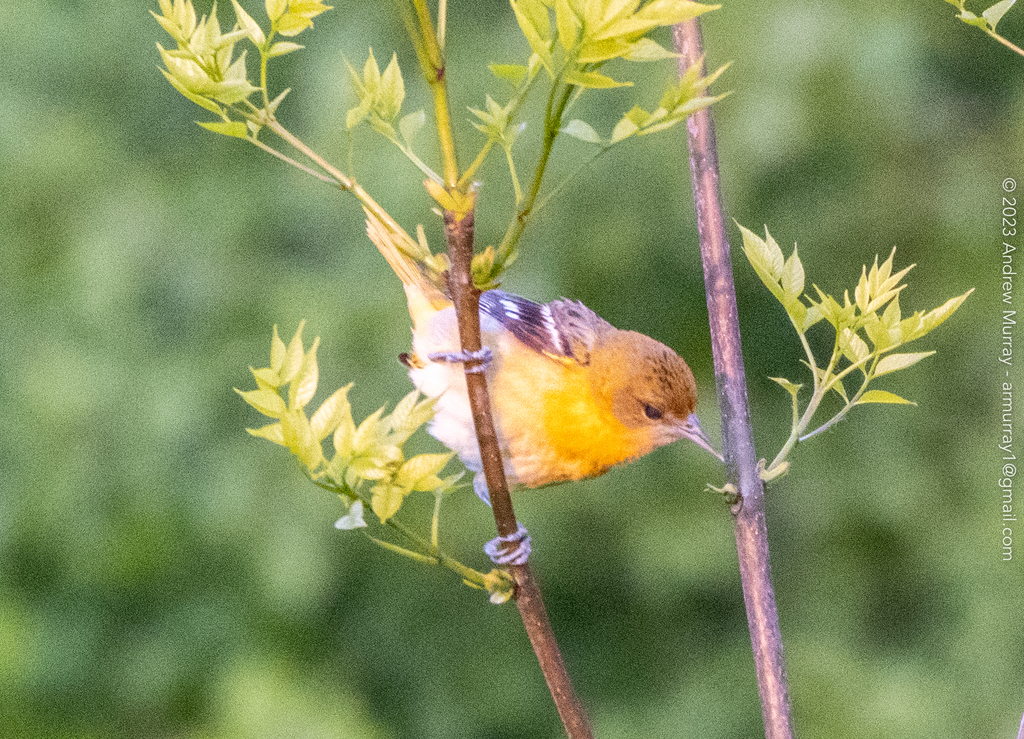
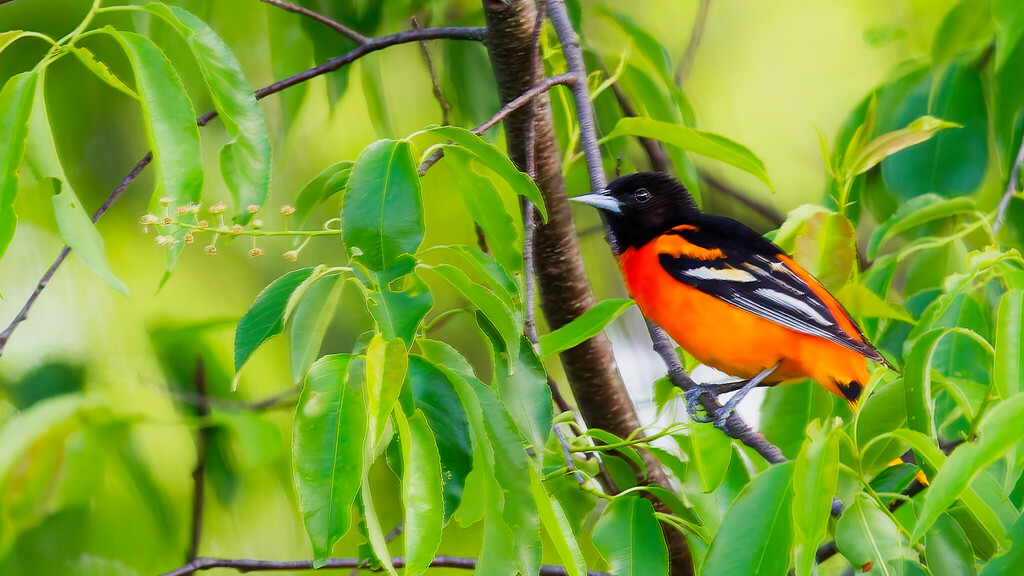
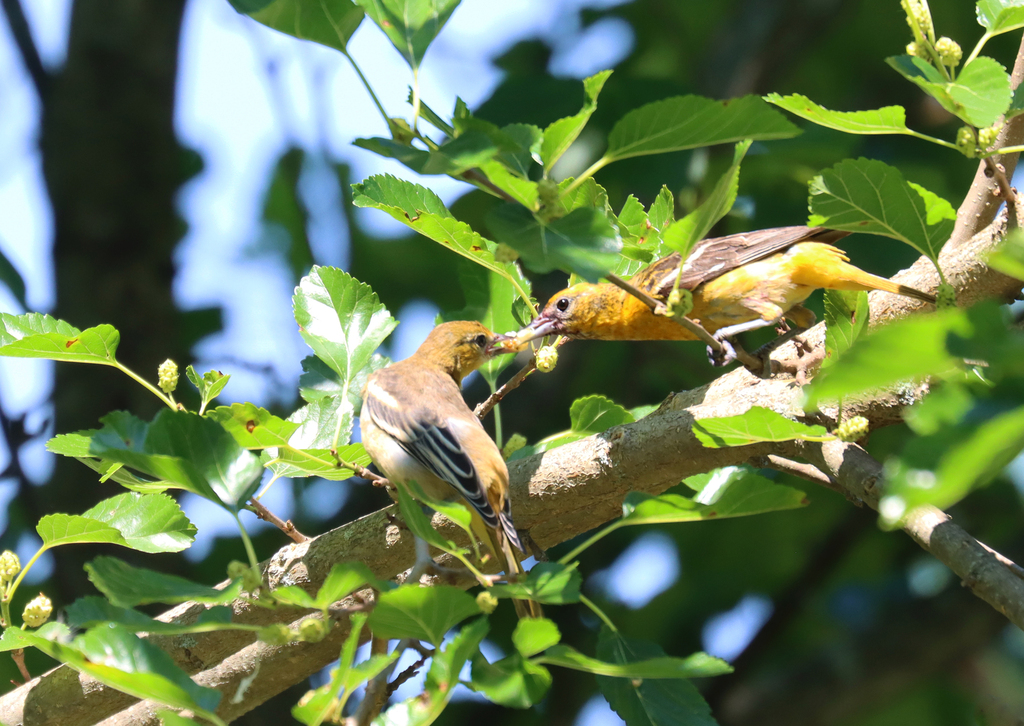
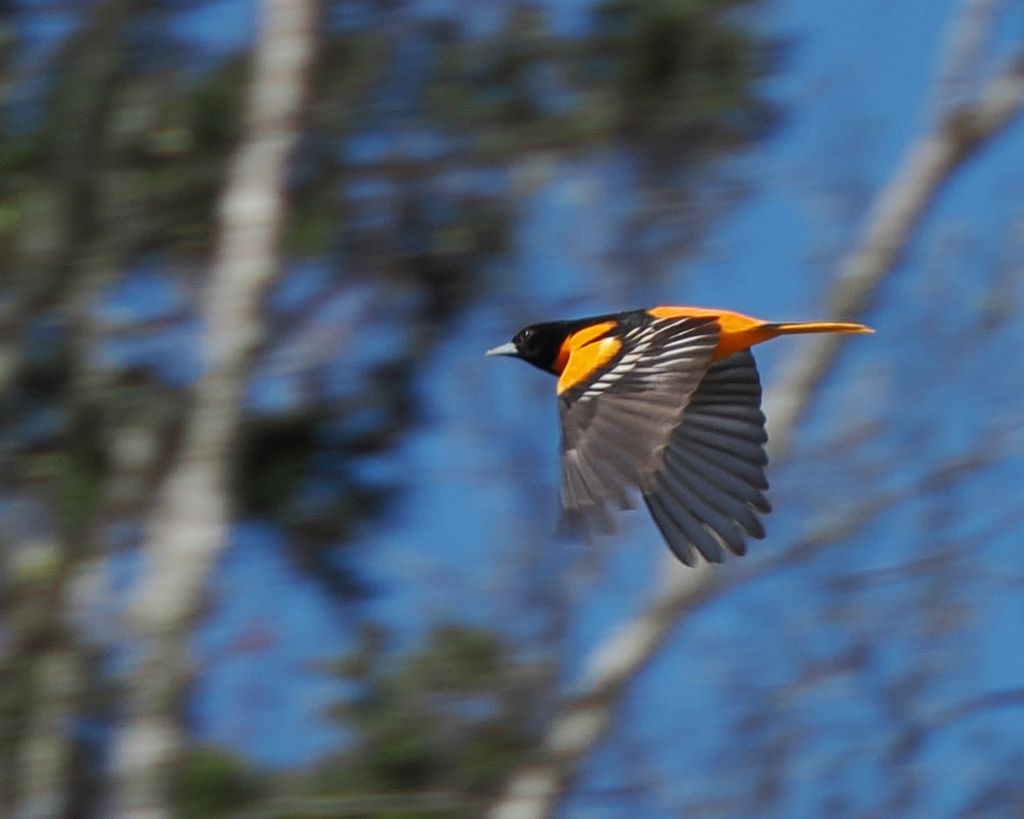
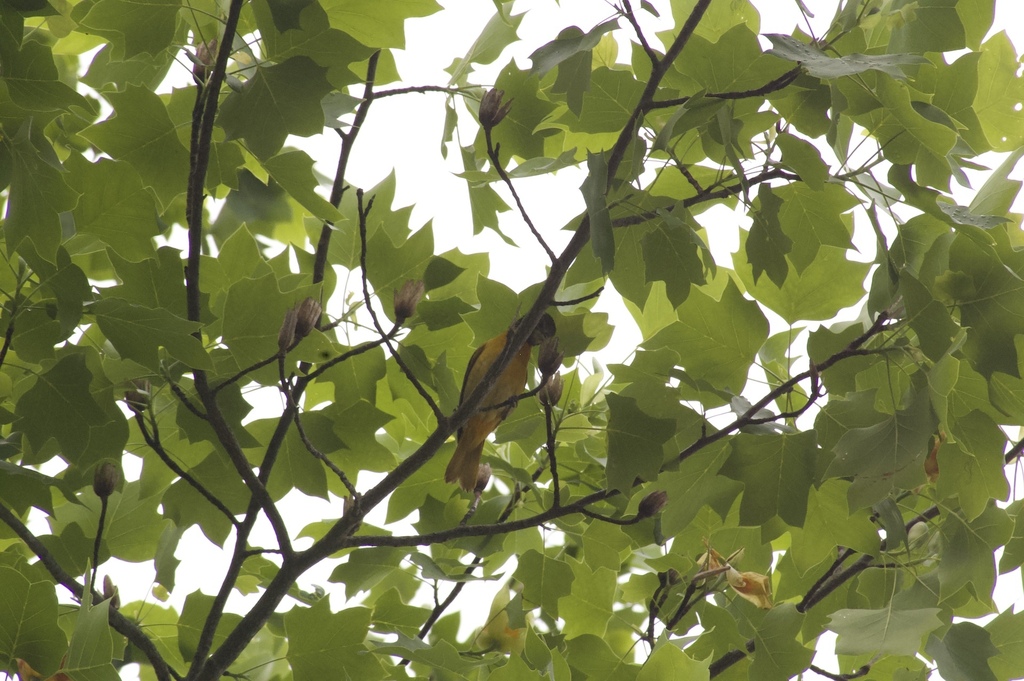
Its closest relatives
The other species of the genus Icterus.
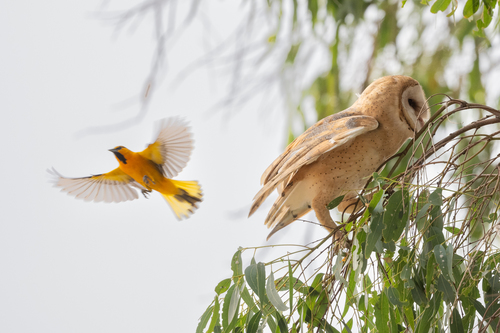
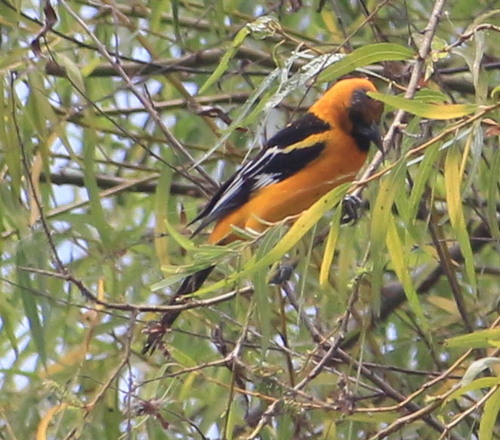
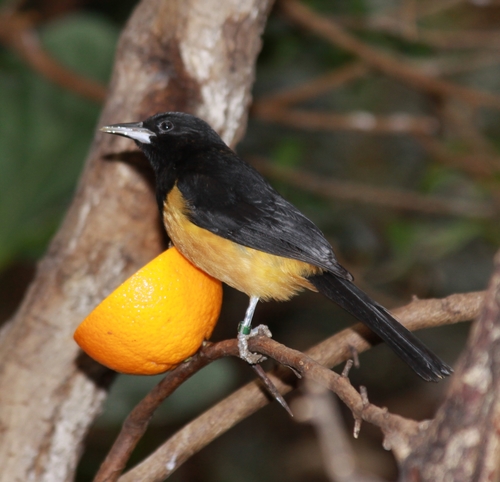
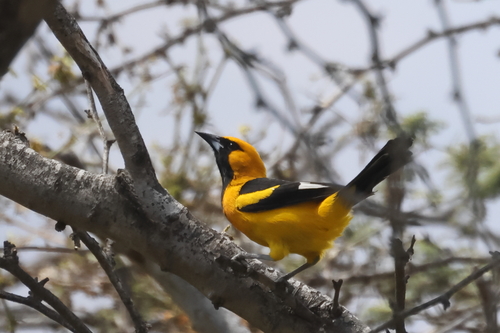

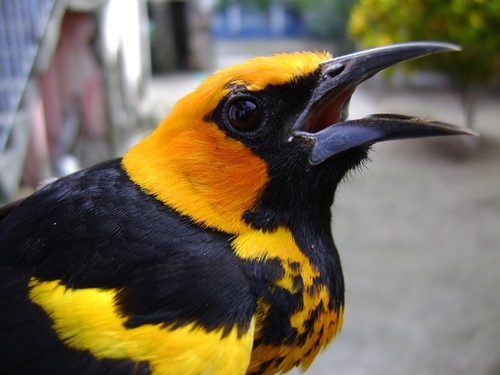
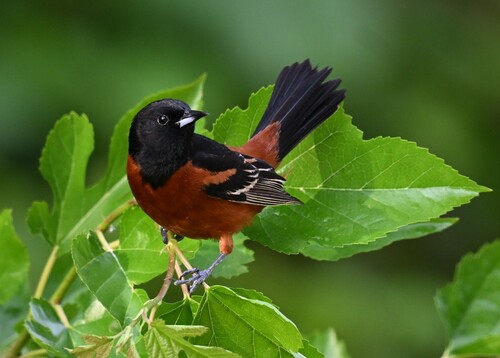
Seen a baltimore oriole?
Share your photo on iNaturalist. Other naturalists help confirm it, and the record goes to GBIF, where scientists use it and where the maps on this page come from.
Questions people ask
What does the baltimore oriole eat?
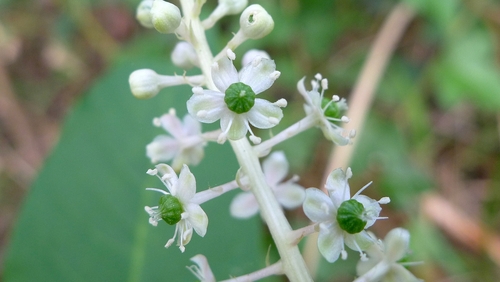
The baltimore oriole has been recorded eating 242 different kinds of animals and plants, most of them plants, insects and birds. The ones recorded most often are snake berry, xylosma panamensis, black cherry, american pokeweed and barbados cherry; records include animals eaten as carrion. Source: GloBI.
What eats the baltimore oriole?
Recorded predators include merlin, barred owl, spectral bat and cooper's hawk. Source: GloBI.
Where does the baltimore oriole live?
People have recorded it in 41 countries; the most records come from United States, Canada, Costa Rica, Guatemala and Belize. Records show where people have seen it, not its full range.
When is the baltimore oriole seen most?
In the northern hemisphere, the most records are made in May and the fewest in November. More people outdoors also means more records.
What are the baltimore oriole's closest relatives?
It shares the genus Icterus with venezuelan troupial, bullock's oriole, altamira oriole, montserrat oriole and white-edged oriole.
Sources and photo credits
- GBIF · Icterus galbula, 4,097,657 human observations
- GloBI · recorded interactions of Icterus galbula
- Wikidata · Baltimore oriole (Q805774)
- Baltimore oriole (Icterus galbula): no rights reserved, uploaded by Chrissy McClarren and Andy Reago, CC0
- Baltimore oriole (Icterus galbula), 801 Strodtman Rd, St. Louis, MO 63138, USA: Chrissy McClarren and Andy Reago, CC0
- Baltimore oriole (Icterus galbula), Washington County, PA, USA: William J. Deml, CC BY 4.0
- Baltimore oriole (Icterus galbula), Northside, Ann Arbor, MI, USA: Donald Davesne, CC BY 4.0
- Baltimore oriole (Icterus galbula), Talbot, London, ON N6P, Canada: Andrew Murray, CC BY 4.0
- Baltimore oriole (Icterus galbula), 1PVille: Daughter Dad, CC BY 4.0
- Baltimore oriole (Icterus galbula), New Milford, CT, USA: Christine Young, CC BY 4.0
- Baltimore oriole (Icterus galbula), Camden, ME, USA: Roger Rittmaster, CC BY 4.0
- Baltimore oriole (Icterus galbula), Pine Ridge Golf Course, Lutherville Timonium, MD, US: orionid, CC0
- Snake berry: Neptalí Ramírez Marcial, CC BY 4.0
- Black cherry: Douglas Goldman, CC BY-SA 4.0
- American pokeweed: John Tann, CC BY 4.0
- Barbados cherry: John Rosford, CC BY 4.0
- Sassafras: Douglas Goldman, CC BY-SA 4.0
- Coco plum: Eridan Xharahi, CC BY 4.0
- West Indian birch: Ricard Busquets Reverte, CC BY 4.0
- Erect prickly pear: sarah caitlin williams, CC BY 4.0
- Hercules'-club: Melissa McMasters, CC BY 4.0
- Breadnut: Neptalí Ramírez Marcial, CC BY 4.0
- Ashy grape: Jay Horn, CC BY 4.0
- Merlin: no rights reserved, uploaded by Kathlin Simpkins, CC0
- Barred owl: Bill Majoros, CC BY-SA 4.0
- Spectral bat: Matt Muir, CC BY 4.0
- Cooper's hawk: Becky Matsubara, CC BY 4.0
- Bullock's oriole: Michael Eisen, CC BY 4.0
- Altamira oriole: Juanito Escamilla, CC0
- Montserrat oriole: Drew Avery, CC BY 4.0
- White-edged oriole: Manuel Roncal, CC0
- Yellow-tailed oriole: Christoph Moning, CC BY 4.0
- Spot-breasted oriole: Alexis López Hernández, CC BY 4.0
- Orchard oriole: no rights reserved, uploaded by Chrissy McClarren and Andy Reago, CC0
Records show where people have seen and shared the baltimore oriole, not its full range, and some countries and months are recorded far more than others. The food web lists interactions that studies have recorded somewhere in the world (GloBI), not everything it eats in one place.
Checked 2026-11-22.