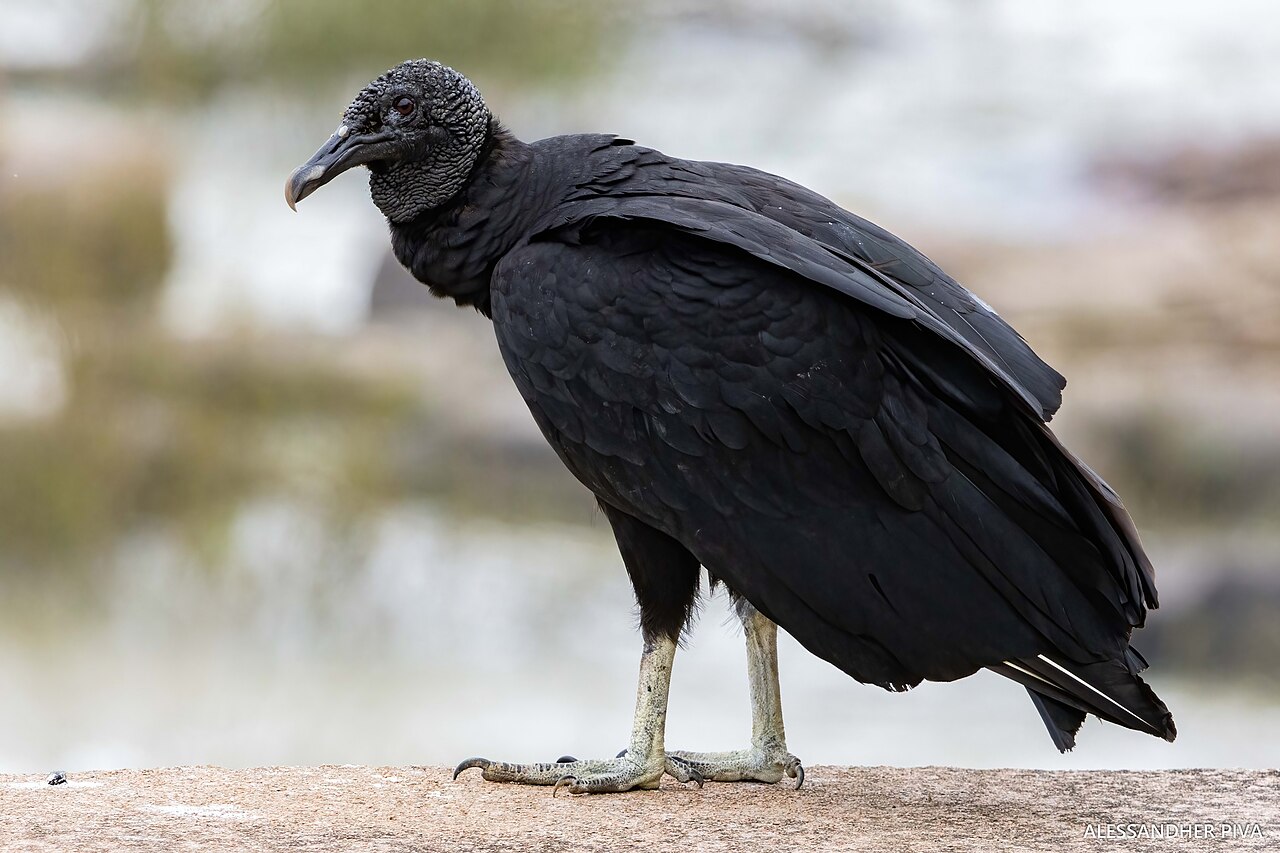
Black vulture
Coragyps atratus
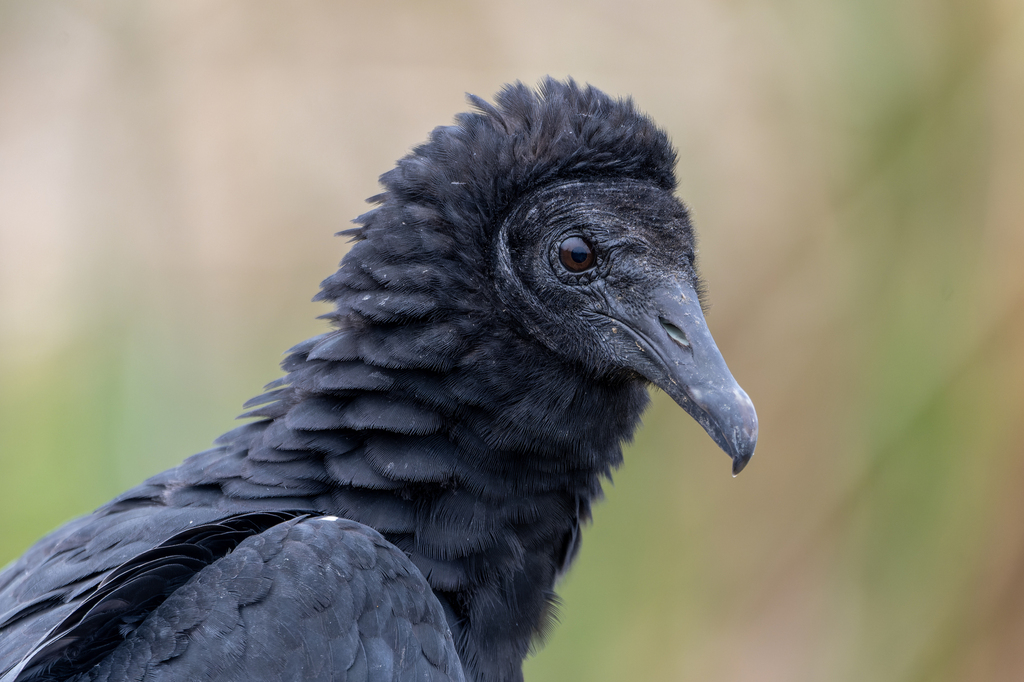
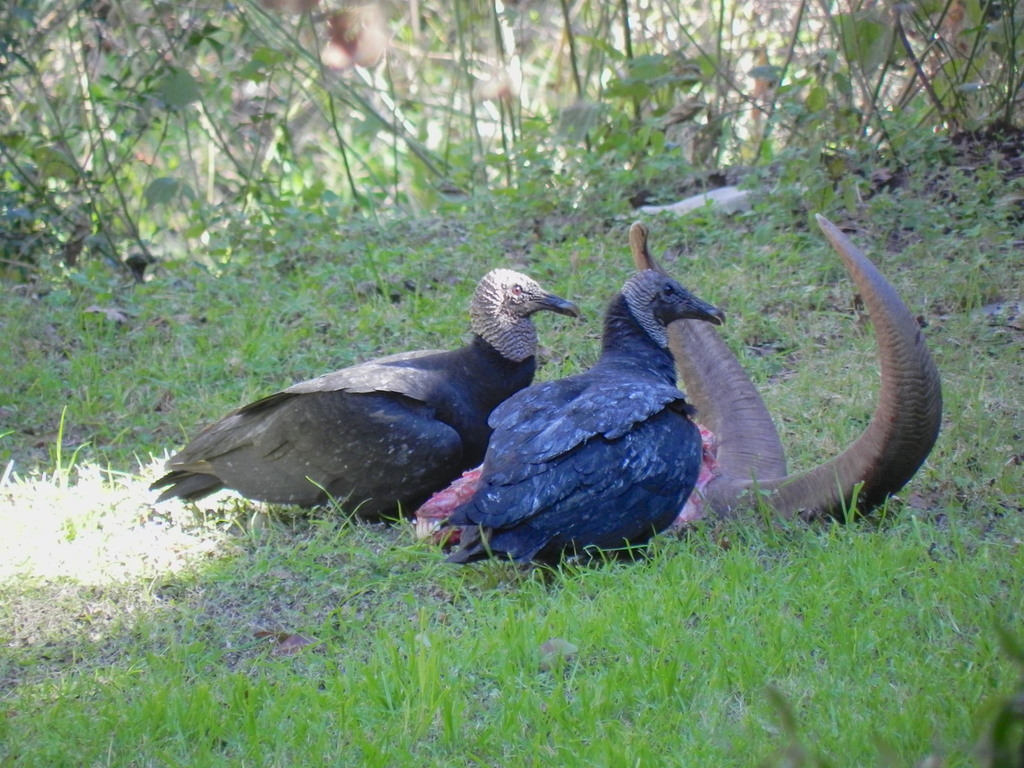
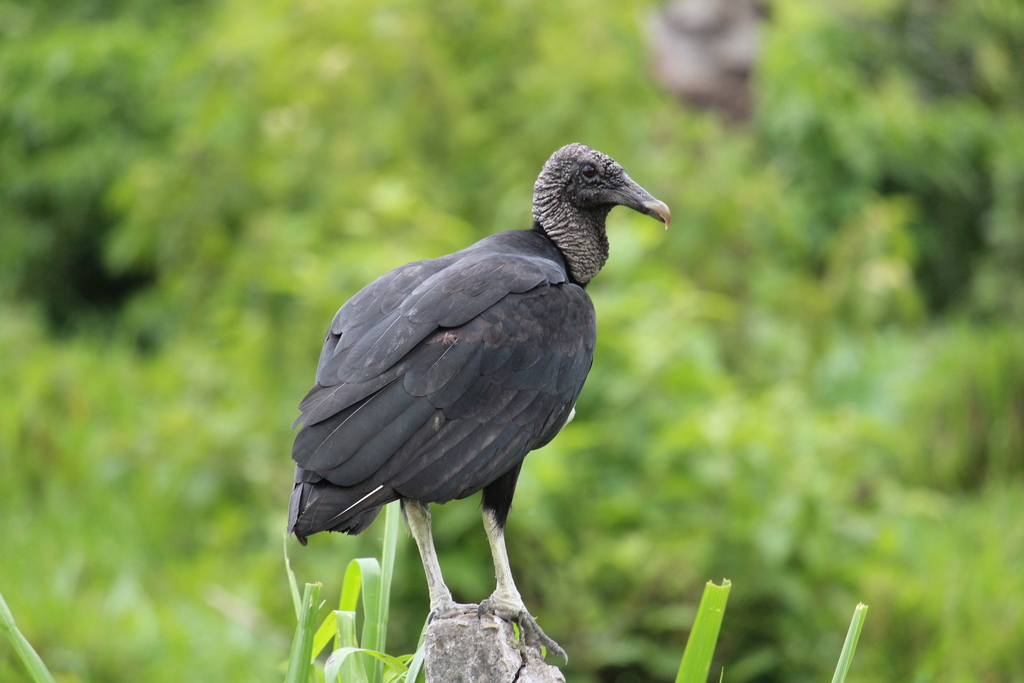
A black vulture with a bare grey head that finds carrion by watching other scavengers and gathers in groups at roosts and carcasses.
- Status
- Least Concern IUCN Red List
- Eats
- raccoon, striped skunk, nine-banded armadillo and 64 more
- Where
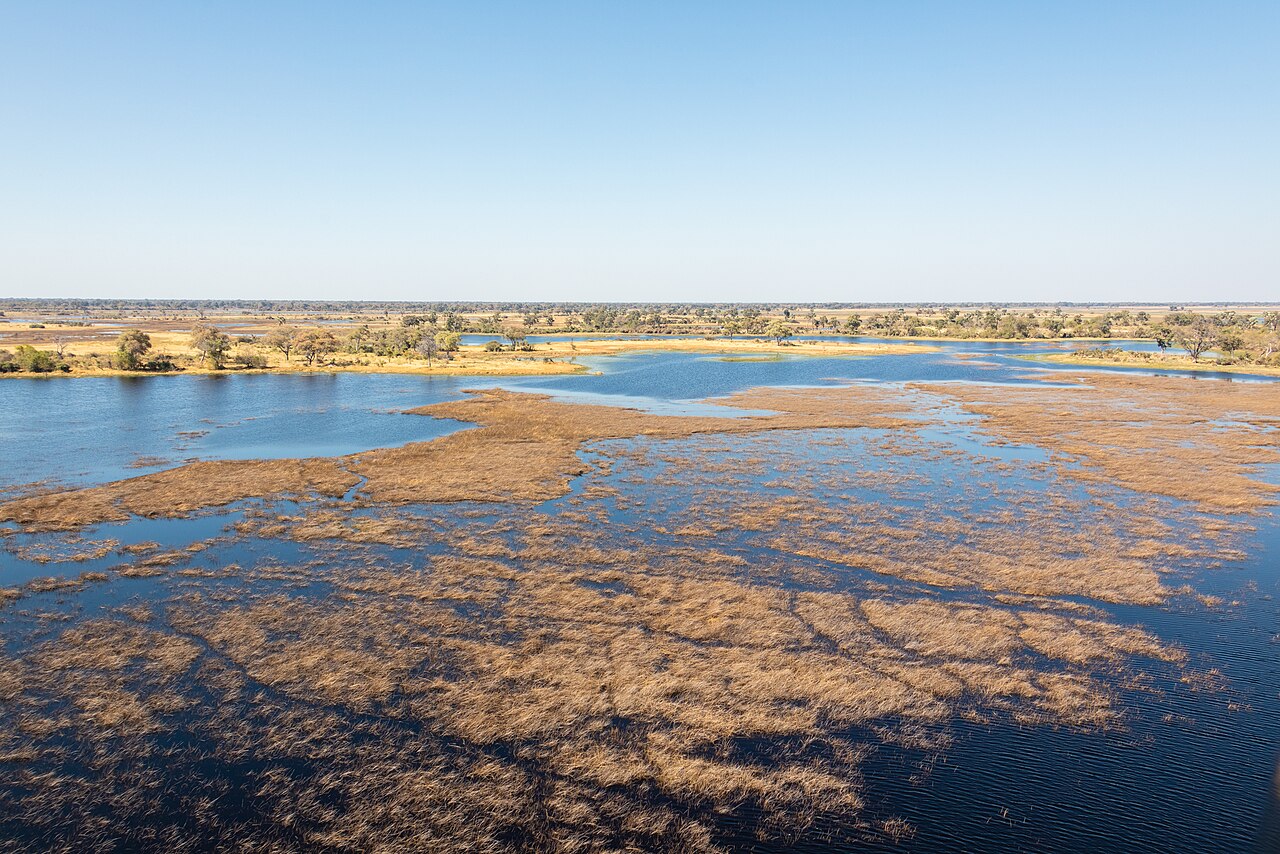
- 31 countries · pantanal, mangroves, Amazon rainforest
On 4Planet Atlas it is among the wildlife people record most around Asunción, Belmopan and Bogotá, and 19 more of the cities we cover.
People have shared 5,577,697 records of the black vulture with GBIF, from 31 countries, most of them from United States, Costa Rica and Brazil. Records collected by GloBI show it eating 67 different kinds of animals and plants, and being eaten by 1.
Habitats
What the black vulture eats, and what eats it
Studies have recorded it eating 67 kinds of animals and plants, and 1 kinds of animals eating it. Tap any of them to follow the food chain.
- Mammals 33
- Reptiles 17
- Fish 7
- Birds 5
- Plants 2
- Sharks and rays 1
Black vulture

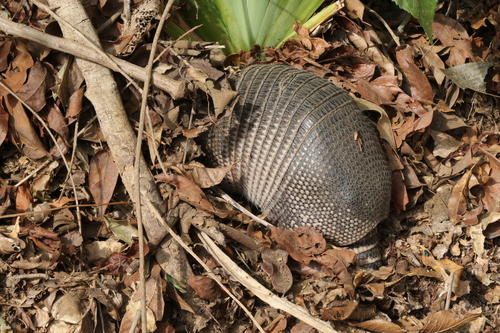
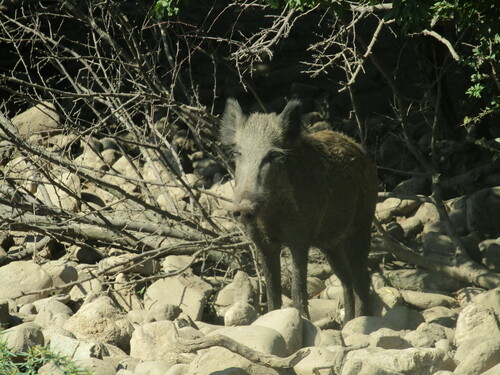
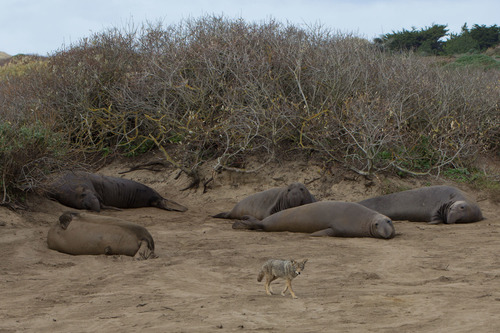

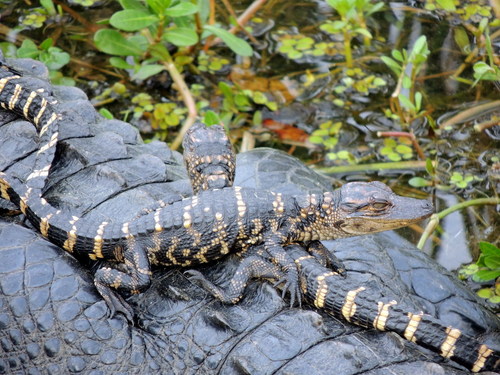
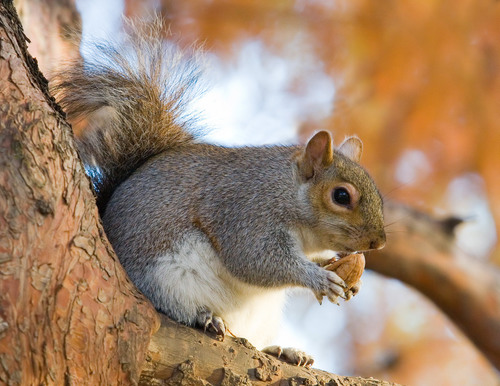
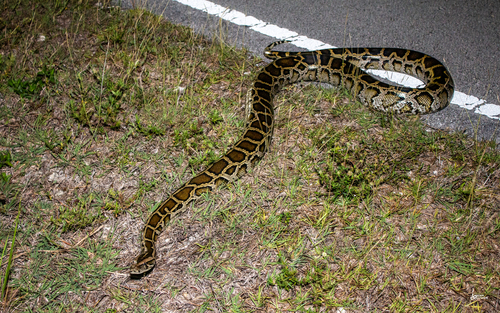

Records from studies worldwide, collected by GloBI. They include animals eaten as carrion, and they are not everything it eats in one place.
Where people see the black vulture
People have shared 5,577,697 records from 31 countries.
Near a city: Asunción, Belmopan, Bogotá, Brasília, Caracas, Georgetown, Guatemala City, Lima, Managua, New York, Panama City, Paramaribo, Port of Spain, Quito, Rio de Janeiro, San José, San Salvador, Santiago, São Paulo, Sucre, Tegucigalpa, Washington, D.C..
Records show where people have seen it and shared it, not its full range. Country names open their page in Atlas.
When it is seen
Records per month in the northern hemisphere. More people outdoors also means more records.
Watch and listen
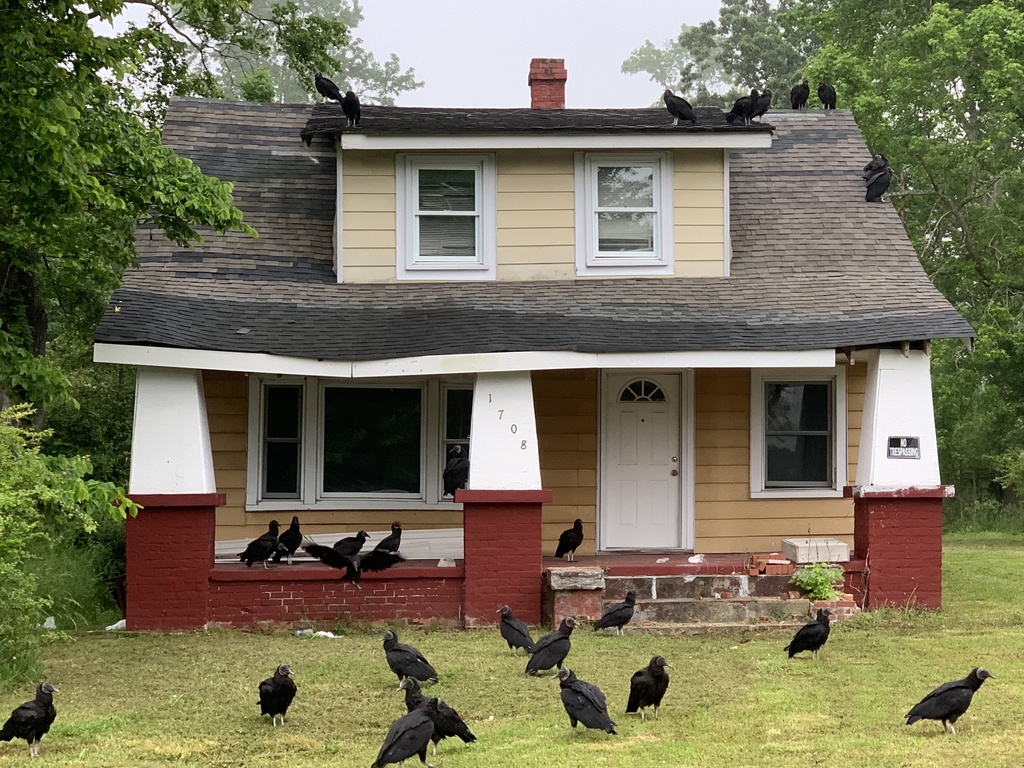
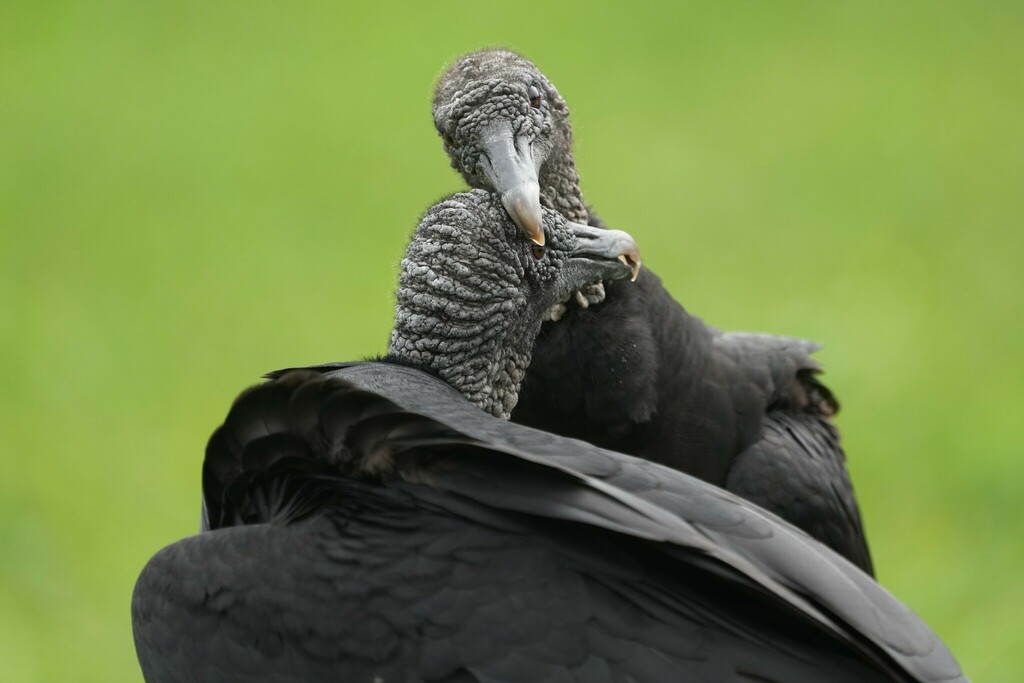
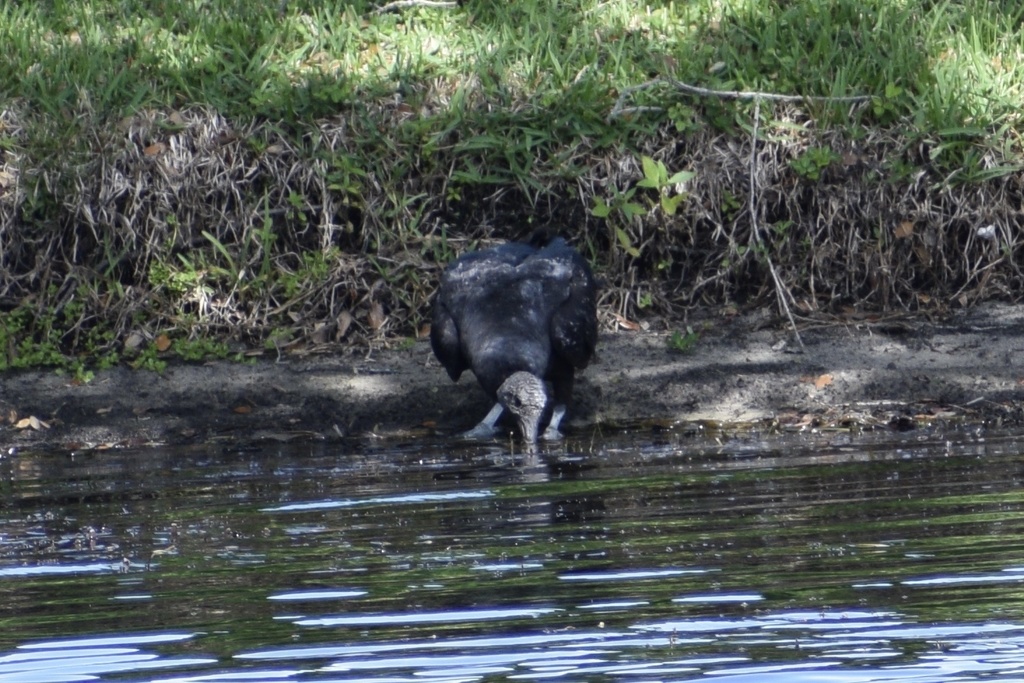
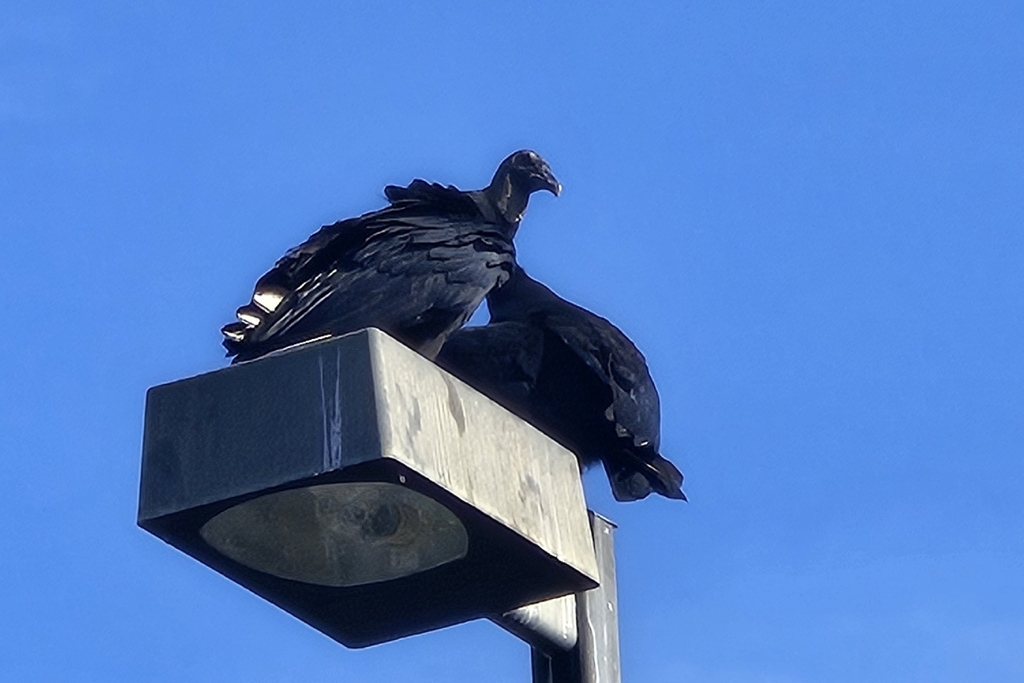
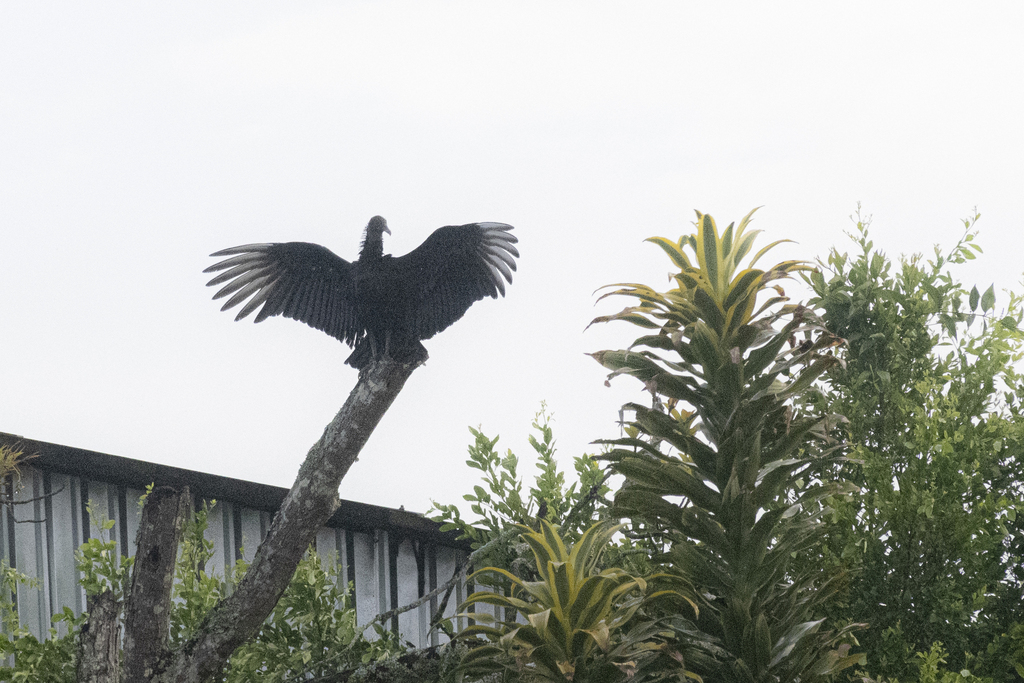
Seen a black vulture?
Share your photo on iNaturalist. Other naturalists help confirm it, and the record goes to GBIF, where scientists use it and where the maps on this page come from.
Explore next
What puts the black vulture under pressure, what helps, and who works on it.




Questions people ask
What does the black vulture eat?
The black vulture has been recorded eating 67 different kinds of animals and plants, most of them mammals, reptiles, fish and birds. The ones recorded most often are raccoon, striped skunk, nine-banded armadillo, wild boar and coyote; records include animals eaten as carrion. Source: GloBI.
What eats the black vulture?
Recorded predators include . Source: GloBI.
Where does the black vulture live?
People have recorded it in 31 countries; the most records come from United States, Costa Rica, Brazil, Colombia and Mexico. Records show where people have seen it, not its full range.
When is the black vulture seen most?
In the northern hemisphere, the most records are made in April and the fewest in July. More people outdoors also means more records.
Sources and photo credits
- GBIF · Coragyps atratus, 5,577,697 human observations
- GloBI · recorded interactions of Coragyps atratus
- Wikidata · Black vulture (Q213366)
- Black vulture (Coragyps atratus): Alessandher Piva, CC BY 4.0
- Black vulture (Coragyps atratus), Nansemond Pkwy, Suffolk, VA, US: Laura Mae, CC BY 4.0
- Black vulture (Coragyps atratus), Miami-Dade, Everglades National Park, Florida, United States: carbenoid, CC BY 4.0
- Black vulture (Coragyps atratus), Brevard County, US-FL, US: Neli Kanonerova, CC BY 4.0
- Black vulture (Coragyps atratus), H9JM+JF, San Antonio, TX 78249, USA: azurebeetle, CC BY 4.0
- Black vulture (Coragyps atratus), Armenia, Quindío, Colombia: Angélica Arenas, CC0
- Black vulture (Coragyps atratus), Pantanos de Villa, Lima, Perú: David F. Belmonte, CC BY 4.0
- Black vulture (Coragyps atratus), Travis County, US-TX, US: Clifton Ladd, C.W.B., CC BY 4.0
- Black vulture (Coragyps atratus), Flores, Guatemala: Ricard Busquets Reverte, CC BY 4.0
- Raccoon: Steven Bodzin, CC BY 4.0
- Striped skunk: Dan Dzurisin, CC BY 4.0
- Nine-banded armadillo: Bruno Henrique Aranda, CC BY 4.0
- Wild boar: SteveM4560, CC BY 4.0
- Coyote: avocat, CC BY 4.0
- Common bottlenose dolphin: Laurent Bouveret, CC BY-SA 4.0
- American alligator: no rights reserved, uploaded by Vijay Barve, CC0
- Eastern gray squirrel: Diliff, CC BY-SA 4.0
- Burmese python: Adam Cushen, CC BY 4.0
- Fox squirrel: Judy Gallagher, CC BY 4.0

Records show where people have seen and shared the black vulture, not its full range, and some countries and months are recorded far more than others. The food web lists interactions that studies have recorded somewhere in the world (GloBI), not everything it eats in one place.
Checked 2026-11-22.