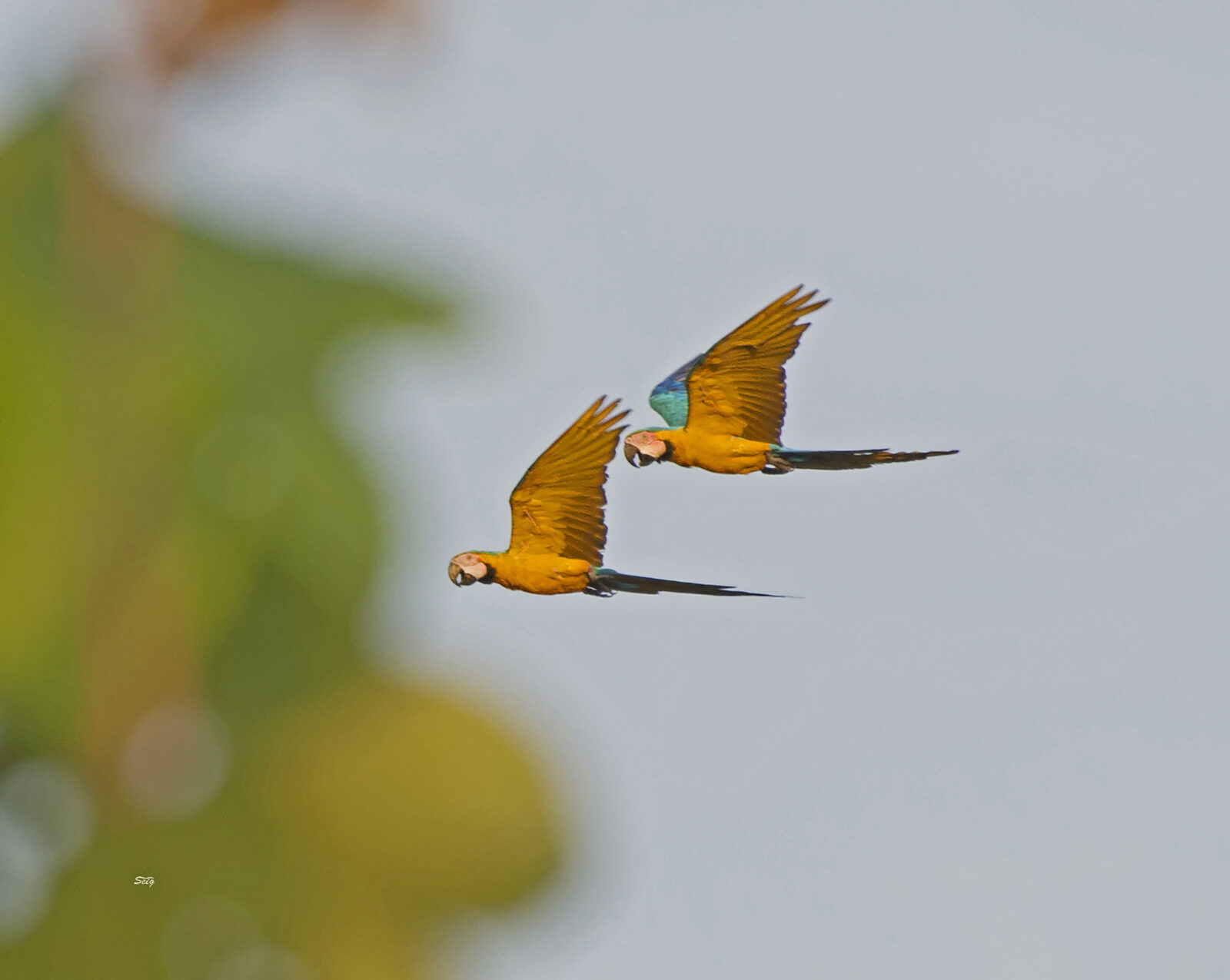
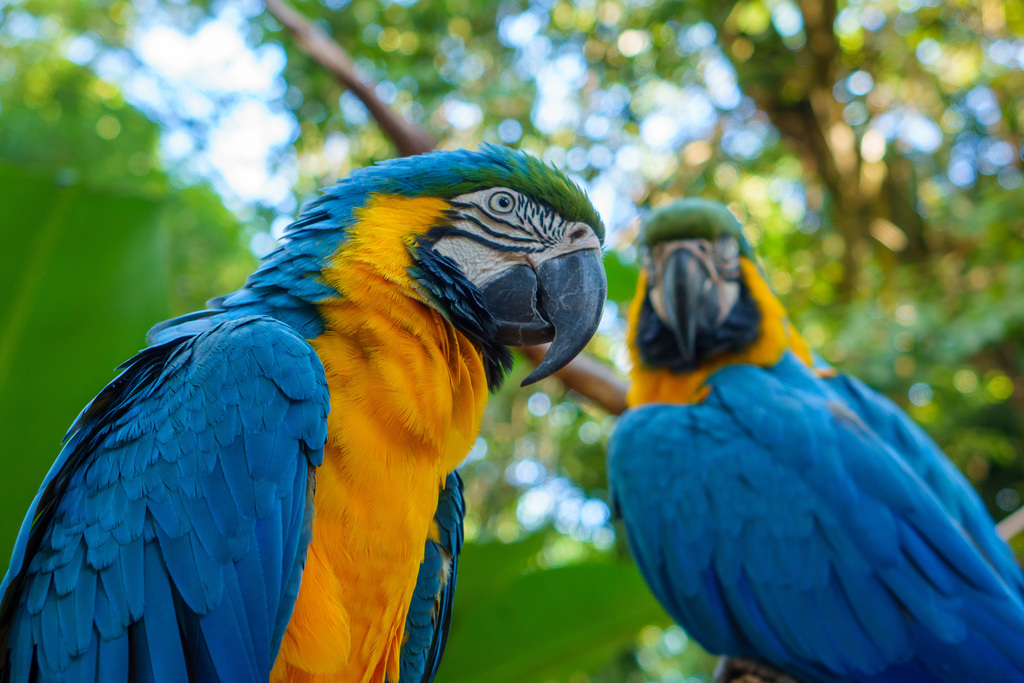
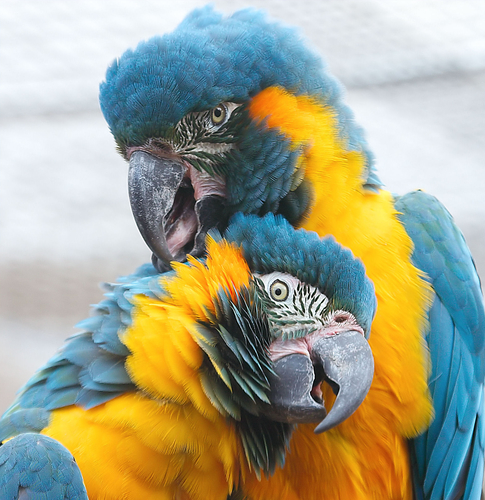
Blue-and-yellow macaw
Ara ararauna
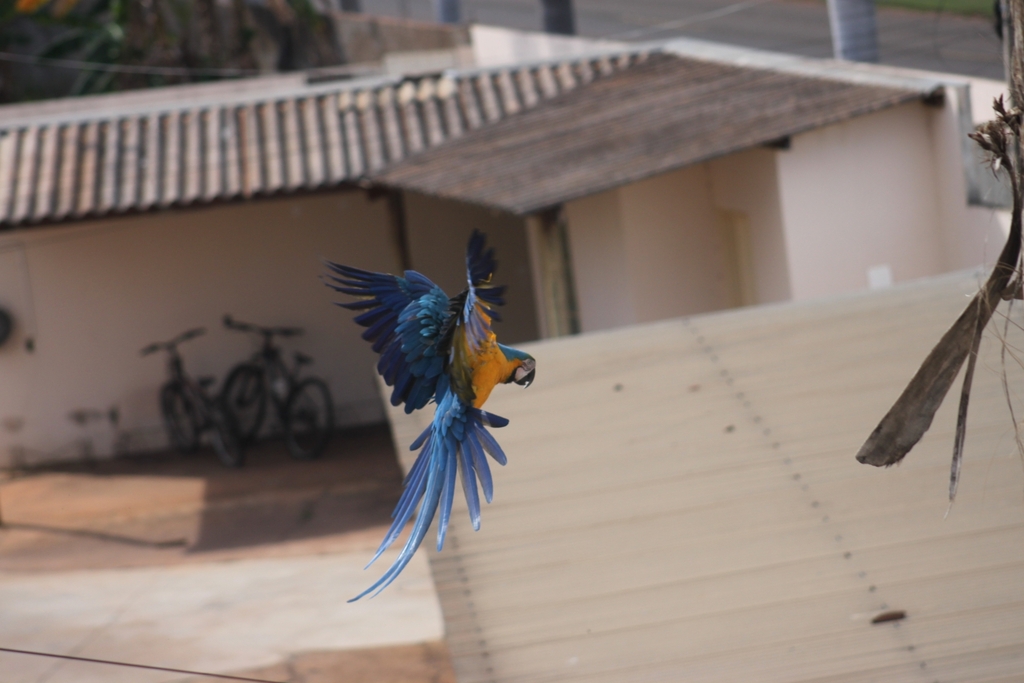
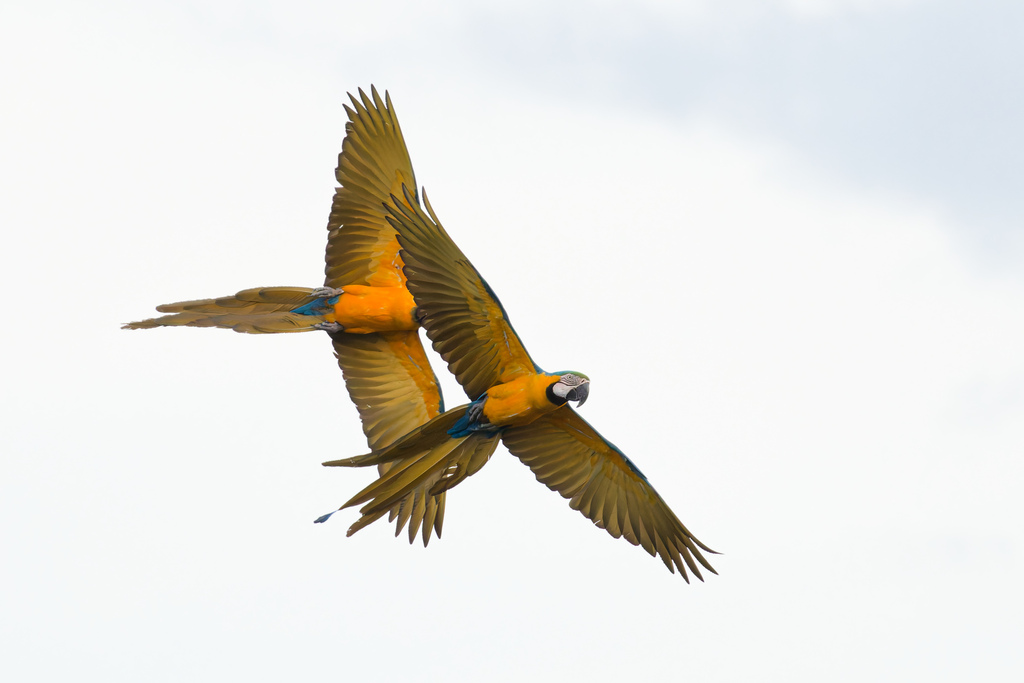
A large parrot of South American forests and palm swamps, usually seen in pairs flying over the canopy.
- Status
- Least Concern IUCN Red List
- Eats
- catole palm, muriti, queen palm and 6 more
- Eaten by
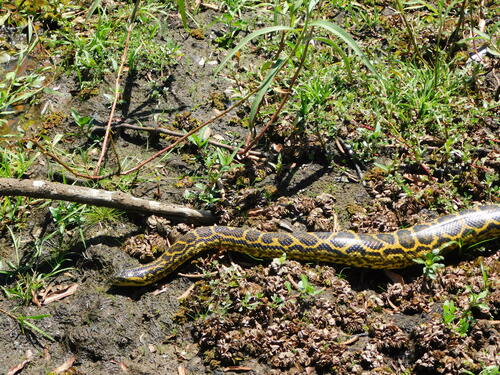
- yellow anaconda
- Where
- 42 countries
On 4Planet Atlas it is among the wildlife people record most around Brasília and Caracas.
People have shared 114,134 records of the blue-and-yellow macaw with GBIF, from 42 countries, most of them from Brazil, Venezuela and Peru. Records collected by GloBI show it eating 9 different kinds of animals and plants, and being eaten by 1.
What the blue-and-yellow macaw eats, and what eats it
Studies have recorded it eating 9 kinds of animals and plants, and 1 kinds of animals eating it. Tap any of them to follow the food chain.
- Plants 9
Eaten by
 Blue-and-yellow macaw
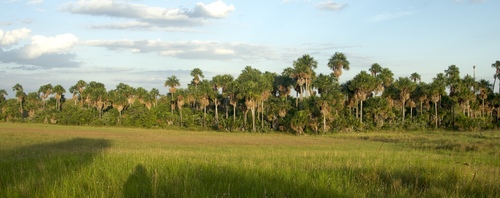
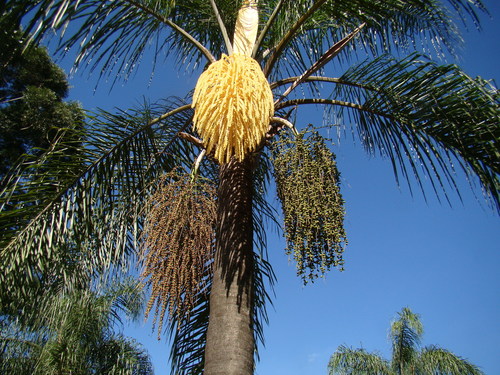
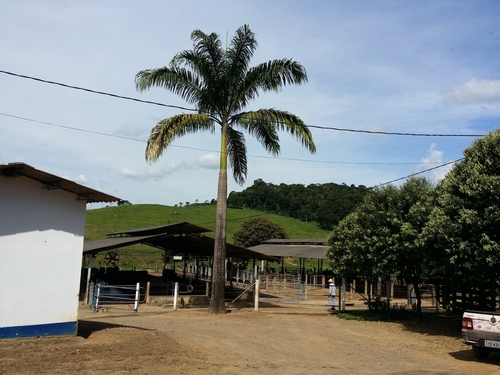
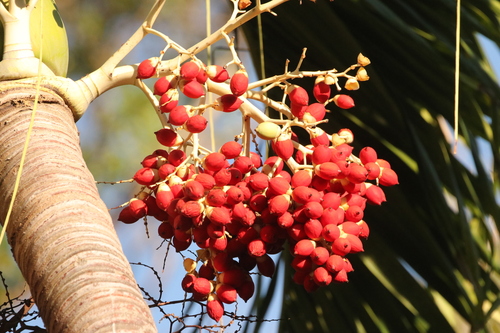
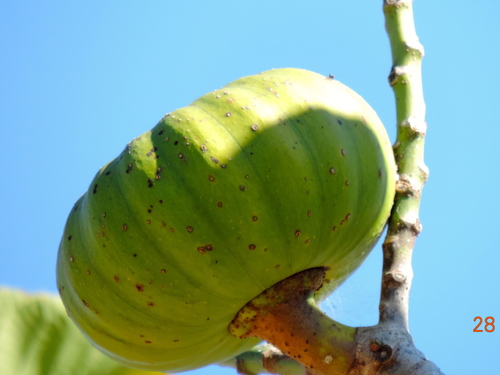
Records from studies worldwide, collected by GloBI. They include animals eaten as carrion, and they are not everything it eats in one place.
Where people see the blue-and-yellow macaw
People have shared 114,134 records from 42 countries.
Near a city: Brasília, Caracas.
Records show where people have seen it and shared it, not its full range. Country names open their page in Atlas.
When it is seen
Records per month in the southern hemisphere. More people outdoors also means more records.
Watch and listen
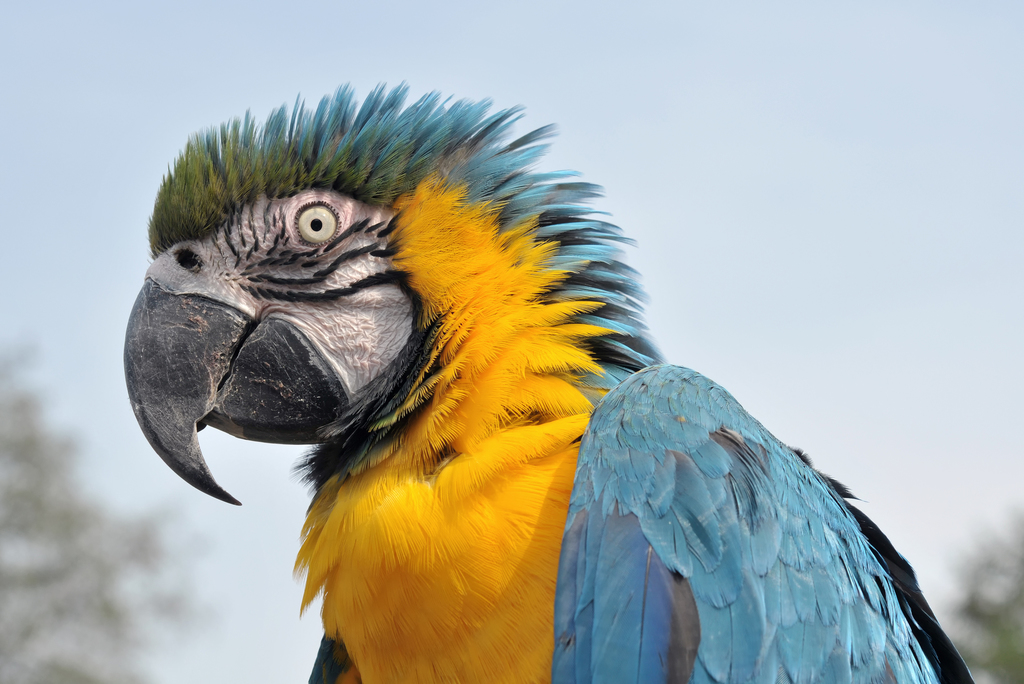
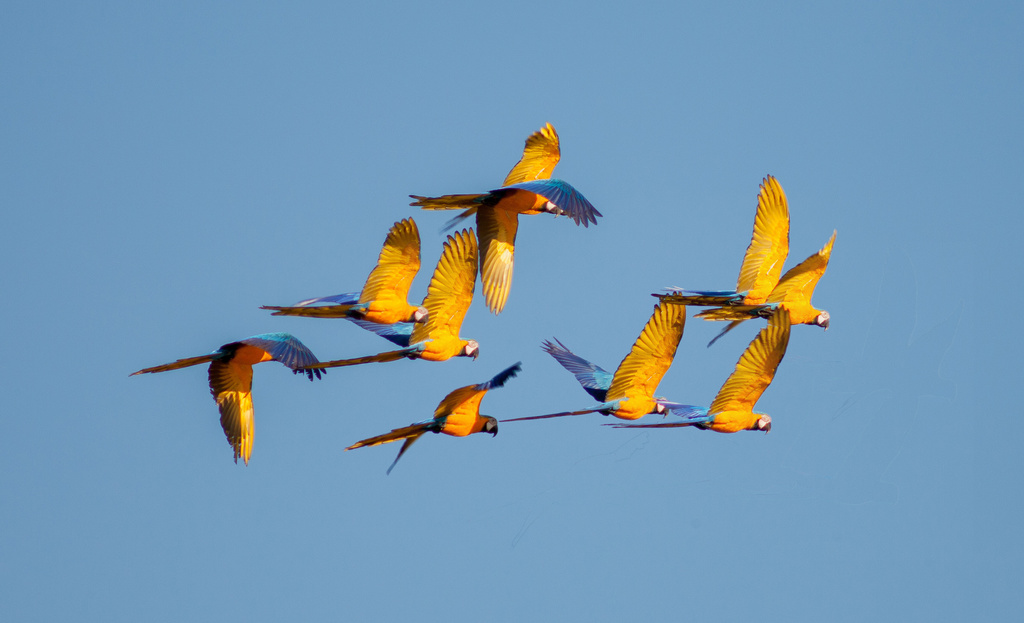
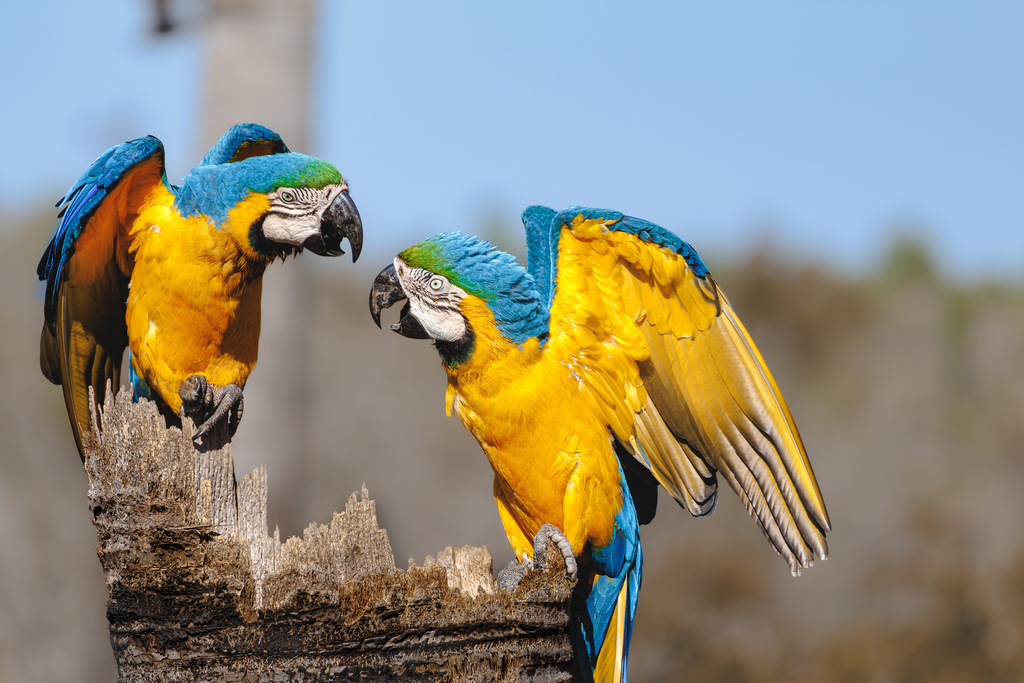
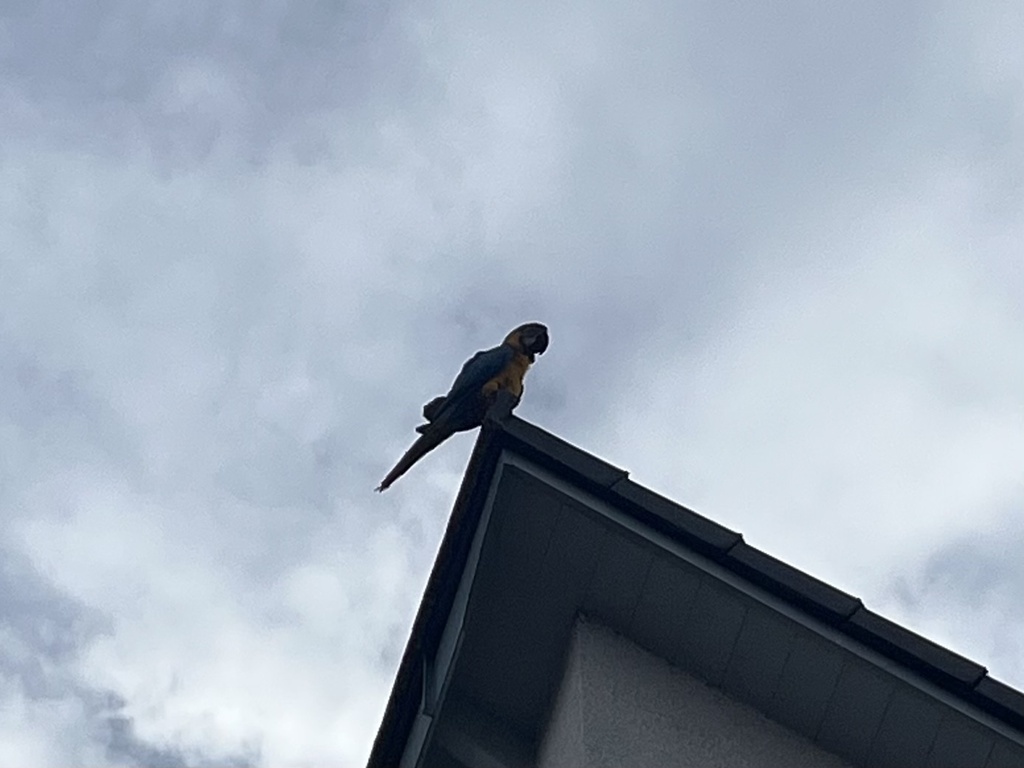
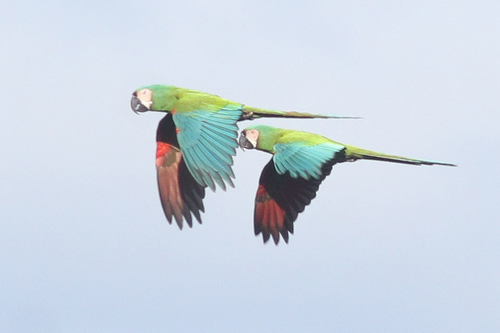
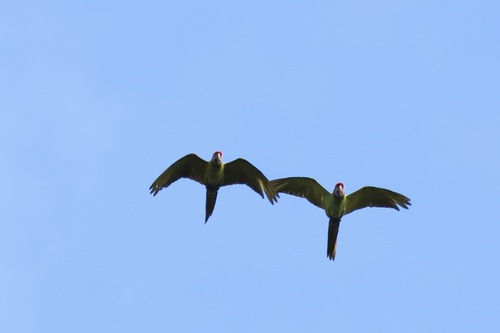
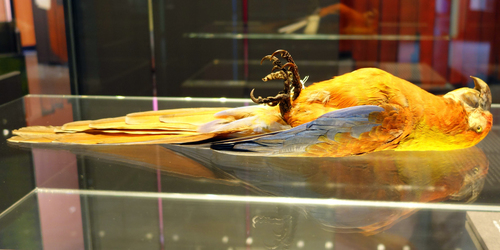
Its closest relatives
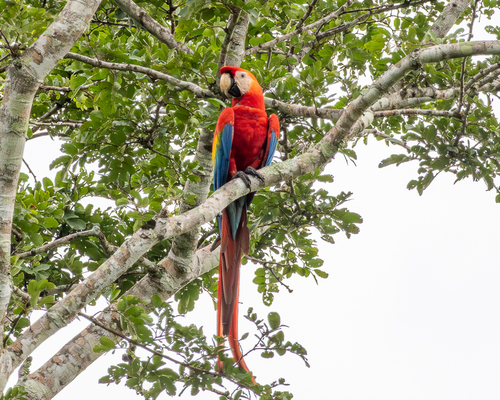
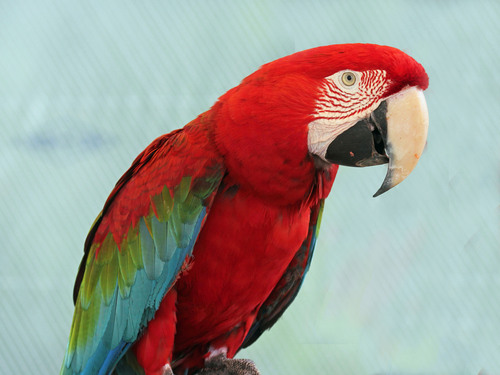
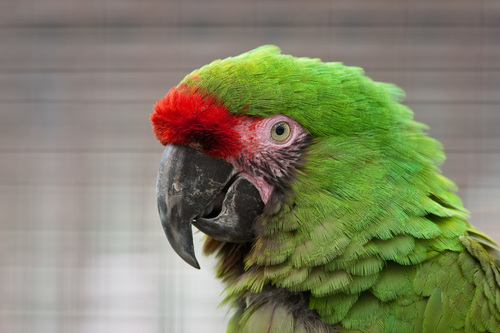
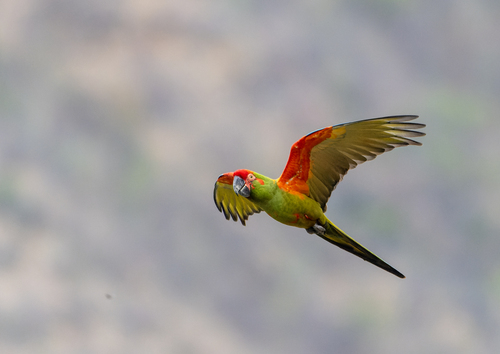
The other species of the genus Ara.
Follow the blue-and-yellow macaw into its world
The story it is part of, with the threats and what helps.
Seen a blue-and-yellow macaw?
Share your photo on iNaturalist. Other naturalists help confirm it, and the record goes to GBIF, where scientists use it and where the maps on this page come from.
Put this species on your site
The card names every source and links back here.
<iframe src="https://4planetatlas.com/place/embed/species/blue-and-yellow-macaw" title="Blue-and-yellow macaw (Ara ararauna), 4PLANET Species" width="100%" height="600" style="border:0;max-width:640px" loading="lazy"></iframe>
<p><a href="https://4species.com/blue-and-yellow-macaw">Blue-and-yellow macaw on 4PLANET Species</a></p>Questions people ask
What does the blue-and-yellow macaw eat?
The blue-and-yellow macaw has been recorded eating 9 different kinds of animals and plants, most of them plants. The ones recorded most often are catole palm, muriti, queen palm, acrocomia aculeata and caribbean royal palm; records include animals eaten as carrion. Source: GloBI.
What eats the blue-and-yellow macaw?
Recorded predators include yellow anaconda. Source: GloBI.
Where does the blue-and-yellow macaw live?
People have recorded it in 42 countries; the most records come from Brazil, Venezuela, Peru, Colombia and Ecuador. Records show where people have seen it, not its full range.
When is the blue-and-yellow macaw seen most?
In the southern hemisphere, the most records are made in October and the fewest in February. More people outdoors also means more records.
What are the blue-and-yellow macaw's closest relatives?
It shares the genus Ara with scarlet macaw, red-and-green macaw, blue-throated macaw, military macaw and red-fronted macaw.
Sources and photo credits
- GBIF · Ara ararauna, 114,134 human observations
- GloBI · recorded interactions of Ara ararauna
- Wikidata · Blue-and-yellow macaw (Q205477)
- Blue-and-yellow macaw (Ara ararauna): Seig, CC BY 4.0
- Brown-throated sloth (Bradypus variegatus): tanager manager, CC BY 4.0
- Blue-and-yellow macaw (Ara ararauna): Frank Dietze, CC BY 4.0
- Blue-and-yellow macaw (Ara ararauna): Michael Gäbler, CC BY 4.0
- Blue-and-yellow macaw (Ara ararauna), Peru: Manuel Vicente Miranda del Solar, CC BY 4.0
- Blue-and-yellow macaw (Ara ararauna), Mato Grosso, BR: willengarg, CC BY-SA 4.0
- Blue-and-yellow macaw (Ara ararauna), Naturpark Südschwarzwald, Kandern, Baden-Württemberg, DE: iatchley, CC BY 4.0
- Blue-and-yellow macaw (Ara ararauna), São Paulo, BR: Gabriel Augusto Faria, CC BY 4.0
- Blue-and-yellow macaw (Ara ararauna), Mato Grosso, BR: Donald Davesne, CC BY 4.0
- Blue-and-yellow macaw (Ara ararauna), Rio de Janeiro, BR: Richard Littauer, CC BY 4.0
- Muriti: JR Ferrer-Paris, CC BY 4.0
- Queen palm: mauro halpern, CC BY 4.0
- Caribbean royal palm: Jean Jacques Godon, CC BY 4.0
- Manila palm: scaup, CC BY 4.0
- Hura polyandra: Francisco Farriols Sarabia, CC BY 4.0
- Yellow anaconda: Sebastián Gómez Barboza Silveira, CC0
- Scarlet macaw: NINA WENÓLI, CC0
- Red-and-green macaw: DickDaniels, CC BY-SA 4.0
- Blue-throated macaw: David Friel, CC BY 4.0
- Military macaw: Arjan Haverkamp, CC BY 4.0
- Red-fronted macaw: David F. Belmonte, bazı hakları saklıdır (CC BY), yükleyen: David F. Belmonte, CC BY 4.0
- Chestnut-fronted macaw: Jan Ebr & Ivana Ebrová, CC BY 4.0
- Great green macaw: er-birds, CC BY 4.0
- Cuban macaw: Etemenanki3, bazı hakları saklıdır (CC BY-SA), CC BY-SA 4.0
Records show where people have seen and shared the blue-and-yellow macaw, not its full range, and some countries and months are recorded far more than others. The food web lists interactions that studies have recorded somewhere in the world (GloBI), not everything it eats in one place.
Checked 2026-11-22.