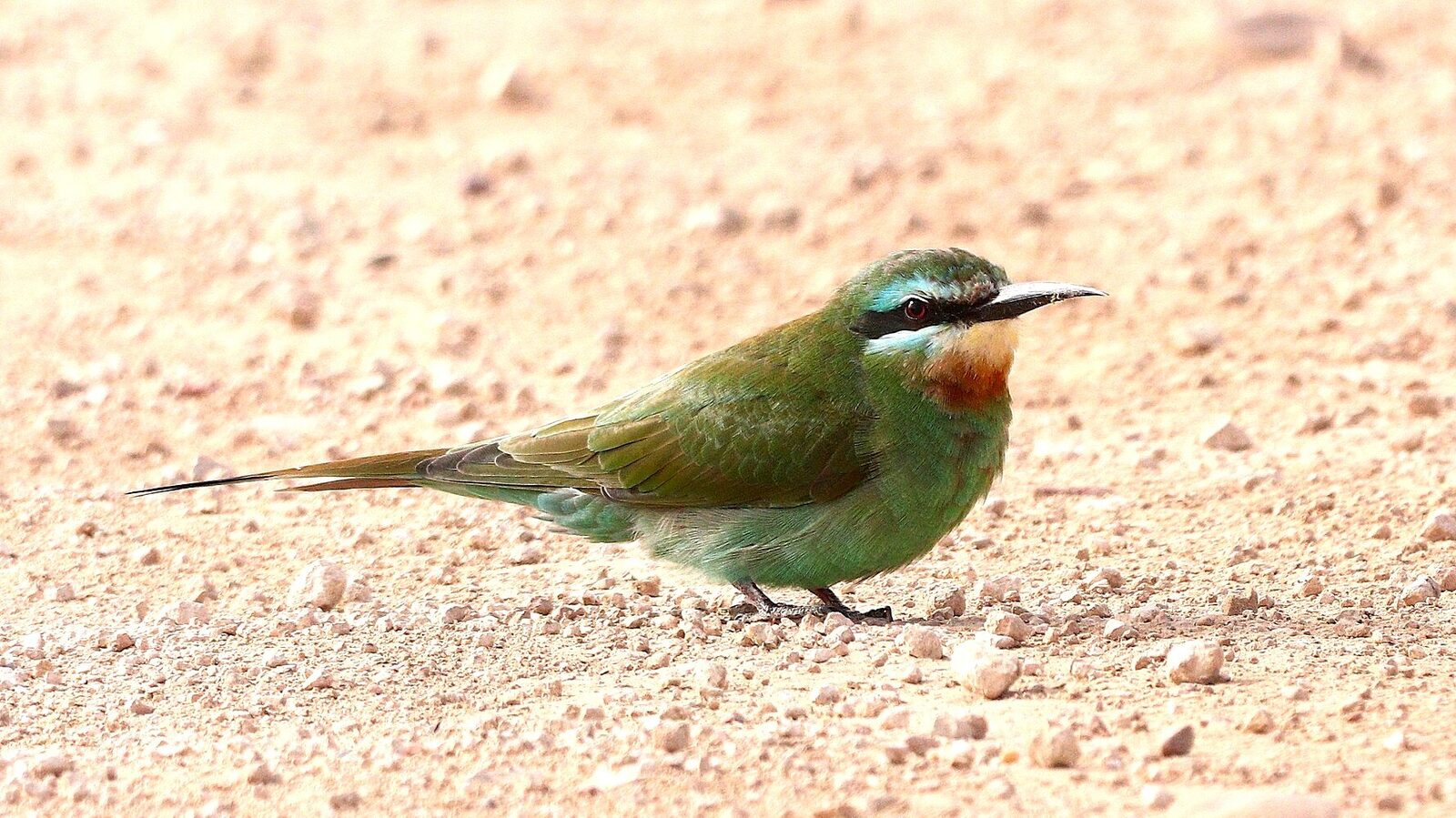
Blue-cheeked bee-eater
Merops persicus
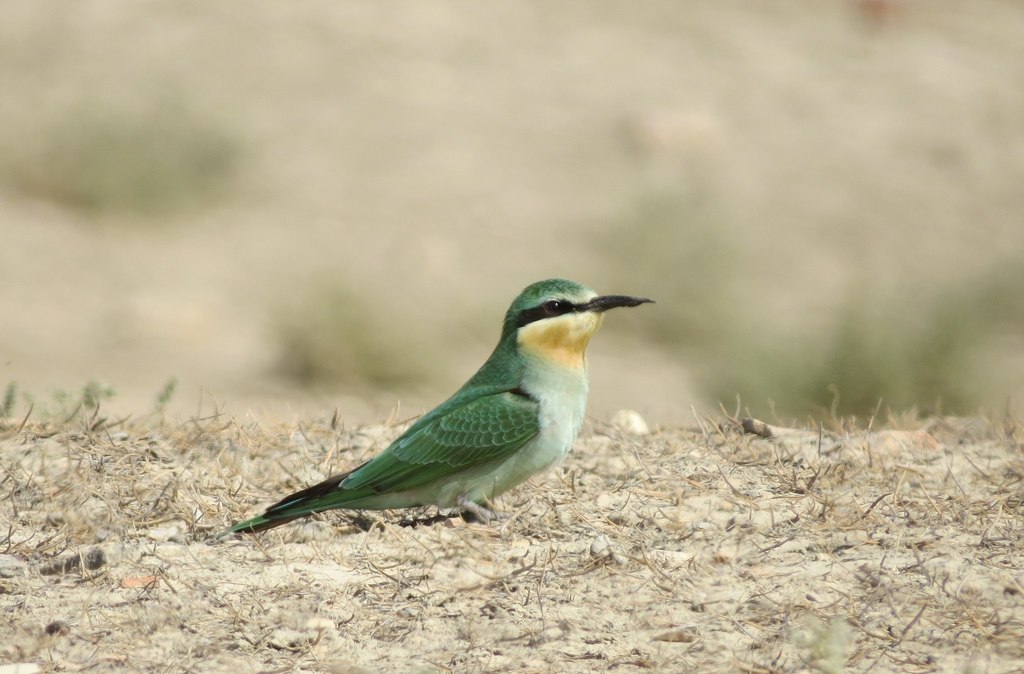
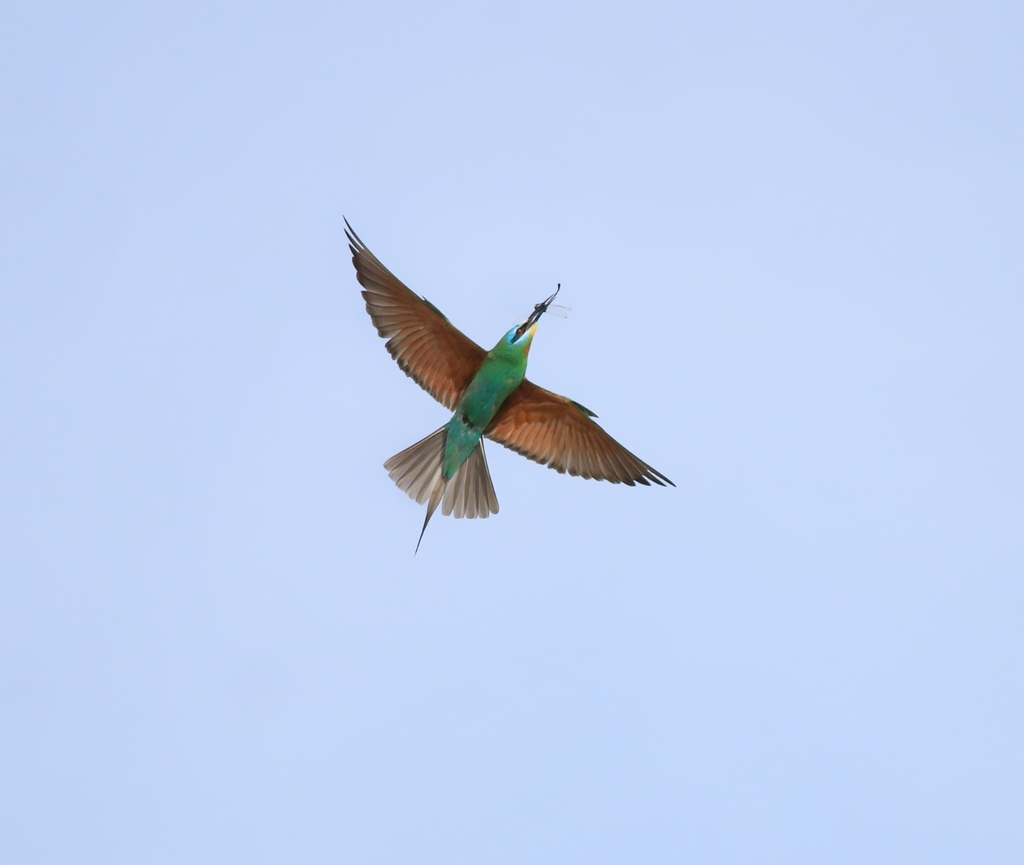
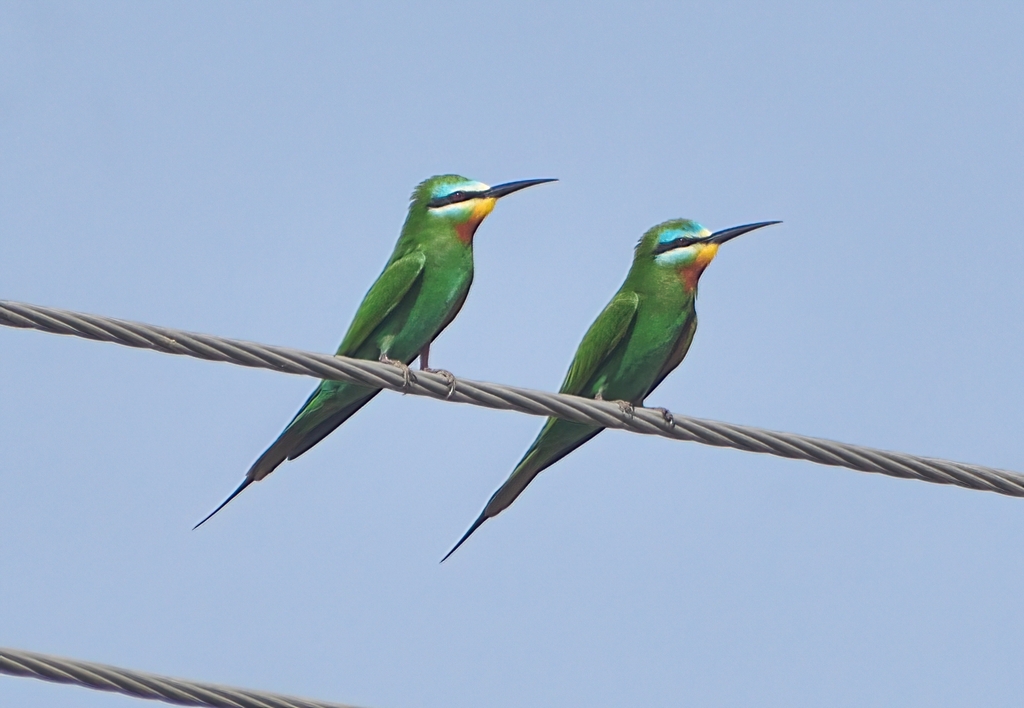
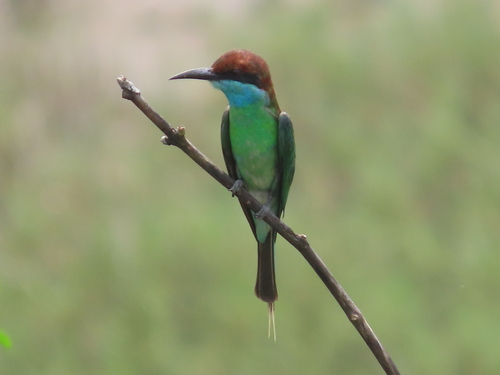
A green bee-eater with a blue cheek and long central tail feathers.
- Status
- Least Concern IUCN Red List
- Where
- 88 countries
On 4Planet Atlas it is among the wildlife people record most around Baku, Cairo and Manama, and 2 more of the cities we cover.
People have shared 59,360 records of the blue-cheeked bee-eater with GBIF, from 88 countries, most of them from India, United Arab Emirates and South Africa. Records collected by GloBI show it eating 5 different kinds of animals and plants.
Where people see the blue-cheeked bee-eater
People have shared 59,360 records from 88 countries.
Near a city: Baku, Cairo, Manama, Tashkent, Yerevan.
Records show where people have seen it and shared it, not its full range. Country names open their page in Atlas.
When it is seen
Records per month in the northern hemisphere. More people outdoors also means more records.
Watch and listen
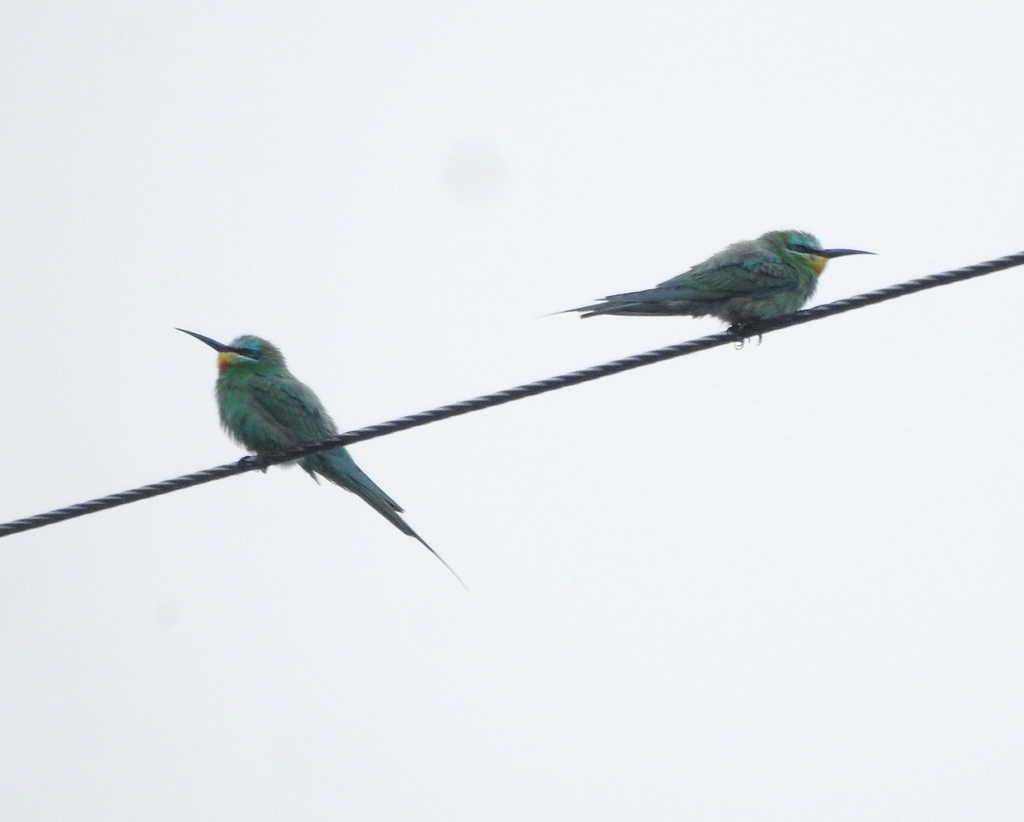
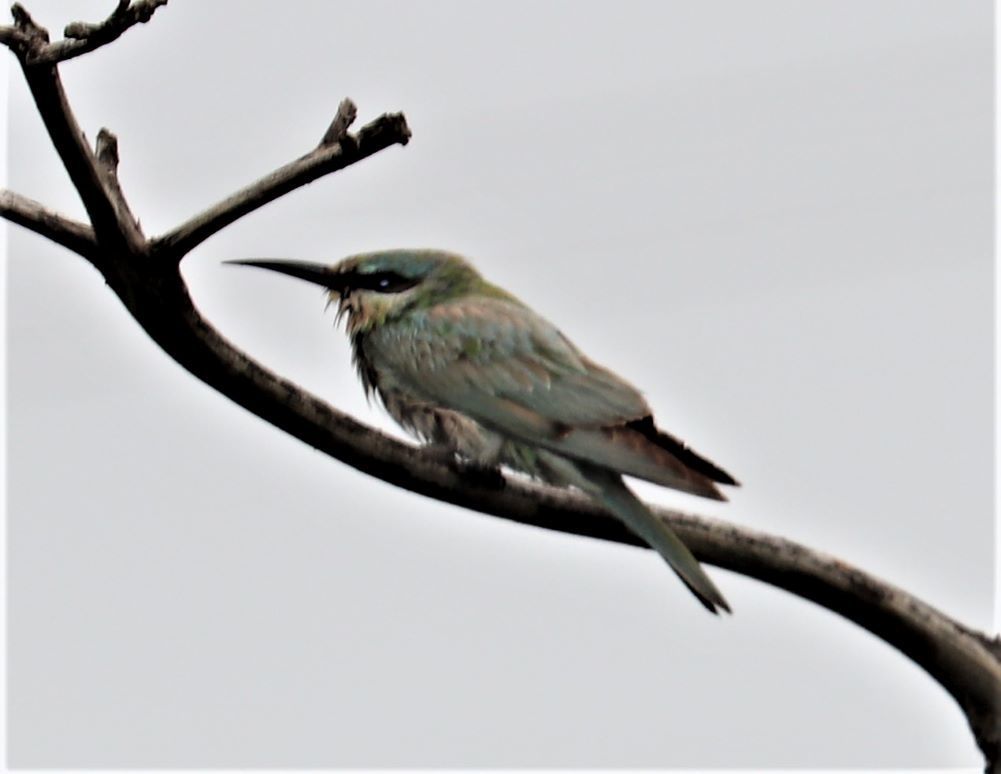
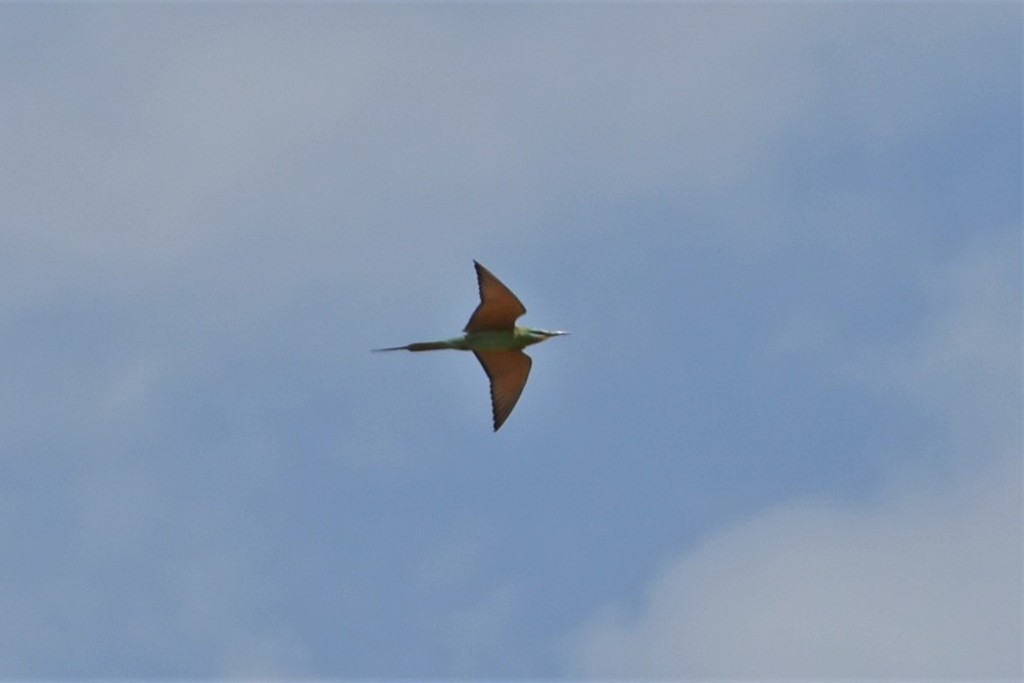
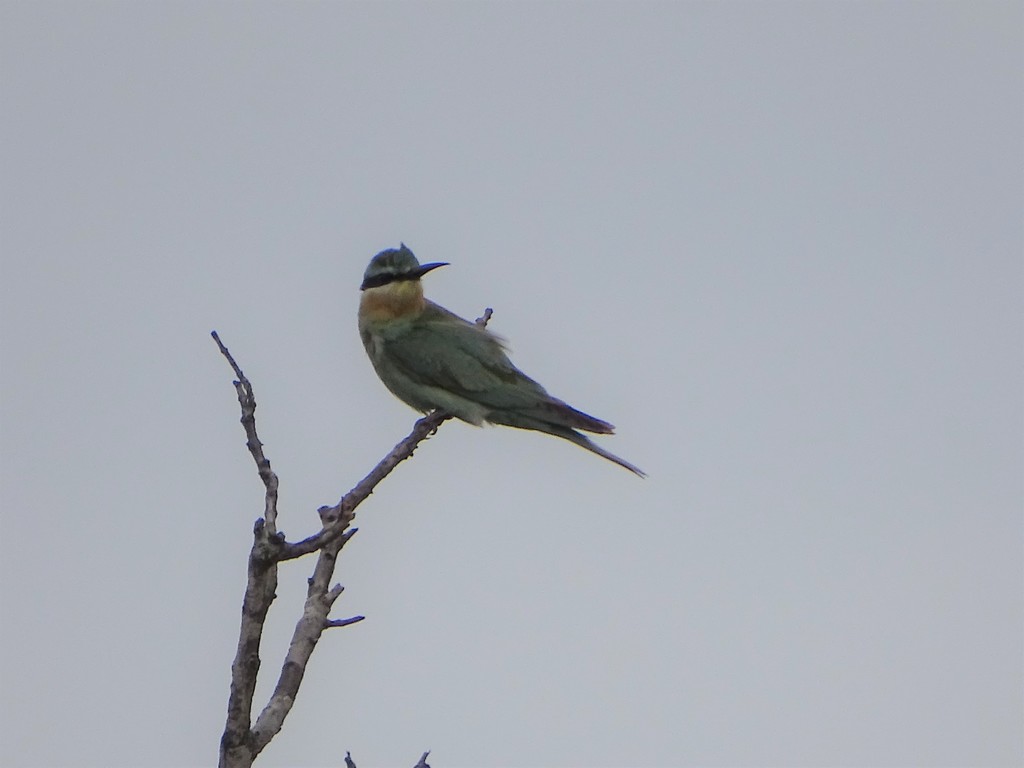
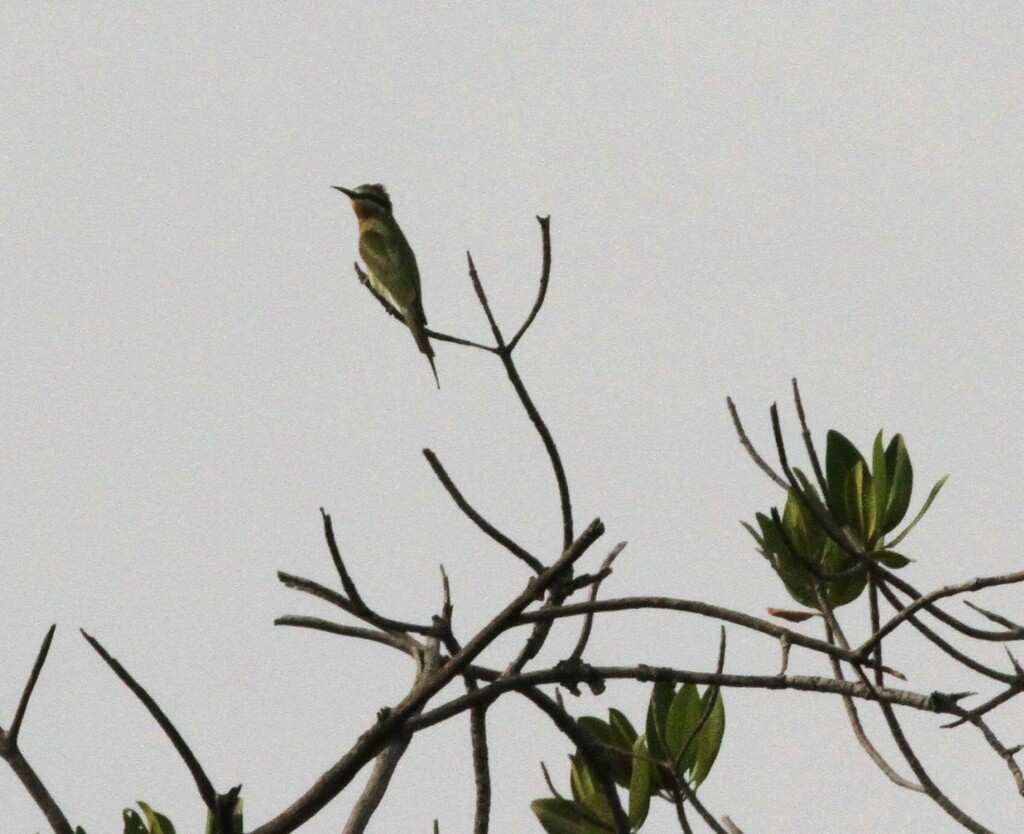
Its closest relatives
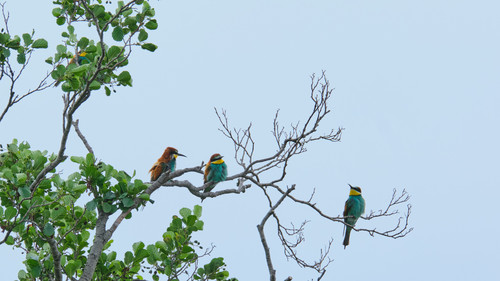
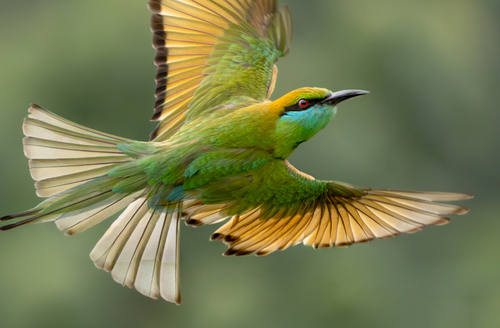
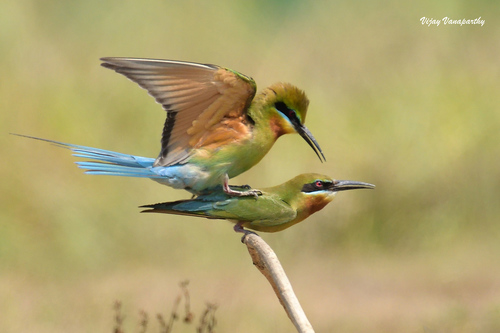
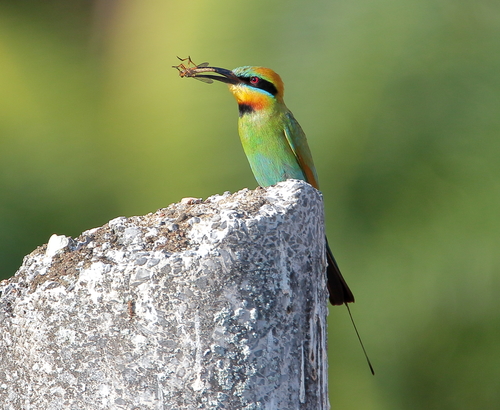
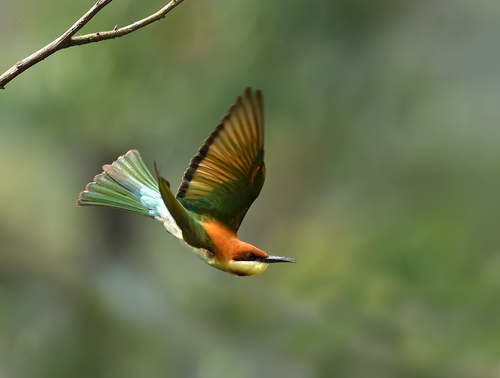
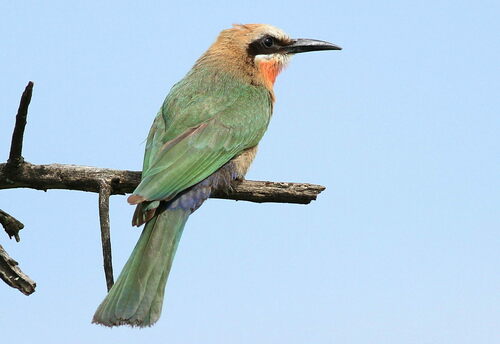
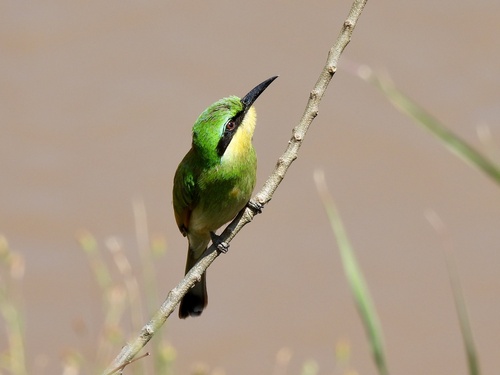
The other species of the genus Merops.
Seen a blue-cheeked bee-eater?
Share your photo on iNaturalist. Other naturalists help confirm it, and the record goes to GBIF, where scientists use it and where the maps on this page come from.
Questions people ask
What does the blue-cheeked bee-eater eat?
The blue-cheeked bee-eater has been recorded eating 5 different kinds of animals and plants, most of them insects. The ones recorded most often are ; records include animals eaten as carrion. Source: GloBI.
Where does the blue-cheeked bee-eater live?
People have recorded it in 88 countries; the most records come from India, United Arab Emirates, South Africa, Israel and Tanzania. Records show where people have seen it, not its full range.
When is the blue-cheeked bee-eater seen most?
In the northern hemisphere, the most records are made in September and the fewest in February. More people outdoors also means more records.
What are the blue-cheeked bee-eater's closest relatives?
It shares the genus Merops with european bee-eater, asian green bee-eater, blue-tailed bee-eater, rainbow bee-eater and chestnut-headed bee-eater.
Sources and photo credits
- GBIF · Merops persicus, 59,360 human observations
- GloBI · recorded interactions of Merops persicus
- Wikidata · Blue-cheeked bee-eater (Q1951359)
- Blue-cheeked bee-eater (Merops persicus): Dave Brown, CC0
- Blue-cheeked bee-eater (Merops persicus), Туракурганский район, Узбекистан: Вячеслав Юсупов, CC BY 4.0
- Blue-cheeked bee-eater (Merops persicus), W9VM+VXG, Kattampally, Kerala 670011, India: Afsar Nayakkan, CC BY 4.0
- Blue-cheeked bee-eater (Merops persicus), Raghwa, Rajasthan 345022, India: Tejas M, CC BY 4.0
- Blue-cheeked bee-eater (Merops persicus), Kattampally: Afsar Nayakkan, CC BY 4.0
- Blue-cheeked bee-eater (Merops persicus), Colchester, Port Elizabeth, South Africa: Dave Brown, CC0
- Blue-cheeked bee-eater (Merops persicus), Шардаринский, Казахстан: Kudaibergen Amirekul, CC BY-SA 4.0
- Blue-cheeked bee-eater (Merops persicus), Umkhanyakude, KwaZulu-Natal, South Africa: Shaun Swanepoel, CC BY 4.0
- Blue-cheeked bee-eater (Merops persicus), Foundiougne, Senegal: Lucy Keith-Diagne, CC BY 4.0
- European bee-eater: Sem Khatov, CC BY 4.0
- Asian green bee-eater: Sunny Joseph, CC BY 4.0
- Blue-tailed bee-eater: Vijay Vanaparthy, CC BY 4.0
- Rainbow bee-eater: Graham Winterflood, CC BY-SA 4.0
- Chestnut-headed bee-eater: Sunny Joseph, CC BY 4.0
- White-fronted bee-eater: Derek Keats, CC BY 4.0
- Little bee-eater: Caroline Quinn, CC BY 4.0
- Blue-throated bee-eater: ian_mcallan, CC BY 4.0
Records show where people have seen and shared the blue-cheeked bee-eater, not its full range, and some countries and months are recorded far more than others. The food web lists interactions that studies have recorded somewhere in the world (GloBI), not everything it eats in one place.
Checked 2026-11-22.