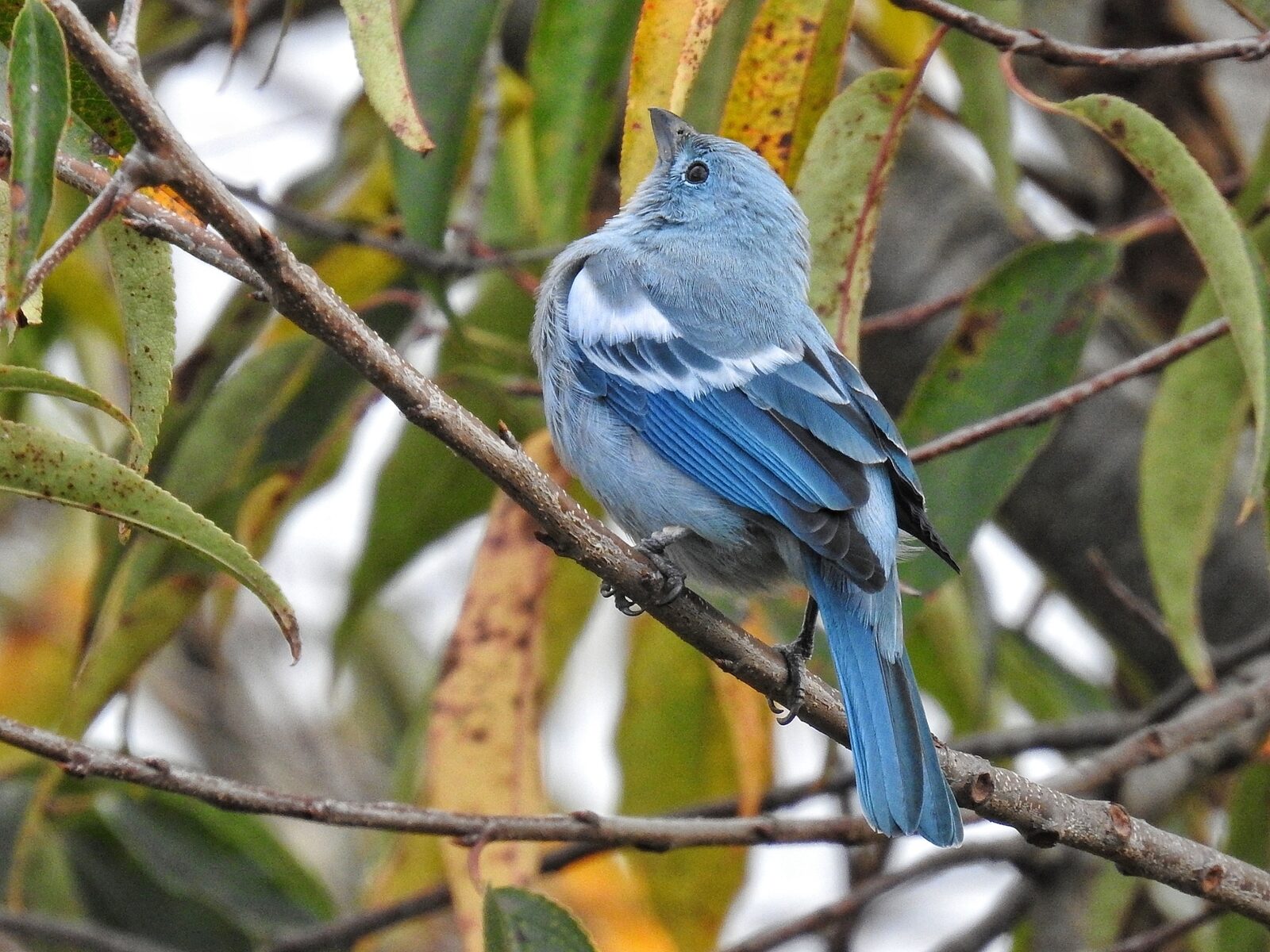
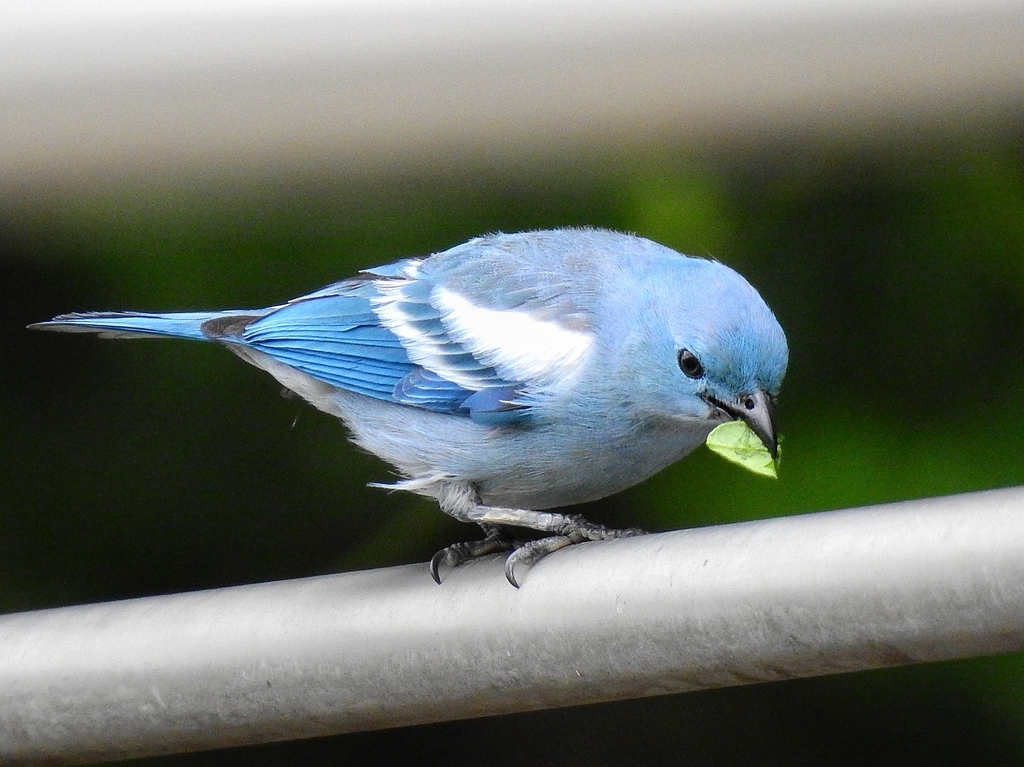
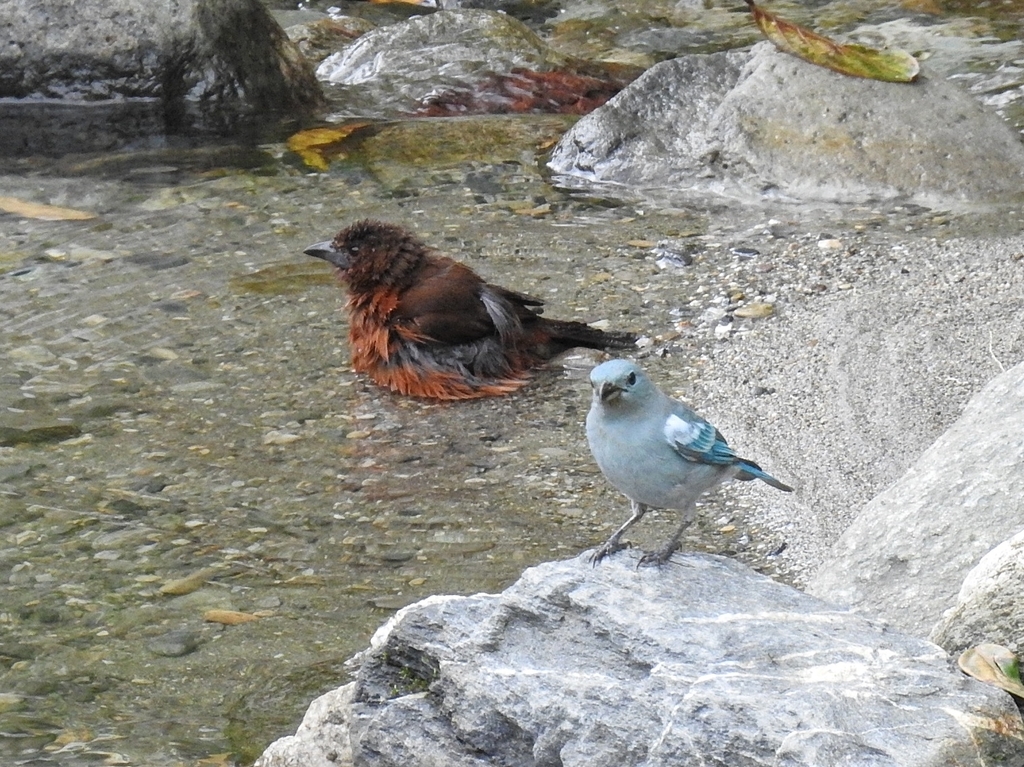
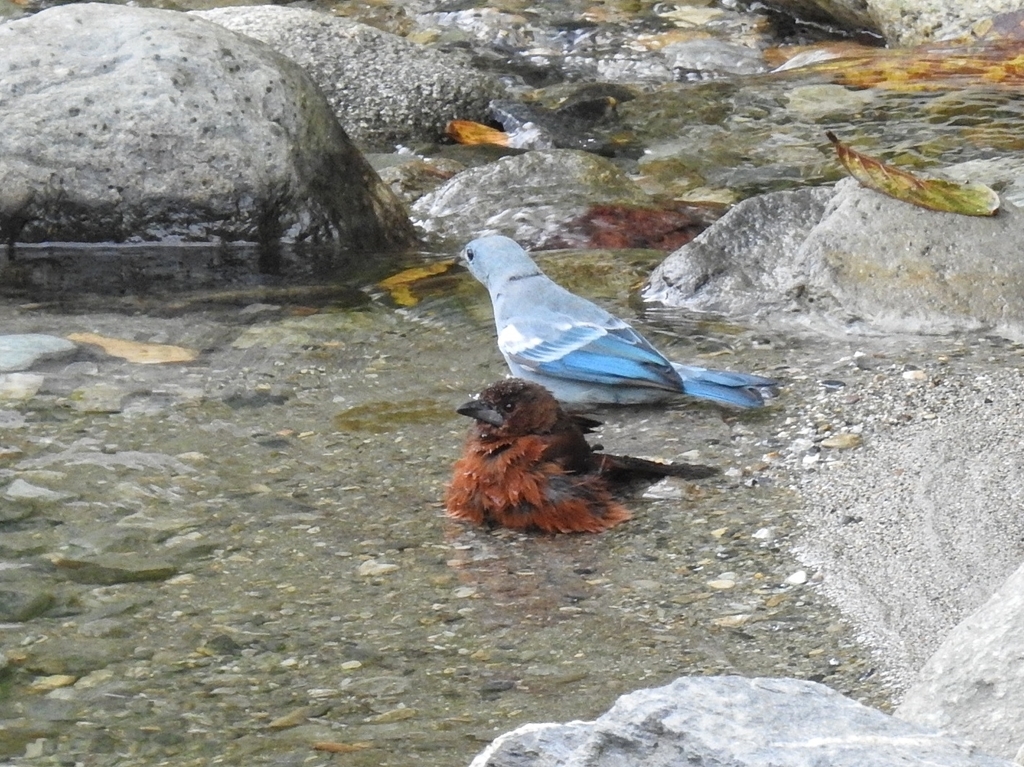
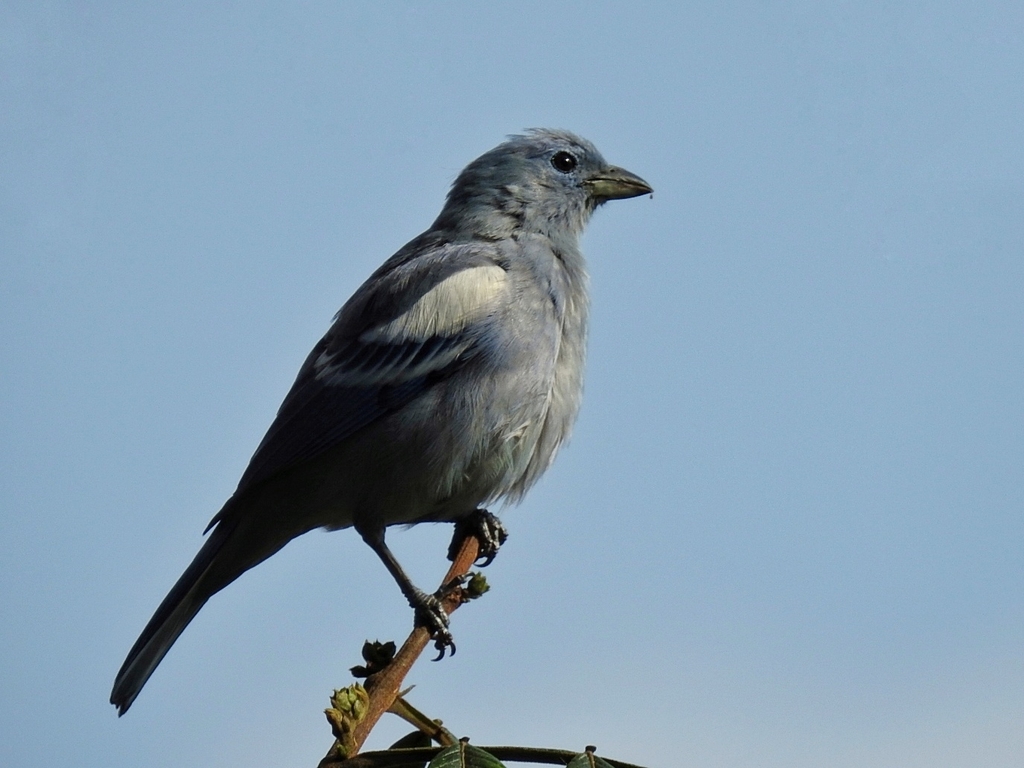
Blue-grey tanager
Thraupis episcopus
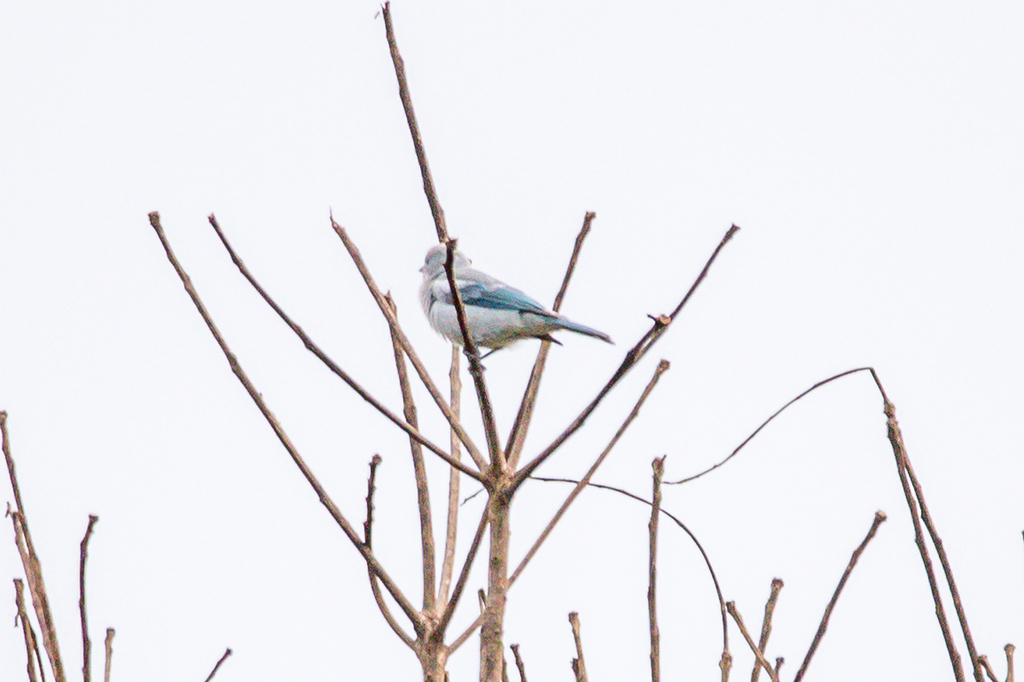
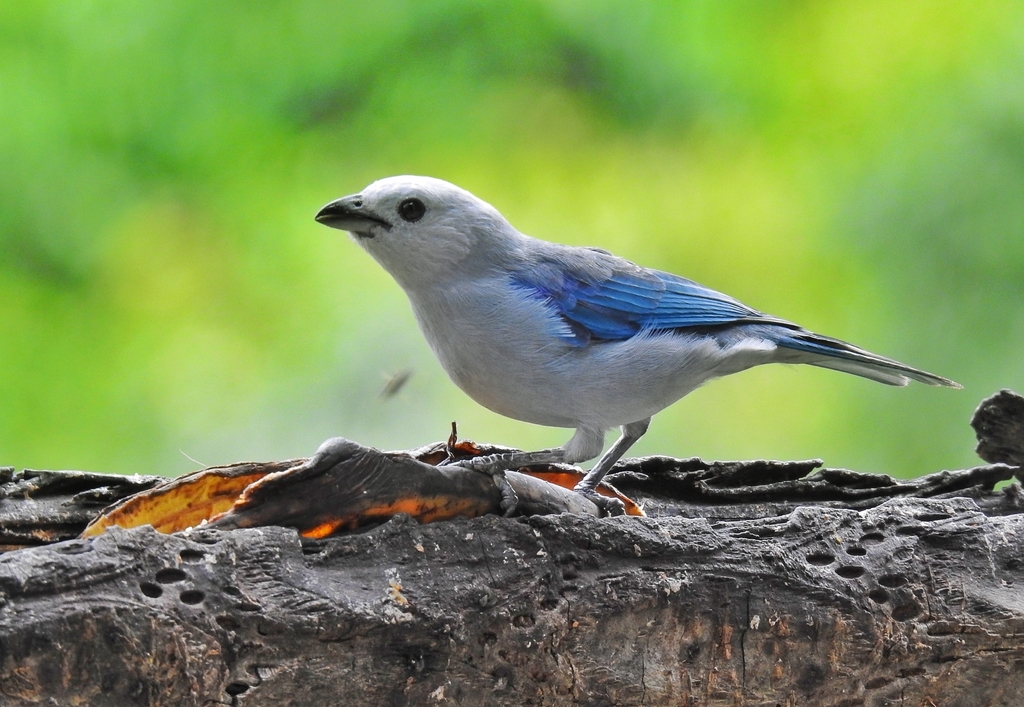
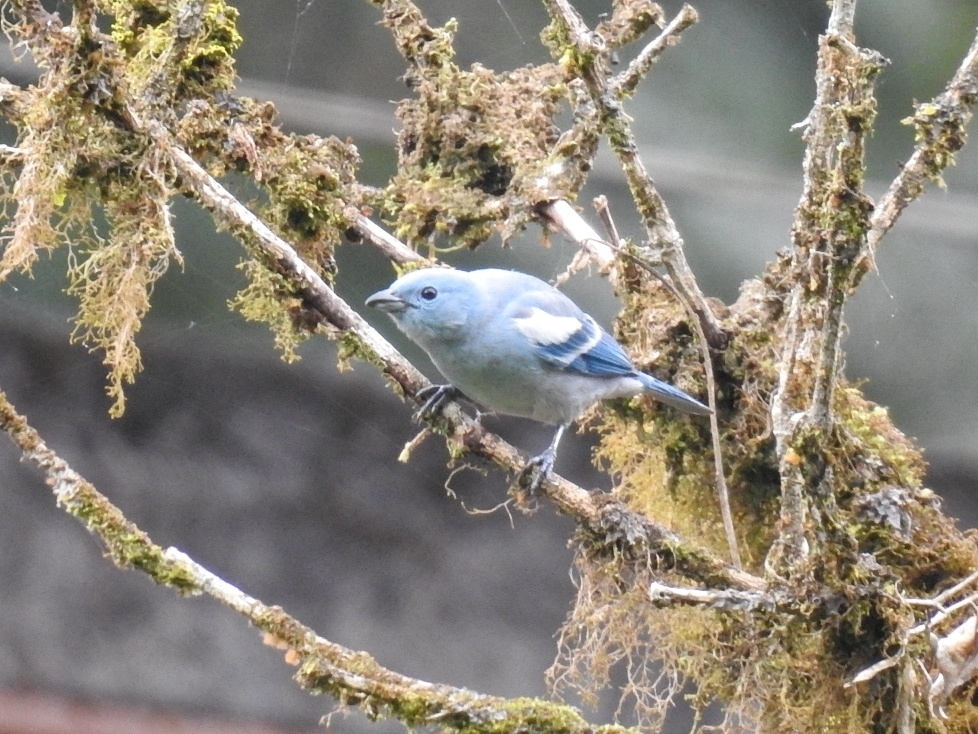
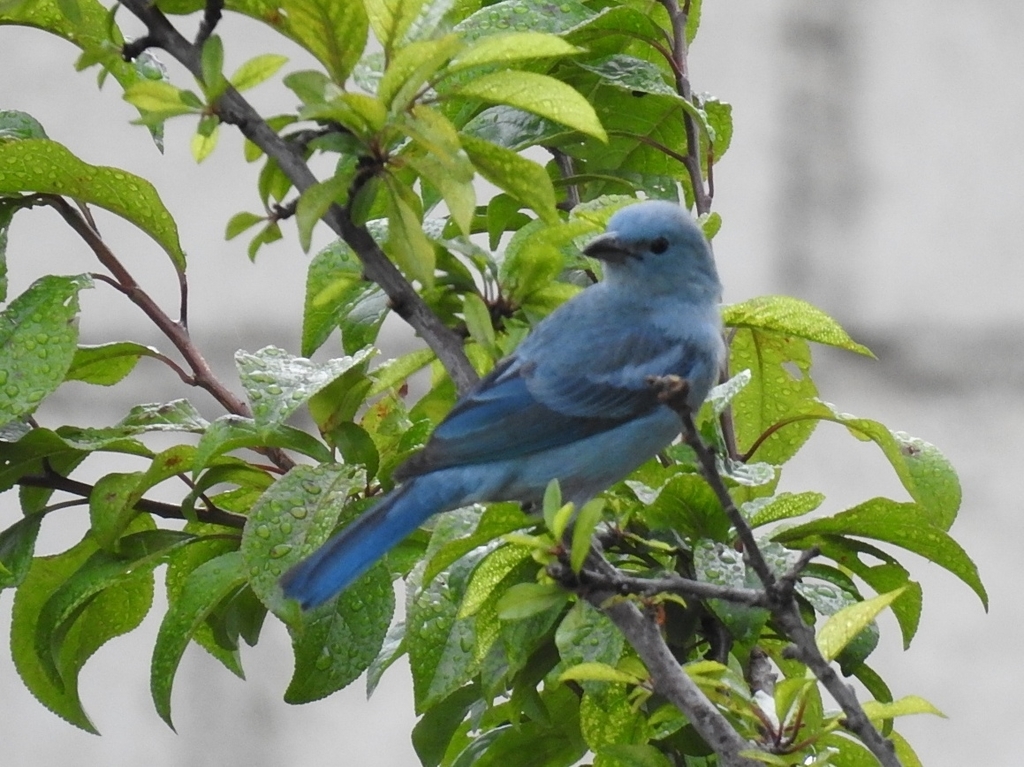
A common, adaptable tanager of gardens and forest edges from Mexico to the Amazon.
- Status
- IUCN Red List
- Eats
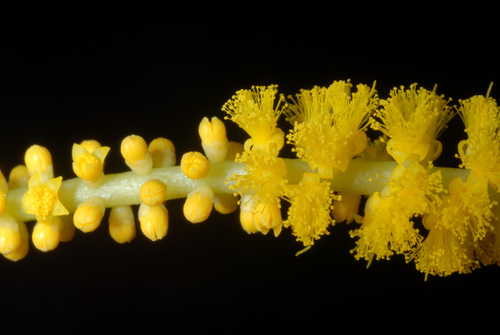
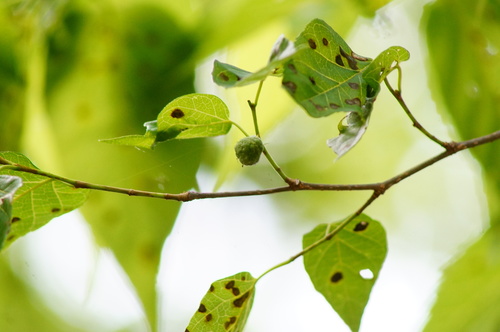
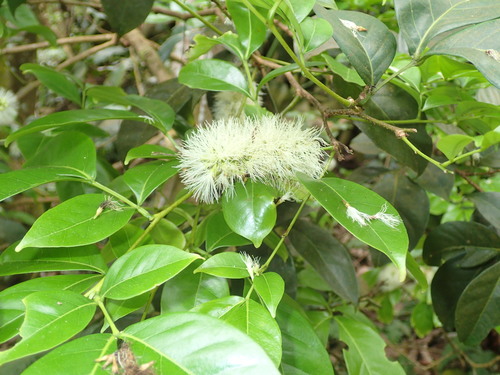
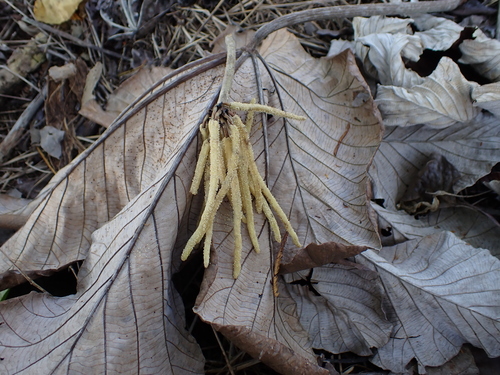
- black mulberry, champac, murraya paniculata and 440 more
- Eaten by
- white-throated magpie-jay
- Where
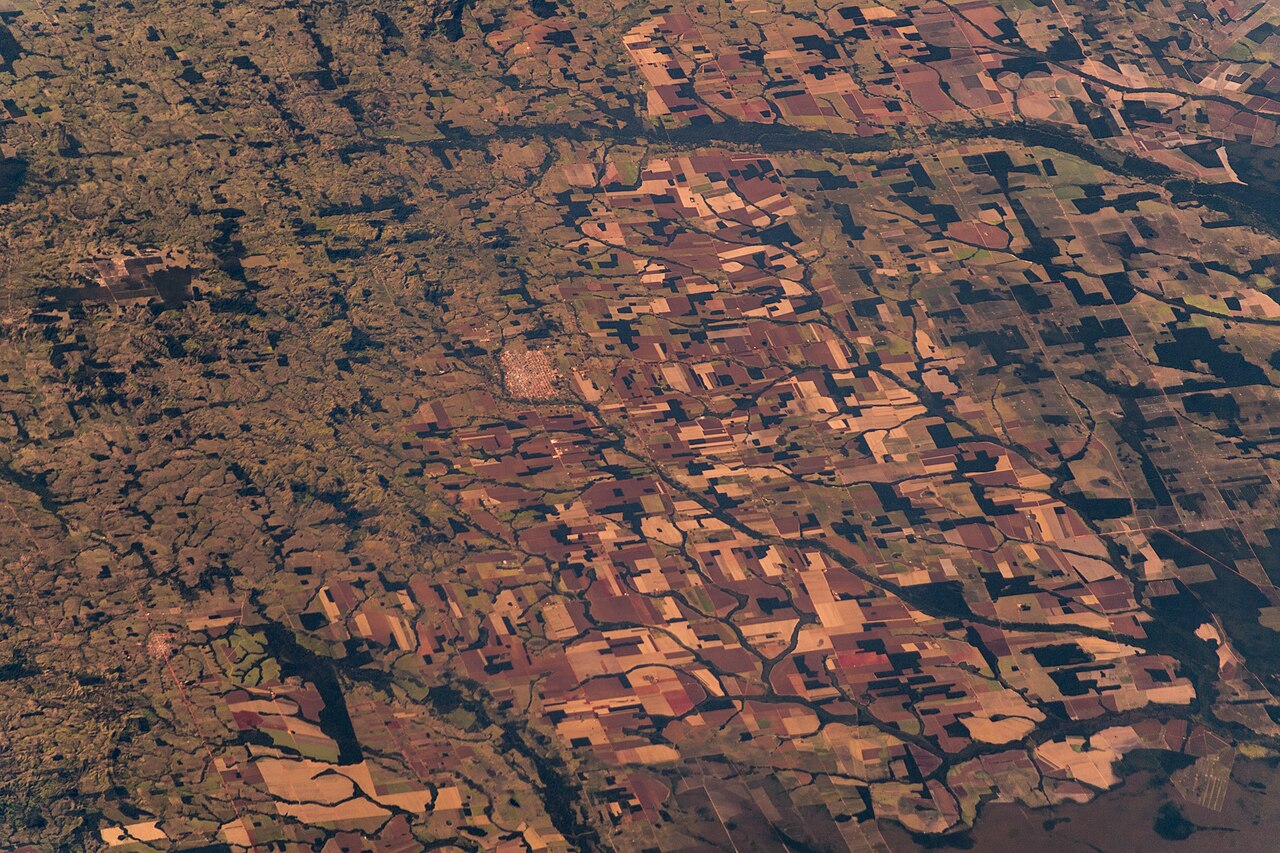
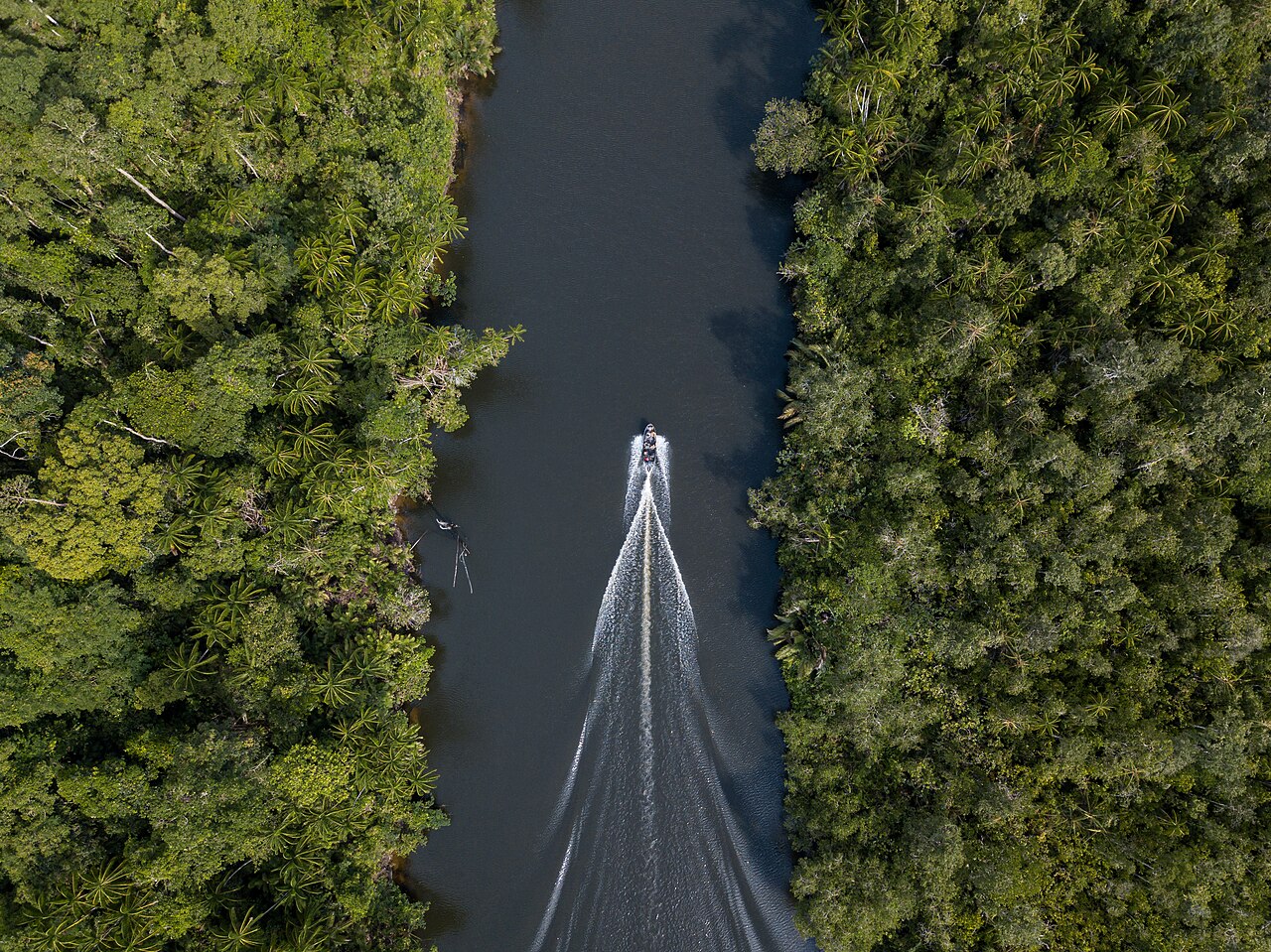
- 19 countries · Amazon rainforest
On 4Planet Atlas it is among the wildlife people record most around Belmopan, Bogotá and Caracas, and 3 more of the cities we cover.
People have shared 1,191,993 records of the blue-grey tanager with GBIF, from 19 countries, most of them from Costa Rica, Colombia and Panama. Records collected by GloBI show it eating 443 different kinds of animals and plants, and being eaten by 3.
Habitats
What the blue-grey tanager eats, and what eats it
Studies have recorded it eating 443 kinds of animals and plants, and 3 kinds of animals eating it. Tap any of them to follow the food chain.
- Plants 421
- Spiders and mites 1
Eaten by
 Blue-grey tanager
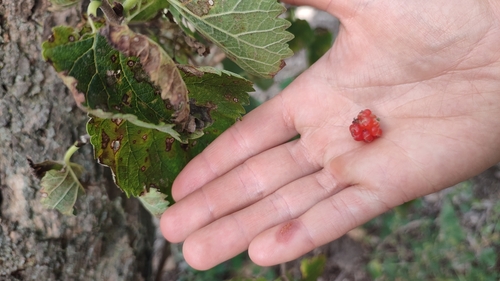
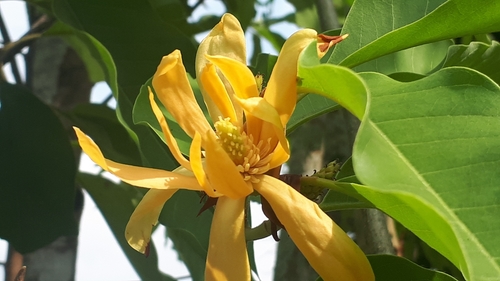
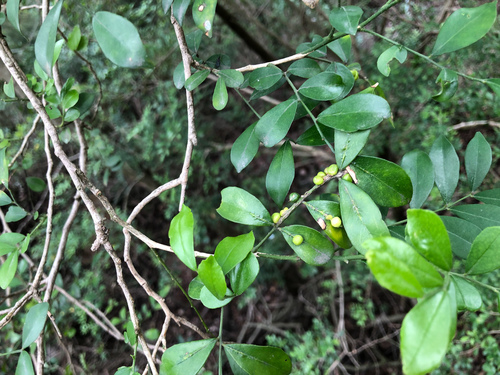

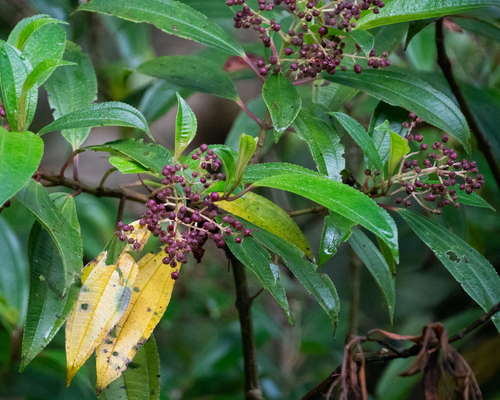
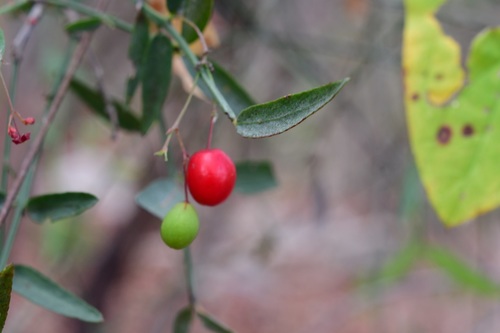
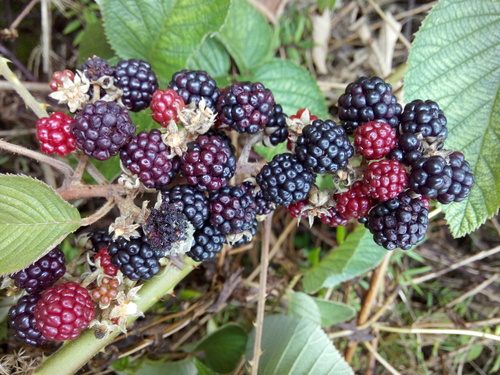
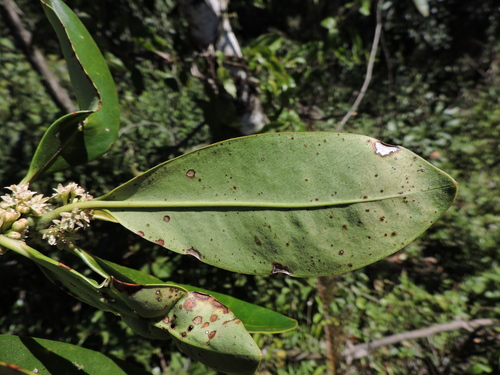
Records from studies worldwide, collected by GloBI. They include animals eaten as carrion, and they are not everything it eats in one place.
Where people see the blue-grey tanager
People have shared 1,191,993 records from 19 countries.
Near a city: Belmopan, Bogotá, Caracas, Lima, Paramaribo, Quito.
Records show where people have seen it and shared it, not its full range. Country names open their page in Atlas.
When it is seen
Records per month in the northern hemisphere. More people outdoors also means more records.
Watch and listen
Its closest relatives
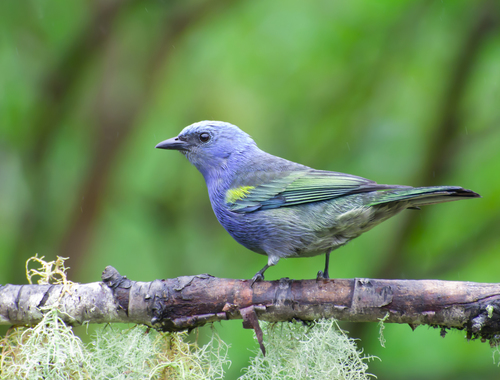
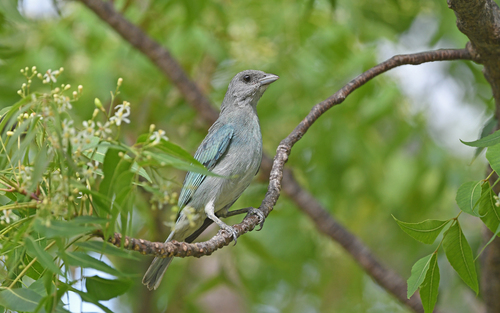
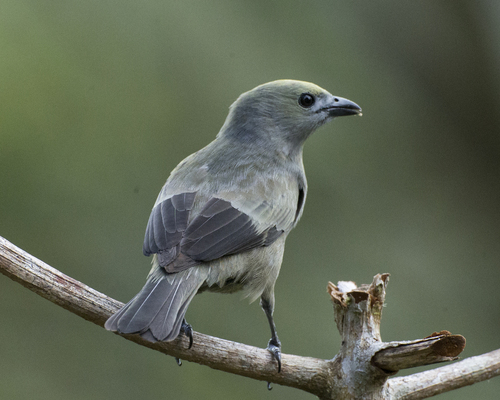
The other species of the genus Thraupis.

Seen a blue-grey tanager?
Share your photo on iNaturalist. Other naturalists help confirm it, and the record goes to GBIF, where scientists use it and where the maps on this page come from.
Explore next
What puts the blue-grey tanager under pressure, what helps, and who works on it.

Questions people ask
What does the blue-grey tanager eat?
The blue-grey tanager has been recorded eating 443 different kinds of animals and plants, most of them plants and spiders and mites. The ones recorded most often are black mulberry, champac, murraya paniculata, earleaf acacia and matchwood; records include animals eaten as carrion. Source: GloBI.
What eats the blue-grey tanager?
Recorded predators include white-throated magpie-jay. Source: GloBI.
Where does the blue-grey tanager live?
People have recorded it in 19 countries; the most records come from Costa Rica, Colombia, Panama, Ecuador and Venezuela. Records show where people have seen it, not its full range.
When is the blue-grey tanager seen most?
In the northern hemisphere, the most records are made in March and the fewest in August. More people outdoors also means more records.
What are the blue-grey tanager's closest relatives?
It shares the genus Thraupis with golden-chevroned tanager, sayaca tanager, yellow-winged tanager, glaucous tanager and palm tanager.
Sources and photo credits
- GBIF · Thraupis episcopus, 1,191,993 human observations
- GloBI · recorded interactions of Thraupis episcopus
- Wikidata · Blue-grey tanager (Q883102)
- Blue-grey tanager (Thraupis episcopus): Esteban Poveda, CC BY 4.0
- Blue-grey tanager (Thraupis episcopus): Esteban Poveda, CC BY 4.0
- Blue-grey tanager (Thraupis episcopus): Esteban Poveda, CC BY 4.0
- Blue-grey tanager (Thraupis episcopus), Rio Negro, Ecuador: Esteban Poveda, CC BY 4.0
- Blue-grey tanager (Thraupis episcopus), Rio Negro, Ecuador: Esteban Poveda, CC BY 4.0
- Blue-grey tanager (Thraupis episcopus), Extrema, Porto Velho - RO, Brasil: Diogo Luiz, CC BY 4.0
- Blue-grey tanager (Thraupis episcopus), Mindo, Ecuador: Esteban Poveda, CC BY 4.0
- Blue-grey tanager (Thraupis episcopus), Rio Negro, Ecuador: Esteban Poveda, CC BY 4.0
- Blue-grey tanager (Thraupis episcopus), Ambato, EC-TU, EC: Esteban Poveda, CC BY 4.0
- Black mulberry: Josh, CC BY 4.0
- Champac: Ong Jyh Seng, CC BY-SA 4.0
- Murraya paniculata: Cheng-Tao Lin, CC BY 4.0
- Earleaf acacia: Douglas Goldman, CC BY-SA 4.0
- Matchwood: GERMAN LEONEL SARMIENTO CRUZ, CC BY 4.0
- Old fustic: Carlos Domínguez-Rodríguez, CC BY 4.0
- Sacky sac bean: Dan Schofield, CC BY 4.0
- White cecropia: Kozue Kawakami, CC BY-SA 4.0
- Miconia theizans: filipeprates, CC0
- Snake berry: Neptalí Ramírez Marcial, CC BY 4.0
- Rubus guyanensis: Kristof & Yulia, CC BY 4.0
- Myrsine umbellata: Fabrício Mil Homens Riella, CC BY 4.0
- White-throated magpie-jay: Dominic Sherony, CC BY-SA 4.0
- Golden-chevroned tanager: Dario Sanches, CC BY-SA 4.0
- Sayaca tanager: Dario Sanches, CC BY-SA 4.0
- Yellow-winged tanager: Ricard Busquets Reverte, CC BY 4.0
- Glaucous tanager: Christoph Moning, CC BY 4.0
- Palm tanager: Lip Kee, CC BY-SA 4.0
Records show where people have seen and shared the blue-grey tanager, not its full range, and some countries and months are recorded far more than others. The food web lists interactions that studies have recorded somewhere in the world (GloBI), not everything it eats in one place.
Checked 2026-11-22.