SPECIES
Capybara
Hydrochoerus hydrochaeris Pending authority citation
The world's largest living rodent lives between water and grass, often surrounded by companions.
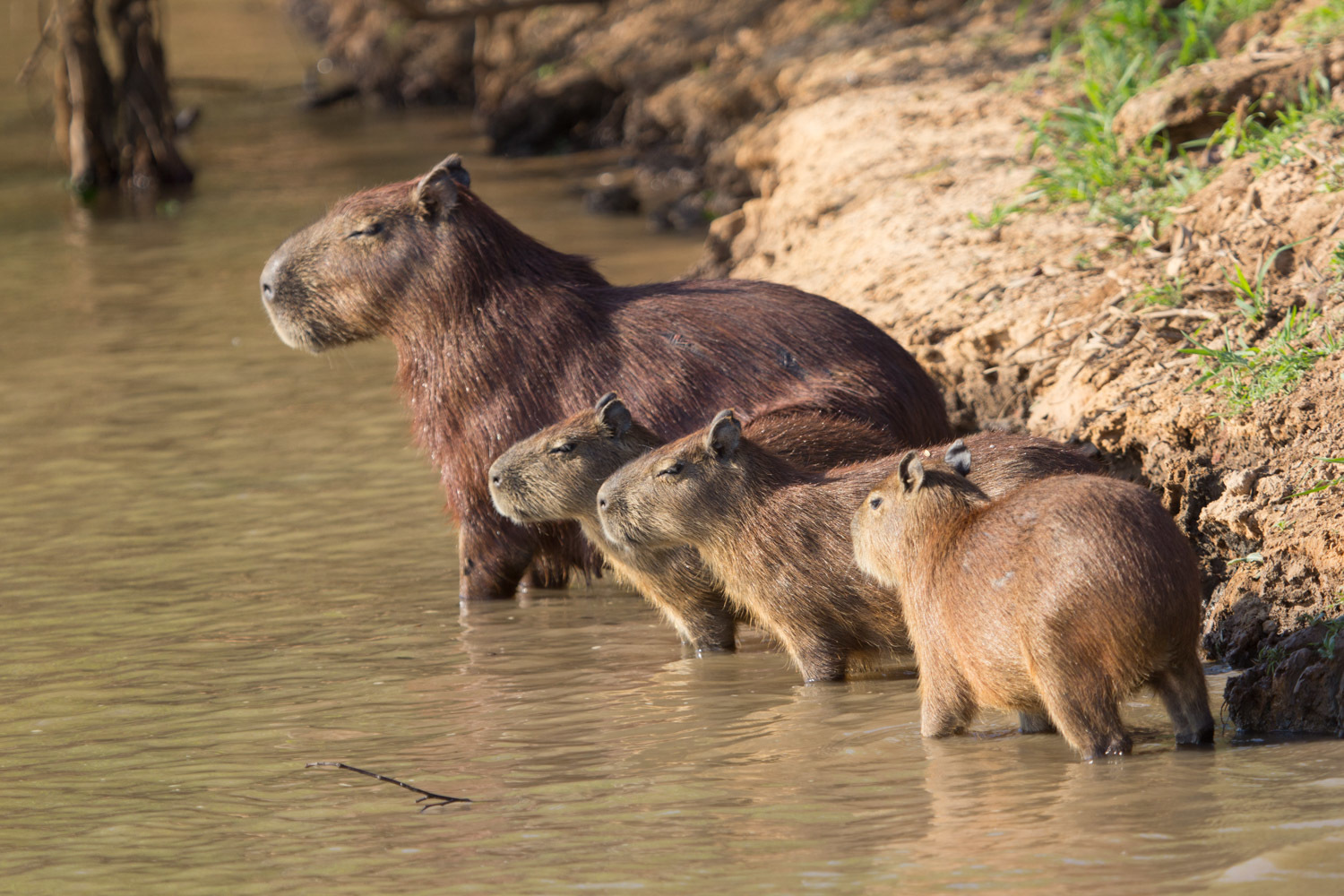
Capybaras form social groups, swim well and slip into water to evade threats.
Grazing connects them to wetland plants and large predators including jaguars and caimans.
Wetlands, grasslands, rivers and flooded savannas across much of South America.
Where does a capybara live?
Wetlands, grasslands, rivers and flooded savannas across…
Worth knowing
- Adaptation Capybaras form social groups, swim well and slip into water to evade threats.
- Ecological role Grazing connects them to wetland plants and large predators including jaguars and caimans.
- Home Wetlands, grasslands, rivers and flooded savannas across much of South America.
How it survives
Capybaras form social groups, swim well and slip into water to evade threats.
The world's largest living rodent lives between water and grass, often surrounded by companions.
Why relationships matter
Grazing connects them to wetland plants and large predators including jaguars and caimans.
Where it lives
Wetlands, grasslands, rivers and flooded savannas across much of South America.
Pressures and responses
Habitat conversion, local hunting and conflict near farms.
Maintain healthy wetlands and manage coexistence with people and predators.
Sources
- University of Michigan Museum of Zoology — Animal Diversity Web, Hydrochoerus hydrochaeris
- GBIF — Hydrochoerus hydrochaeris accepted taxon
- San Diego Zoo Wildlife Alliance — Habitat changes carry risk
- San Diego Zoo Wildlife Alliance — What do capybaras eat?
Records of where it has been seen come live from GBIF; observed interactions from GloBI. Draft — not yet reviewed by a person.