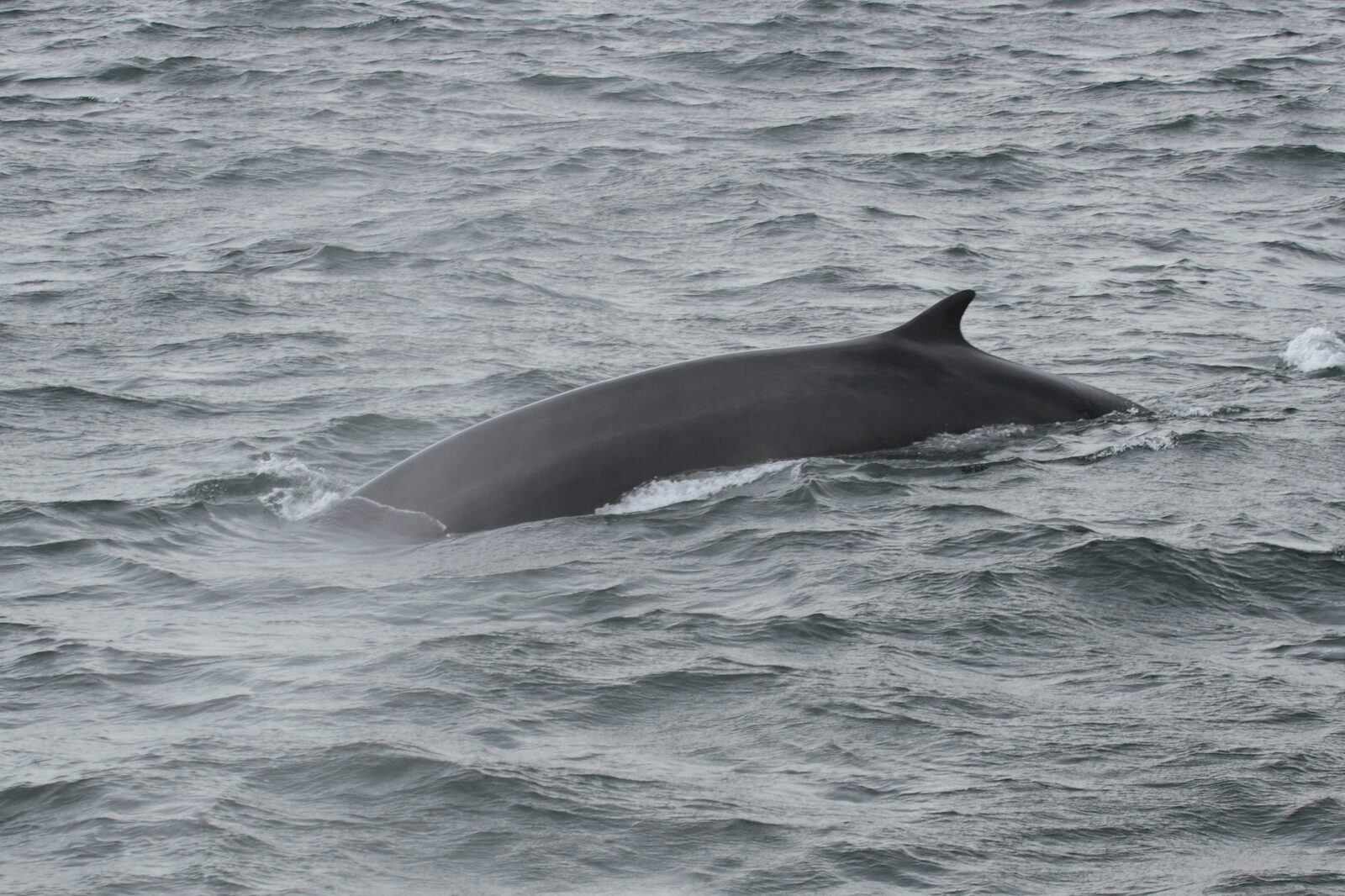
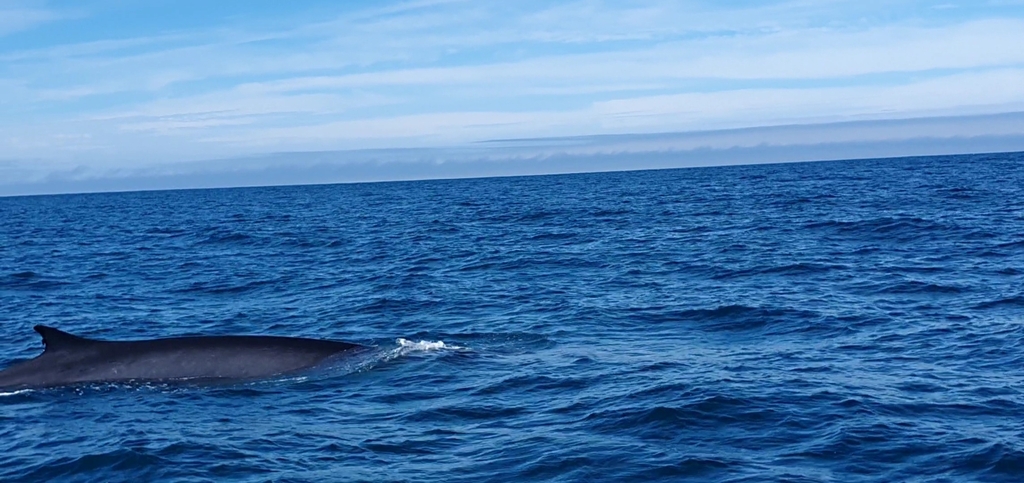
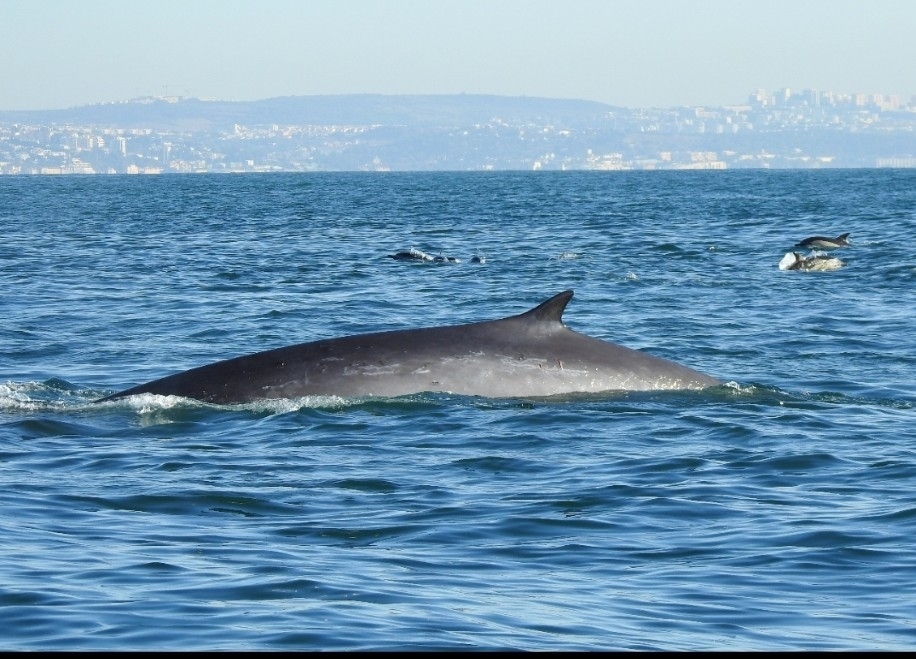
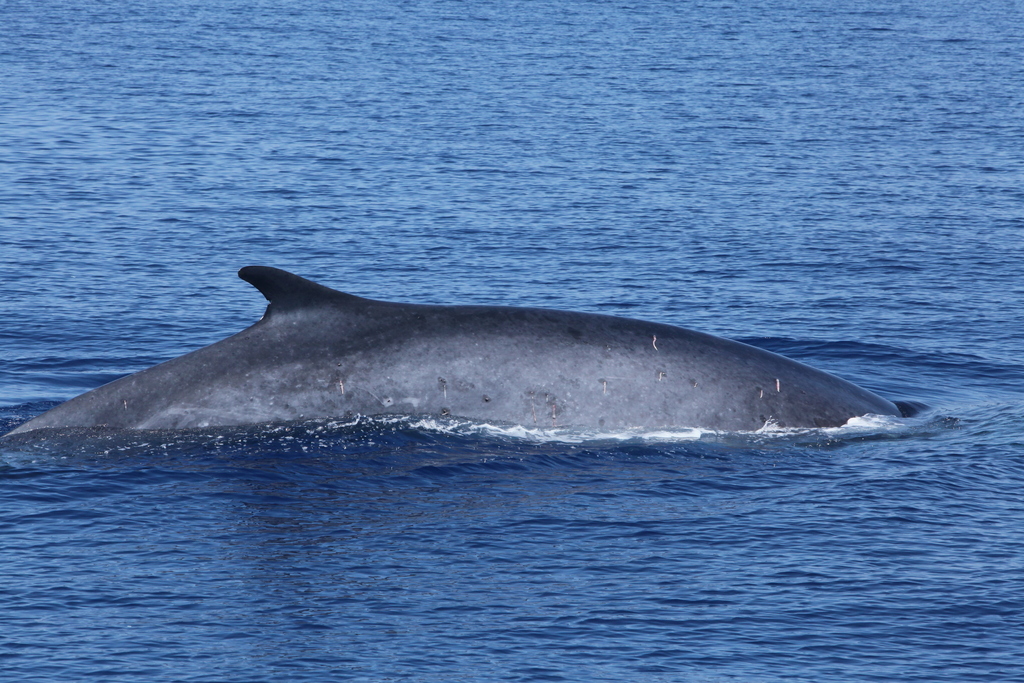
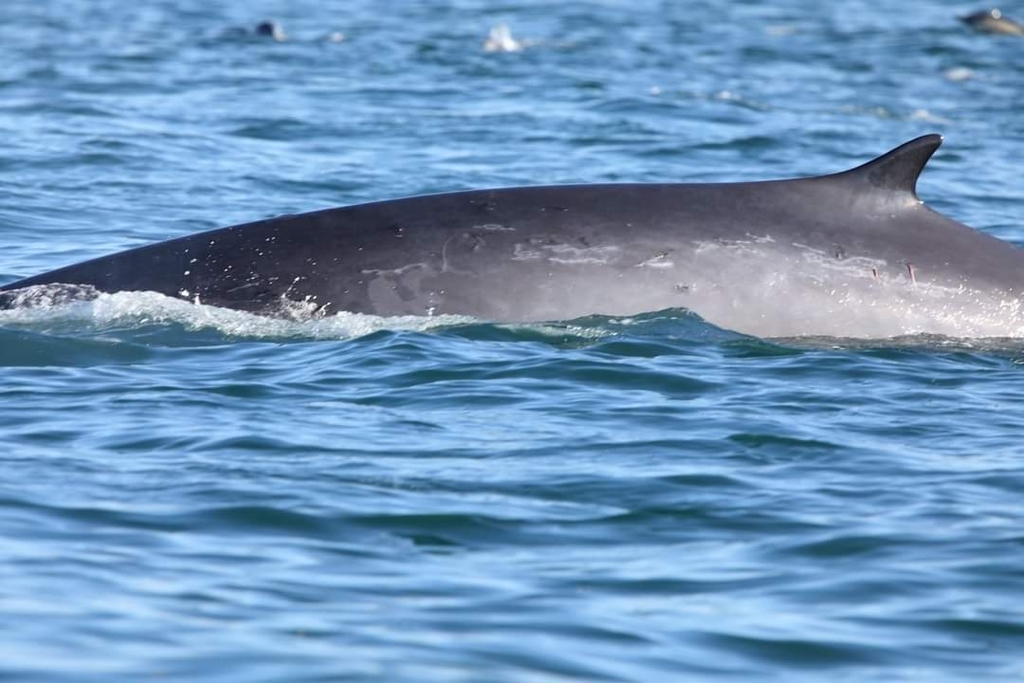
Fin whale
Balaenoptera physalus
The second-largest animal on Earth, and one of the fastest of the great whales.
- Status
- Vulnerable IUCN Red List
- Weight
- About 47,506 kg (adult average)
- Length
- About 20.6 m, head and body
- Lifespan
- Up to 116 years recorded
- Young
- About 1 per litter, after 338 days
- Eats
- antarctic krill, colossal squid, northern krill and 73 more
- Eaten by
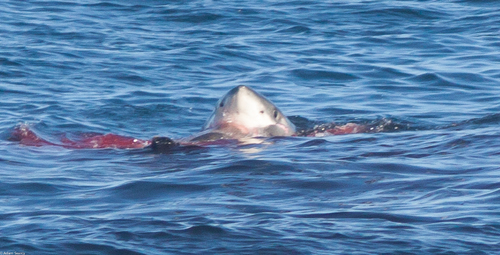
- great white shark
- Where
- 34 countries
People have shared 3,075 records of the fin whale with GBIF, from 34 countries, most of them from United States, Canada and Antarctica. Records collected by GloBI show it eating 76 different kinds of animals and plants, and being eaten by 2.
What the fin whale eats, and what eats it
Studies have recorded it eating 76 kinds of animals and plants, and 2 kinds of animals eating it. Tap any of them to follow the food chain.
- Crustaceans 23
- Fish 20
- Octopus and squid 10
- Birds 1
- Snails and slugs 1
Eaten by
 Fin whale
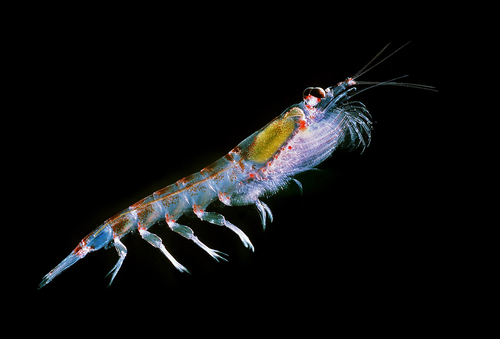
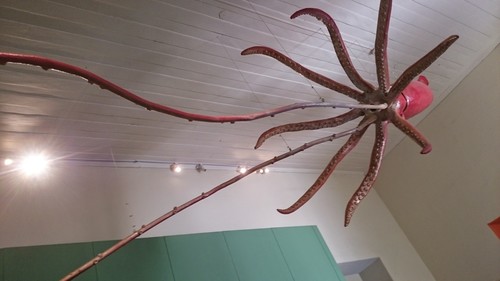
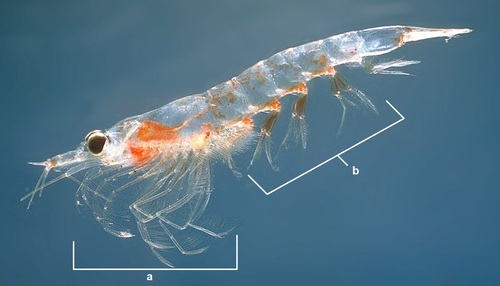
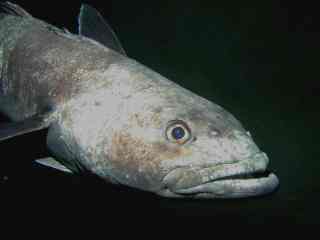
Records from studies worldwide, collected by GloBI. They include animals eaten as carrion, and they are not everything it eats in one place.
Where people see the fin whale
People have shared 3,075 records from 34 countries.
Records show where people have seen it and shared it, not its full range. Country names open their page in Atlas.
When it is seen
Records per month in the northern hemisphere. More people outdoors also means more records.
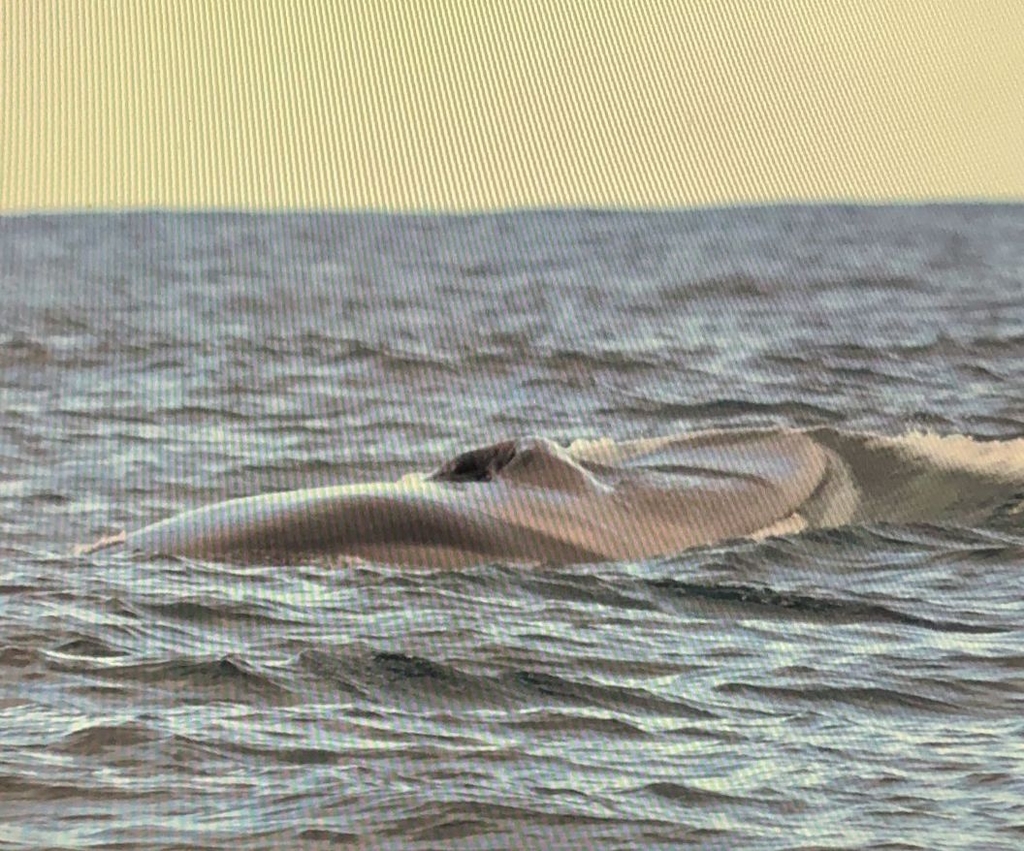
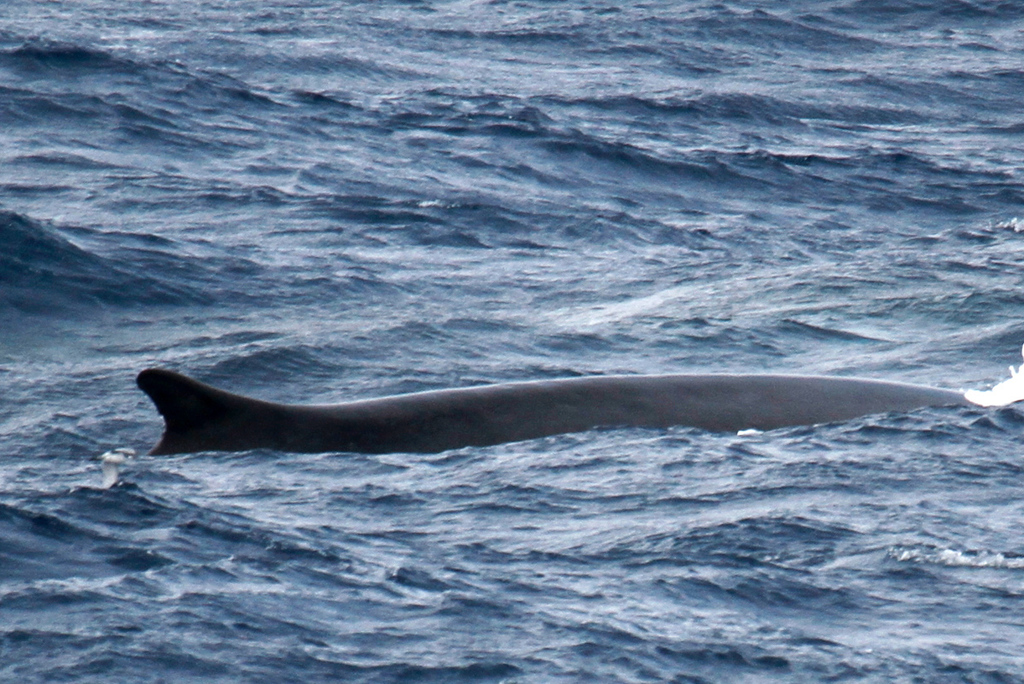
Watch and listen
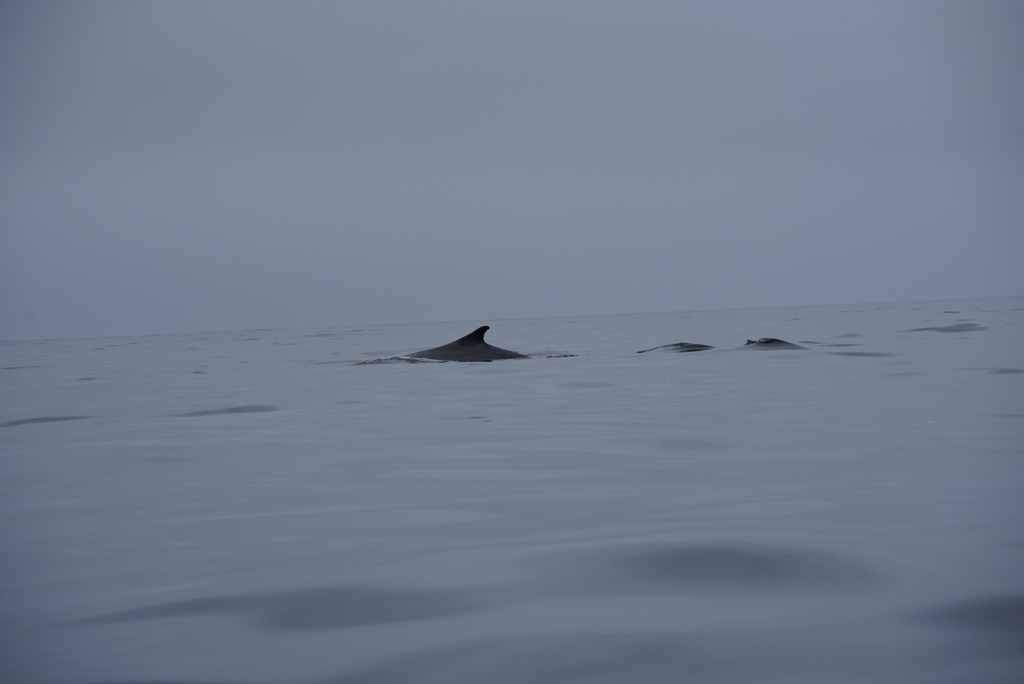
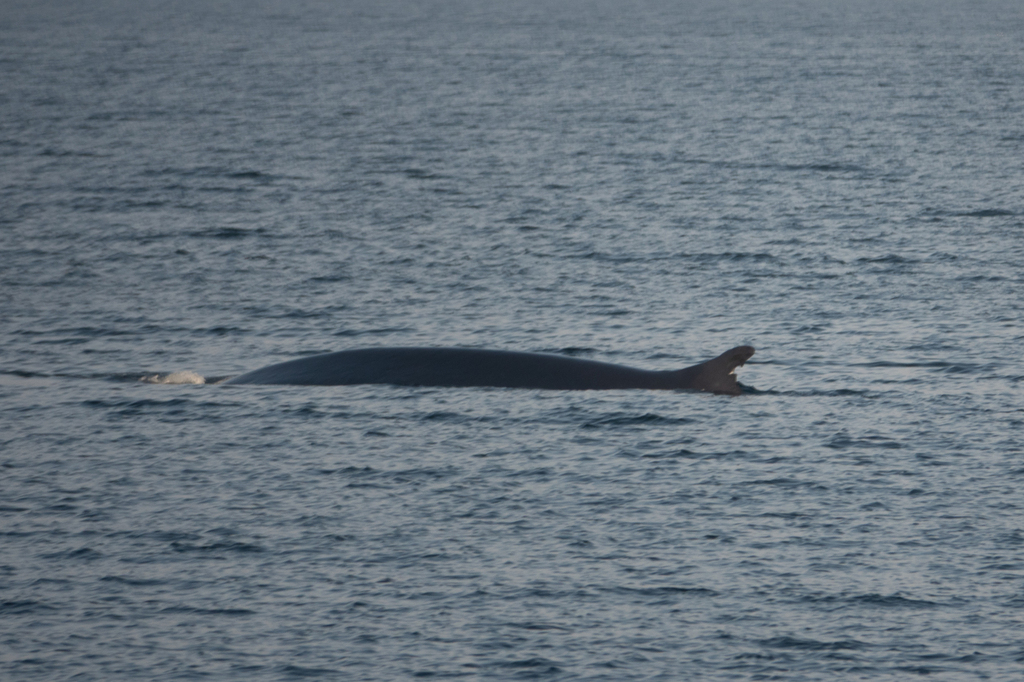
Its closest relatives
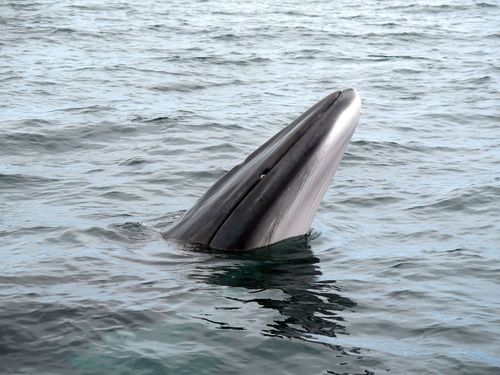
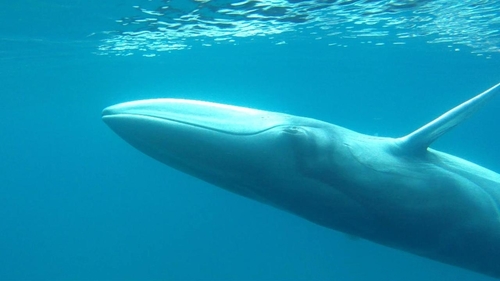
The other species of the genus Balaenoptera.

Seen a fin whale?
Share your photo on iNaturalist. Other naturalists help confirm it, and the record goes to GBIF, where scientists use it and where the maps on this page come from.
Questions people ask
What does the fin whale eat?
The fin whale has been recorded eating 76 different kinds of animals and plants, most of them crustaceans, fish, octopus and squid and birds. The ones recorded most often are antarctic krill, colossal squid, northern krill, antarctic toothfish and mackerel icefish; records include animals eaten as carrion. Source: GloBI.
What eats the fin whale?
Recorded predators include great white shark. Source: GloBI.
Where does the fin whale live?
People have recorded it in 34 countries; the most records come from United States, Canada, Antarctica, Chile and France. Records show where people have seen it, not its full range.
When is the fin whale seen most?
In the northern hemisphere, the most records are made in August and the fewest in January. More people outdoors also means more records.
What are the fin whale's closest relatives?
It shares the genus Balaenoptera with minke whale, omura's whale, antarctic minke whale and rice's whale.
Sources and photo credits
- GBIF · Balaenoptera physalus, 3,075 human observations
- GloBI · recorded interactions of Balaenoptera physalus
- Wikidata · Fin whale (Q179020)
- PanTHERIA · Jones et al. (2009), Ecology 90:2648, mammal size and life history
- Fin whale (Balaenoptera physalus): Cephas, CC BY-SA 4.0
- Fin whale (Balaenoptera physalus), Chile: Jorge Herreros de Lartundo, CC BY 4.0
- Fin whale (Balaenoptera physalus), Schleswig-Holstein, DE: Demian Hiß, CC BY 4.0
- Fin whale (Balaenoptera physalus), Portugal: Sidonio Paes, CC BY 4.0
- Fin whale (Balaenoptera physalus): Sidonio Paes, CC BY 4.0
- Fin whale (Balaenoptera physalus): Gianmaria Bonari, CC BY 4.0
- Fin whale (Balaenoptera physalus): Sidonio Paes, CC BY 4.0
- Fin whale (Balaenoptera physalus), Portugal: Sidonio Paes, CC BY 4.0
- Fin whale (Balaenoptera physalus): steve b, CC0
- Antarctic krill: Krill666.jpg, CC BY-SA 4.0
- Colossal squid: Victoria Klarissa de Souza, CC BY-SA 4.0
- Northern krill: Øystein Paulsen, CC BY-SA 4.0
- Antarctic toothfish: Pcziko, CC BY-SA 4.0
- Great white shark: Adam J. Searcy, CC BY 4.0
- Minke whale: Nils, CC BY 4.0
- Omura's whale: Salvatore Cerchio et al. / Royal Society Open Science, CC BY 4.0
- Antarctic minke whale: Oregon State University/Ari Friedlaender, CC BY-SA 4.0
Records show where people have seen and shared the fin whale, not its full range, and some countries and months are recorded far more than others. The food web lists interactions that studies have recorded somewhere in the world (GloBI), not everything it eats in one place.
Checked 2026-11-21.