SPECIES
Fly agaric
Amanita muscaria
Its red, white-spotted mushroom is only the visible fruit of a partnership beneath the forest floor.
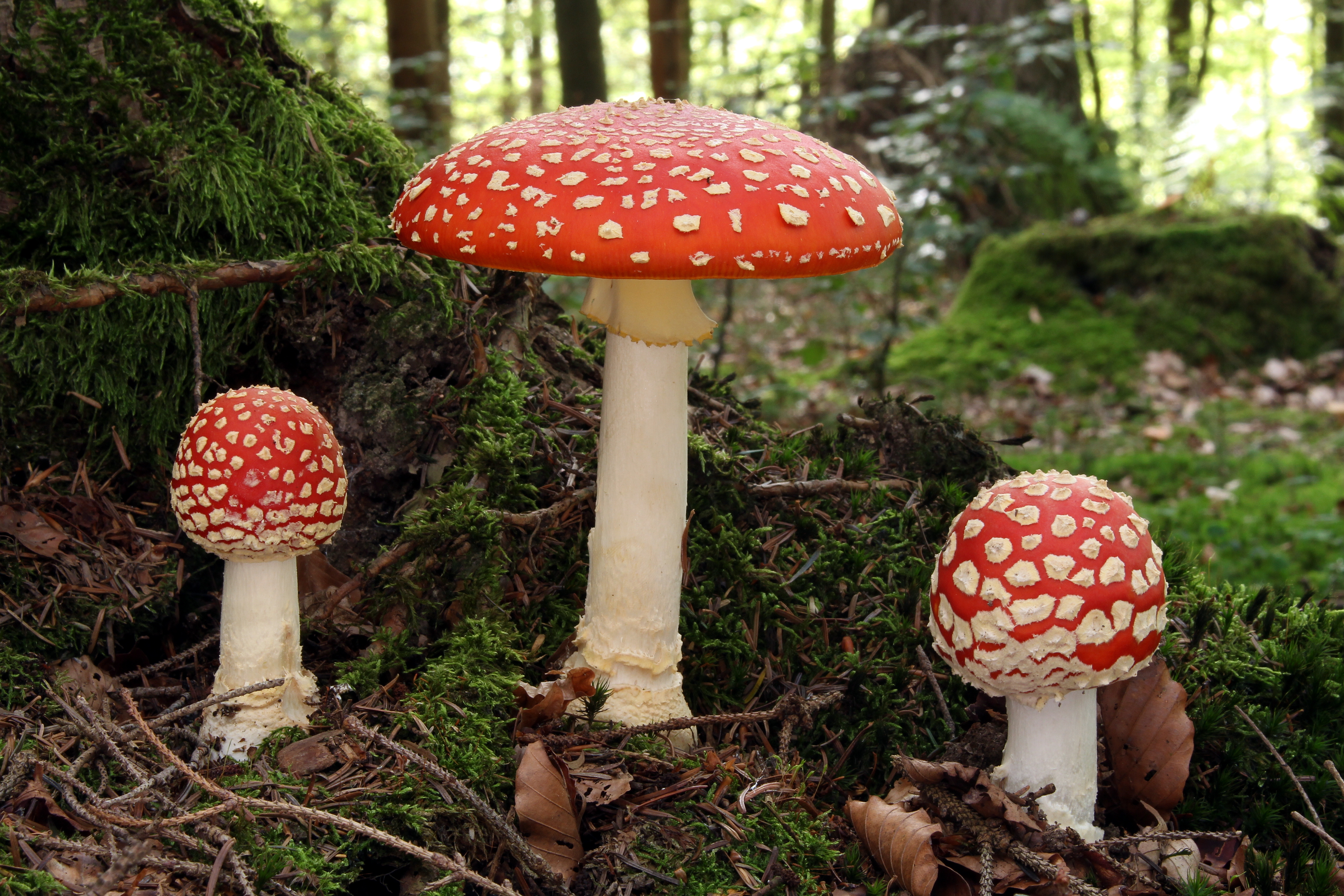
Fly agaric is recognised by a scarlet to orange cap, often dotted with white veil remnants, and pale gills.
It lives with tree roots in mycorrhizal associations, often with birch and also with conifers, helping transport nutrients.
The conspicuous mushroom appears from late summer into early winter in British woodland and heathland. It is poisonous and should not be eaten.
How big is a fly agaric?
cap up to 20 cm
What does a fly agaric grow with?
birch, pine & spruce
Where does a fly agaric grow?
woodland & heathland
When does a fly agaric appear?
late summer–early winter (UK) (Regional season, not a universal schedule)
Worth knowing
- 20 cm Cap diameter can reach about this size.
- Birch roots A frequent tree partner in mycorrhizal relationships.
- Toxic Fly agaric is poisonous and is not suitable for eating.
A mushroom above a hidden fungus
A red-capped fruiting body appears during the fruiting season, while the fungus exists beyond the visible mushroom.
Connected to tree roots
Fly agaric forms mycorrhizal relationships with trees such as birch and pine; these associations exchange nutrients between fungus and plant.
Forest and heath
Woodland Trust reports fly agaric among birch, pine and spruce in woodland and heathland on light soils in Britain.
Respect a toxic species
Fly agaric contains toxins and can cause serious reactions if consumed; its colourful appearance should never be interpreted as a sign that it is edible.
Woodland Trust describes woodland and heathland tree associations; this source does not establish a global population trend for the fungus.
Sources
Records of where it has been seen come live from GBIF; observed interactions from GloBI. Draft — not yet reviewed by a person.