SPECIES
Giant anteater
Myrmecophaga tridactyla Pending authority citation
A long snout, formidable claws and an extraordinary tongue reveal a mammal built around ants.
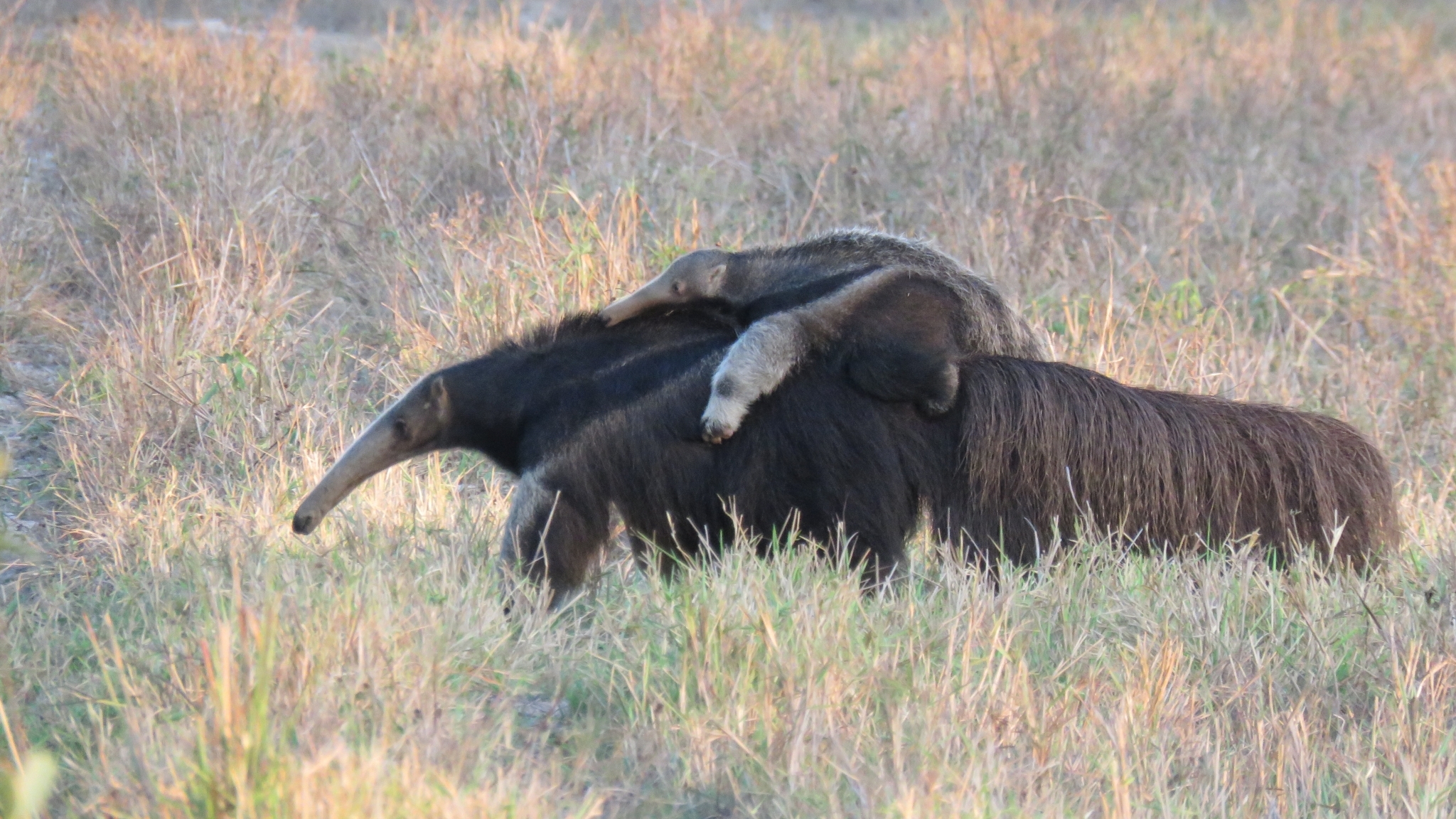
It uses strong foreclaws to open termite mounds and ant nests, then feeds rapidly.
By consuming large numbers of social insects it participates in grassland and forest food webs.
Grasslands, savannas and open forests of Central and South America.
Where does a giant anteater live?
Grasslands, savannas and open forests of Central and…
Worth knowing
- Adaptation It uses strong foreclaws to open termite mounds and ant nests, then feeds rapidly.
- Ecological role By consuming large numbers of social insects it participates in grassland and forest food webs.
- Home Grasslands, savannas and open forests of Central and South America.
How it survives
It uses strong foreclaws to open termite mounds and ant nests, then feeds rapidly.
A long snout, formidable claws and an extraordinary tongue reveal a mammal built around ants.
Why relationships matter
By consuming large numbers of social insects it participates in grassland and forest food webs.
Where it lives
Grasslands, savannas and open forests of Central and South America.
Pressures and responses
Fire, roadkill, hunting and habitat conversion.
Improve habitat connectivity and reduce road mortality.
Sources
- University of Michigan Animal Diversity Web — Myrmecophaga tridactyla
- GBIF — Myrmecophaga tridactyla accepted taxon
- Smithsonian National Zoo — Giant Anteater
- San Diego Zoo — Giant Anteater
Records of where it has been seen come live from GBIF; observed interactions from GloBI. Draft — not yet reviewed by a person.