SPECIES
Giant oceanic manta ray
Mobula birostris Pending authority citation
A winged ocean giant flies beneath waves while filtering near-invisible plankton.
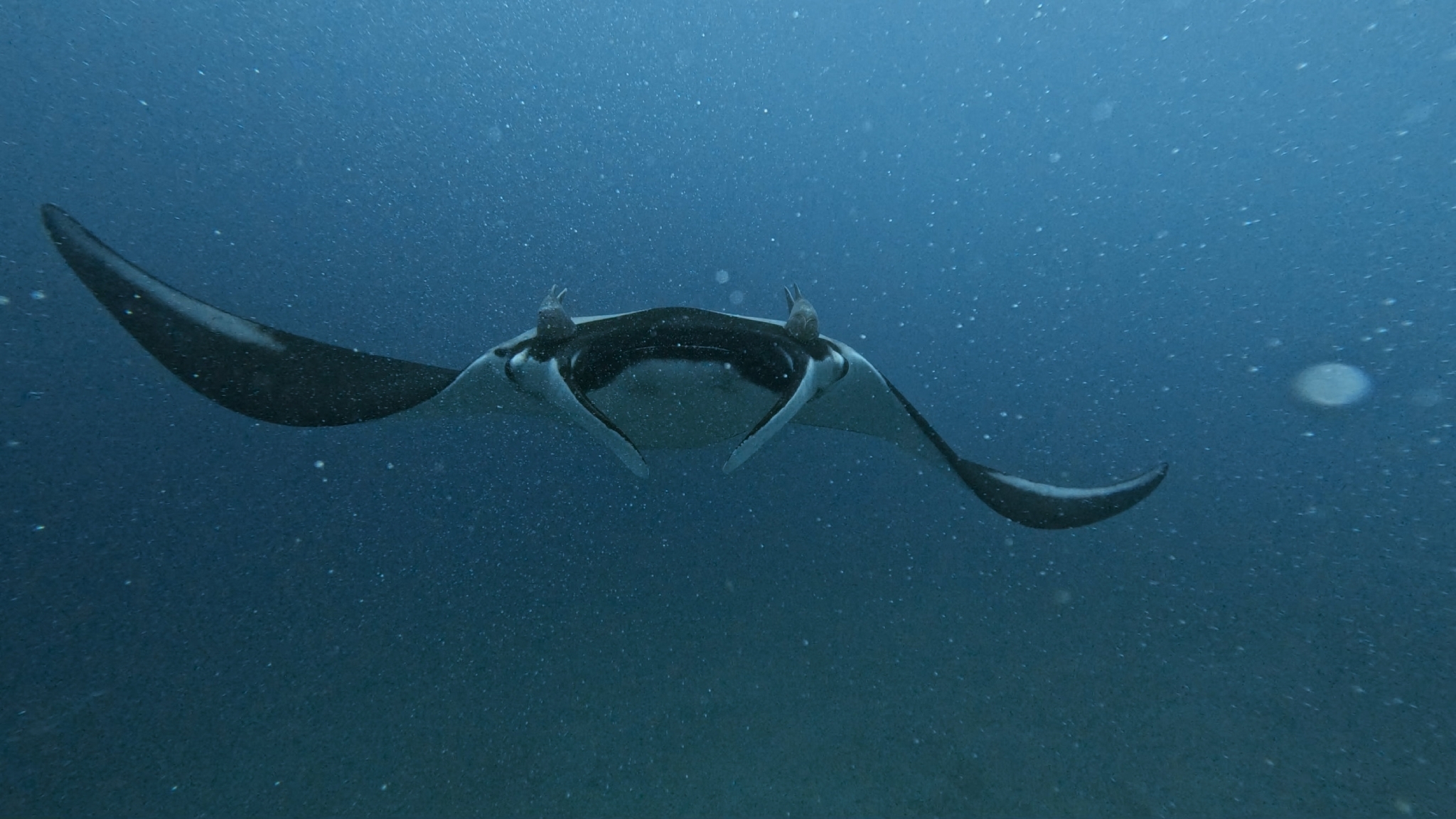
Cephalic fins guide water toward its wide mouth.
Plankton-rich currents support this long-ranging filter feeder.
Tropical and subtropical ocean waters with some coastal aggregation sites.
Where does a giant oceanic manta ray live?
Tropical and subtropical ocean waters with some coastal…
Worth knowing
- Adaptation Cephalic fins guide water toward its wide mouth.
- Ecological role Plankton-rich currents support this long-ranging filter feeder.
- Home Tropical and subtropical ocean waters with some coastal aggregation sites.
How it survives
Cephalic fins guide water toward its wide mouth.
A winged ocean giant flies beneath waves while filtering near-invisible plankton.
Why relationships matter
Plankton-rich currents support this long-ranging filter feeder.
Where it lives
Tropical and subtropical ocean waters with some coastal aggregation sites.
Pressures and responses
Targeted fishing, bycatch and disturbance at gathering areas.
Protect aggregation sites and reduce fishing mortality.
Sources
- Wikipedia species-account reference, not independently claim-verified — Mobula birostris
- GBIF — Mobula birostris accepted taxon
- Manta Trust — Trade adds pressure
- NOAA Fisheries — Incidental capture is a major pressure
- NOAA Fisheries — Giant manta ray ESA listing
Records of where it has been seen come live from GBIF; observed interactions from GloBI. Draft — not yet reviewed by a person.