SPECIES
Greater blue-ringed octopus
Hapalochlaena lunulata Pending authority citation
Electric-blue rings appear on a tiny reef octopus as an unmistakable warning.
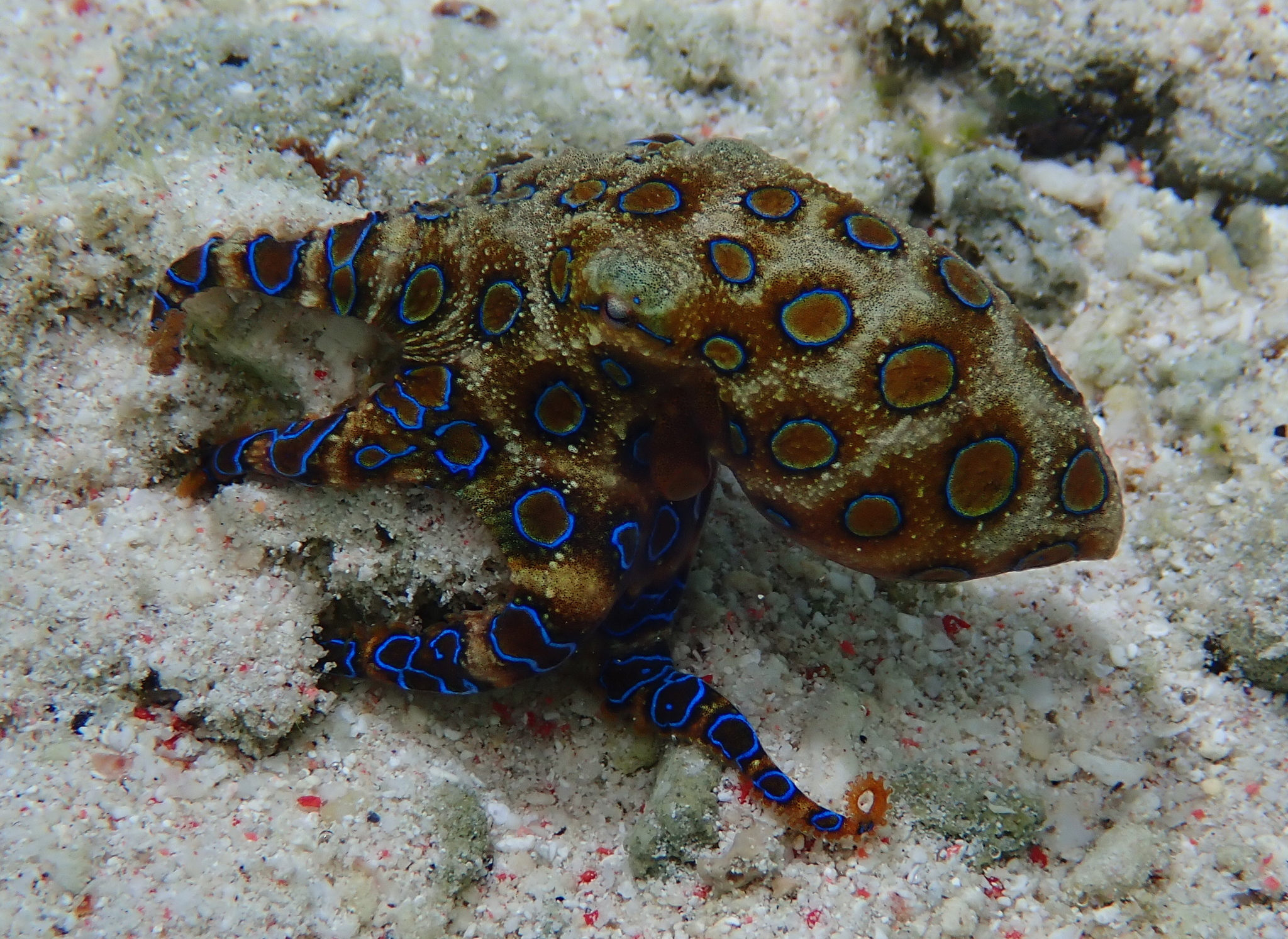
The vivid rings may become more visible during disturbance; it otherwise relies on camouflage.
It hunts small crustaceans in crevices and reef environments.
Shallow tropical waters of the western Pacific and Indian oceans.
Where does a greater blue-ringed octopus live?
Shallow tropical waters of the western Pacific and…
Worth knowing
- Adaptation The vivid rings may become more visible during disturbance; it otherwise relies on camouflage.
- Ecological role It hunts small crustaceans in crevices and reef environments.
- Home Shallow tropical waters of the western Pacific and Indian oceans.
How it survives
The vivid rings may become more visible during disturbance; it otherwise relies on camouflage.
Electric-blue rings appear on a tiny reef octopus as an unmistakable warning.
Why relationships matter
It hunts small crustaceans in crevices and reef environments.
Where it lives
Shallow tropical waters of the western Pacific and Indian oceans.
Pressures and responses
Local habitat damage and unsafe wildlife interactions.
Protect reefs and keep a respectful distance from wild marine animals.
Sources
- University of Michigan Animal Diversity Web — Hapalochlaena lunulata
- GBIF — Hapalochlaena lunulata accepted taxon
- Western Australian Museum — Greater blue-ringed octopus
- ScienceDirect 2024 — Biology and ecology of Hapalochlaena lunulata
Records of where it has been seen come live from GBIF; observed interactions from GloBI. Draft — not yet reviewed by a person.