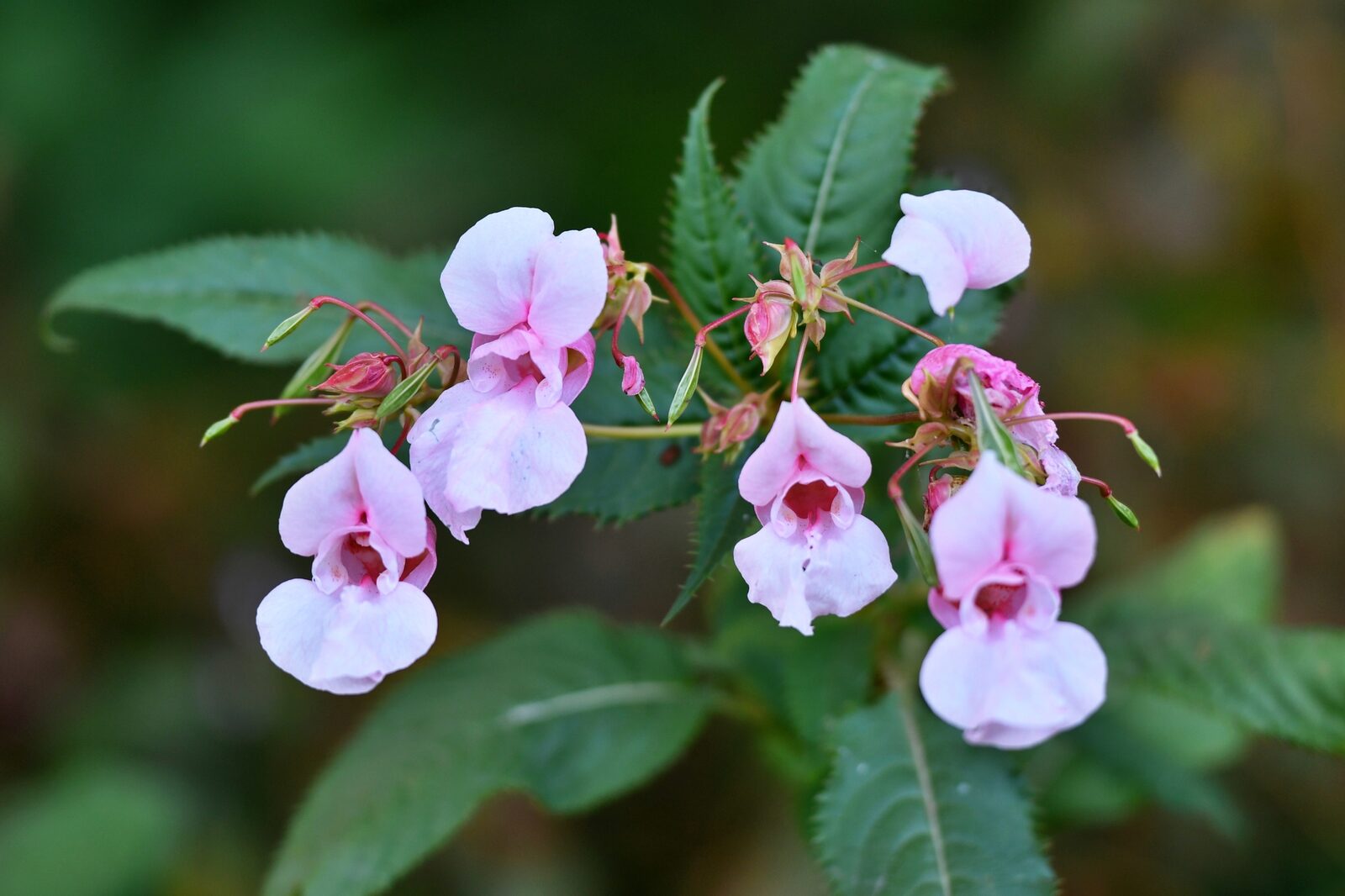
Himalayan balsam
Impatiens glandulifera
A tall pink-flowered plant whose seed pods explode when touched; it spreads along rivers.
- Status
- IUCN Red List
- Where
- 44 countries
Himalayan balsam came to Britain in the 1800s as a garden plant and now lines rivers across Europe. Its ripe seed pods burst open when touched, flinging the seeds several metres.
People have shared 58,129 records of the himalayan balsam with GBIF, from 44 countries, most of them from United Kingdom, Russia and Canada. Records collected by GloBI show it eating 1 different kinds of animals and plants.
Where people see the Himalayan balsam
People have shared 58,129 records from 44 countries.
Records show where people have seen it and shared it, not its full range. Country names open their page in Atlas.
When it is seen
Records per month in the northern hemisphere. More people outdoors also means more records.
Watch and listen
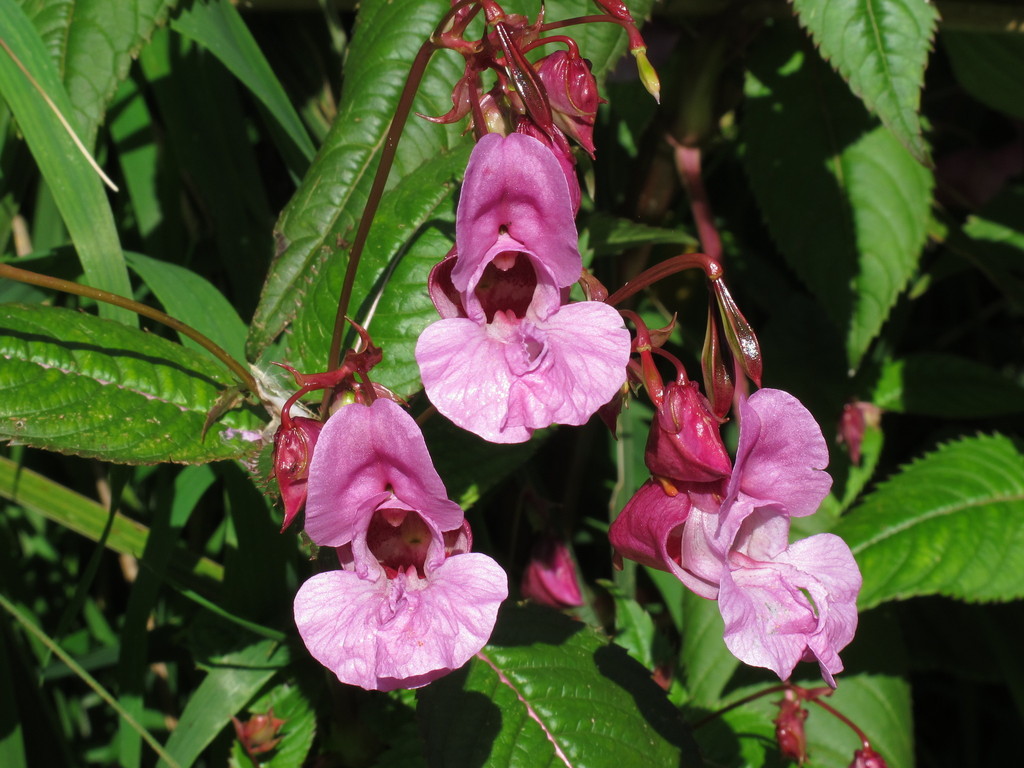
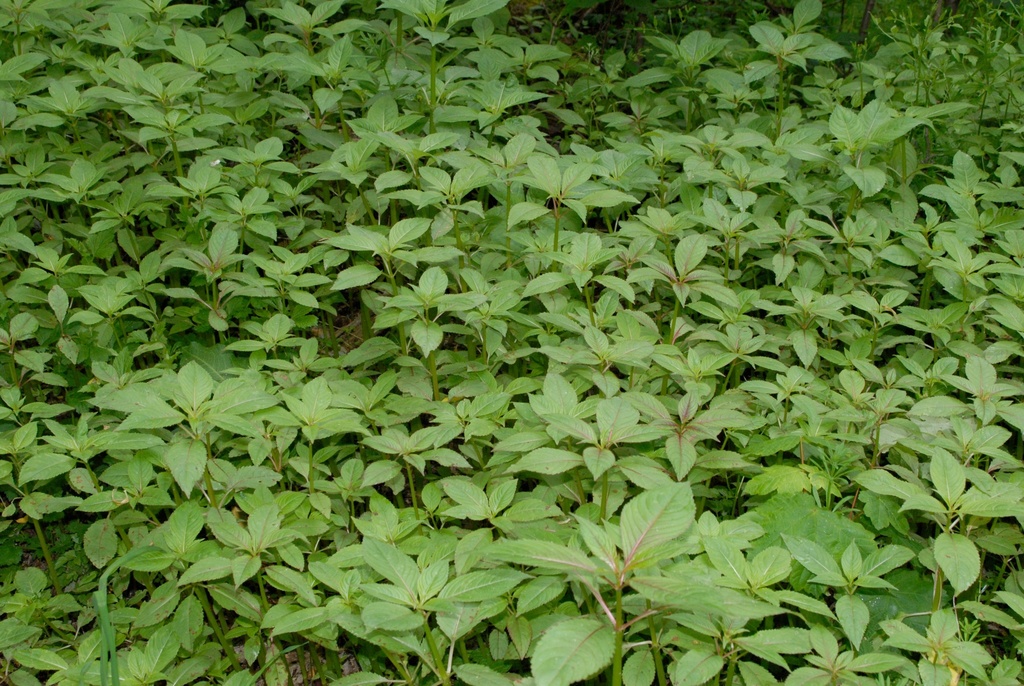
Seen a Himalayan balsam?
Share your photo on iNaturalist. Other naturalists help confirm it, and the record goes to GBIF, where scientists use it and where the maps on this page come from.
Questions people ask
What does the himalayan balsam eat?
The himalayan balsam has been recorded eating 1 different kinds of animals and plants, most of them snails and slugs. The ones recorded most often are ; records include animals eaten as carrion. Source: GloBI.
Where does the himalayan balsam live?
People have recorded it in 44 countries; the most records come from United Kingdom, Russia, Canada, Germany and Austria. Records show where people have seen it, not its full range.
When is the himalayan balsam seen most?
In the northern hemisphere, the most records are made in August and the fewest in January. More people outdoors also means more records.
Sources and photo credits
- Wikipedia · Impatiens glandulifera
- GBIF · Impatiens glandulifera, 58,129 human observations
- GloBI · recorded interactions of Impatiens glandulifera
- Wikidata · Himalayan balsam (Q158035)
- Himalayan balsam (Impatiens glandulifera): Paweł Ryszawa, CC BY 4.0
- Himalayan balsam (Impatiens glandulifera): John Barkla, CC BY 4.0
- Himalayan balsam (Impatiens glandulifera): Jon Sullivan, CC BY 4.0
Records show where people have seen and shared the himalayan balsam, not its full range, and some countries and months are recorded far more than others. The food web lists interactions that studies have recorded somewhere in the world (GloBI), not everything it eats in one place.
Checked 2026-11-21.