SPECIES
Orca
Orcinus orca (Linnaeus, 1758)
A highly social ocean hunter, found in every ocean on Earth — the most widely distributed of all whales and dolphins.
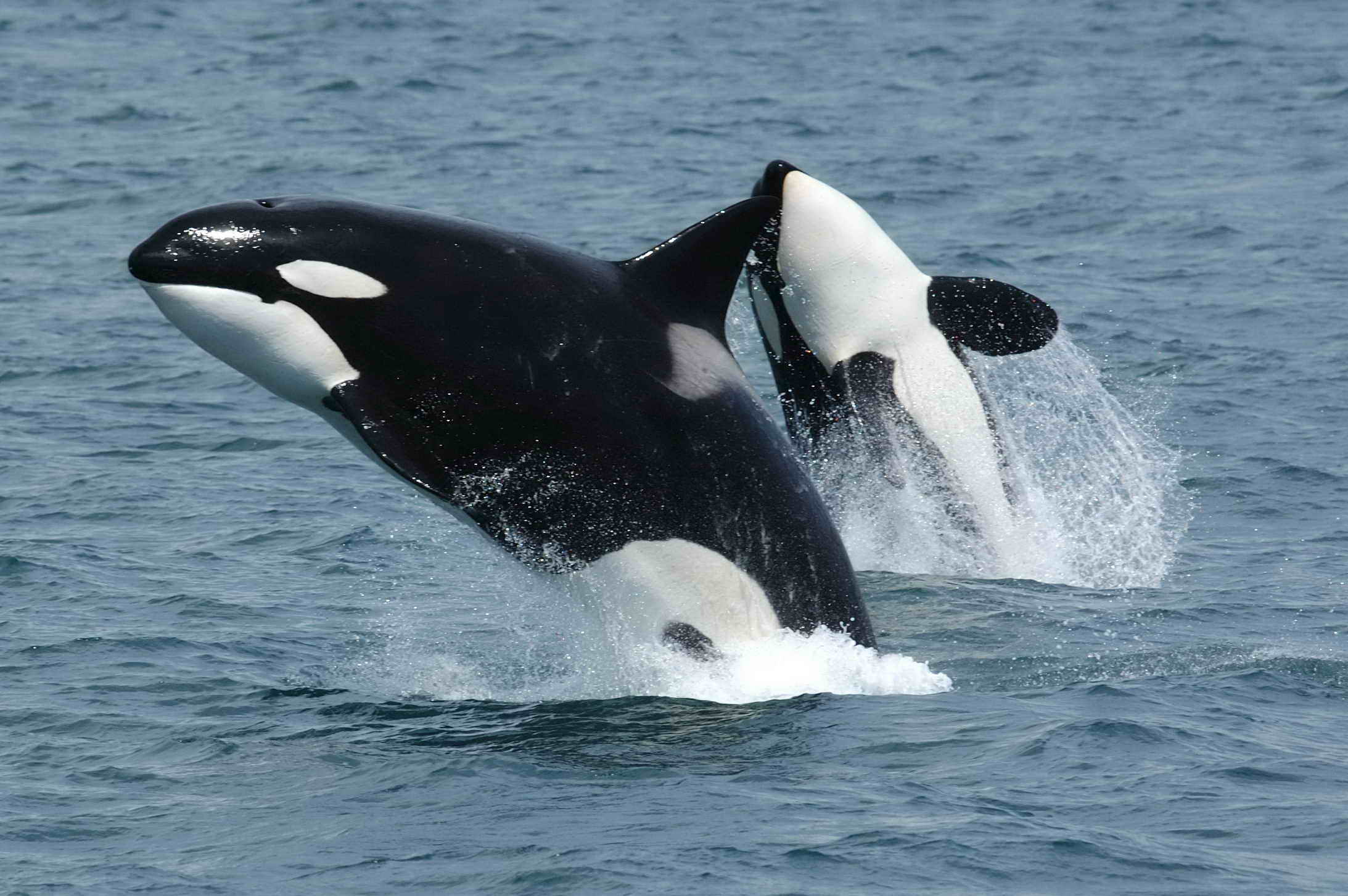
Orcas, also called killer whales, are the largest members of the dolphin family. They are most abundant in cold waters such as Antarctica, the North Atlantic and the North Pacific, but they also live in tropical and subtropical seas.
They live in social groups called pods, usually a few to 20 or more closely related whales, and communicate in clicks, whistles and pulsed calls. The pulsed calls are unique to each population — learned and culturally passed on between individuals.
What an orca eats depends on where it lives and which population it belongs to. Off Norway they feed mainly on herring and other schooling fish; in Antarctic waters on minke whales, seals or toothfish; off New Zealand some take stingrays and sharks. Often they hunt as a team, like a pack of wolves.
How big is an orca?
up to 9.8 m (32 ft)
What does an orca eat?
fish, seals, whales, squid (Diet differs by population and region: some eat mostly salmon or herring, others seals and whales.)
Where does an orca live?
every ocean
How long does an orca live?
30–90 years (Average in the wild: about 30 years for males, about 50 for females; males can live to at least 60, females to at least 90.)
Worth knowing
- 90 years Female orcas can live at least this long in the wild.
- Menopause Killer whales are among the few species known to go through menopause — as humans do.
- 74 Southern Resident killer whales counted in July 2025 — one endangered population.
Different orcas, different lives
NOAA Fisheries describes three main types of killer whales in the North Pacific. Residents eat mostly fish, primarily salmon; the endangered Southern Residents prefer Chinook salmon.
North Pacific transients hunt seals, sea lions, porpoises, dolphins and other whales. Their dorsal fins are straighter; residents' are more rounded.
North Pacific offshore killer whales eat fish, including sharks. They have the largest range of any community and often occur more than 9 miles (about 14.5 km) offshore.
A slow, long life
A female is typically pregnant for 15 to 18 months and gives birth to a single calf, in any month of the year.
The calf nurses exclusively for at least a year and stays close to its mother for at least the first two years.
Females mature between 10 and 13 years old. In some populations a female gives birth about every five years over roughly 25 years.
What presses on them
NOAA Fisheries lists chemical contaminants, disturbance from vessel traffic and noise, entanglement in fishing gear, food limitation and oil spills as threats.
When vessels are present, killer whales hunt less and travel more.
Overfishing and habitat loss have reduced the prey available to some killer whale populations.
What people are doing
NOAA Fisheries' conservation work for killer whales includes supporting salmon restoration, reducing contaminants, preventing oil spills and developing vessel regulations to reduce whale-watching harassment; part of it is aimed at the endangered Southern Residents.
NOAA Fisheries asks people to choose land-based whale watching, keep their distance, and report marine life in distress.
Sources
Records of where it has been seen come live from GBIF; observed interactions from GloBI. Draft — not yet reviewed by a person.