SPECIES
Quokka
Setonix brachyurus Pending authority citation
The small Australian marsupial nicknamed the world's happiest animal has a more complicated wild life than its smile suggests.
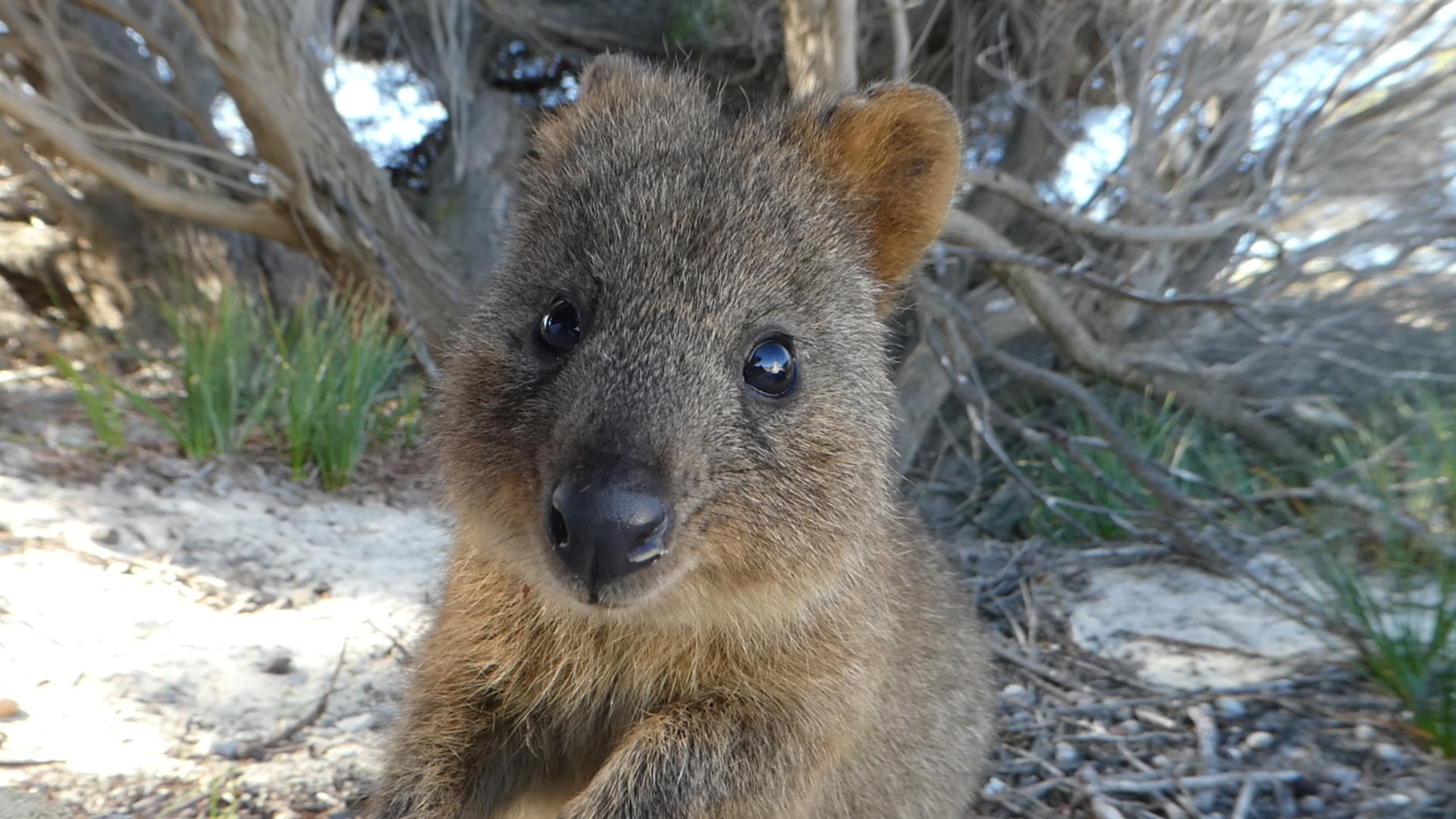
Quokkas are mainly active at night and move through dense vegetation for cover.
They graze and browse on native plants; access to moist vegetation is important in dry seasons.
Western Australia, especially Rottnest Island and limited mainland habitats.
Where does a quokka live?
Western Australia, especially Rottnest Island and…
Worth knowing
- Adaptation Quokkas are mainly active at night and move through dense vegetation for cover.
- Ecological role They graze and browse on native plants; access to moist vegetation is important in dry seasons.
- Home Western Australia, especially Rottnest Island and limited mainland habitats.
How it survives
Quokkas are mainly active at night and move through dense vegetation for cover.
The small Australian marsupial nicknamed the world's happiest animal has a more complicated wild life than its smile suggests.
Why relationships matter
They graze and browse on native plants; access to moist vegetation is important in dry seasons.
Where it lives
Western Australia, especially Rottnest Island and limited mainland habitats.
Pressures and responses
Introduced predators, changing fire regimes and habitat loss on the mainland.
Maintain predator controls and native plant communities; never feed or handle wild quokkas for photographs.
Sources
- University of Michigan Museum of Zoology — Animal Diversity Web, Setonix brachyurus
- GBIF — Setonix brachyurus accepted taxon
- Australian Museum — Predators on the mainland
- Rottnest Island visitor guidance — Should visitors feed quokkas?
- Western Australia Government legislation — Protected island wildlife
Records of where it has been seen come live from GBIF; observed interactions from GloBI. Draft — not yet reviewed by a person.