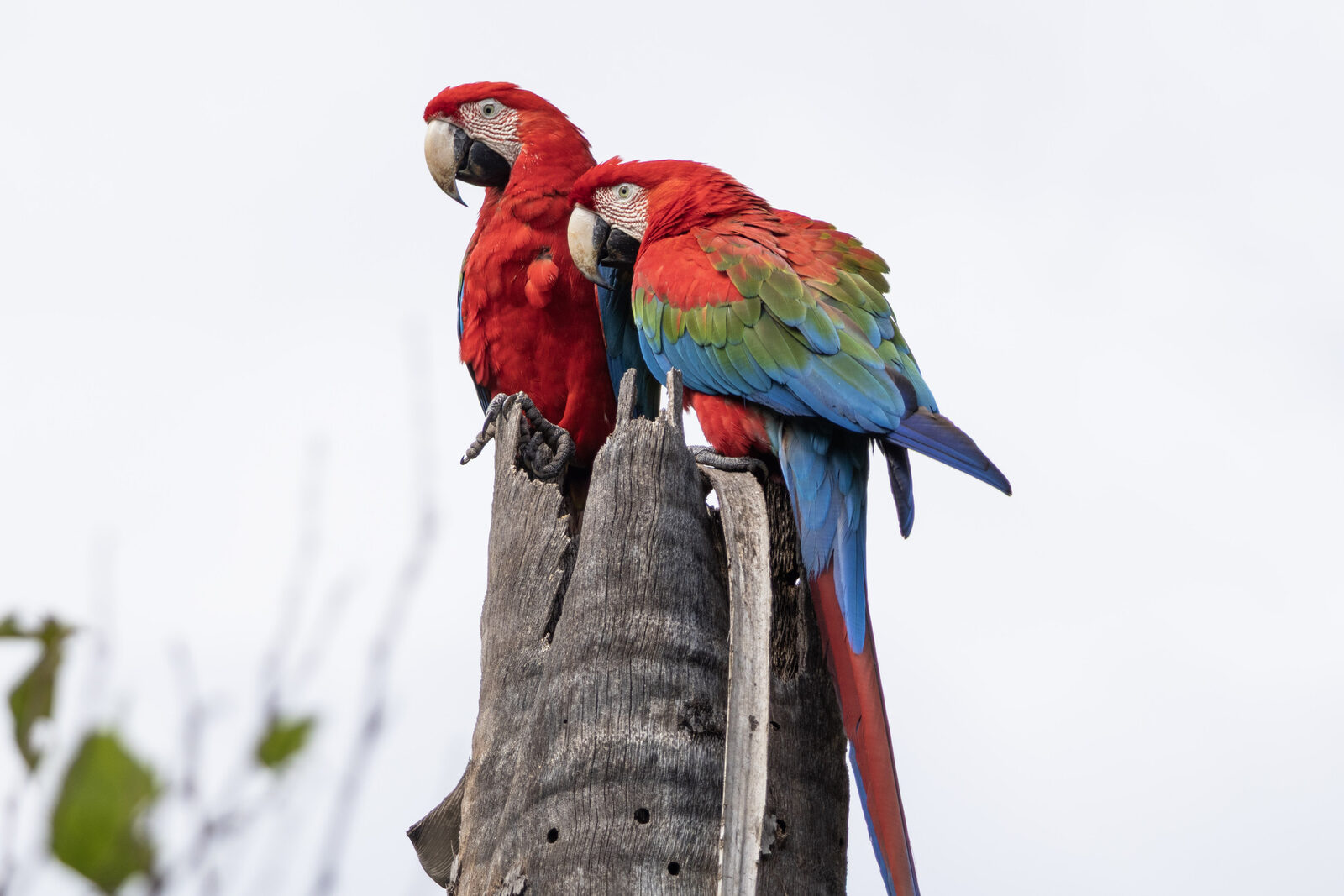
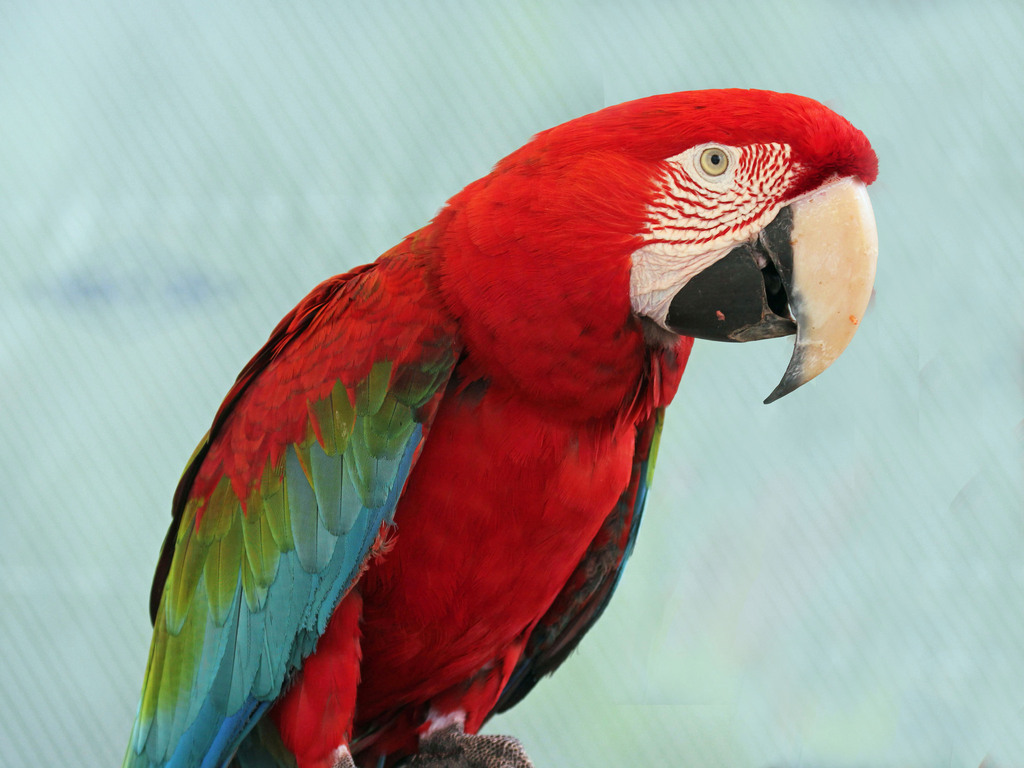
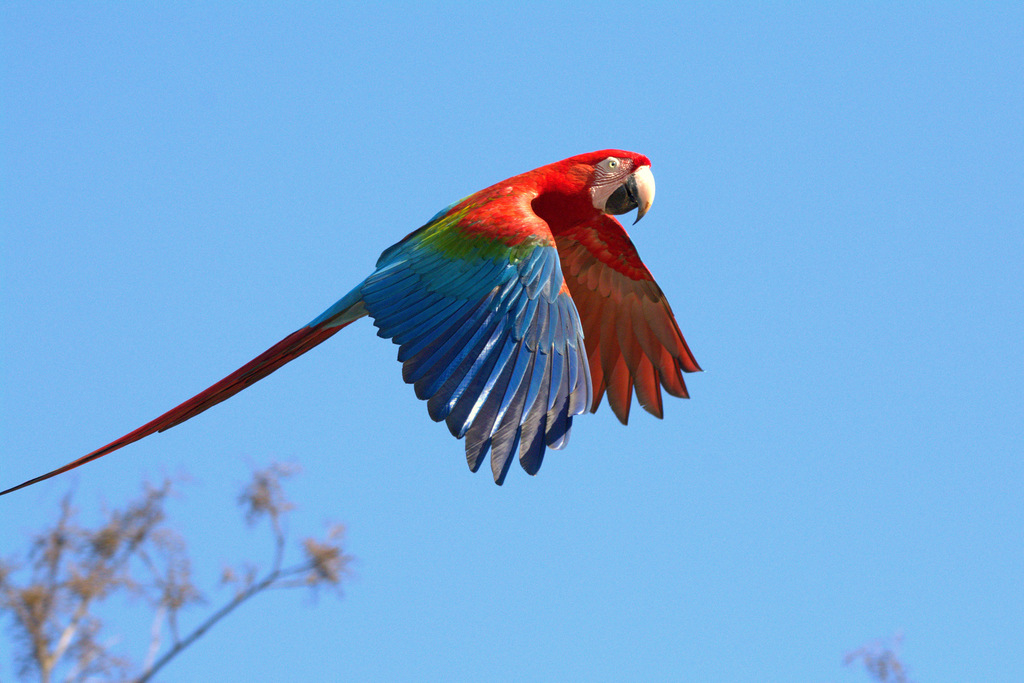
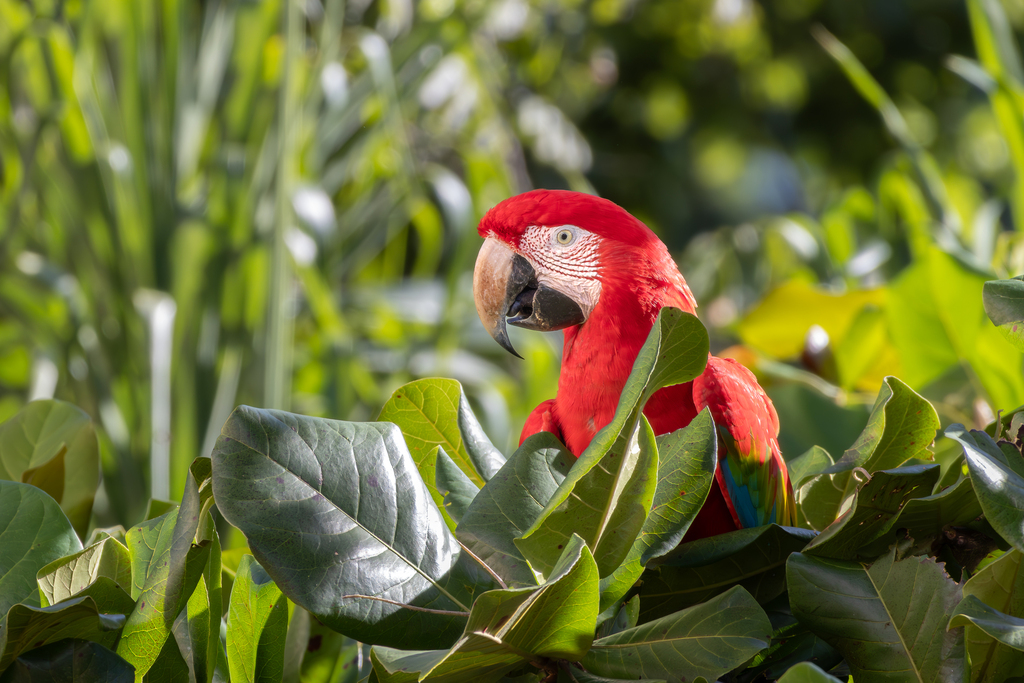
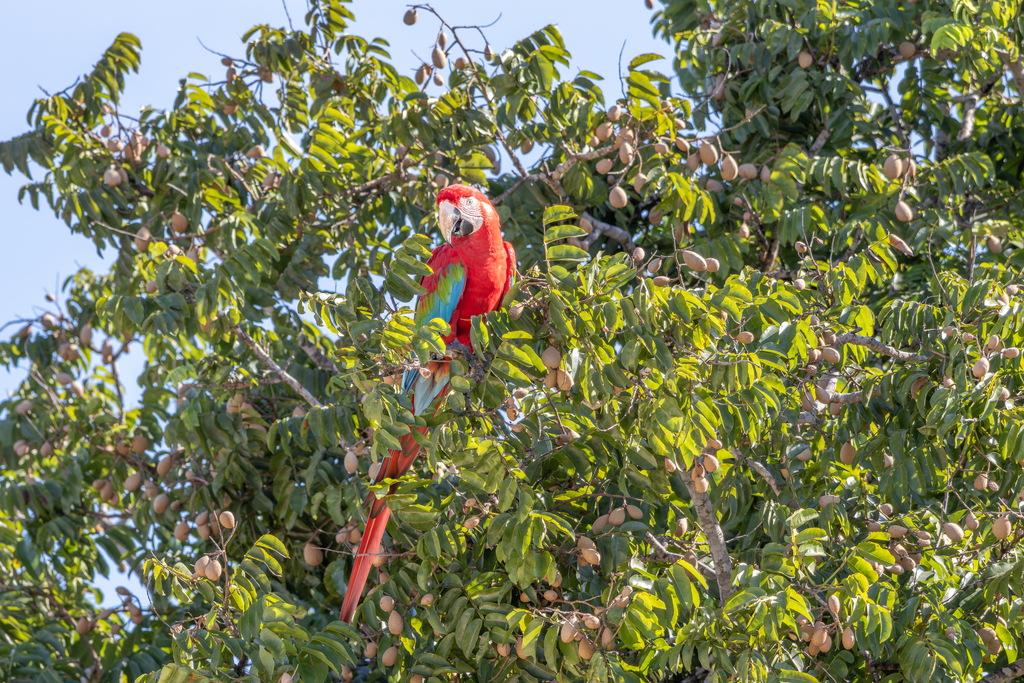
Red-and-green macaw
Ara chloropterus
One of the largest macaws; flocks gather at clay banks along rivers to eat the soil.
- Status
- Least Concern IUCN Red List
- Eats
- pekea nut, Langsdorf's copaifera, xylopia aromatica and 12 more
- Where
- 27 countries
In the western Amazon, red-and-green macaws gather in large flocks at riverbanks of exposed clay and eat the soil. Scientists think the clay gives them sodium that is scarce in their diet of seeds and fruit.
People have shared 39,358 records of the red-and-green macaw with GBIF, from 27 countries, most of them from Brazil, Peru and Guyana. Records collected by GloBI show it eating 15 different kinds of animals and plants.
What the red-and-green macaw eats, and what eats it
Studies have recorded it eating 15 kinds of animals and plants. Tap any of them to follow the food chain.
- Plants 14
Red-and-green macaw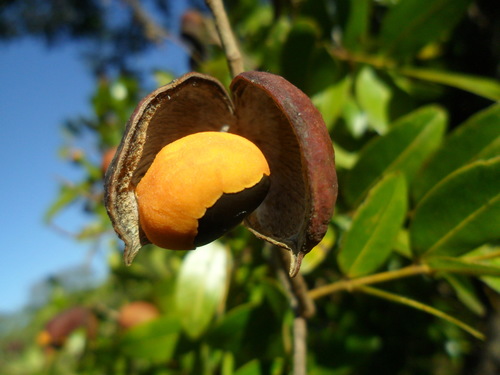

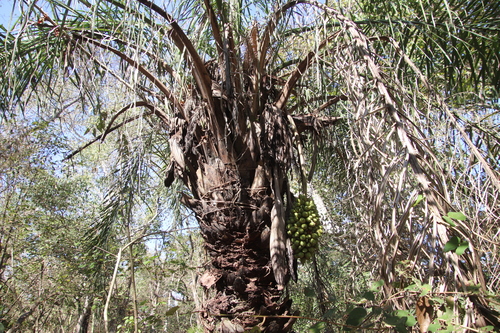
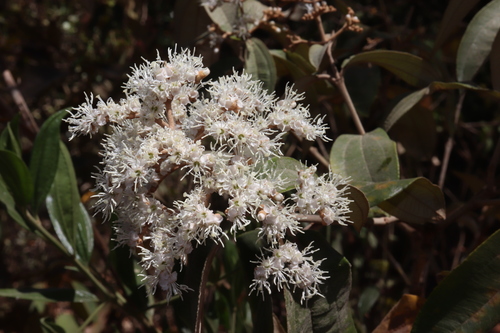

Records from studies worldwide, collected by GloBI. They include animals eaten as carrion, and they are not everything it eats in one place.
Where people see the red-and-green macaw
People have shared 39,358 records from 27 countries.
Records show where people have seen it and shared it, not its full range. Country names open their page in Atlas.
When it is seen
Records per month in the southern hemisphere. More people outdoors also means more records.
Watch and listen
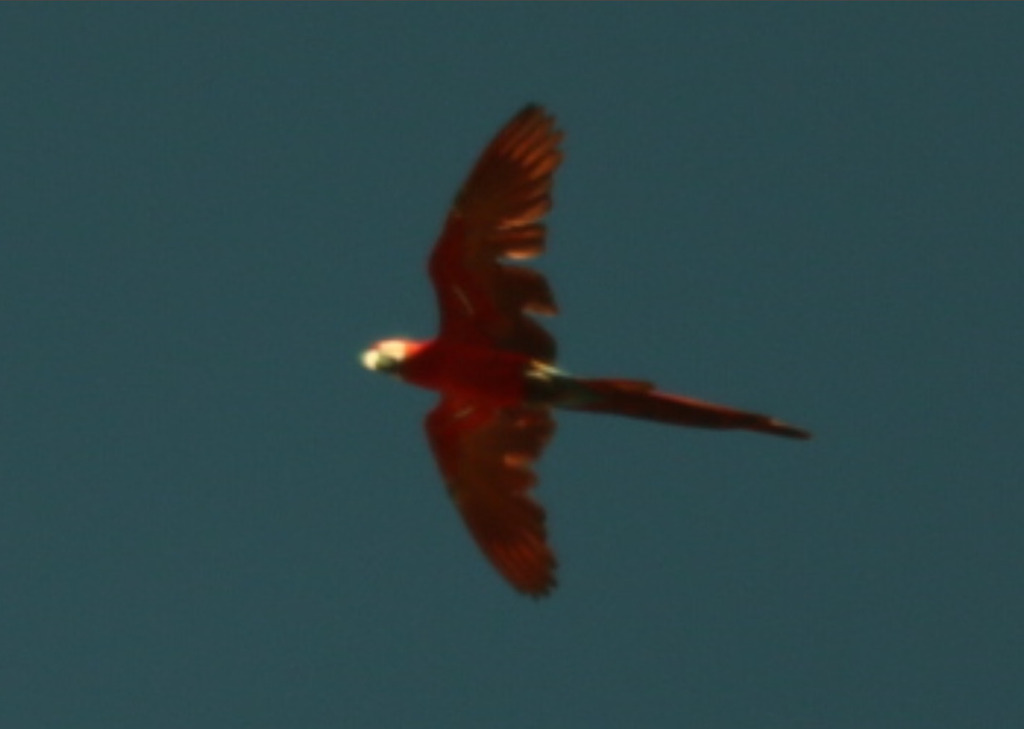
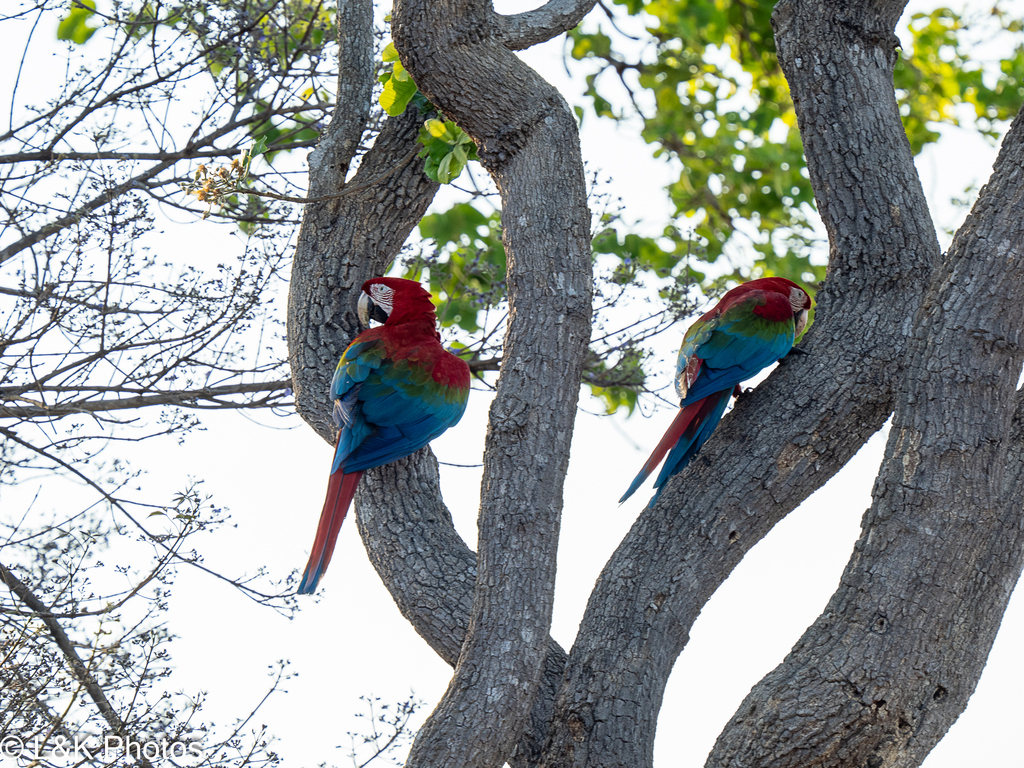
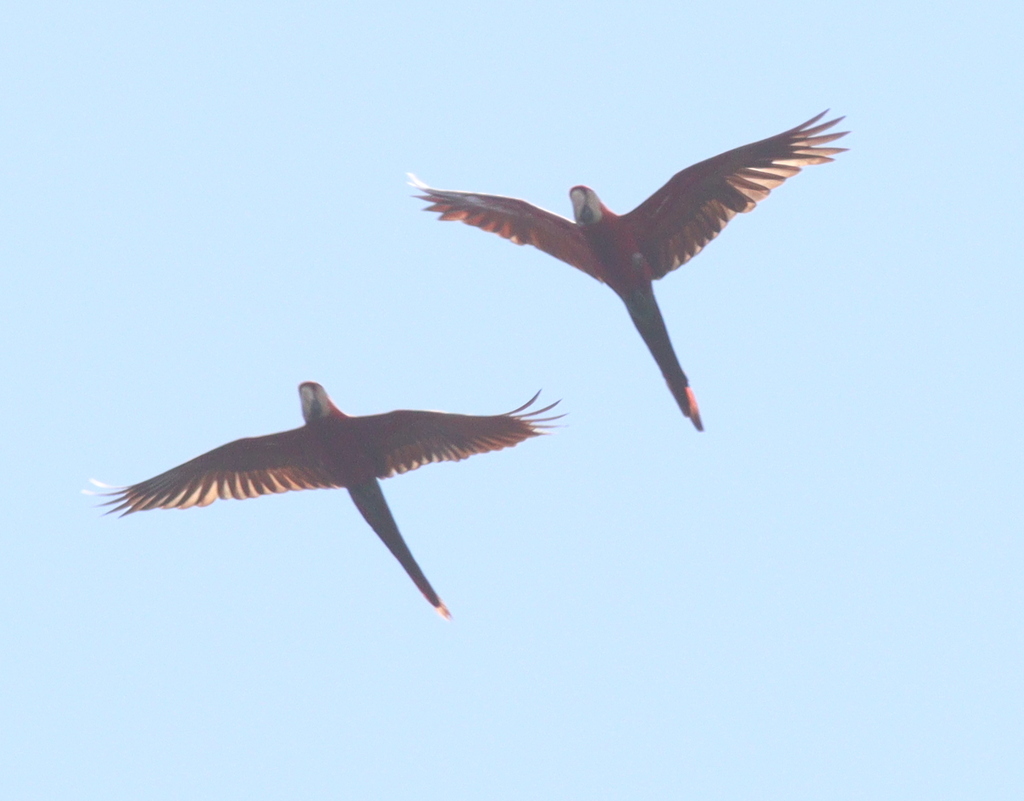
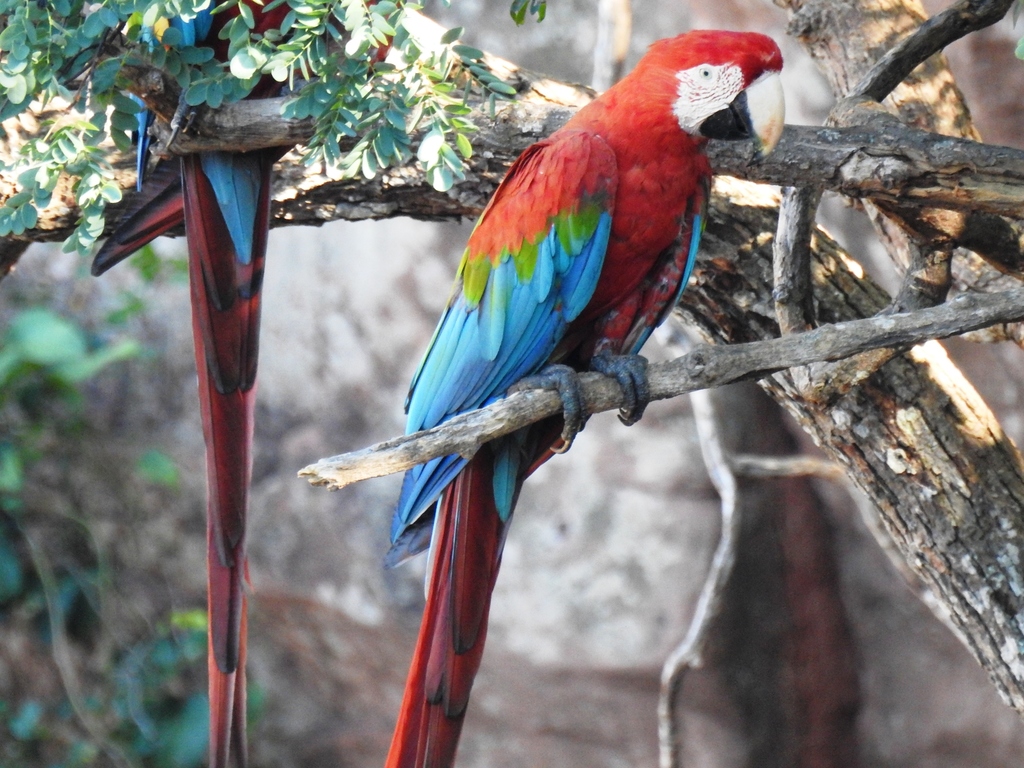
Its closest relatives
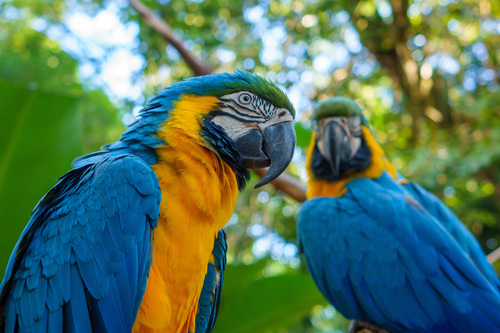
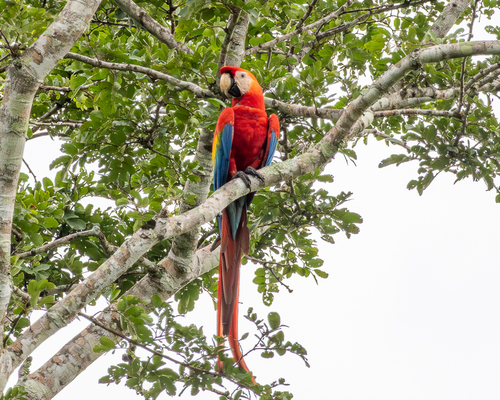
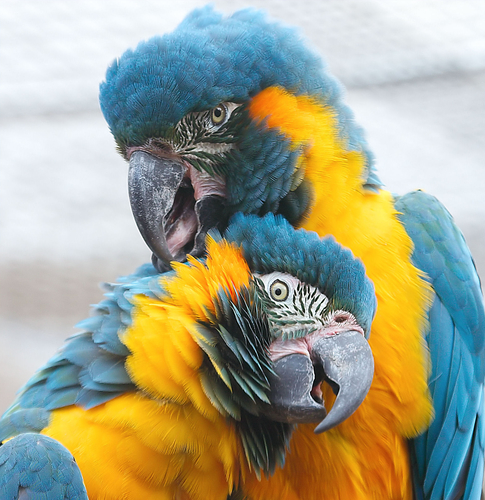
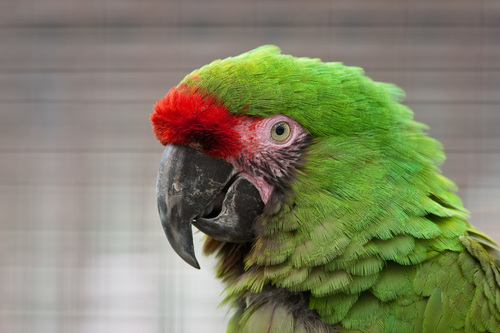
The other species of the genus Ara.
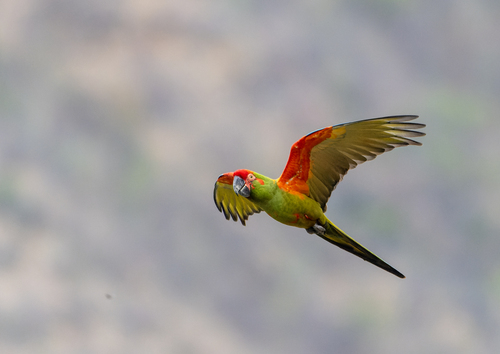
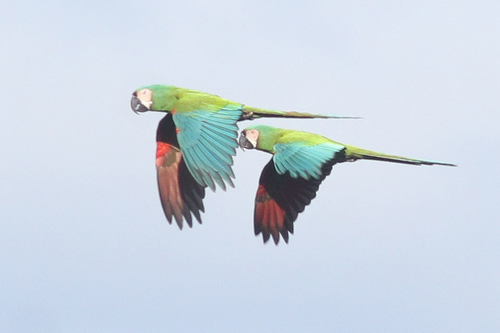
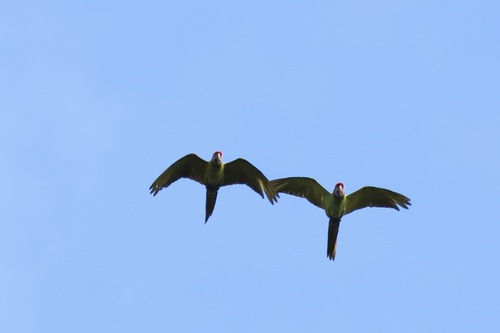
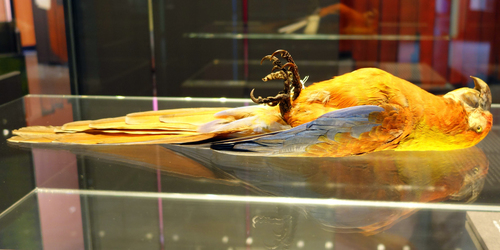
Seen a red-and-green macaw?
Share your photo on iNaturalist. Other naturalists help confirm it, and the record goes to GBIF, where scientists use it and where the maps on this page come from.
Questions people ask
What does the red-and-green macaw eat?
The red-and-green macaw has been recorded eating 15 different kinds of animals and plants, most of them plants. The ones recorded most often are pekea nut, langsdorf's copaifera, xylopia aromatica, mountain-cabbage and sandpaper tree; records include animals eaten as carrion. Source: GloBI.
Where does the red-and-green macaw live?
People have recorded it in 27 countries; the most records come from Brazil, Peru, Guyana, Venezuela and Bolivia. Records show where people have seen it, not its full range.
When is the red-and-green macaw seen most?
In the southern hemisphere, the most records are made in October and the fewest in February. More people outdoors also means more records.
What are the red-and-green macaw's closest relatives?
It shares the genus Ara with blue-and-yellow macaw, scarlet macaw, blue-throated macaw, military macaw and red-fronted macaw.
Sources and photo credits
- Wikipedia · Red-and-green macaw
- GBIF · Ara chloropterus, 39,358 human observations
- GloBI · recorded interactions of Ara chloropterus
- Wikidata · Red-and-green macaw (Q739089)
- Red-and-green macaw (Ara chloropterus): Luciano Silveira, CC BY-SA 4.0
- Red-and-green macaw (Ara chloropterus): DickDaniels, CC BY-SA 4.0
- Red-and-green macaw (Ara chloropterus), Sidrolândia, BR-MS, BR: NINA WENÓLI, CC0
- Red-and-green macaw (Ara chloropterus), Arinos, BR-MG, BR: Francisco V. Bezerra Neto, CC BY-SA 4.0
- Red-and-green macaw (Ara chloropterus), Arinos, BR-MG, BR: Francisco V. Bezerra Neto, CC BY-SA 4.0
- Red-and-green macaw (Ara chloropterus), Brazil: Wallace Carneiro Almeida, CC BY 4.0
- Red-and-green macaw (Ara chloropterus), Aquidauana, BR-MS, BR: lallen, CC0
- Red-and-green macaw (Ara chloropterus), Cuiaba, BR-MT, BR: Jan Ebr & Ivana Ebrová, CC BY 4.0
- Red-and-green macaw (Ara chloropterus), Mato Grosso do Sul, BR: Pedro Henrique Maloso Ramos, CC BY 4.0
- Langsdorf's copaifera: Márcia Martins, CC BY 4.0
- Sandpaper tree: nasua, CC BY 4.0
- Urucuri palm: Millie Basden, CC BY 4.0
- Miconia albicans: alejandrozab, CC BY 4.0
- Ambay pumpwood: Conrado Pável de Oliveira, CC BY 4.0
- Blue-and-yellow macaw: Frank Dietze, CC BY 4.0
- Scarlet macaw: NINA WENÓLI, CC0
- Blue-throated macaw: David Friel, CC BY 4.0
- Military macaw: Arjan Haverkamp, CC BY 4.0
- Red-fronted macaw: David F. Belmonte, CC BY 4.0
- Chestnut-fronted macaw: Jan Ebr & Ivana Ebrová, CC BY 4.0
- Great green macaw: er-birds, CC BY 4.0
- Cuban macaw: Etemenanki3, CC BY-SA 4.0
Records show where people have seen and shared the red-and-green macaw, not its full range, and some countries and months are recorded far more than others. The food web lists interactions that studies have recorded somewhere in the world (GloBI), not everything it eats in one place.
Checked 2026-11-21.