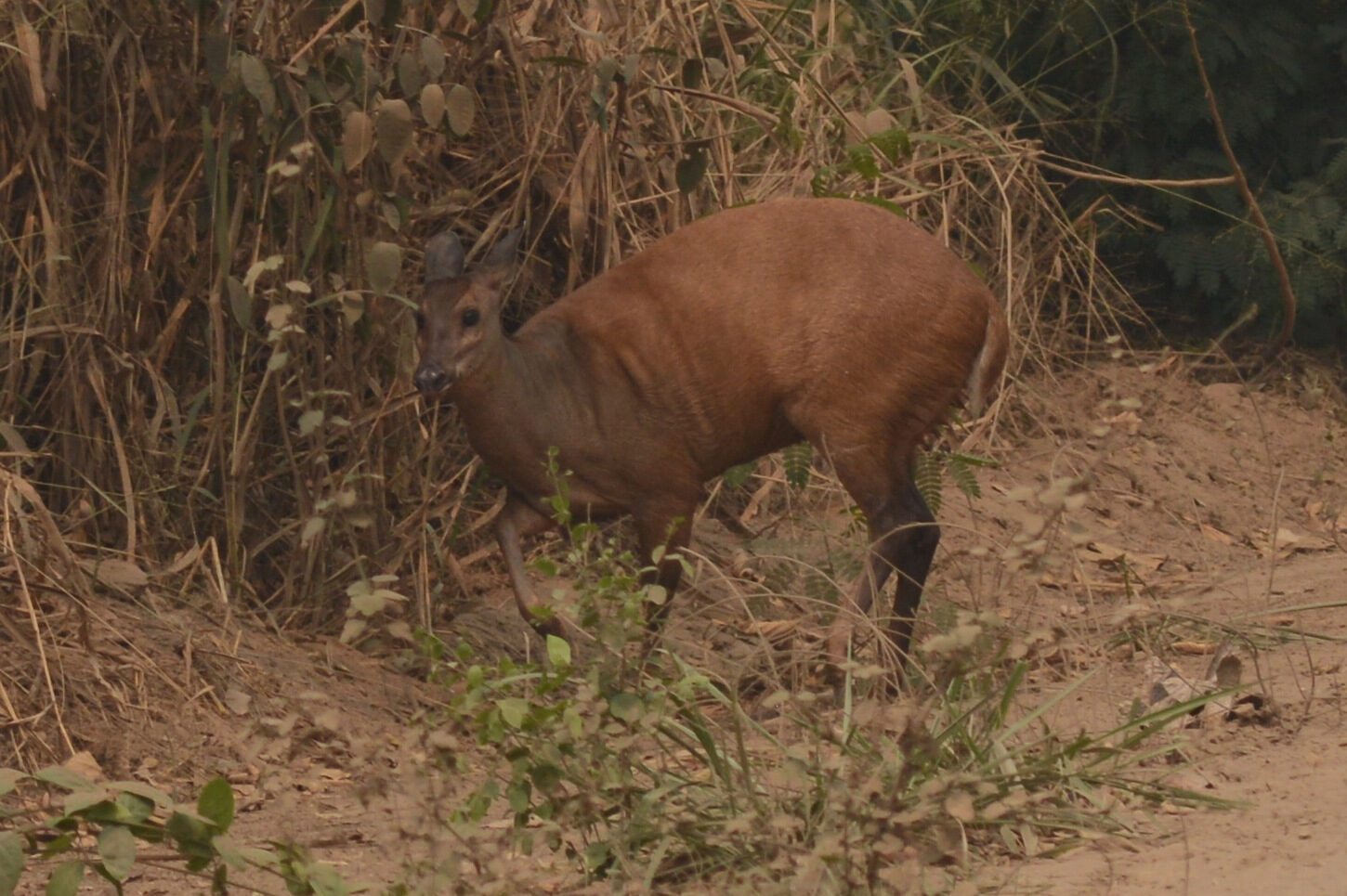
Red brocket
Mazama americana
- Status
- Data Deficient IUCN Red List
- Eats
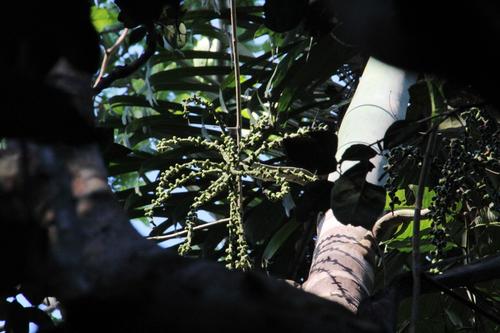
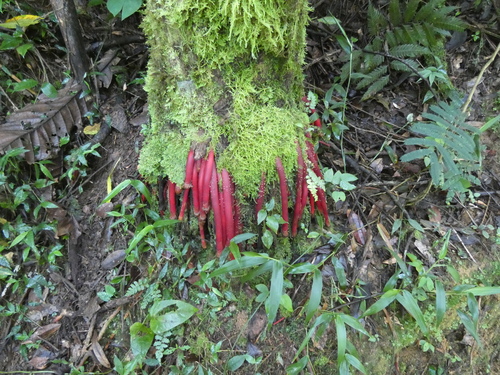
- assai palm, muriti, cashapona and 64 more
- Where
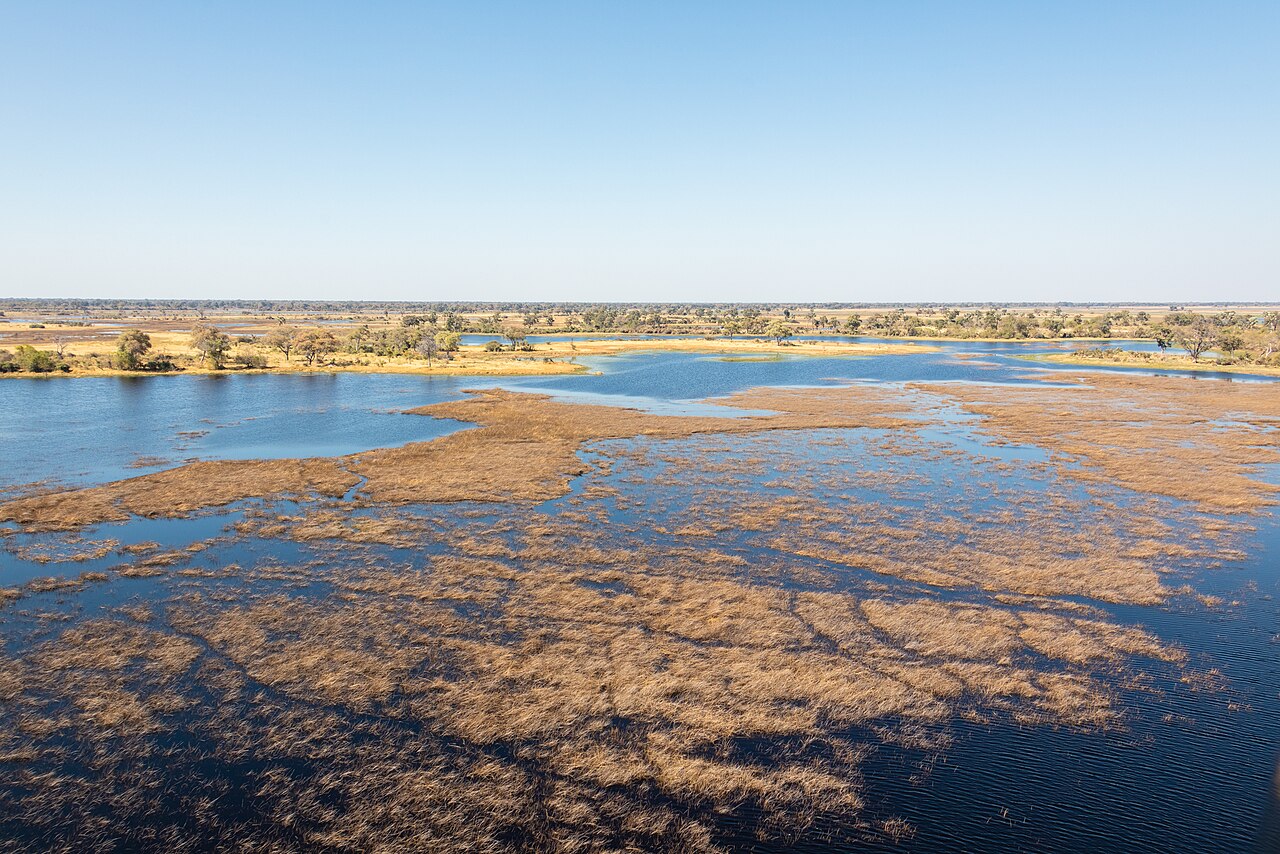
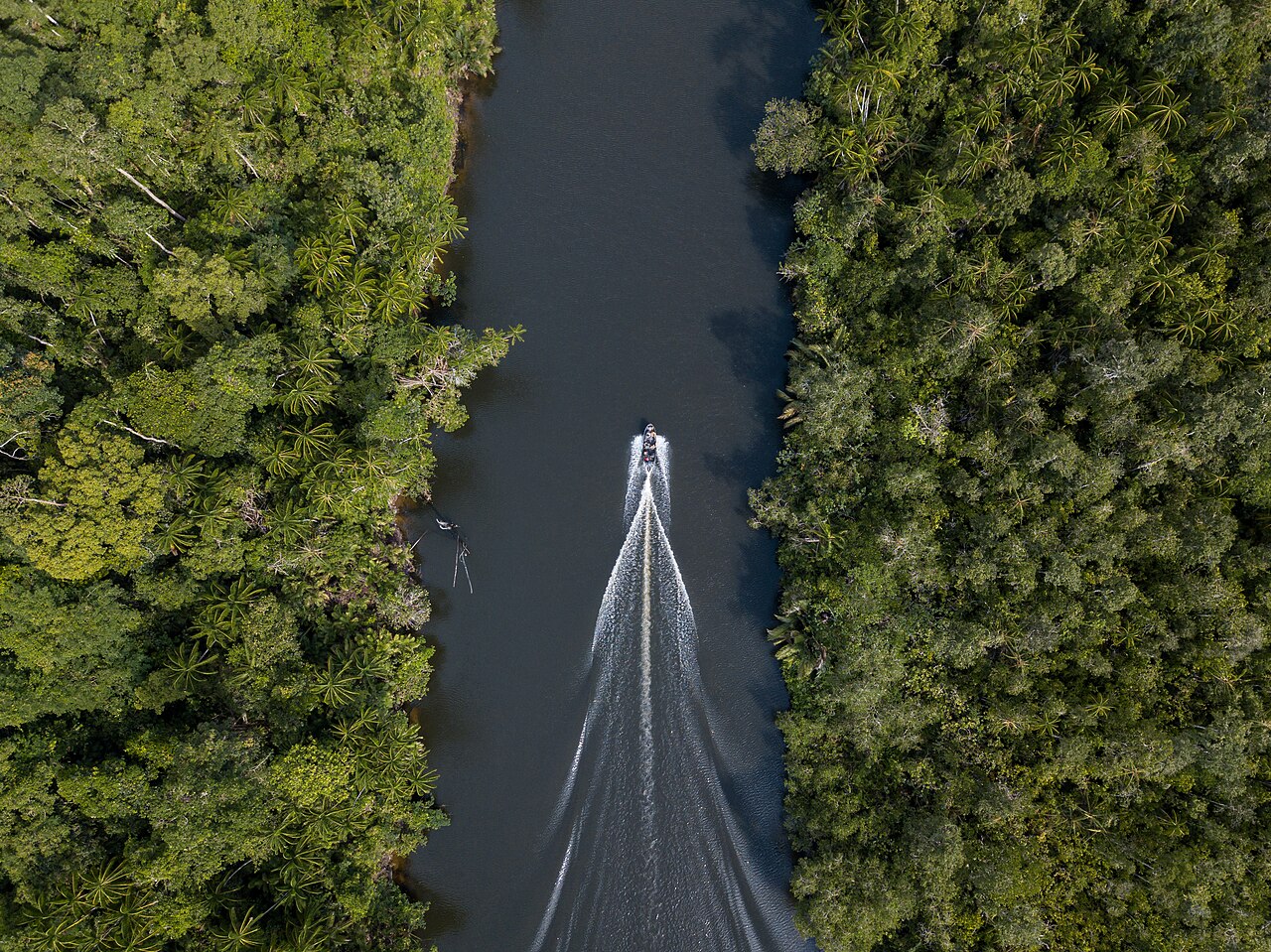
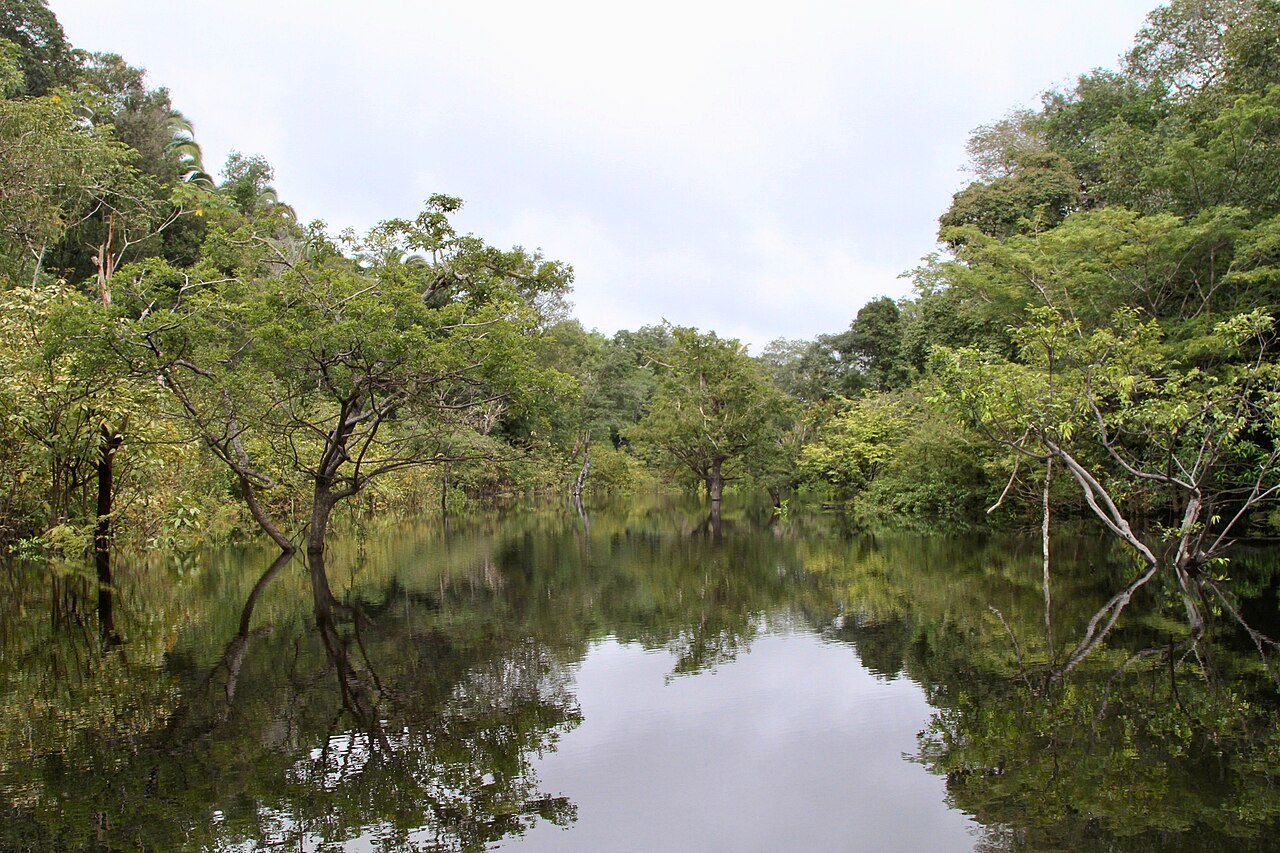
- 10 countries · Amazon rainforest
People have shared 338 records of the red brocket with GBIF, from 10 countries, most of them from Ecuador, Peru and Brazil. Records collected by GloBI show it eating 67 different kinds of animals and plants.
In the southern hemisphere, people record it most in July and least in January. It belongs to the genus Mazama in the family Cervidae.
Habitats
What the red brocket eats, and what eats it
Studies have recorded it eating 67 kinds of animals and plants. Tap any of them to follow the food chain.
- Plants 58
- Bacteria 4
- Spiders and mites 2
Red brocket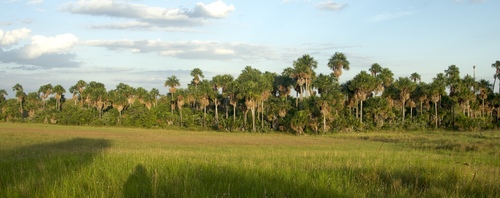
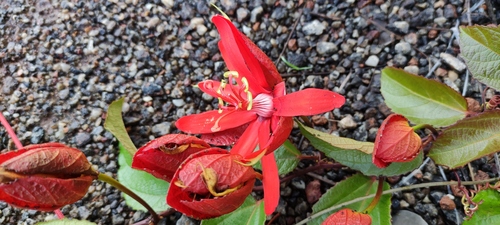
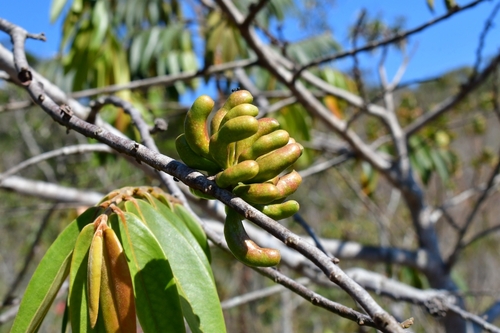
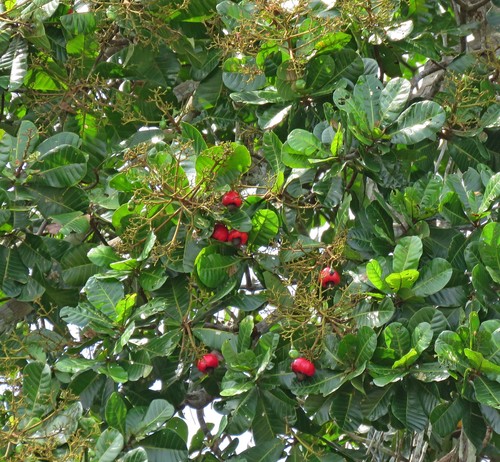
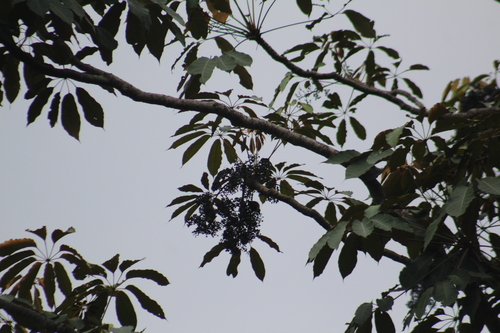
Records from studies worldwide, collected by GloBI. They include animals eaten as carrion, and they are not everything it eats in one place.
Where people see the red brocket
People have shared 338 records from 10 countries.
Records show where people have seen it and shared it, not its full range. Country names open their page in Atlas.
When it is seen
Records per month in the southern hemisphere. More people outdoors also means more records.
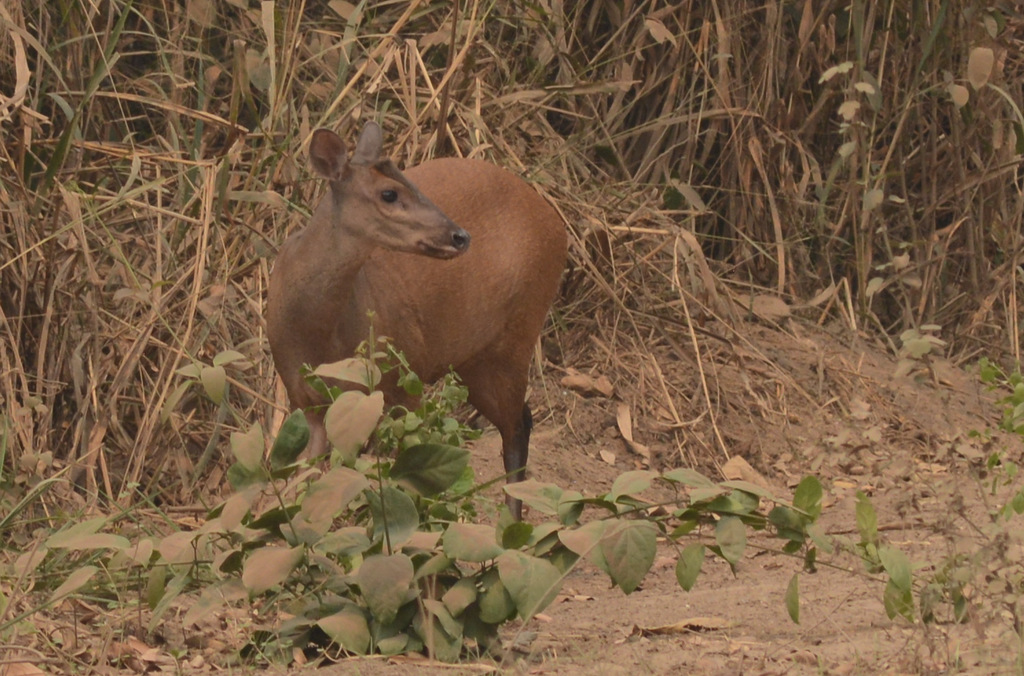
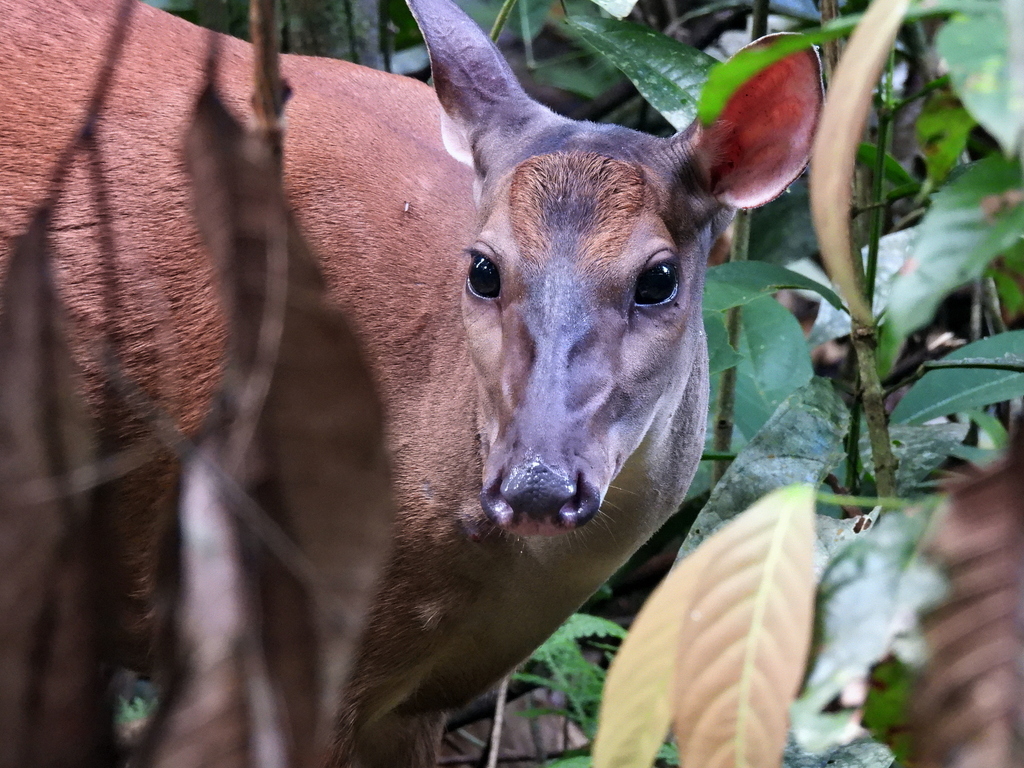
Watch and listen
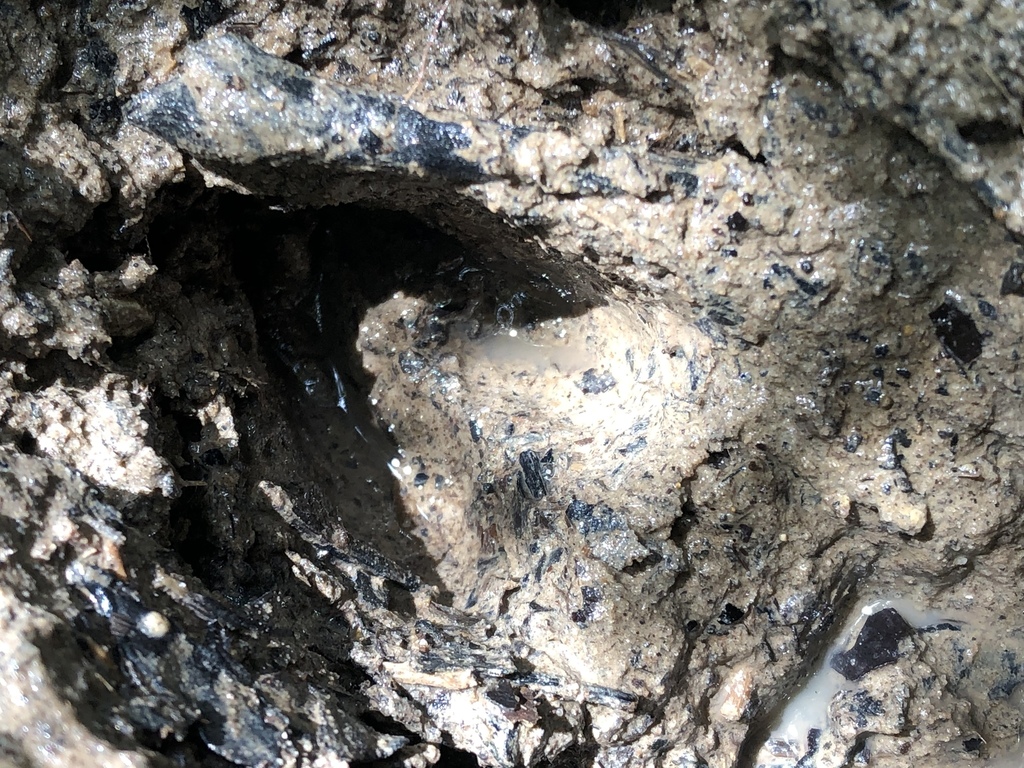
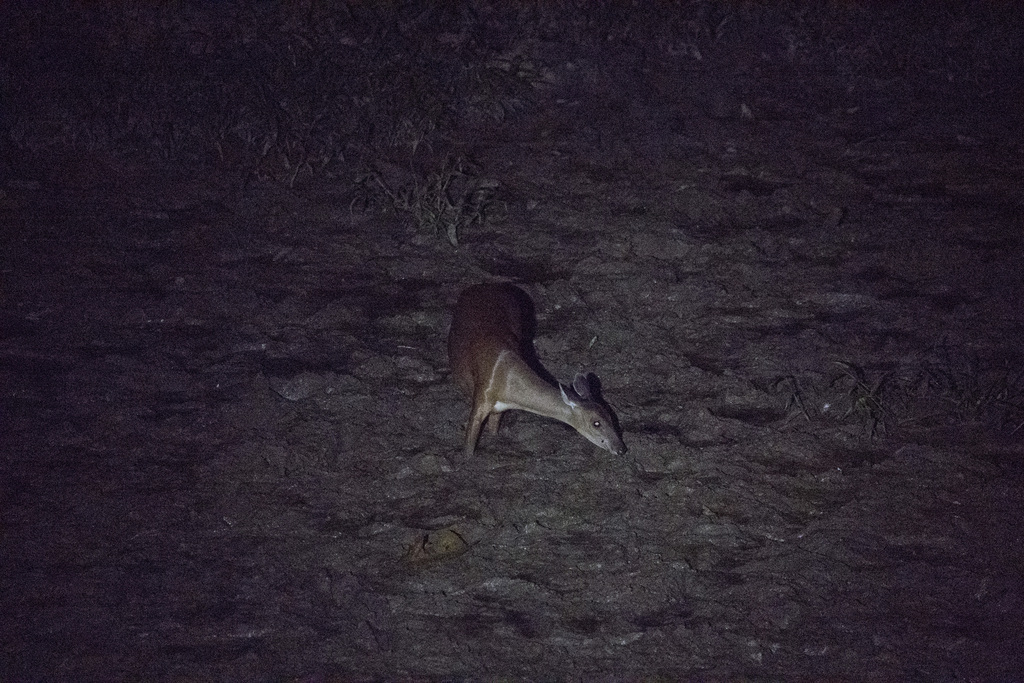
Its closest relatives
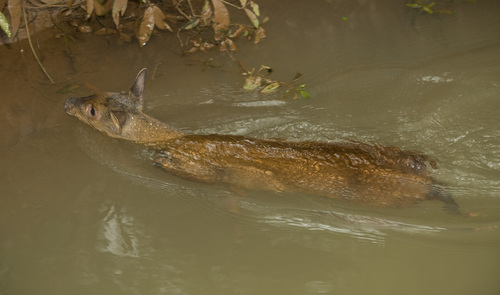
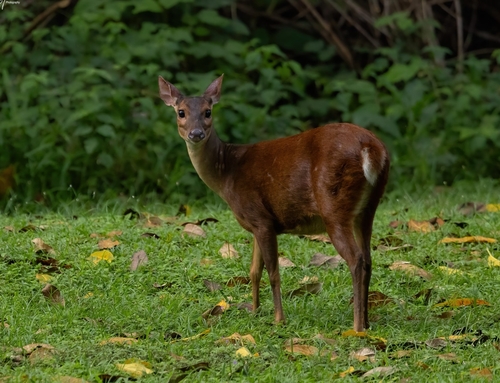
The other species of the genus Mazama.


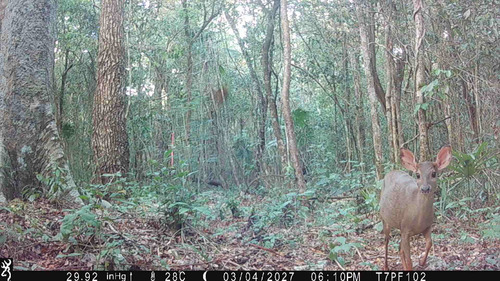
Seen a red brocket?
Share your photo on iNaturalist. Other naturalists help confirm it, and the record goes to GBIF, where scientists use it and where the maps on this page come from.
Put this species on your site
The card names every source and links back here.
<iframe src="https://4planetatlas.com/place/embed/species/red-brocket" title="Red brocket (Mazama americana), 4PLANET Species" width="100%" height="600" style="border:0;max-width:640px" loading="lazy"></iframe>
<p><a href="https://4species.com/red-brocket">Red brocket on 4PLANET Species</a></p>Explore next
What puts the red brocket under pressure, what helps, and who works on it.
Questions people ask
What does the red brocket eat?
The red brocket has been recorded eating 67 different kinds of animals and plants, most of them plants, bacteria and spiders and mites. The ones recorded most often are assai palm, muriti, cashapona, assai palm and scarlet passionflower; records include animals eaten as carrion. Source: GloBI.
Where does the red brocket live?
People have recorded it in 10 countries; the most records come from Ecuador, Peru, Brazil, Colombia and French Guiana. Records show where people have seen it, not its full range.
When is the red brocket seen most?
In the southern hemisphere, the most records are made in July and the fewest in January. More people outdoors also means more records.
What are the red brocket's closest relatives?
It shares the genus Mazama with pygmy brocket, chunyi, merida brocket, small red brocket and central american red brocket.
Sources and photo credits
- GBIF · Mazama americana, 338 human observations
- GloBI · recorded interactions of Mazama americana
- Wikidata · Red brocket (Q1763357)
- Red brocket (Mazama americana): B. Phalan, CC BY 4.0
- Red brocket (Mazama americana): B. Phalan, CC BY 4.0
- Red brocket (Mazama americana), Brazil - MT - Alta Floresta - Cristalino Lodge: Sidnei Dantas, CC BY-SA 4.0
- Red brocket (Mazama americana), T2, Madre de Dios, PE: Jared Shorma, CC BY 4.0
- Red brocket (Mazama americana), Manú Province, Peru: Claude Kolwelter, CC BY 4.0
- Muriti: JR Ferrer-Paris, CC BY 4.0
- Cashapona: Tony Rebelo, CC BY-SA 4.0
- Assai palm: agujaceratops, CC BY 4.0
- Scarlet passionflower: fmunoz, CC BY 4.0
- Xylopia aromatica: Joey Santore, CC BY 4.0
- Maripa palm: Evandro Maia Neves, CC BY 4.0
- Black manwood: andrew2285, CC0
- Caja acu: Sidnei Dantas, CC BY-SA 4.0
- Matchwood: GERMAN LEONEL SARMIENTO CRUZ, CC BY 4.0
- Pygmy brocket: Nicolas Olejnik, CC BY 4.0
- Chunyi: Carlos Otávio Gussoni, CC BY 4.0
- Merida brocket: Cristian Antonio Calderón López, CC0
- Central American red brocket: Derek Spencer, CC BY 4.0
- Yucatan brown brocket: Jalil R., CC BY-SA 4.0
Records show where people have seen and shared the red brocket, not its full range, and some countries and months are recorded far more than others. The food web lists interactions that studies have recorded somewhere in the world (GloBI), not everything it eats in one place.
Checked 2026-11-23.