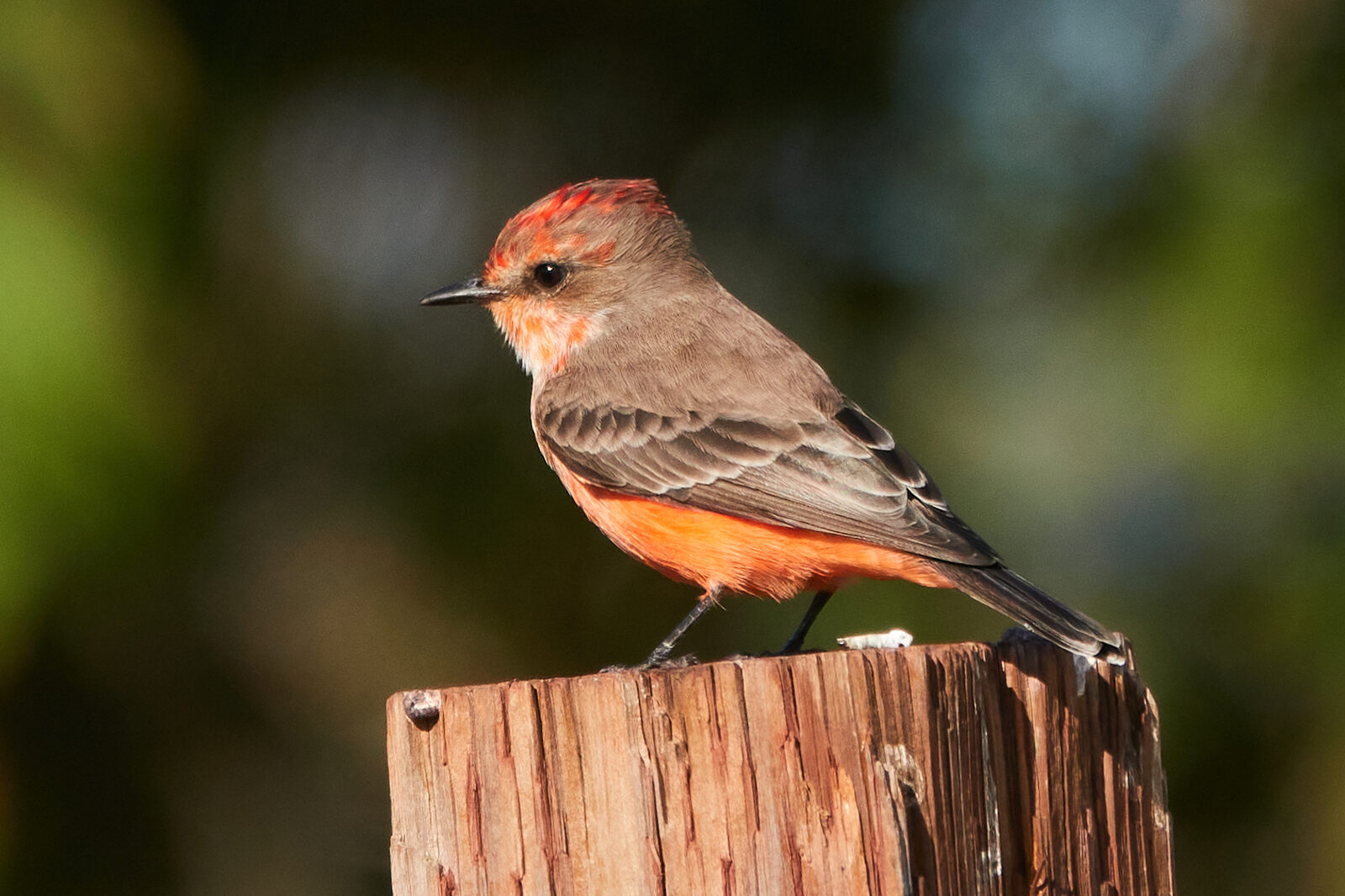
Scarlet flycatcher
Pyrocephalus rubinus
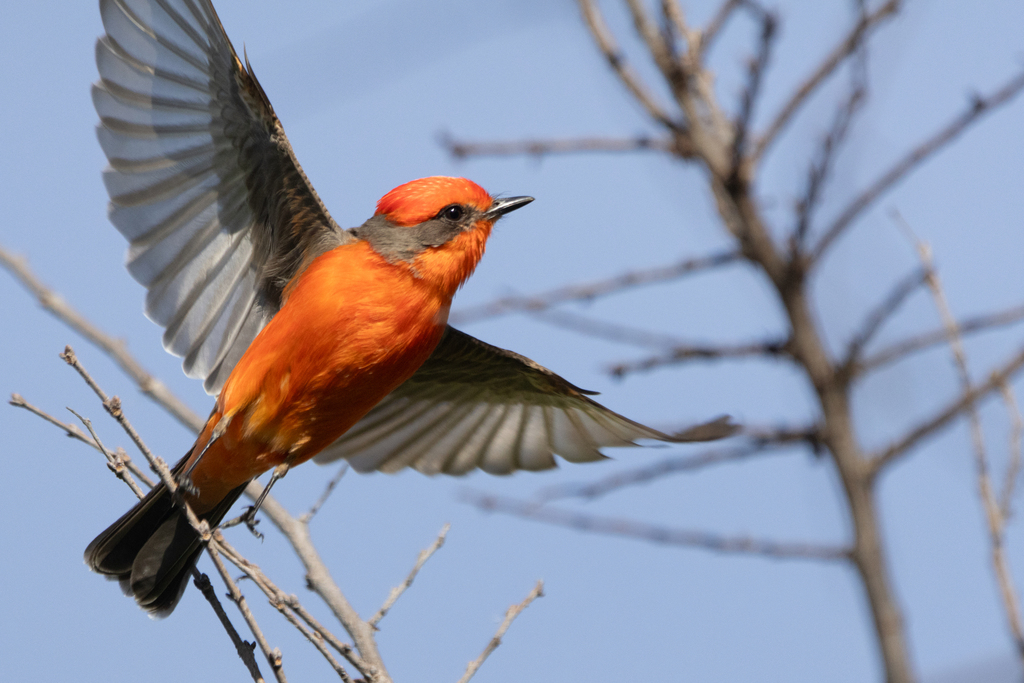
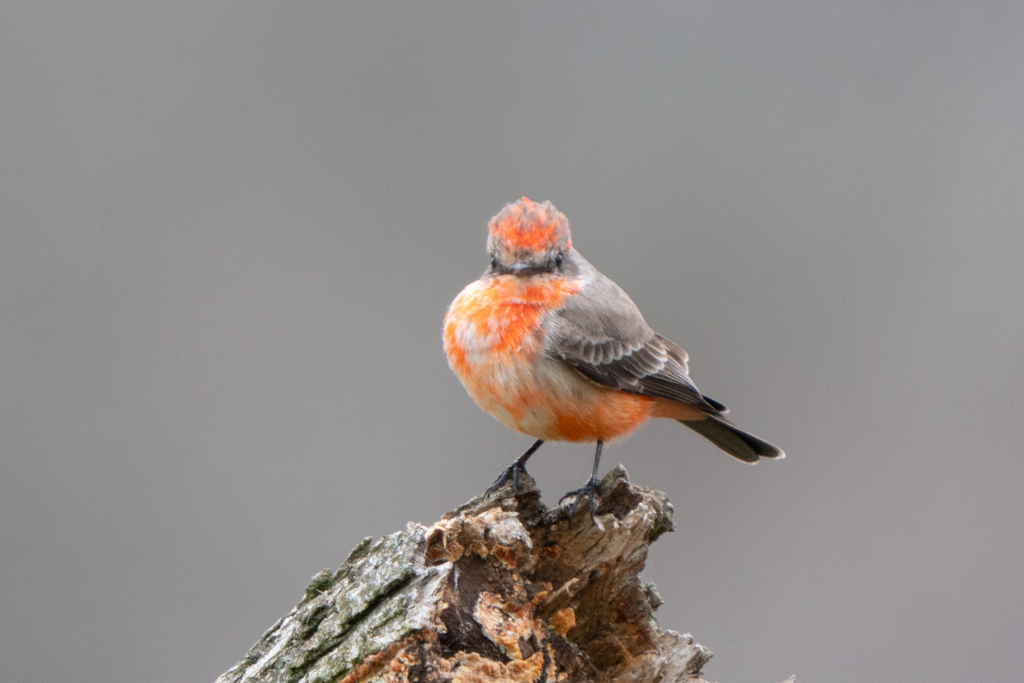
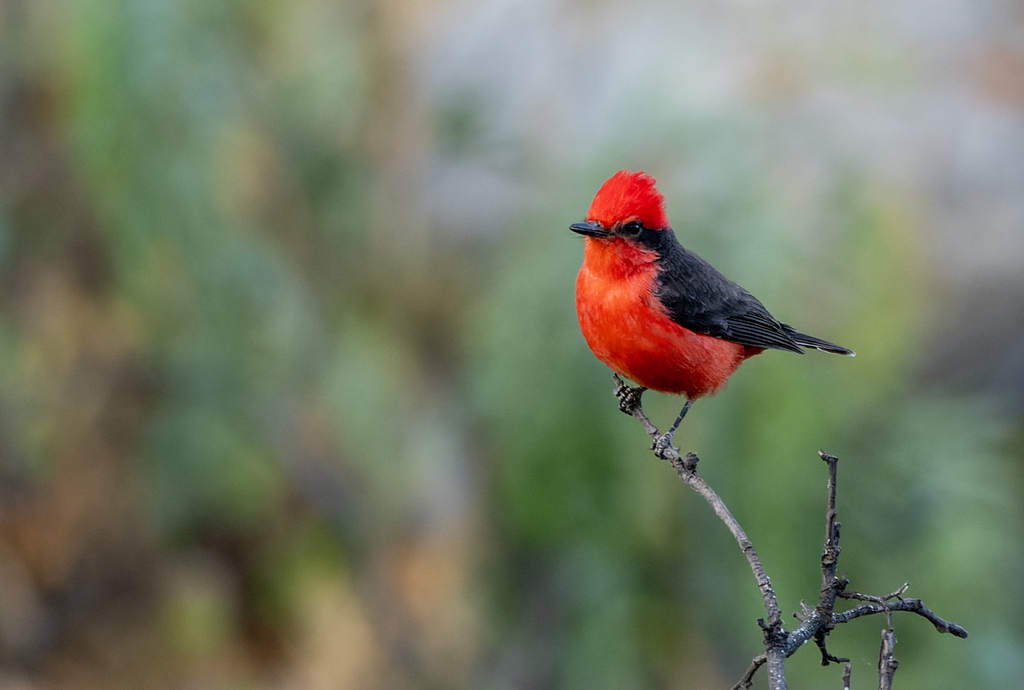
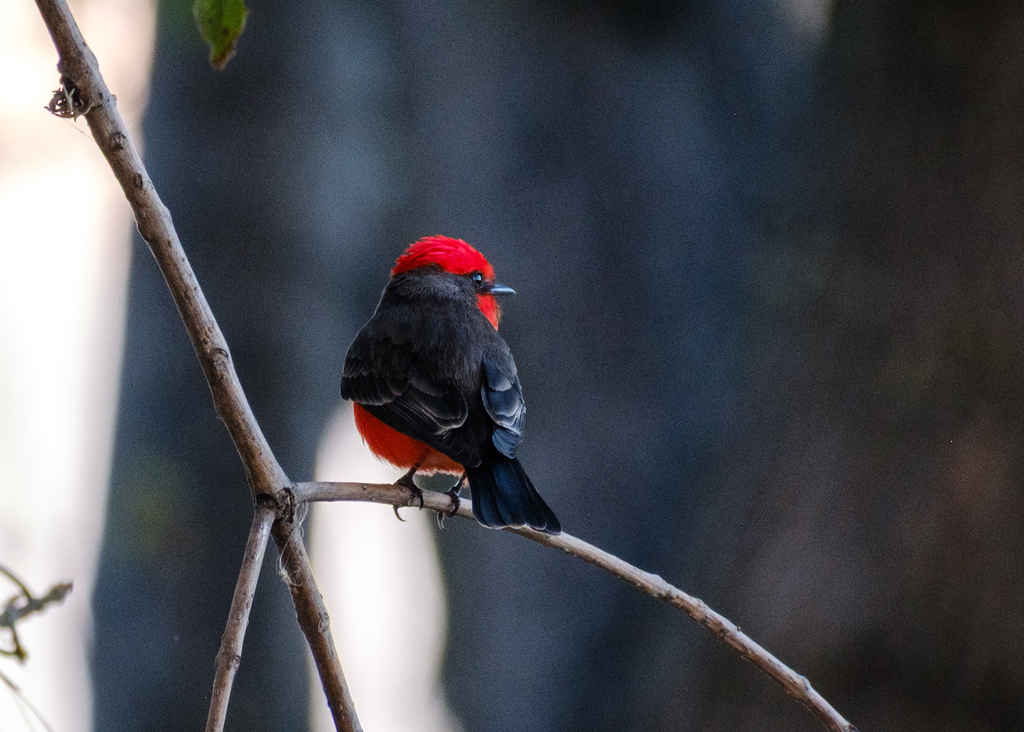
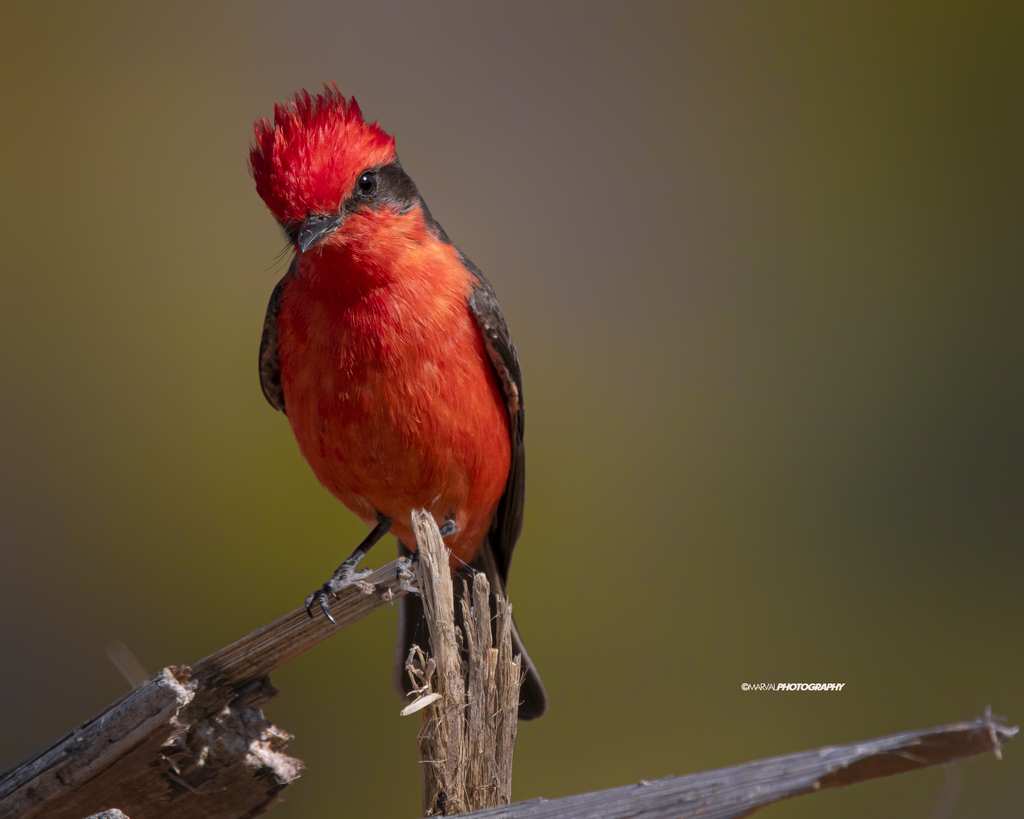
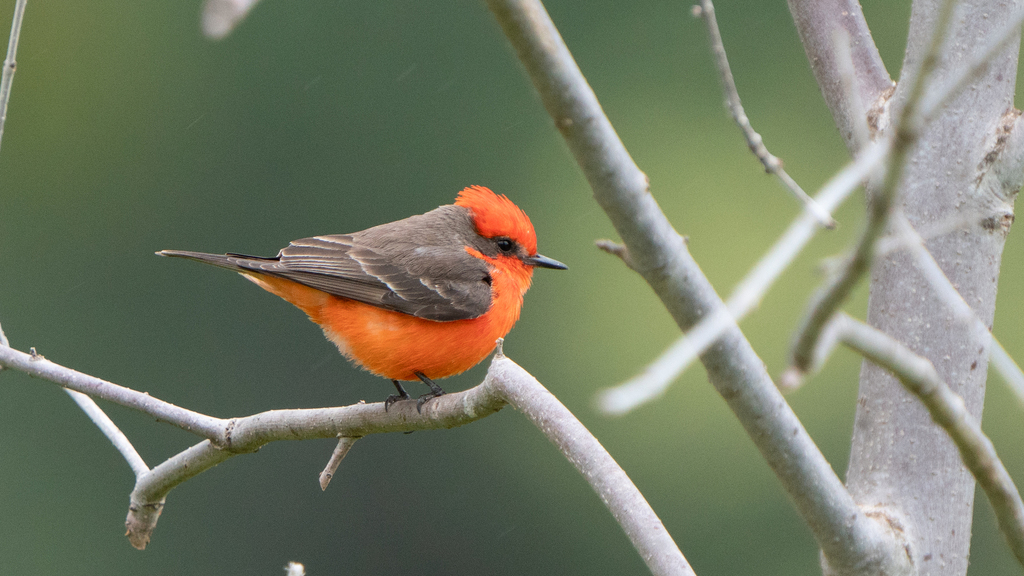
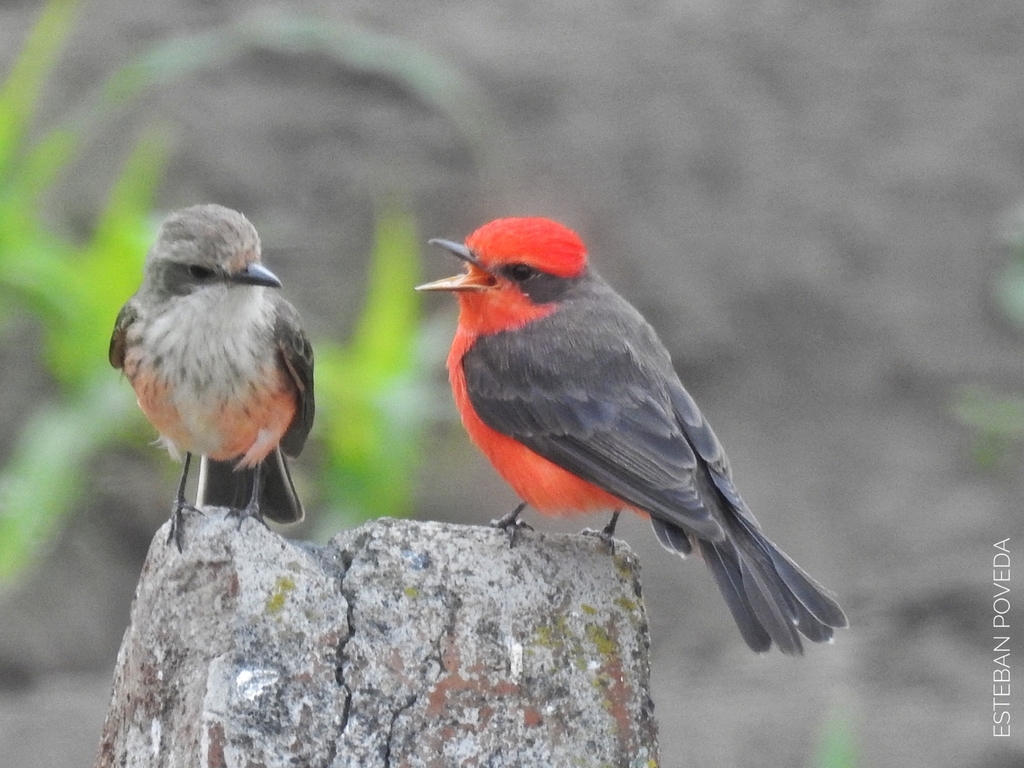
The male is brilliant red with a dark mask and wings; it sallies out from perches to catch insects.
- Status
- Least Concern IUCN Red List
- Eats
- European hackberry, quercus humboldtii and 3 more
- Eaten by
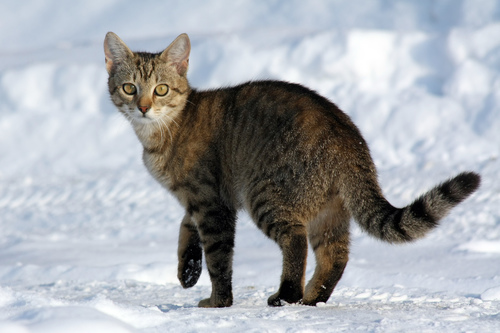
- cat
- Where
- 22 countries
On 4Planet Atlas it is among the wildlife people record most around Belmopan, Bogotá and Buenos Aires, and 3 more of the cities we cover.
People have shared 985,647 records of the scarlet flycatcher with GBIF, from 22 countries, most of them from United States, Mexico and Colombia. Records collected by GloBI show it eating 5 different kinds of animals and plants, and being eaten by 1.
What the scarlet flycatcher eats, and what eats it
Studies have recorded it eating 5 kinds of animals and plants, and 1 kinds of animals eating it. Tap any of them to follow the food chain.
- Plants 2
- Insects 2
- Crustaceans 1
Records from studies worldwide, collected by GloBI. They include animals eaten as carrion, and they are not everything it eats in one place.
Where people see the scarlet flycatcher
People have shared 985,647 records from 22 countries.
Near a city: Belmopan, Bogotá, Buenos Aires, Lima, Mexico City, Montevideo.
Records show where people have seen it and shared it, not its full range. Country names open their page in Atlas.
When it is seen
Records per month in the northern hemisphere. More people outdoors also means more records.
Watch and listen

Its closest relatives
The other species of the genus Pyrocephalus.
Seen a scarlet flycatcher?
Share your photo on iNaturalist. Other naturalists help confirm it, and the record goes to GBIF, where scientists use it and where the maps on this page come from.
Questions people ask
What does the scarlet flycatcher eat?
The scarlet flycatcher has been recorded eating 5 different kinds of animals and plants, most of them plants, insects and crustaceans. The ones recorded most often are european hackberry and quercus humboldtii; records include animals eaten as carrion. Source: GloBI.
What eats the scarlet flycatcher?
Recorded predators include cat. Source: GloBI.
Where does the scarlet flycatcher live?
People have recorded it in 22 countries; the most records come from United States, Mexico, Colombia, Peru and Argentina. Records show where people have seen it, not its full range.
When is the scarlet flycatcher seen most?
In the northern hemisphere, the most records are made in April and the fewest in July. More people outdoors also means more records.
What are the scarlet flycatcher's closest relatives?
It shares the genus Pyrocephalus with vermilion flycatcher.
Sources and photo credits
- GBIF · Pyrocephalus rubinus, 985,647 human observations
- GloBI · recorded interactions of Pyrocephalus rubinus
- Wikidata · Scarlet flycatcher (Q572657)
- Scarlet flycatcher (Pyrocephalus rubinus): Ken-ichi Ueda, CC BY 4.0
- Scarlet flycatcher (Pyrocephalus rubinus): Esteban Poveda, CC BY 4.0
- Scarlet flycatcher (Pyrocephalus rubinus), Long Beach, CA, USA: Jodhan Fine, CC0
- Scarlet flycatcher (Pyrocephalus rubinus), Huntington Beach, CA, USA: jubileej, CC0
- Scarlet flycatcher (Pyrocephalus rubinus), Chacras de Huaytará, Huancavelica, Perú: David F. Belmonte, CC BY 4.0
- Scarlet flycatcher (Pyrocephalus rubinus), University City, Mexico City, CDMX, Mexico: Jer Clarke, CC BY 4.0
- Scarlet flycatcher (Pyrocephalus rubinus), Mulegé, B.C.S., México: MarvalPhotography19, CC BY 4.0
- Scarlet flycatcher (Pyrocephalus rubinus), Fullerton, CA, USA: jubileej, CC0
- Scarlet flycatcher (Pyrocephalus rubinus), Parroquia Celiano Monge, Ambato, Ecuador: Esteban Poveda, CC BY 4.0
- Cat: Von.grzanka, CC BY-SA 4.0
Records show where people have seen and shared the scarlet flycatcher, not its full range, and some countries and months are recorded far more than others. The food web lists interactions that studies have recorded somewhere in the world (GloBI), not everything it eats in one place.
Checked 2026-11-21.