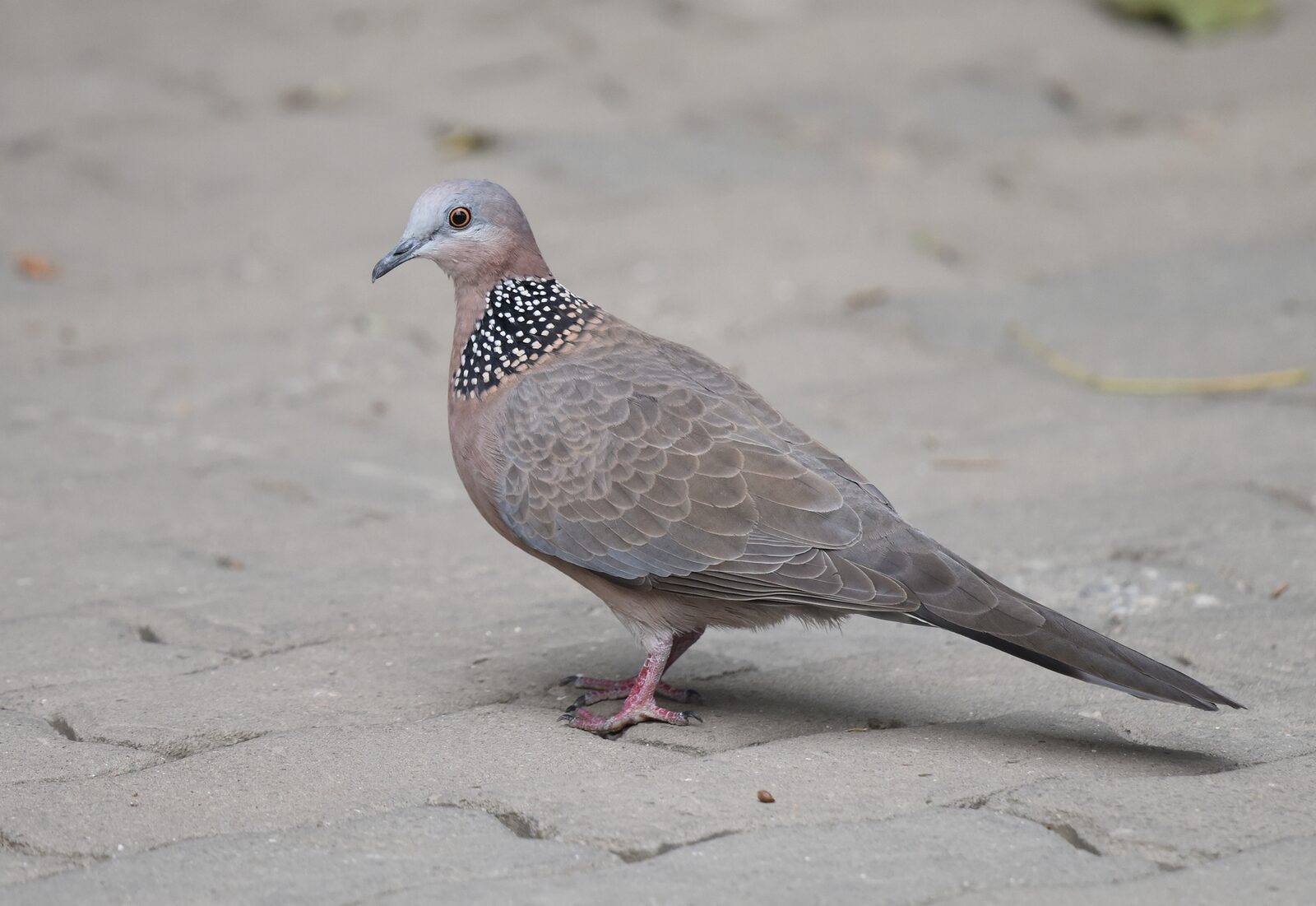
Spotted dove
Spilopelia chinensis
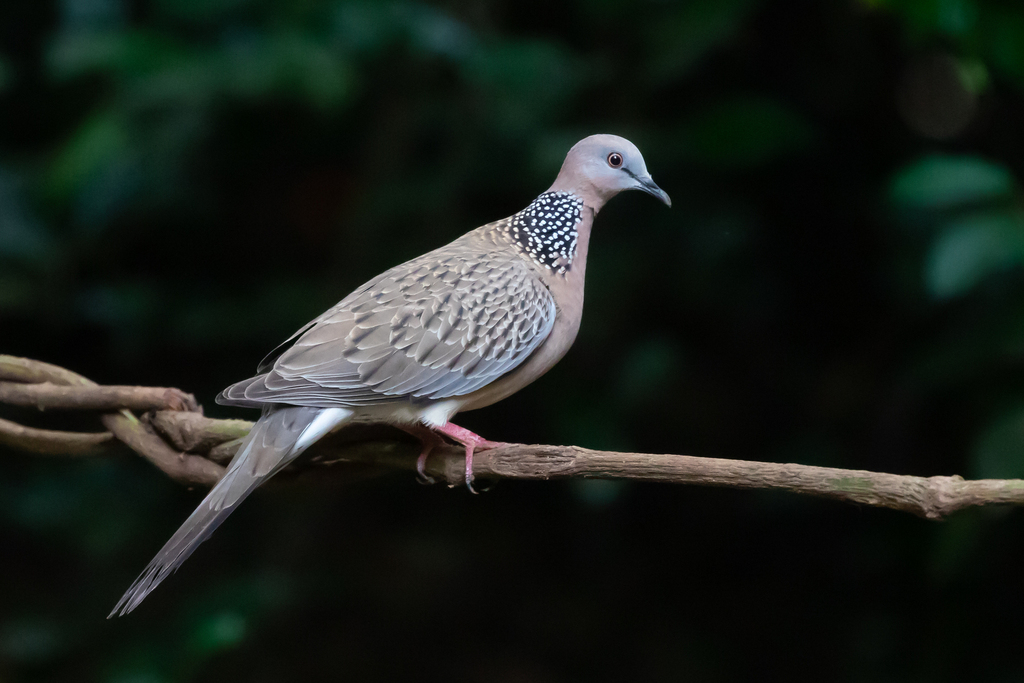
A dove with a black collar dotted with white spots.
- Status
- Least Concern IUCN Red List
- Eats
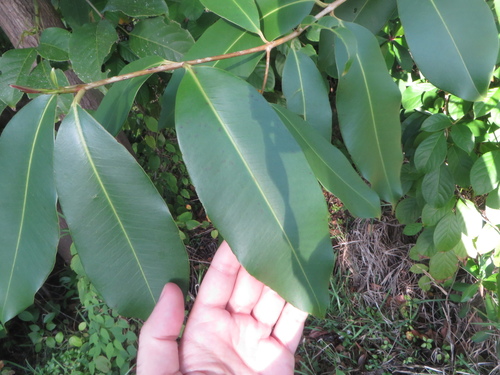
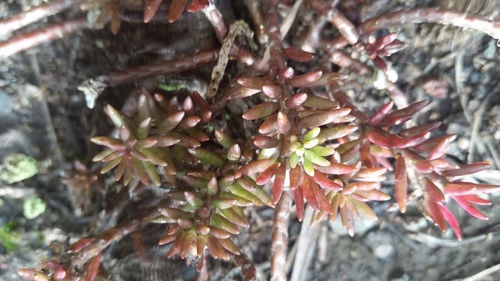
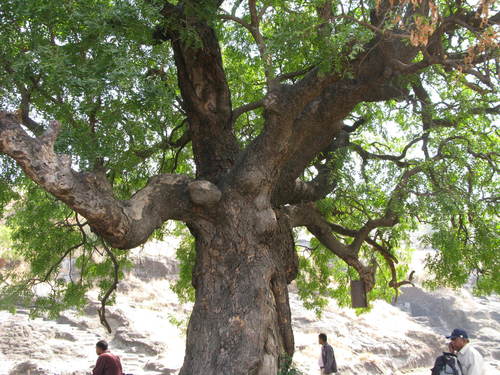
- java plum, common lantana, grewia multiflora and 189 more
- Eaten by
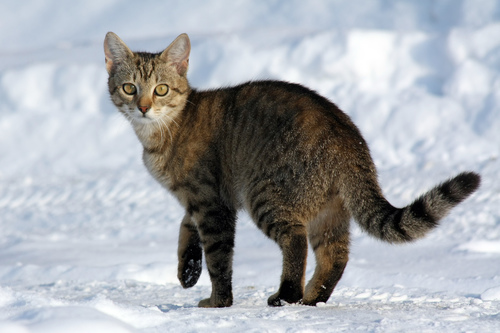
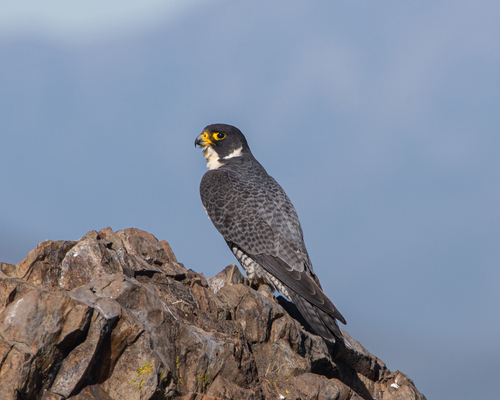
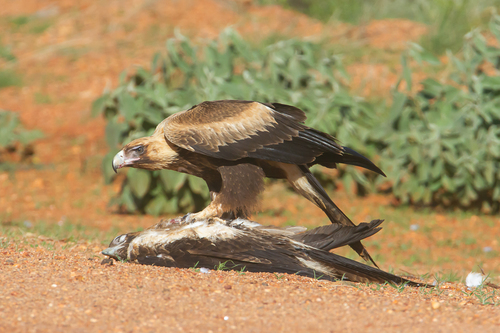
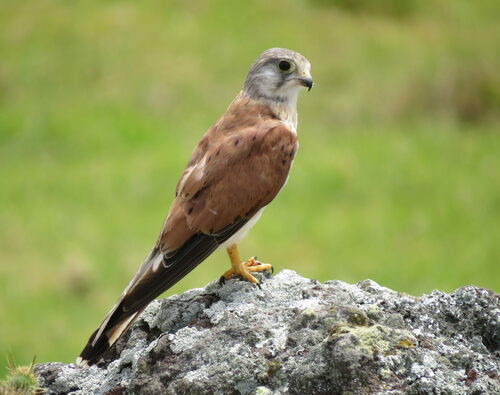
- cat, peregrine falcon, wedge-tailed eagle
- Where
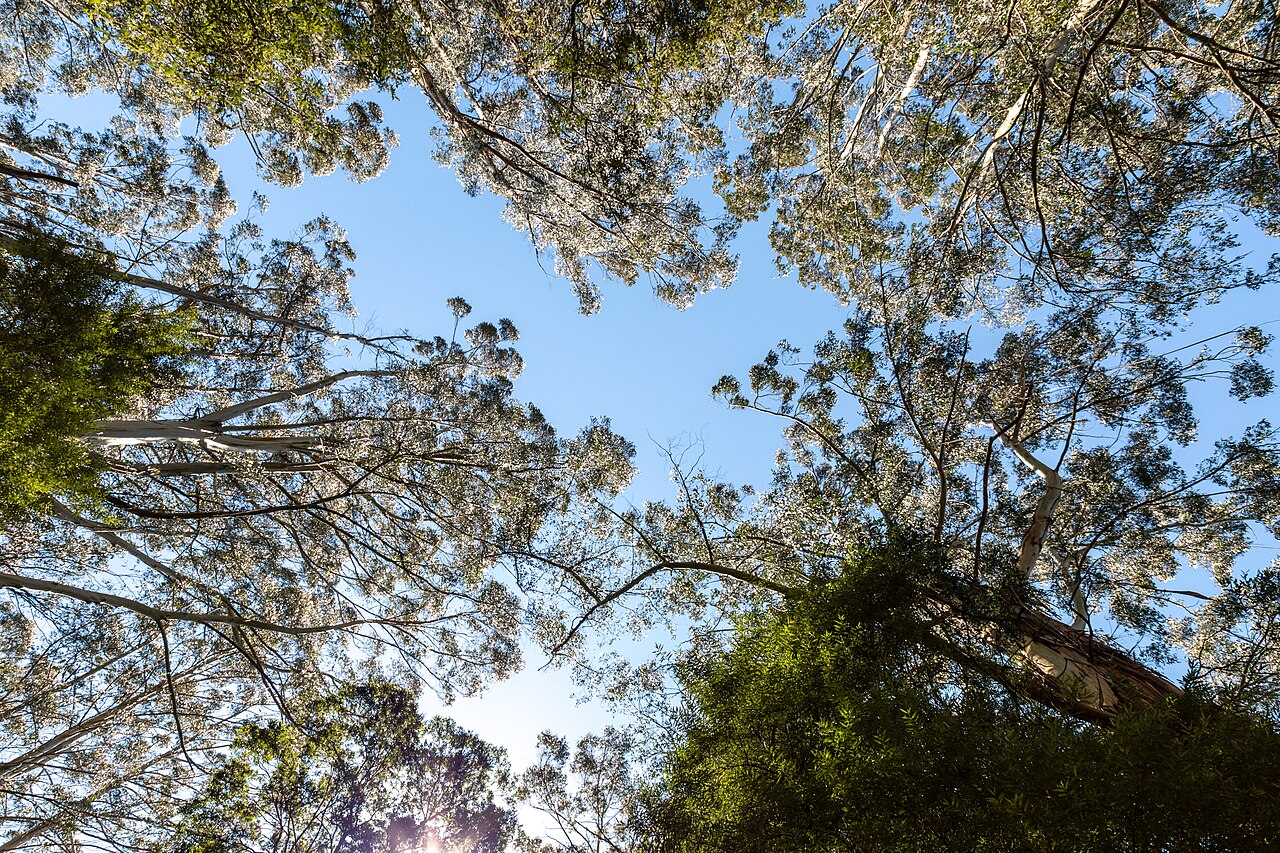
- 30 countries · forest, wetland
On 4Planet Atlas it is among the wildlife people record most around Auckland, Beijing and Canberra, and 6 more of the cities we cover.
People have shared 2,315,006 records of the spotted dove with GBIF, from 30 countries, most of them from India, Australia and Taiwan. Records collected by GloBI show it eating 192 different kinds of animals and plants, and being eaten by 6.
Habitats
- Forest
- Wetland
What the spotted dove eats, and what eats it
Studies have recorded it eating 192 kinds of animals and plants, and 6 kinds of animals eating it. Tap any of them to follow the food chain.
- Plants 180
- Insects 5
 Spotted dove

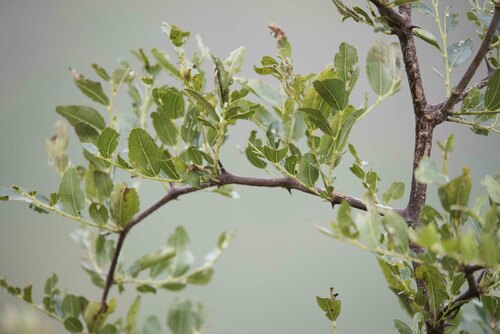
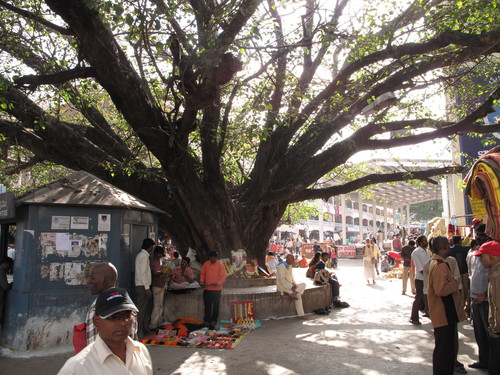

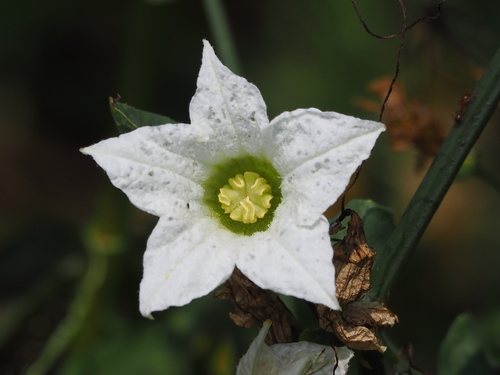
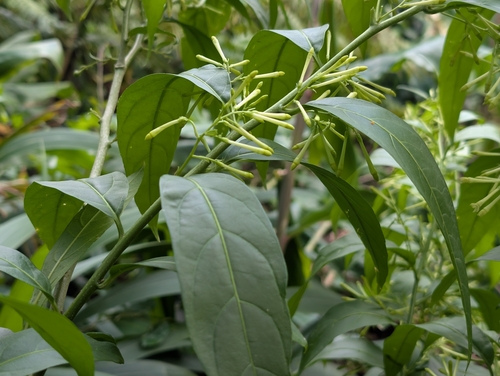

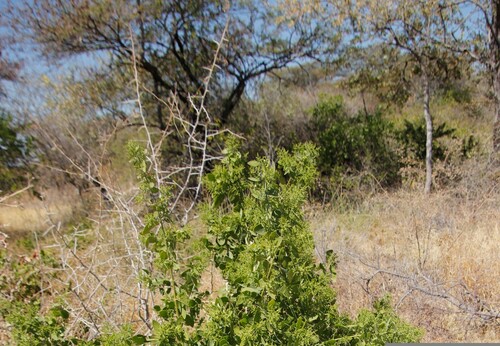
Records from studies worldwide, collected by GloBI. They include animals eaten as carrion, and they are not everything it eats in one place.
Where people see the spotted dove
People have shared 2,315,006 records from 30 countries.
Near a city: Auckland, Beijing, Canberra, Dili, Jakarta, Melbourne, Mumbai, Shanghai, Sydney.
Records show where people have seen it and shared it, not its full range. Country names open their page in Atlas.
When it is seen
Records per month in the northern hemisphere. More people outdoors also means more records.
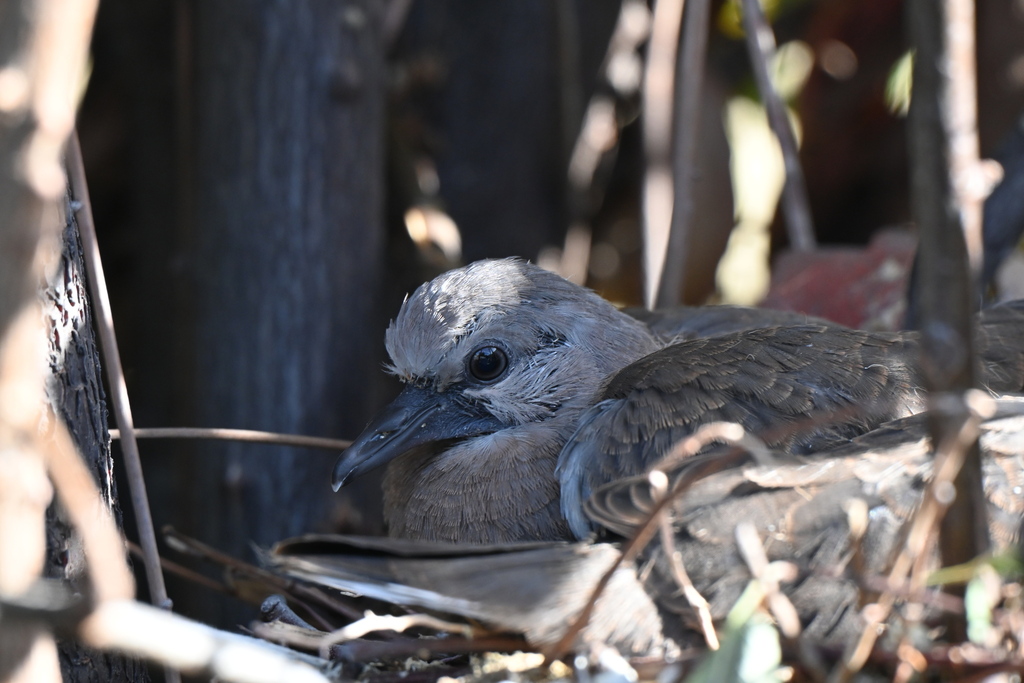
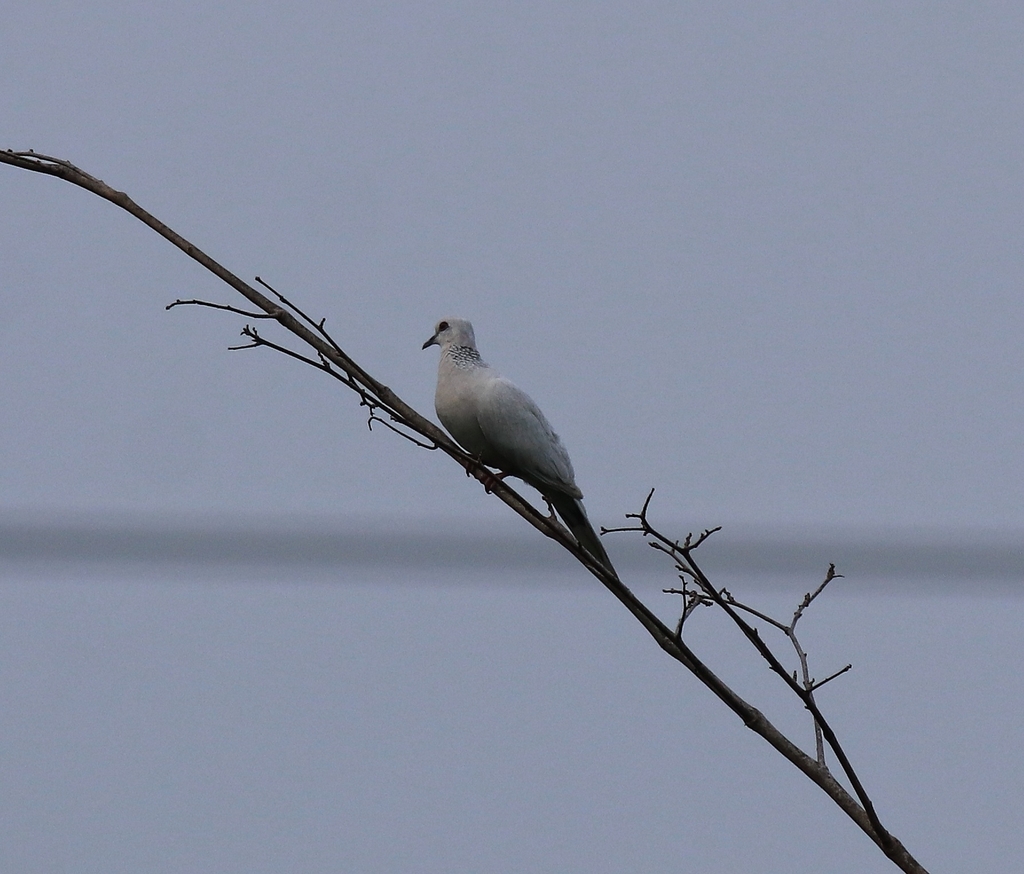
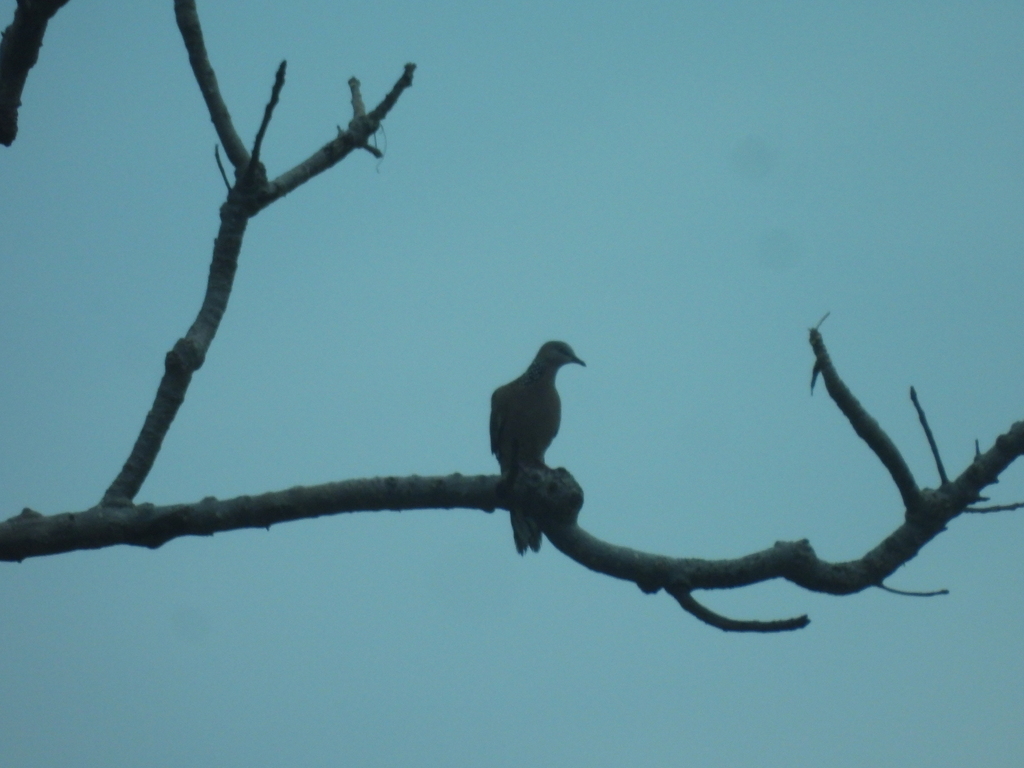
Watch and listen


Its closest relatives
The other species of the genus Spilopelia.

Seen a spotted dove?
Share your photo on iNaturalist. Other naturalists help confirm it, and the record goes to GBIF, where scientists use it and where the maps on this page come from.
Explore next
What puts the spotted dove under pressure, what helps, and who works on it.

Questions people ask
What does the spotted dove eat?
The spotted dove has been recorded eating 192 different kinds of animals and plants, most of them plants and insects. The ones recorded most often are java plum, common lantana, grewia multiflora, 'ihi makole and neem; records include animals eaten as carrion. Source: GloBI.
What eats the spotted dove?
Recorded predators include cat, peregrine falcon, wedge-tailed eagle and nankeen kestrel. Source: GloBI.
Where does the spotted dove live?
People have recorded it in 30 countries; the most records come from India, Australia, Taiwan, Thailand and United States. Records show where people have seen it, not its full range.
When is the spotted dove seen most?
In the northern hemisphere, the most records are made in February and the fewest in July. More people outdoors also means more records.
What are the spotted dove's closest relatives?
It shares the genus Spilopelia with laughing dove.
Sources and photo credits
- GBIF · Spilopelia chinensis, 2,315,006 human observations
- GloBI · recorded interactions of Spilopelia chinensis
- Wikidata · Spotted dove (Q116686)
- Spotted dove (Spilopelia chinensis): Zinogre, CC BY-SA 4.0
- Spotted dove (Spilopelia chinensis): jirau, CC BY-SA 4.0
- Spotted dove (Spilopelia chinensis): William Stephens, CC BY 4.0
- Spotted dove (Spilopelia chinensis), WC2Q+964, Eachur, Vattapoyil, Kerala 670591, India: Afsar Nayakkan, CC BY 4.0
- Spotted dove (Spilopelia chinensis), Cemarajaya, Cibuaya, Karawang, West Java, Indonesia: Seno Nur Rohman, CC BY-SA 4.0
- Spotted dove (Spilopelia chinensis), Zhengzhou, Henan, China: Zinogre, CC BY-SA 4.0
- Spotted dove (Spilopelia chinensis), Huai Mae Priang, Kaeng Krachan District, Phetchaburi 76170, Thailand: Johannes S., CC BY 4.0
- Spotted dove (Spilopelia chinensis), 中国河南省郑州市金水区: Zinogre, CC BY-SA 4.0
- Java plum: Ben Machado, CC BY 4.0
- Common lantana: no rights reserved, uploaded by Dave Brown, CC0
- 'ihi makole: cwarneke, CC0
- Neem: Yoav Daniel Bar-Ness, CC BY 4.0
- Common jujube: Zinogre, CC BY-SA 4.0
- Peepul tree: Yoav Daniel Bar-Ness, CC BY 4.0
- Indian banyan: jess n, CC BY-SA 4.0
- Ivy gourd: no rights reserved, uploaded by 葉子, CC0
- Night jessamine: Damien Wallace, CC0
- Spanish cherry: Siddarth Machado, CC BY 4.0
- Toothbrushtree: Tony Rebelo, CC BY-SA 4.0
- Cat: Von.grzanka, CC BY-SA 4.0
- Peregrine falcon: Nicolás Villaseca Merino, CC BY-SA 4.0
- Wedge-tailed eagle: dhfischer, CC BY 4.0
- Nankeen kestrel: William Harland, CC BY 4.0
- Laughing dove: SteveM4560, CC BY 4.0
Records show where people have seen and shared the spotted dove, not its full range, and some countries and months are recorded far more than others. The food web lists interactions that studies have recorded somewhere in the world (GloBI), not everything it eats in one place.
Checked 2026-11-22.