SPECIES
Titan arum
Amorphophallus titanum Pending authority citation
A spectacular tropical plant produces a giant flower-like structure that smells of decay.
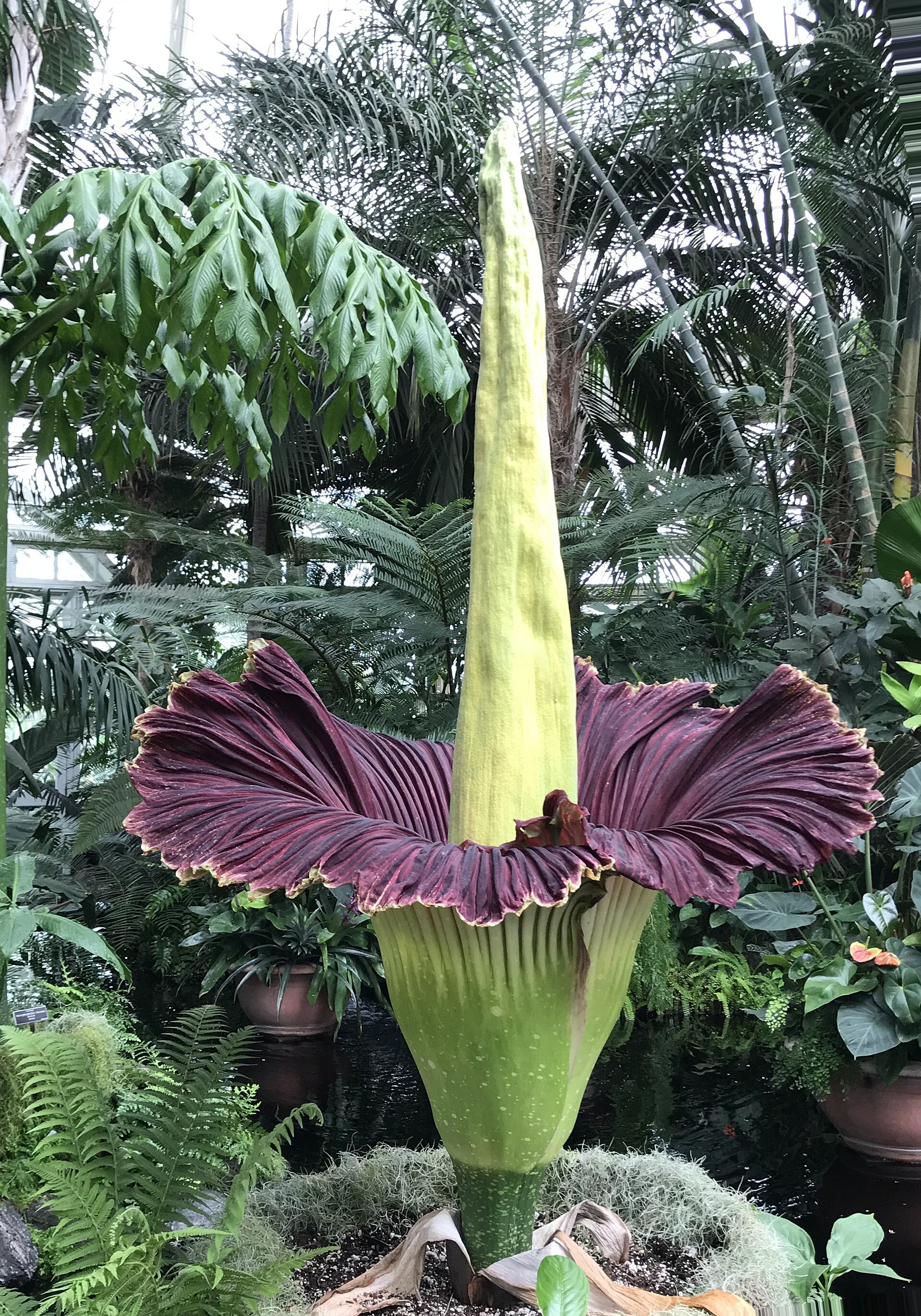
Its inflorescence can heat up and release odours attractive to certain pollinating insects.
Carrion-associated flies and beetles are among its potential pollination visitors.
Rainforests of western Sumatra, Indonesia.
Where does a titan arum grow?
Rainforests of western Sumatra, Indonesia.
Worth knowing
- Adaptation Its inflorescence can heat up and release odours attractive to certain pollinating insects.
- Ecological role Carrion-associated flies and beetles are among its potential pollination visitors.
- Home Rainforests of western Sumatra, Indonesia.
How it survives
Its inflorescence can heat up and release odours attractive to certain pollinating insects.
A spectacular tropical plant produces a giant flower-like structure that smells of decay.
Why relationships matter
Carrion-associated flies and beetles are among its potential pollination visitors.
Where it lives
Rainforests of western Sumatra, Indonesia.
Pressures and responses
Forest clearance and habitat fragmentation.
Protect Sumatran forest habitat and conserve living genetic diversity.
Sources
- Wikipedia species-account reference, not independently claim-verified — Amorphophallus titanum
- GBIF — Amorphophallus titanum accepted taxon
- Kew Gardens — Titan arum
- Royal Botanic Garden Edinburgh — Titan arum background
- Kew — The giant, pongy plant
- Kew Plants of the World Online — Amorphophallus titanum
- Missouri Botanical Garden — Titan arum conservation
Records of where it has been seen come live from GBIF; observed interactions from GloBI. Draft — not yet reviewed by a person.