SPECIES
Venus flytrap
Dionaea muscipula Pending authority citation
A small North American bog plant snaps shut around insects using a remarkable living trap.
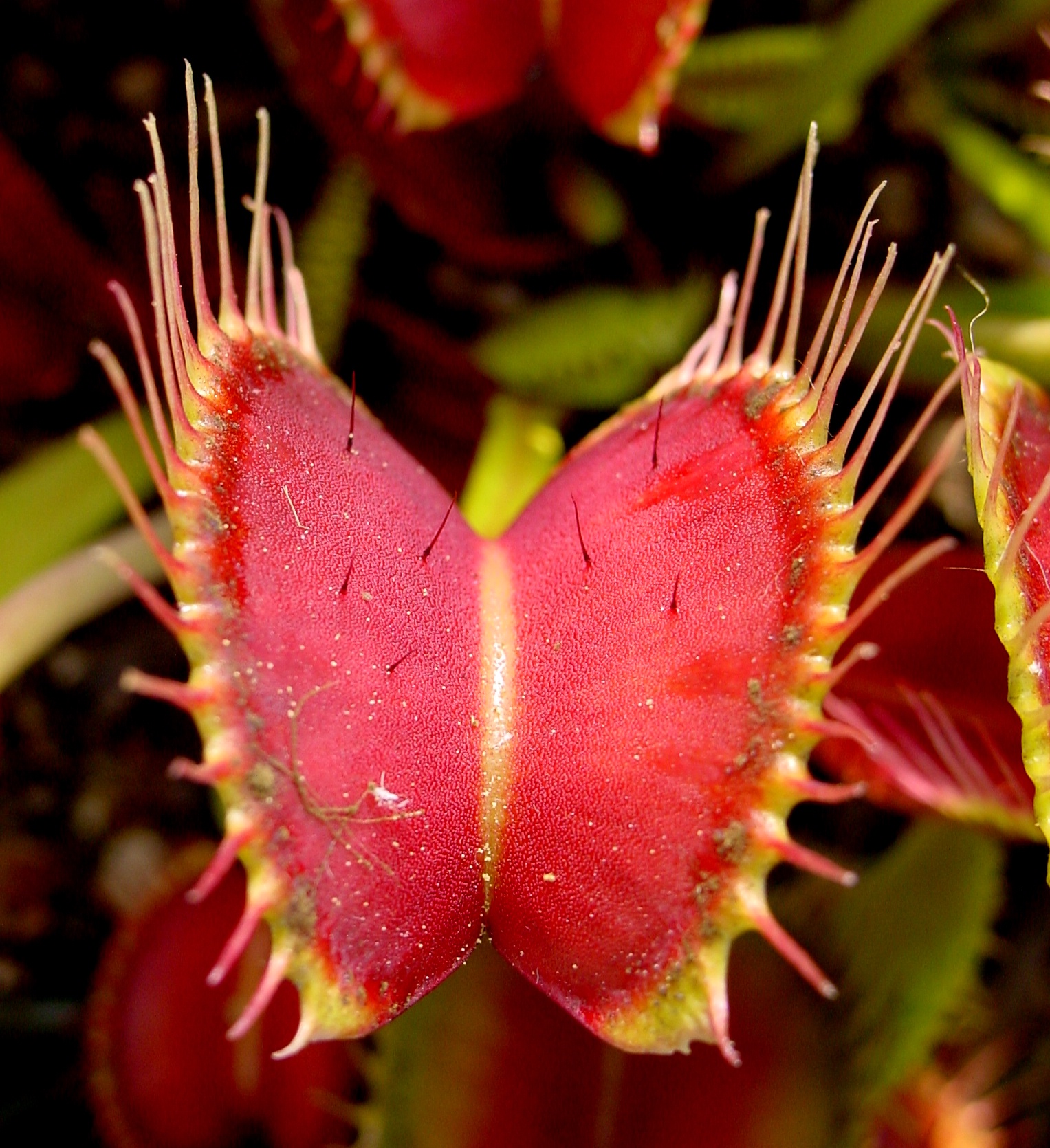
Sensitive trigger hairs help determine when the trap closes.
Insects supplement nutrients in acidic, nutrient-poor wetland soils; photosynthesis supplies energy.
Natural range restricted to coastal plains of North and South Carolina, United States.
Where does a venus flytrap grow?
Natural range restricted to coastal plains of North and…
Worth knowing
- Adaptation Sensitive trigger hairs help determine when the trap closes.
- Ecological role Insects supplement nutrients in acidic, nutrient-poor wetland soils; photosynthesis supplies energy.
- Home Natural range restricted to coastal plains of North and South Carolina, United States.
How it survives
Sensitive trigger hairs help determine when the trap closes.
A small North American bog plant snaps shut around insects using a remarkable living trap.
Why relationships matter
Insects supplement nutrients in acidic, nutrient-poor wetland soils; photosynthesis supplies energy.
Where it lives
Natural range restricted to coastal plains of North and South Carolina, United States.
Pressures and responses
Wetland drainage, suppression of appropriate fire cycles and illegal poaching.
Restore wetland hydrology and protect legally propagated plants.
Sources
- Wikipedia species-account reference, not independently claim-verified — Dionaea muscipula
- GBIF — Dionaea muscipula accepted taxon
- Plant Physiology, peer-reviewed experiment — How does a Venus flytrap close?
- Journal of Plant Physiology, biomechanics study — Fast but not instantaneous thought
- U.S. Fish and Wildlife Service — Legal protection needs precise wording
Records of where it has been seen come live from GBIF; observed interactions from GloBI. Draft — not yet reviewed by a person.