SPECIES
Walrus
Odobenus rosmarus Pending authority citation
Long tusks and bristling whiskers belong to a marine giant that feeds far below the ice.
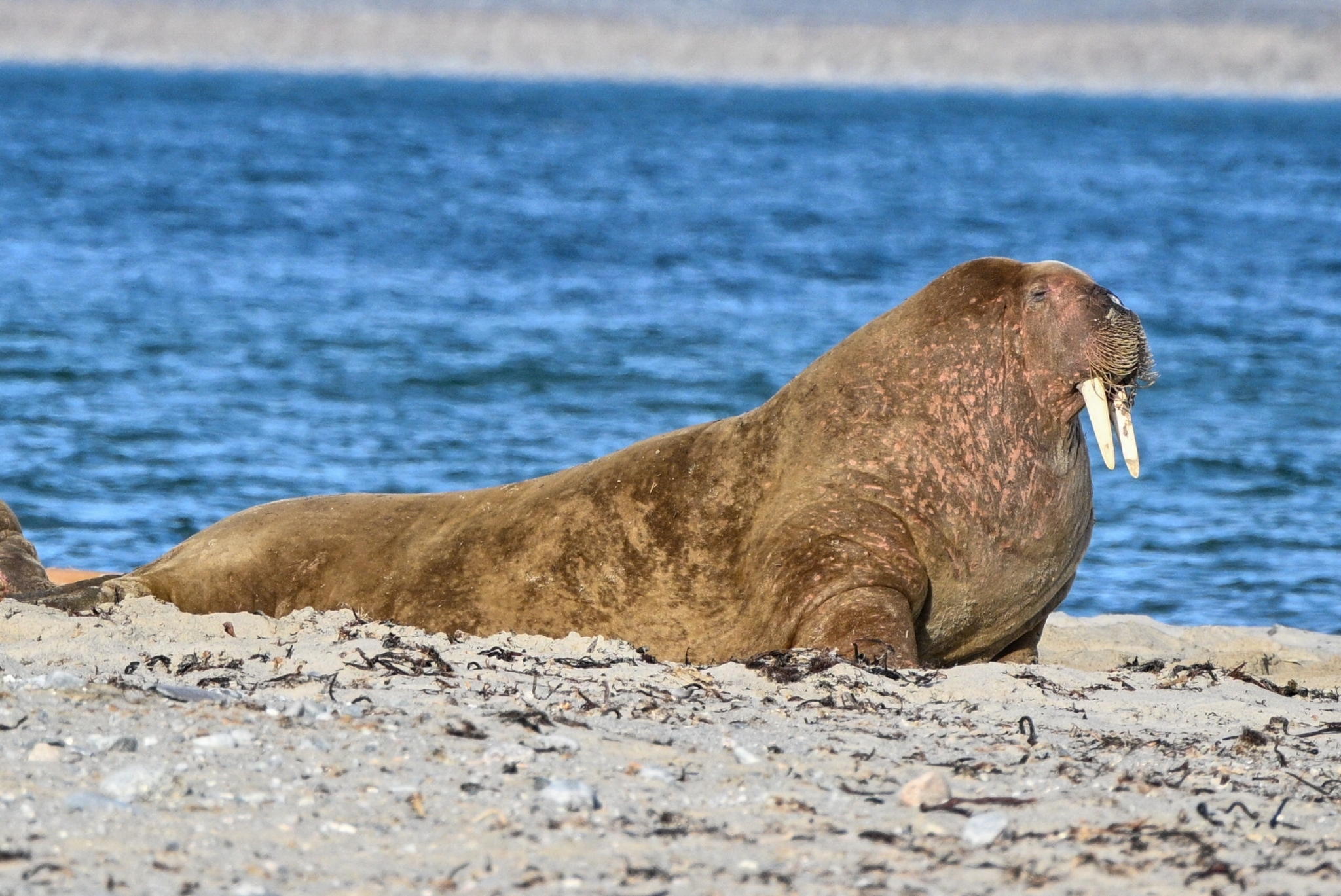
Sensitive whiskers find buried shellfish, while tusks aid social display and hauling out.
Walruses consume bottom-dwelling invertebrates and connect sea-ice habitats with seafloor food webs.
Arctic shelf seas and coasts of the North Atlantic and North Pacific.
Where does a walrus live?
Arctic shelf seas and coasts of the North Atlantic and…
Worth knowing
- Adaptation Sensitive whiskers find buried shellfish, while tusks aid social display and hauling out.
- Ecological role Walruses consume bottom-dwelling invertebrates and connect sea-ice habitats with seafloor food webs.
- Home Arctic shelf seas and coasts of the North Atlantic and North Pacific.
How it survives
Sensitive whiskers find buried shellfish, while tusks aid social display and hauling out.
Long tusks and bristling whiskers belong to a marine giant that feeds far below the ice.
Why relationships matter
Walruses consume bottom-dwelling invertebrates and connect sea-ice habitats with seafloor food webs.
Where it lives
Arctic shelf seas and coasts of the North Atlantic and North Pacific.
Pressures and responses
Sea-ice loss and crowding at land haul-outs, disturbance and local industrial pressure.
Protect critical haul-outs and feeding grounds with regional management.
Sources
- University of Michigan Museum of Zoology — Animal Diversity Web, Odobenus rosmarus
- GBIF — Odobenus rosmarus accepted taxon
- United States Geological Survey — Pacific walrus population research 2026
- United States Fish and Wildlife Service — A journey with giants
Records of where it has been seen come live from GBIF; observed interactions from GloBI. Draft — not yet reviewed by a person.