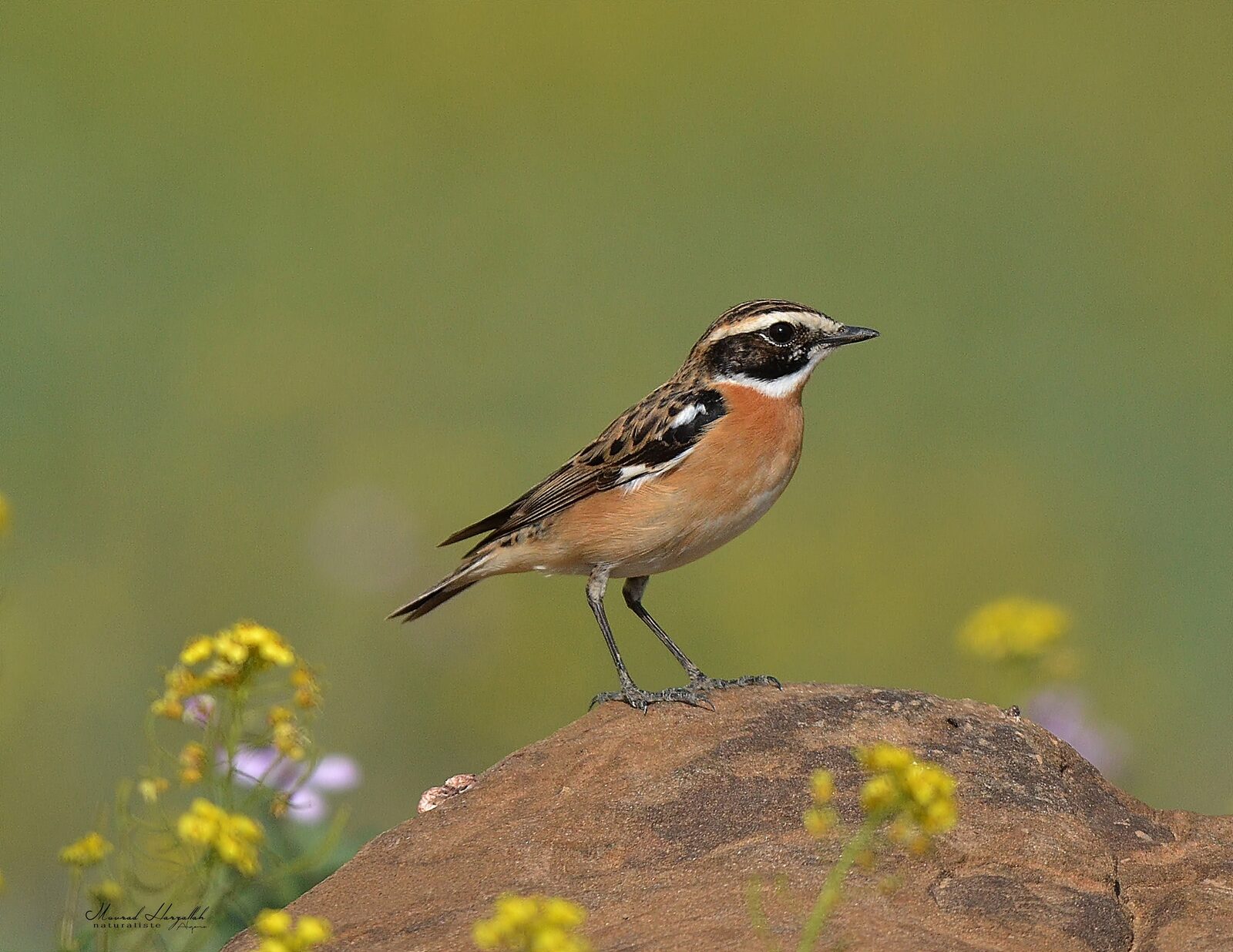
Whinchat
Saxicola rubetra
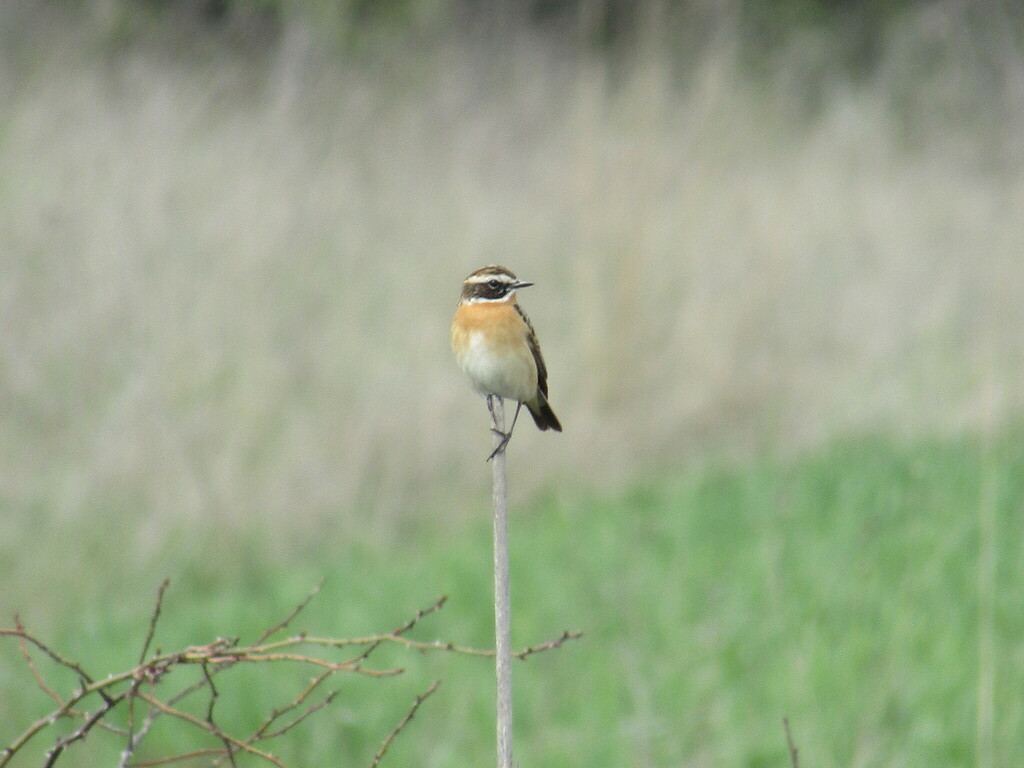
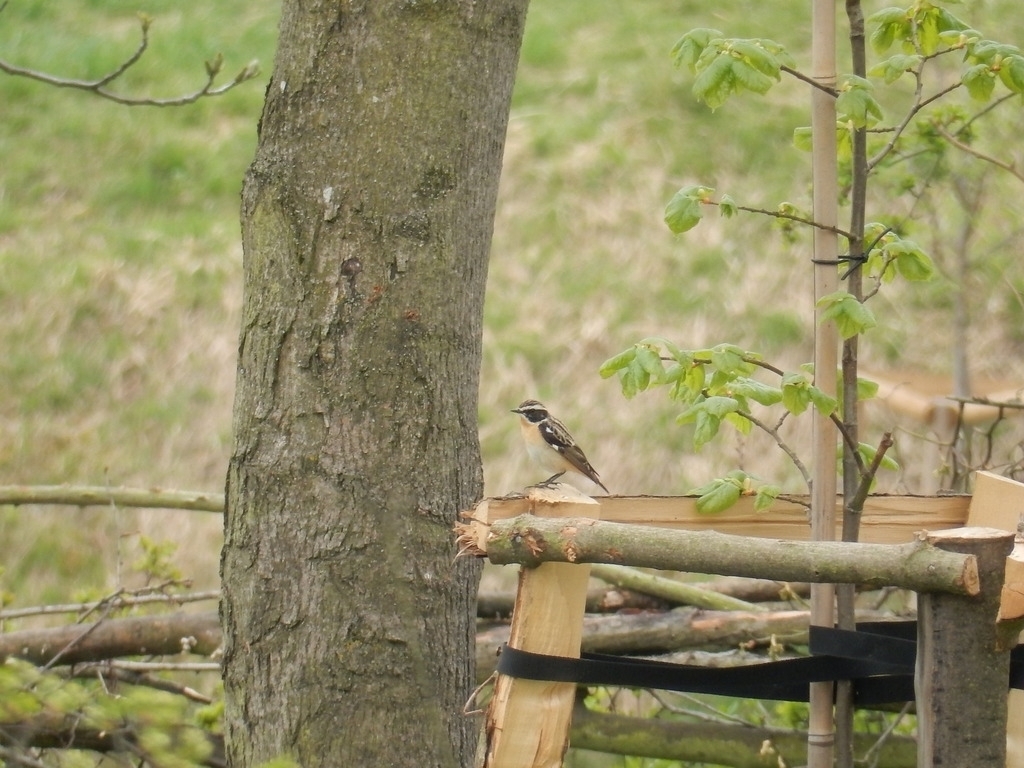
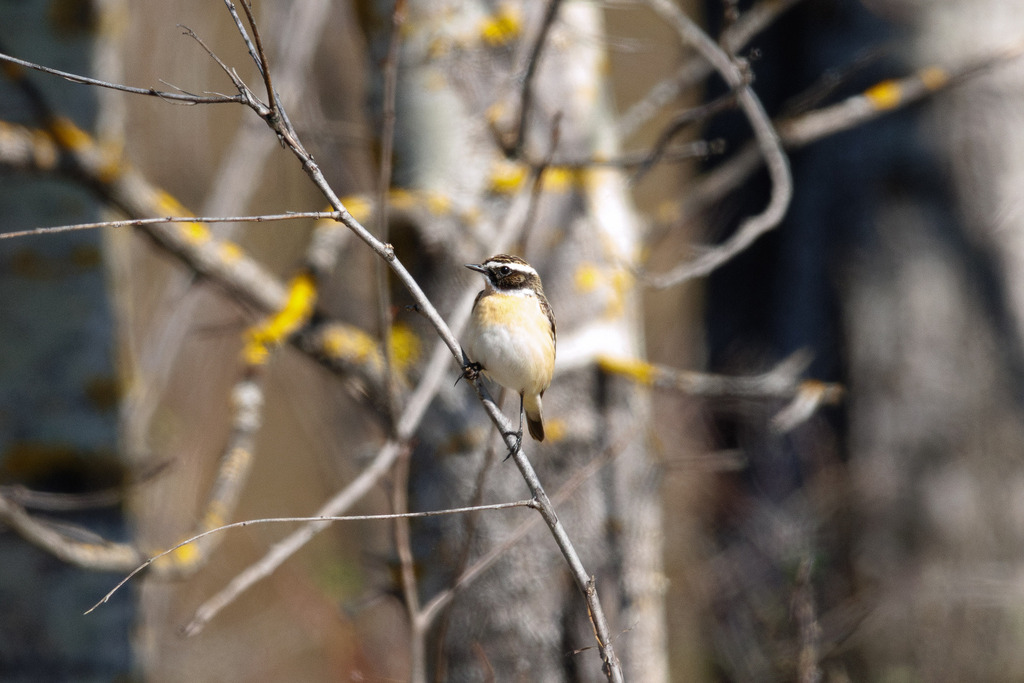
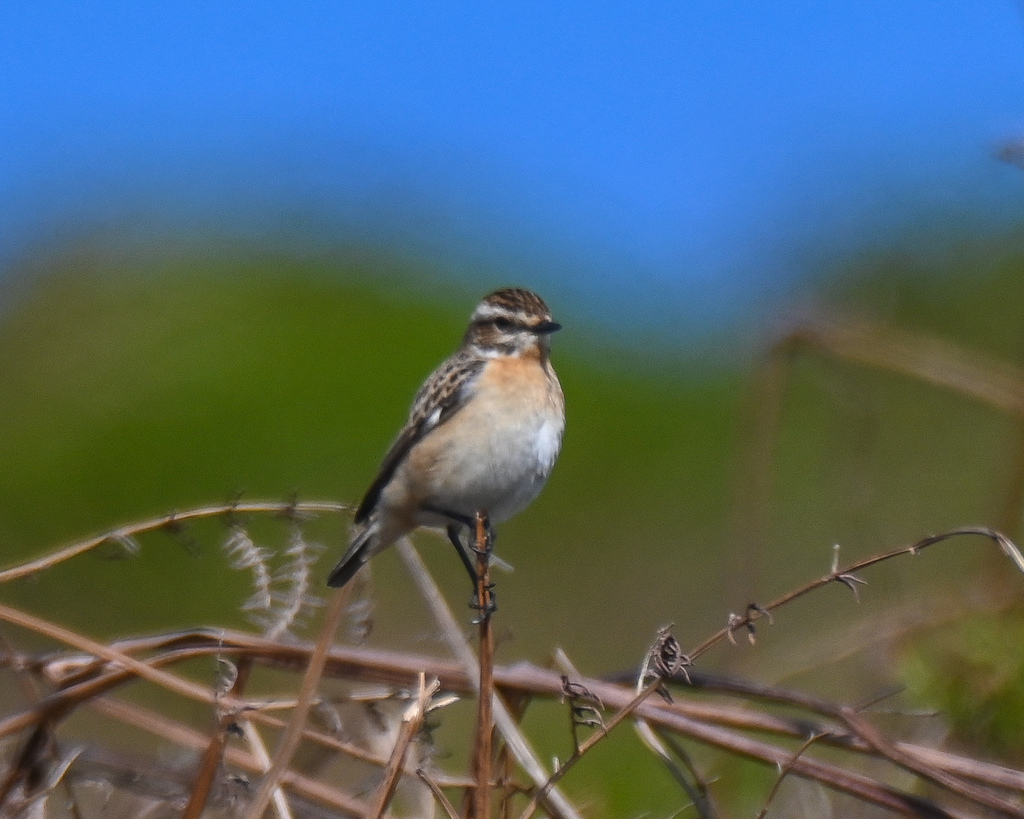
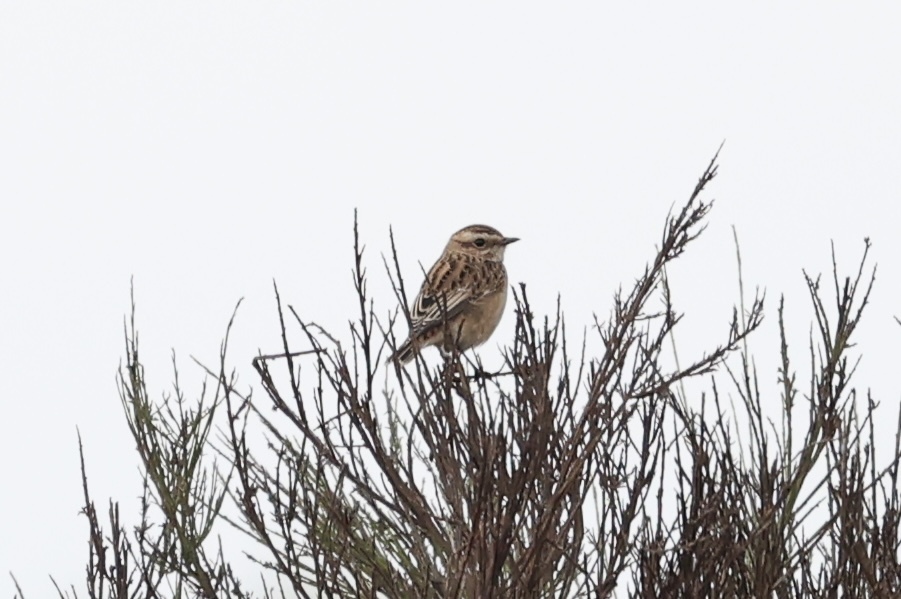
A small chat with a pale eyebrow that perches on fence posts in meadows.
- Status
- Least Concern IUCN Red List
- Eats
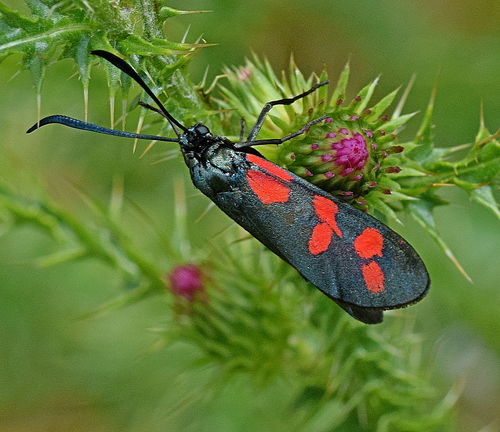
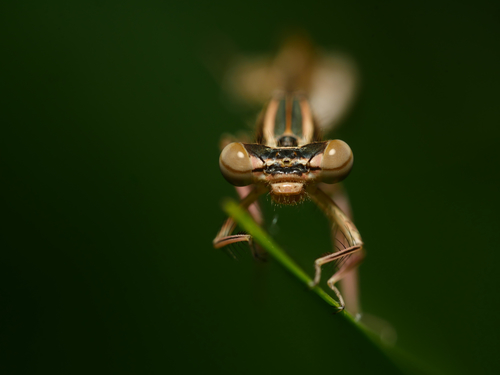
- six-spot burnet, white-legged damselfly, ghost moth and 1,558 more
- Eaten by
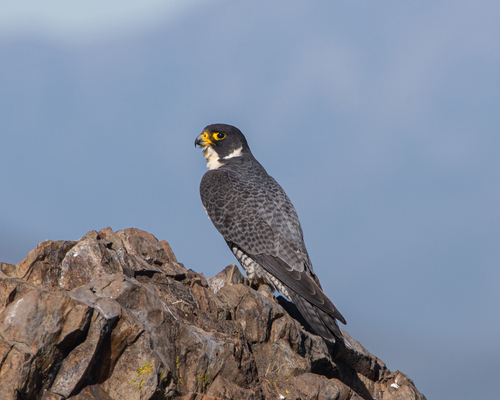
- grey wolf, red fox, northern raven
- Where
- 115 countries
On 4Planet Atlas it is among the wildlife people record most around Andorra la Vella, Ankara and Athens, and 27 more of the cities we cover.
People have shared 242,519 records of the whinchat with GBIF, from 115 countries, most of them from United Kingdom, Spain and Russia. Records collected by GloBI show it eating 1,561 different kinds of animals and plants, and being eaten by 40.
What the whinchat eats, and what eats it
Studies have recorded it eating 1,561 kinds of animals and plants, and 40 kinds of animals eating it. Tap any of them to follow the food chain.
- Insects 1,207
- Snails and slugs 4
- Plants 1
- Birds 1
Eaten by
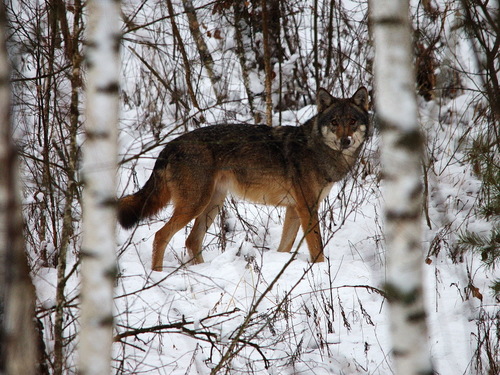
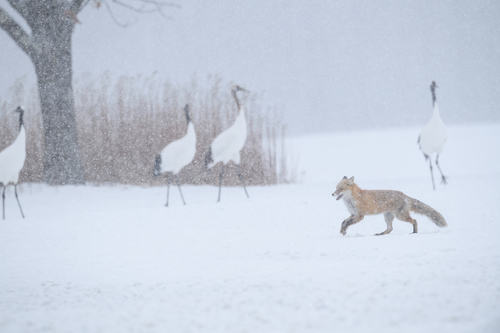
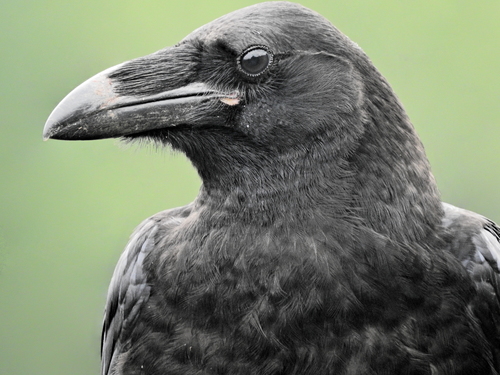

 Whinchat

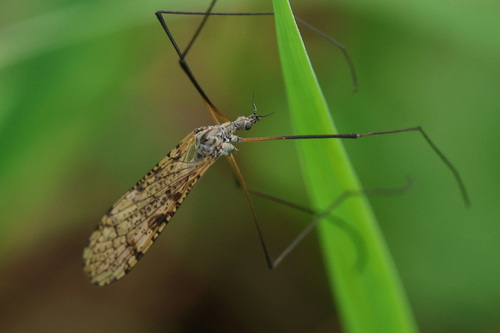
Records from studies worldwide, collected by GloBI. They include animals eaten as carrion, and they are not everything it eats in one place.
Where people see the whinchat
People have shared 242,519 records from 115 countries.
Near a city: Andorra la Vella, Ankara, Athens, Baku, Bergen, Cairo, Chișinău, Copenhagen, Kyiv, Ljubljana, Manama, Minsk, Moscow, Nicosia, Oslo, Podgorica, Riga, Sarajevo, Skopje, Sofia, Stockholm, Tallinn, Tbilisi, Tirana, Vaduz, Valletta, Vilnius, Warsaw, Yerevan, Zagreb.
Records show where people have seen it and shared it, not its full range. Country names open their page in Atlas.
When it is seen
Records per month in the northern hemisphere. More people outdoors also means more records.
Watch and listen
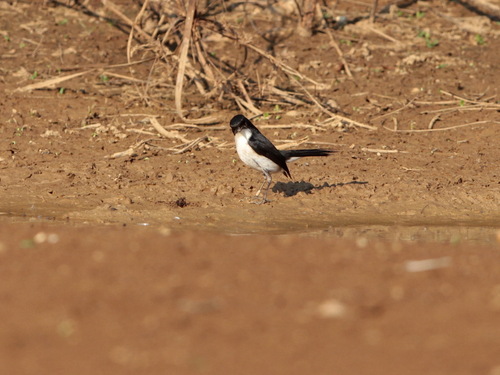
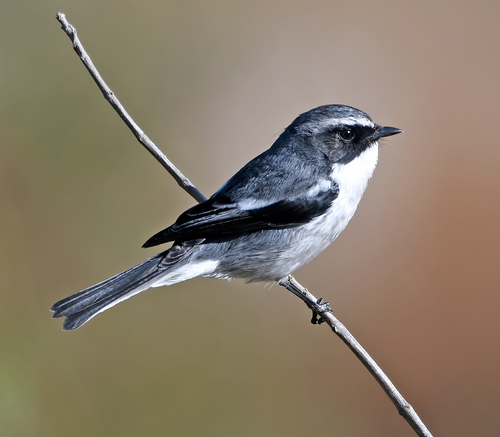
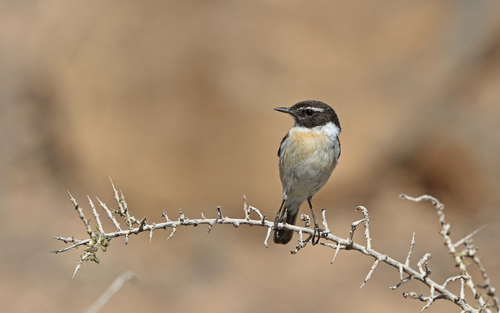
Its closest relatives
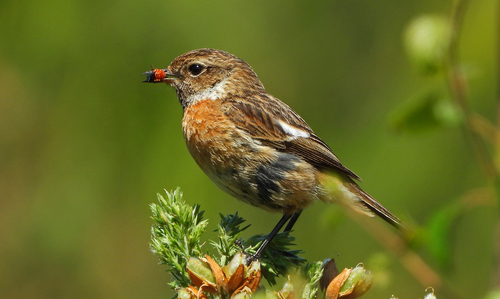
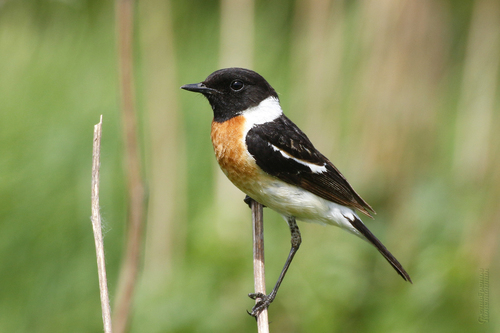
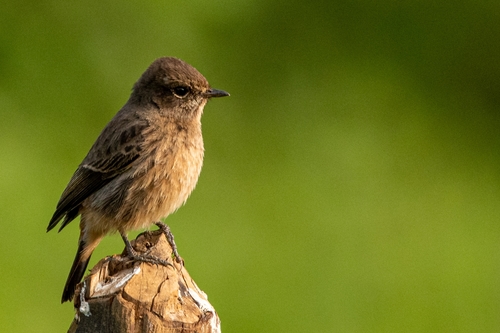
The other species of the genus Saxicola.


Seen a whinchat?
Share your photo on iNaturalist. Other naturalists help confirm it, and the record goes to GBIF, where scientists use it and where the maps on this page come from.
Questions people ask
What does the whinchat eat?
The whinchat has been recorded eating 1,561 different kinds of animals and plants, most of them insects, snails and slugs, plants and birds. The ones recorded most often are six-spot burnet, white-legged damselfly, ghost moth and limnophila punctata; records include animals eaten as carrion. Source: GloBI.
What eats the whinchat?
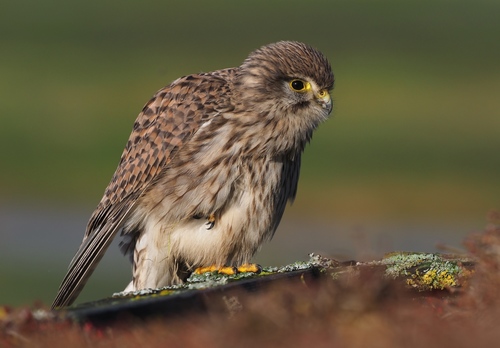
Recorded predators include grey wolf, red fox, northern raven, peregrine falcon and eurasian eagle-owl. Source: GloBI.
Where does the whinchat live?
People have recorded it in 115 countries; the most records come from United Kingdom, Spain, Russia, Sweden and Poland. Records show where people have seen it, not its full range.
When is the whinchat seen most?
In the northern hemisphere, the most records are made in September and the fewest in February. More people outdoors also means more records.
What are the whinchat's closest relatives?
It shares the genus Saxicola with european stonechat, siberian stonechat, pied bush chat, african stonechat and white-throated bush chat.
Sources and photo credits
- GBIF · Saxicola rubetra, 242,519 human observations
- GloBI · recorded interactions of Saxicola rubetra
- Wikidata · Whinchat (Q155869)
- Whinchat (Saxicola rubetra): Mourad Harzallah, CC BY 4.0
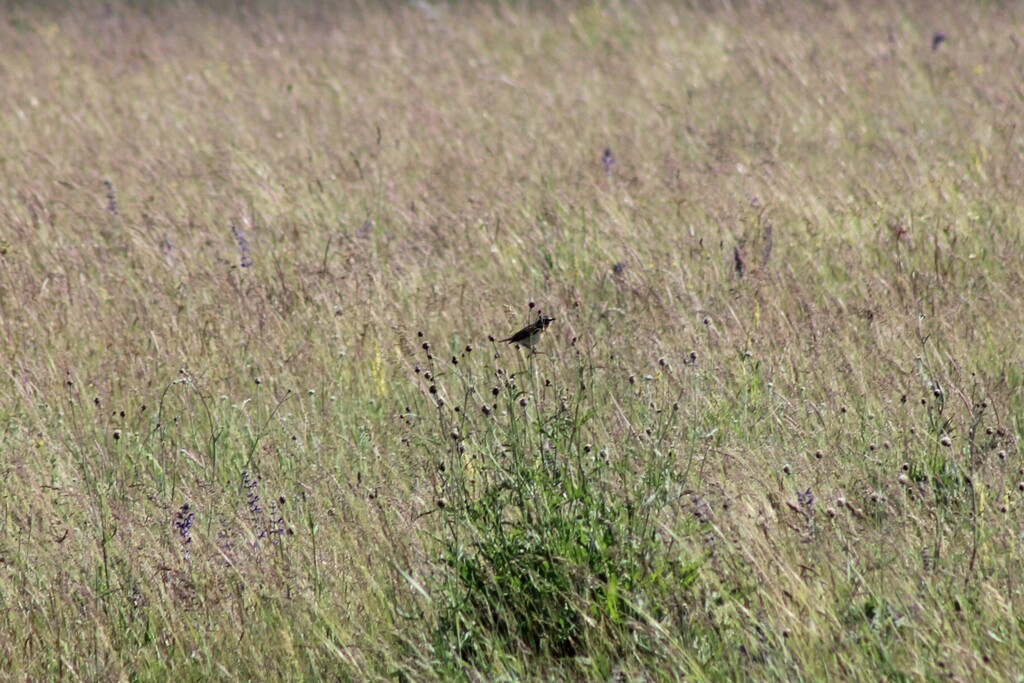
- Whinchat (Saxicola rubetra), 4292 Dobri Dol, Bulgaria: SteveM4560, CC BY 4.0
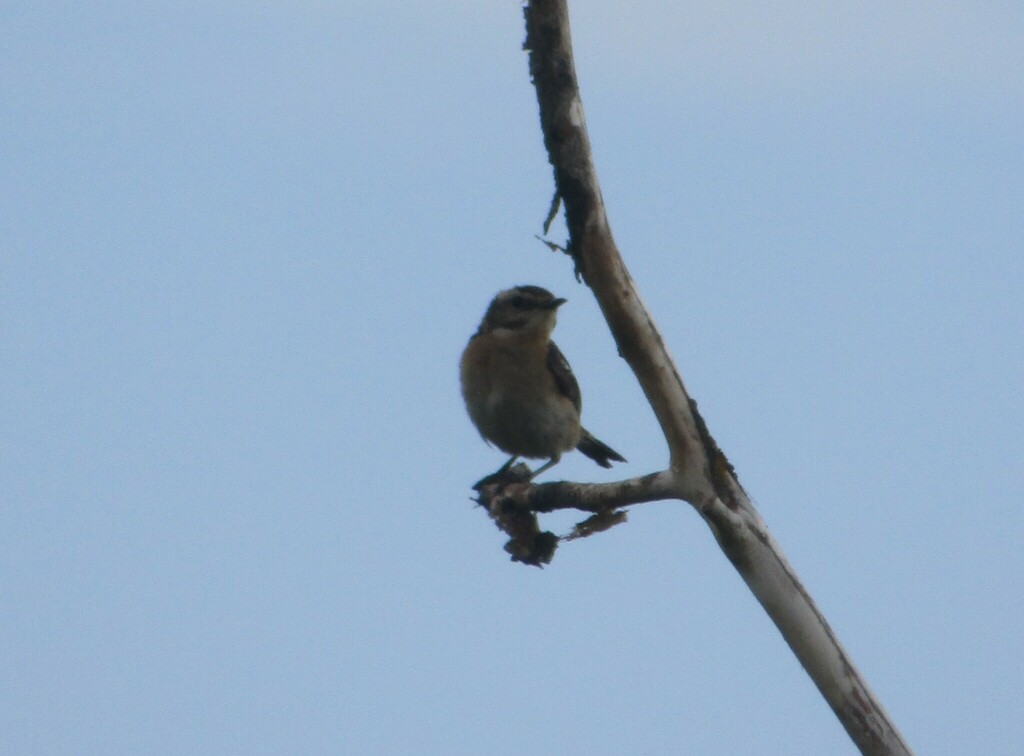
- Whinchat (Saxicola rubetra), Praha 6, Česko: Petra Caltová, CC BY 4.0
- Whinchat (Saxicola rubetra), Первомайский р-н, Киров, Кировская обл., Россия: Вячеслав Шуплецов, CC BY 4.0
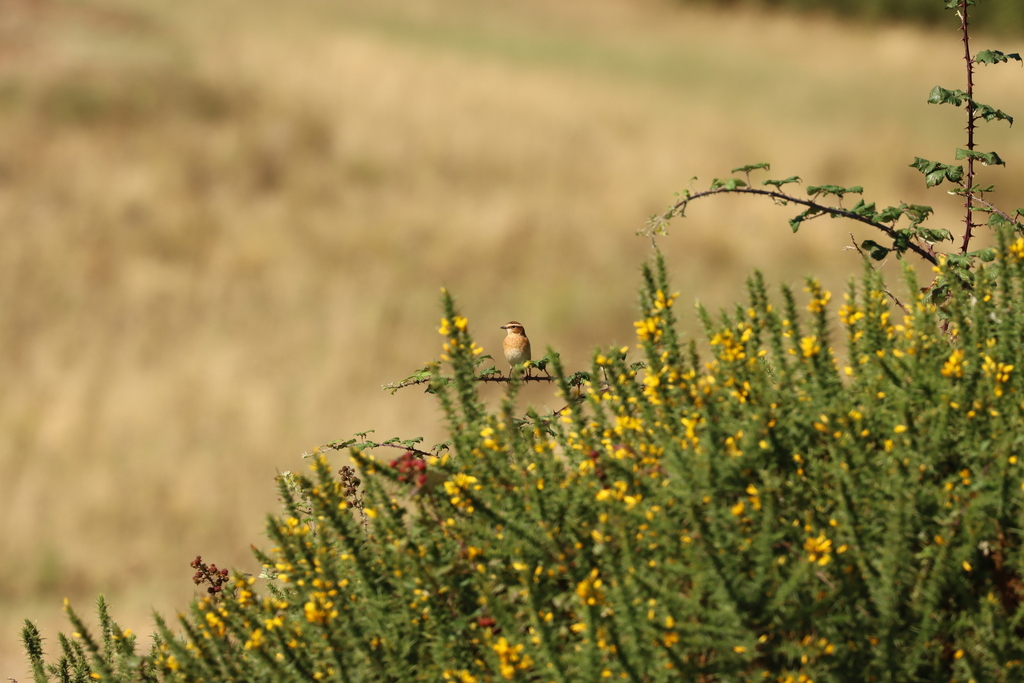
- Whinchat (Saxicola rubetra), Monmouthshire, UK: Frank Sengpiel, CC BY 4.0
- Whinchat (Saxicola rubetra), Kunpeszér, 6096 Ungarn: Philip Schaffer, CC BY 4.0
- Whinchat (Saxicola rubetra), Воскресенский р-н, Московская обл., Россия: snaily_naily, CC BY 4.0
- Whinchat (Saxicola rubetra), Hollybed Common, Worcestershire, UK: Dave, CC BY 4.0
- Whinchat (Saxicola rubetra), London, UK: James Heal, CC BY 4.0
- Six-spot burnet: Kostas Zontanos, CC BY 4.0
- White-legged damselfly: Alexis Tinker-Tsavalas, CC BY 4.0
- Ghost moth: Janet Graham, CC BY 4.0
- Limnophila punctata: Вячеслав Юсупов, CC BY 4.0
- Grey wolf: Andrew Simon, CC BY 4.0
- Red fox: Morten Ross, CC BY 4.0
- Northern raven: xulescu_g, CC BY-SA 4.0
- Peregrine falcon: Nicolás Villaseca Merino, CC BY-SA 4.0
- Eurasian sparrowhawk: Stanislav Murashkin, CC BY 4.0
- Common kestrel: Frank Vassen, CC BY 4.0
- European stonechat: Paul Lewis, CC BY 4.0
- Siberian stonechat: Константин Селивёрстов, CC BY 4.0
- Pied bush chat: Harshad Sharma, CC BY 4.0
- African stonechat: Derek Keats, CC BY 4.0
- White-throated bush chat: Subramanya CK, CC BY-SA 4.0
- Jerdon's bush chat: Ian Dugdale, CC BY 4.0
- Grey bush chat: Pål A. Olsvik, CC BY 4.0
- Canary islands stonechat: Christoph Moning, CC BY 4.0
Records show where people have seen and shared the whinchat, not its full range, and some countries and months are recorded far more than others. The food web lists interactions that studies have recorded somewhere in the world (GloBI), not everything it eats in one place.
Checked 2026-11-22.