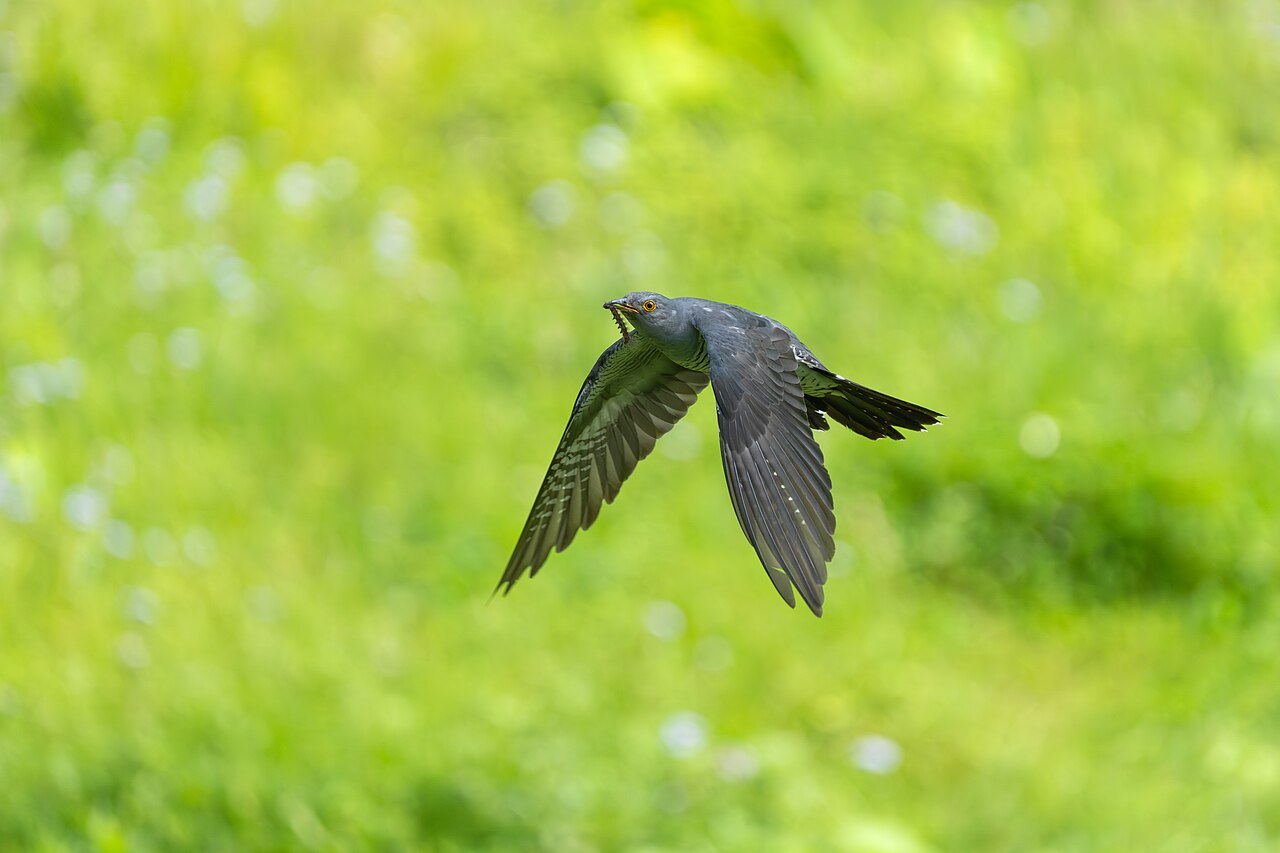
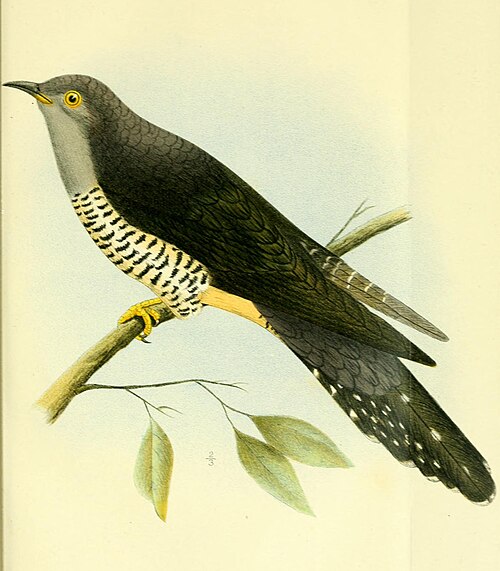
Common cuckoo
Cuculus canorus
The female cuckoo lays her eggs in other birds' nests, and the hosts raise the chick as their own.
- Status
- Least Concern IUCN Red List
- Eats
- common toad, common frog, European robin and 1,019 more
- Eaten by
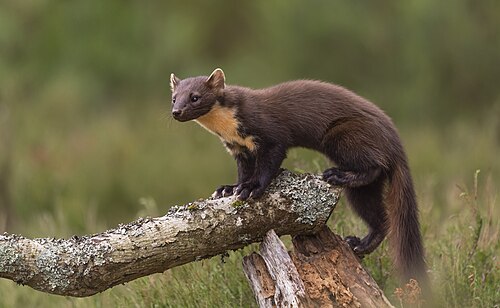
- northern raven, Eurasian jay, peregrine falcon
- Where
- 133 countries
On 4Planet Atlas it is among the wildlife people record most around Amsterdam, Athens and Beijing, and 14 more of the cities we cover.
People have shared 520,082 records of the common cuckoo with GBIF, from 133 countries, most of them from United Kingdom, Spain and Germany. Records collected by GloBI show it eating 1,022 different kinds of animals and plants, and being eaten by 12.
What the common cuckoo eats, and what eats it
Studies have recorded it eating 1,022 kinds of animals and plants, and 12 kinds of animals eating it. Tap any of them to follow the food chain.
- Insects 647
- Birds 38
- Amphibians 37
- Snails and slugs 3
Eaten by
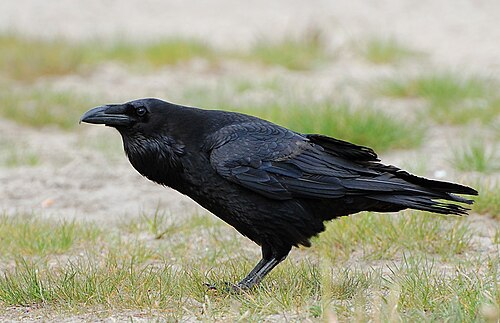
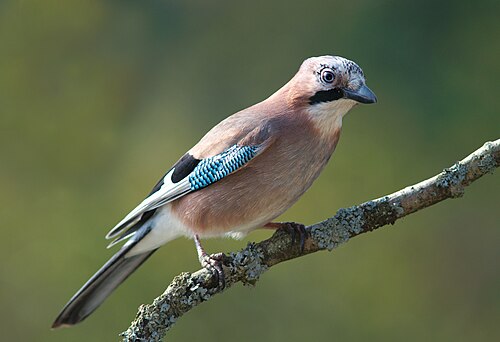

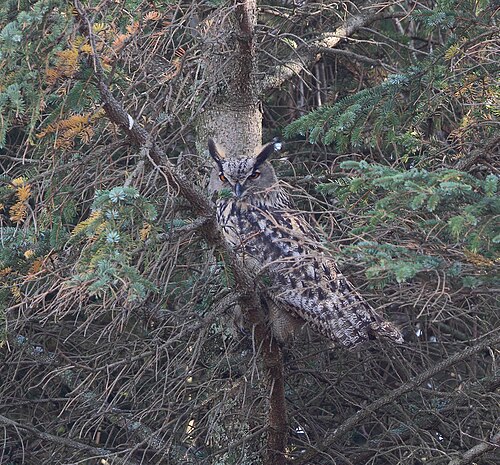


 Common cuckoo
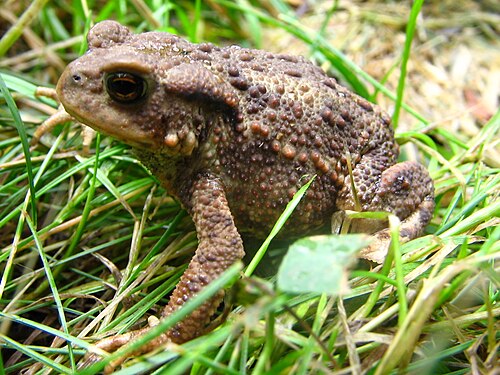

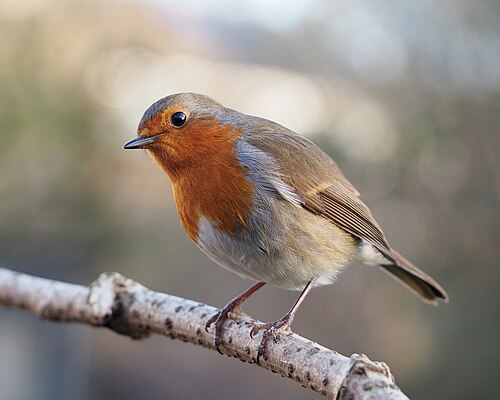


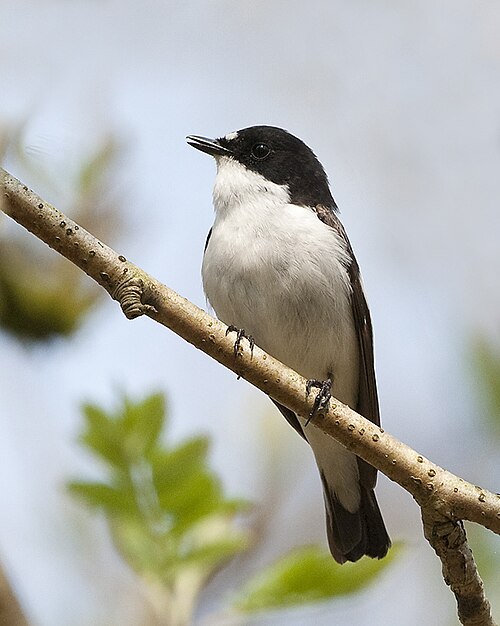
Records from studies worldwide, collected by GloBI. They include animals eaten as carrion, and they are not everything it eats in one place.
Where people see the common cuckoo
People have shared 520,082 records from 133 countries.
Near a city: Amsterdam, Athens, Beijing, Bergen, Berlin, Brussels, Copenhagen, Helsinki, Madrid, Oslo, Paris, Prague, Seoul, Shanghai, Stockholm, Vienna, Warsaw.
Records show where people have seen it and shared it, not its full range. Country names open their page in Atlas.
When it is seen
Records per month in the northern hemisphere. More people outdoors also means more records.
Watch and listen
Its closest relatives
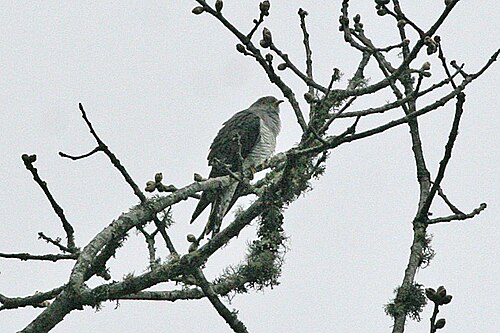
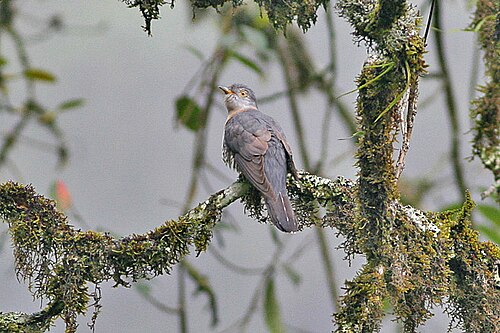
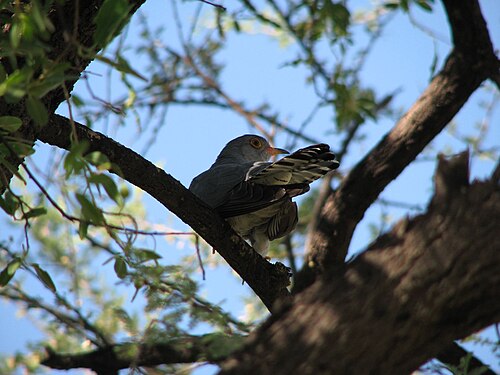
The other species of the genus Cuculus.




Seen a common cuckoo?
Share your photo on iNaturalist. Other naturalists help confirm it, and the record goes to GBIF, where scientists use it and where the maps on this page come from.
Questions people ask
What does the common cuckoo eat?
The common cuckoo has been recorded eating 1,022 different kinds of animals and plants, most of them insects, birds, amphibians and snails and slugs. The ones recorded most often are common toad, common frog, european robin, common nightingale and common redstart; records include animals eaten as carrion. Source: GloBI.
What eats the common cuckoo?
Recorded predators include northern raven, eurasian jay, peregrine falcon, eurasian eagle-owl and eurasian sparrowhawk. Source: GloBI.
Where does the common cuckoo live?
People have recorded it in 133 countries; the most records come from United Kingdom, Spain, Germany, France and Portugal. Records show where people have seen it, not its full range.
When is the common cuckoo seen most?
In the northern hemisphere, the most records are made in May and the fewest in January. More people outdoors also means more records.
What are the common cuckoo's closest relatives?
It shares the genus Cuculus with lesser cuckoo, himalayan cuckoo, indian cuckoo, african cuckoo and oriental cuckoo.
Sources and photo credits
- GBIF · Cuculus canorus, 520,082 human observations
- GloBI · recorded interactions of Cuculus canorus
- Wikidata · Common cuckoo (Q18845)
- Common cuckoo (Cuculus canorus): Sunuwargr, CC BY-SA 4.0
- Common toad: Taka, CC BY-SA 3.0
- Common frog: Richard Bartz, Munich aka Makro Freak Image:MFB.jpg, CC BY-SA 2.5
- European robin: Francis C. Franklin, CC BY-SA 3.0
- Common nightingale: Արարատ Թրվանց, CC BY-SA 4.0
- Common redstart: Aconcagua (talk), CC BY-SA 3.0
- Dunnock: Smalljim, CC BY 3.0
- Great reed warbler: Andreas Trepte, CC BY-SA 2.5
- Eurasian reed warbler: Ron Knight, CC BY 2.0
- European pied flycatcher: Mark Medcalf, CC BY 2.0
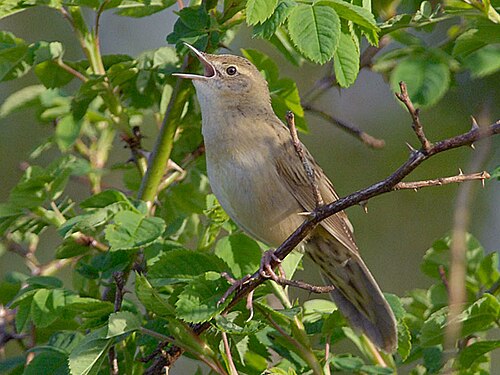
- Common grasshopper warbler: Stefan Hage, Birds.se, CC BY-SA 3.0
- Northern raven: Accipiter (R. Altenkamp, Berlin), CC BY-SA 3.0
- Eurasian jay: Luc Viatour, CC BY-SA 3.0
- Peregrine falcon: Georges Lignier (georges.lignier@wanadoo.fr), CC BY-SA 3.0
- Eurasian eagle-owl: Marton Berntsen, CC BY-SA 4.0
- Eurasian sparrowhawk: Meneer Zjeroen, CC BY 2.0
- European pine marten: caroline legg, CC BY 2.0
- Carrion crow: Alexis Lours, CC BY 4.0
- Eurasian hobby: Imran Shah from Islamabad, Pakistan, CC BY-SA 2.0
- Lesser cuckoo: Ron Knight from Seaford, East Sussex, United Kingdom, CC BY 2.0
- Himalayan cuckoo: Ron Knight from Seaford, East Sussex, United Kingdom, CC BY 2.0
- Indian cuckoo: Creepanta, CC BY-SA 4.0
- African cuckoo: Flickr user Alastair Rae . Photo uploaded to commons by user ltshears, CC BY-SA 2.0
- Oriental cuckoo: Aviceda, CC BY-SA 3.0
- Black cuckoo: Alan Manson, CC BY-SA 2.0
- Madagascar cuckoo: Alphonse Dubois, Public domain
- Red-chested cuckoo: Giles Laurent, CC BY-SA 4.0


Records show where people have seen and shared the common cuckoo, not its full range, and some countries and months are recorded far more than others. The food web lists interactions that studies have recorded somewhere in the world (GloBI), not everything it eats in one place.
Checked 2026-11-20.