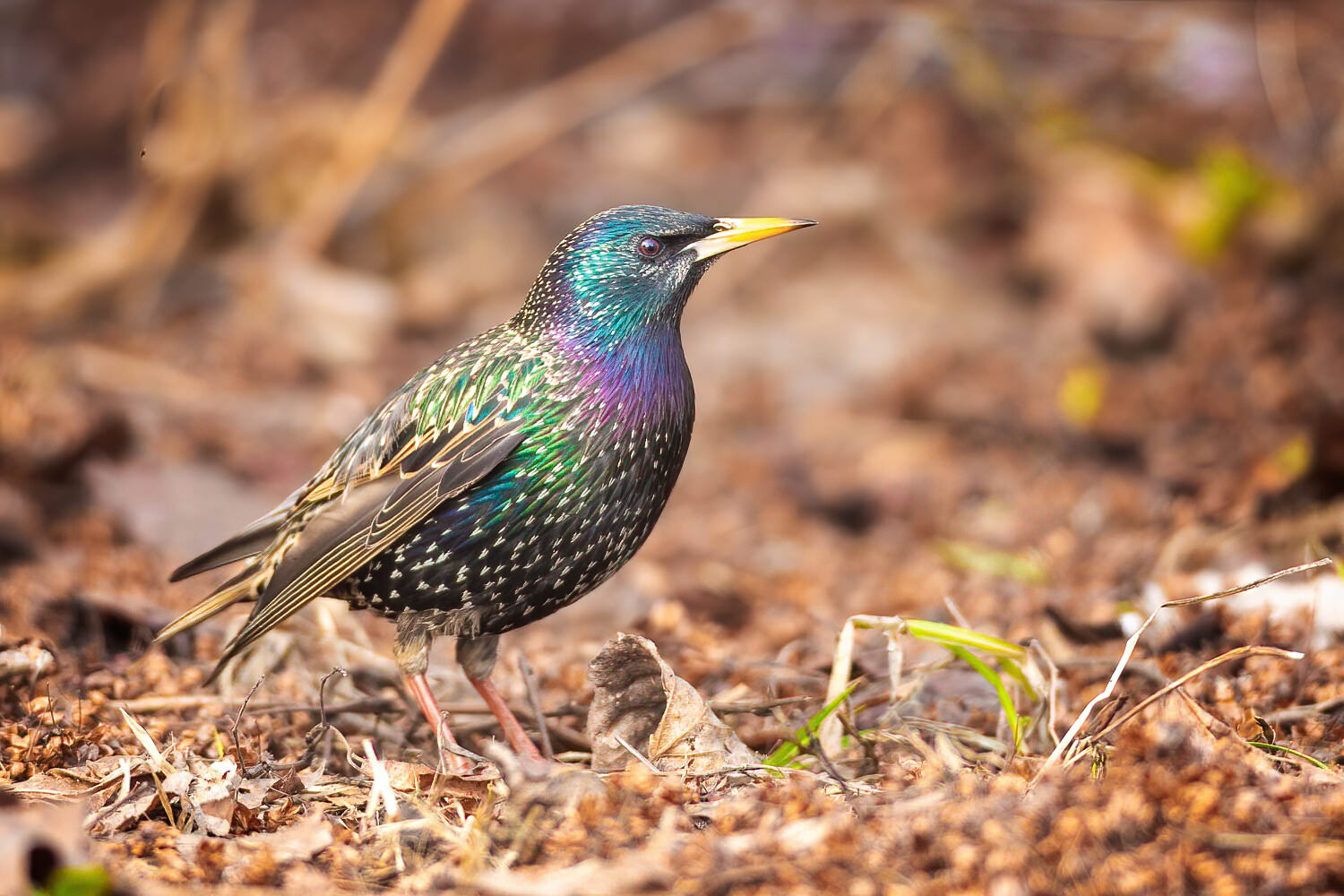
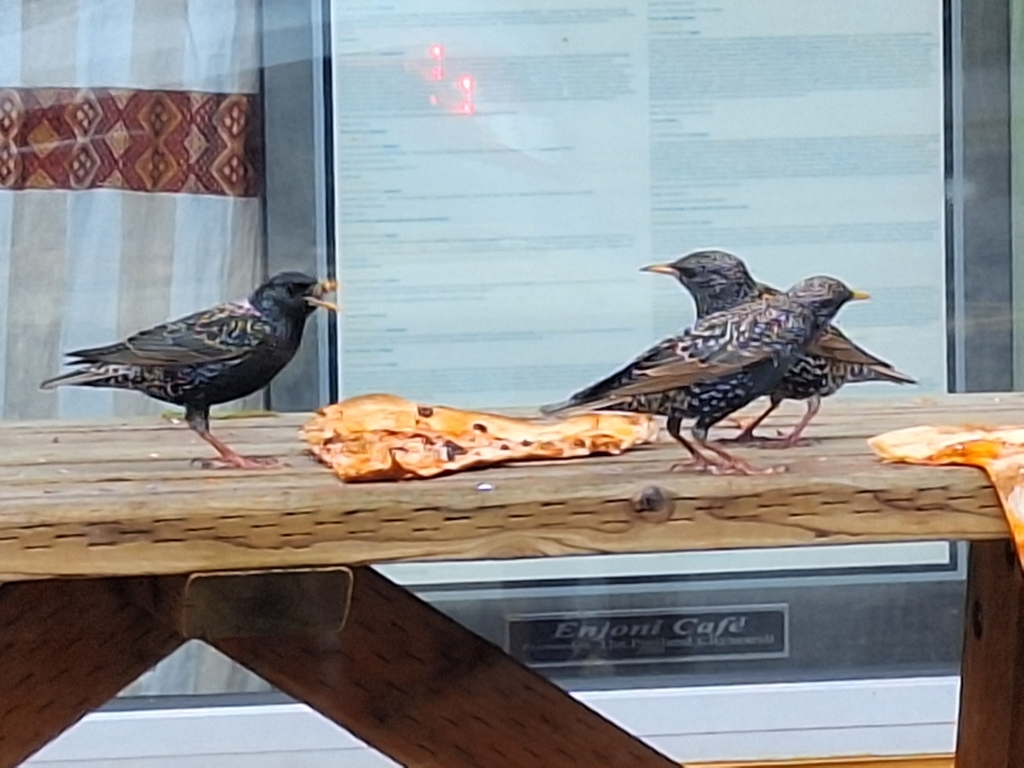
Common starling
Sturnus vulgaris
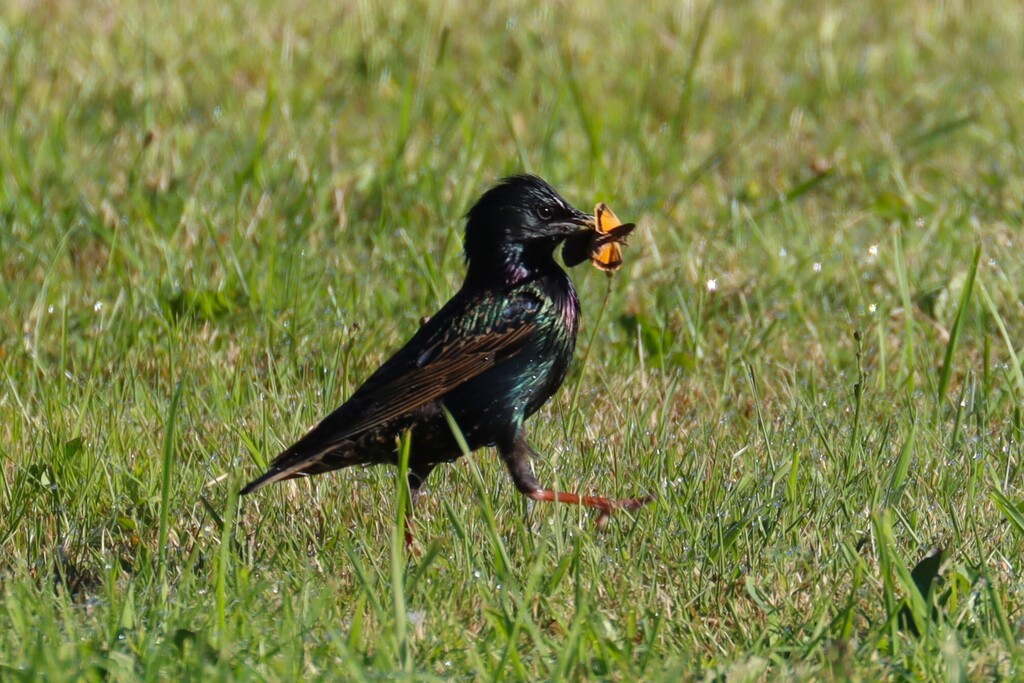
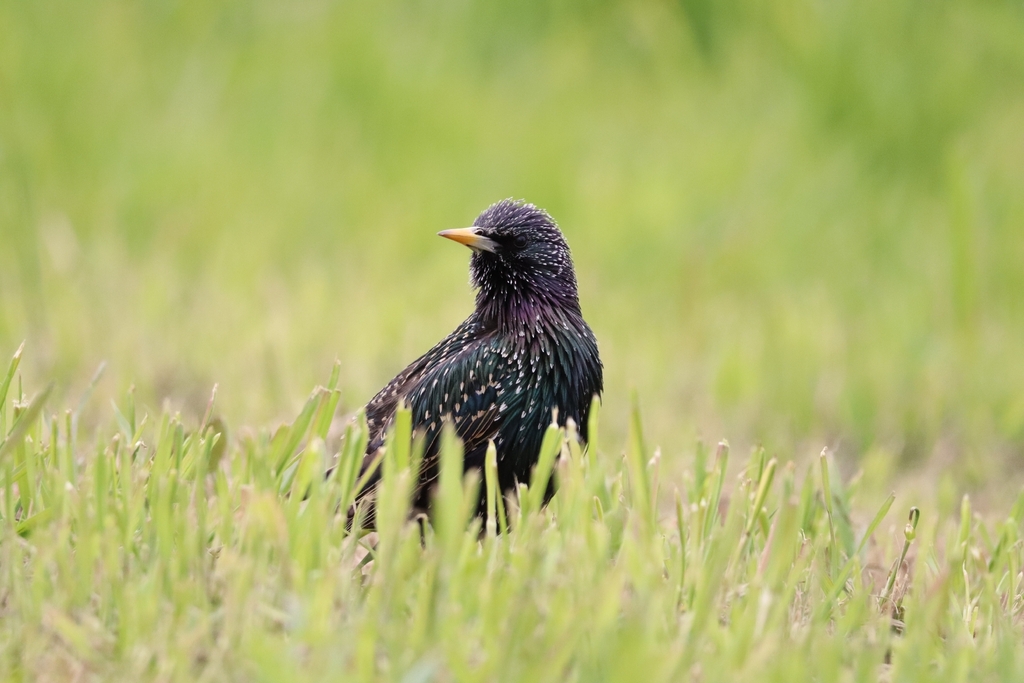
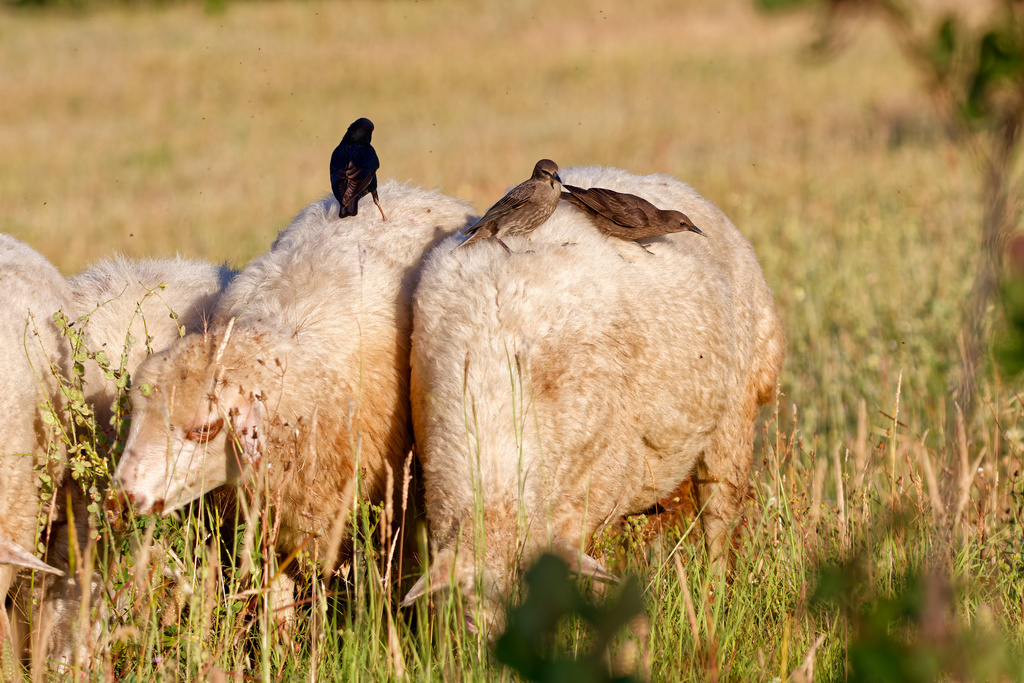
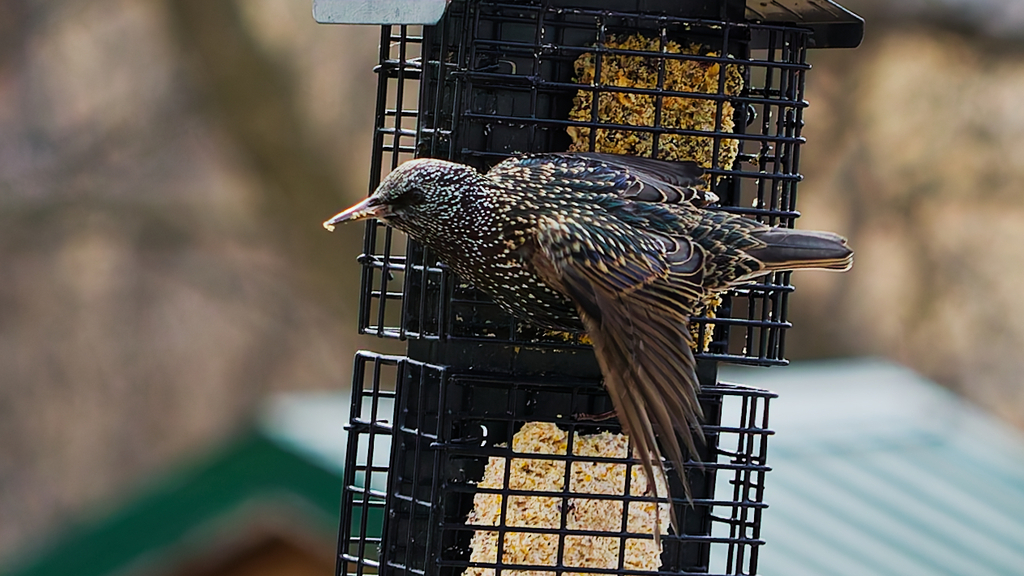
Starlings mimic other sounds in their song, and winter flocks can wheel through the sky in shape-shifting clouds.
- Status
- Least Concern IUCN Red List
- Eats
- dwarf elder, eastern red-cedar, black cherry and 3,816 more
- Eaten by
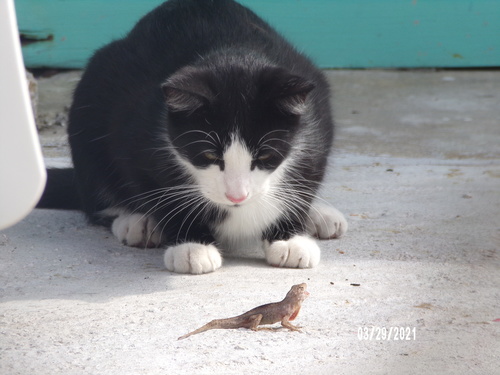
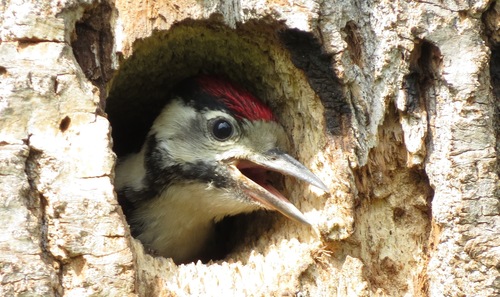
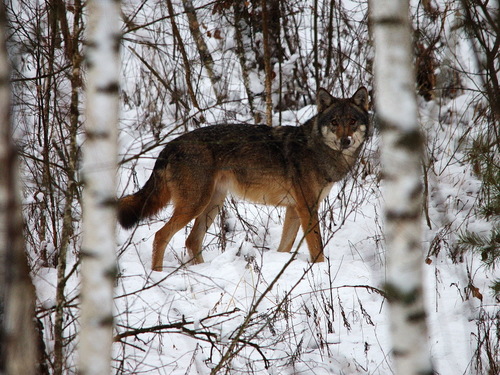
- cat, great spotted woodpecker, grey wolf
- Where
- 130 countries
On 4Planet Atlas it is among the wildlife people record most around Amsterdam, Athens and Auckland, and 24 more of the cities we cover.
People have shared 22,170,080 records of the common starling with GBIF, from 130 countries, most of them from United States, Canada and United Kingdom. Records collected by GloBI show it eating 3,819 different kinds of animals and plants, and being eaten by 71.
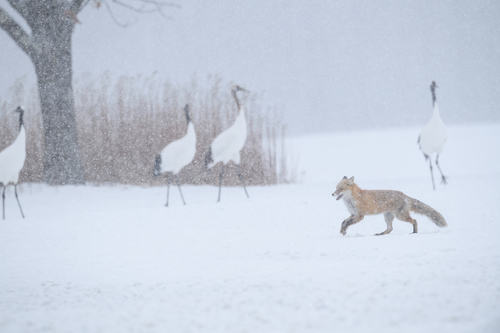
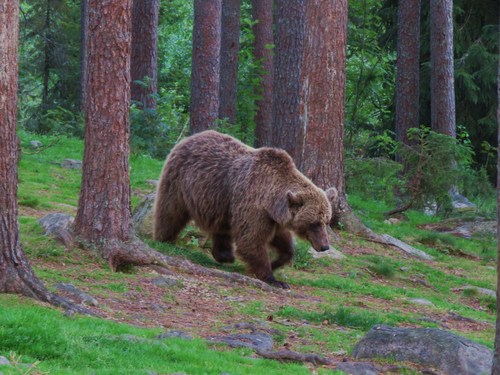
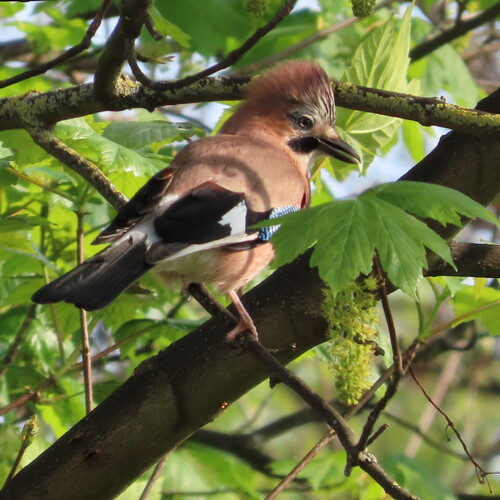
What the common starling eats, and what eats it
Studies have recorded it eating 3,819 kinds of animals and plants, and 71 kinds of animals eating it. Tap any of them to follow the food chain.
- Plants 1,946
- Insects 1,097
- Reptiles 113
- Amphibians 50
- Birds 42
- Mammals 30
- Snails and slugs 4
Eaten by

 Common starling
Records from studies worldwide, collected by GloBI. They include animals eaten as carrion, and they are not everything it eats in one place.
Where people see the common starling
People have shared 22,170,080 records from 130 countries.
Near a city: Amsterdam, Athens, Auckland, Bergen, Berlin, Brussels, Buenos Aires, Cape Town, Copenhagen, Delhi, Helsinki, Lisbon, London, Madrid, Melbourne, New York, Oslo, Paris, Prague, Reykjavík, Rome, Stockholm, Sydney, Toronto, Vancouver, Vienna, Warsaw.
Records show where people have seen it and shared it, not its full range. Country names open their page in Atlas.
When it is seen
Records per month in the northern hemisphere. More people outdoors also means more records.
Watch and listen

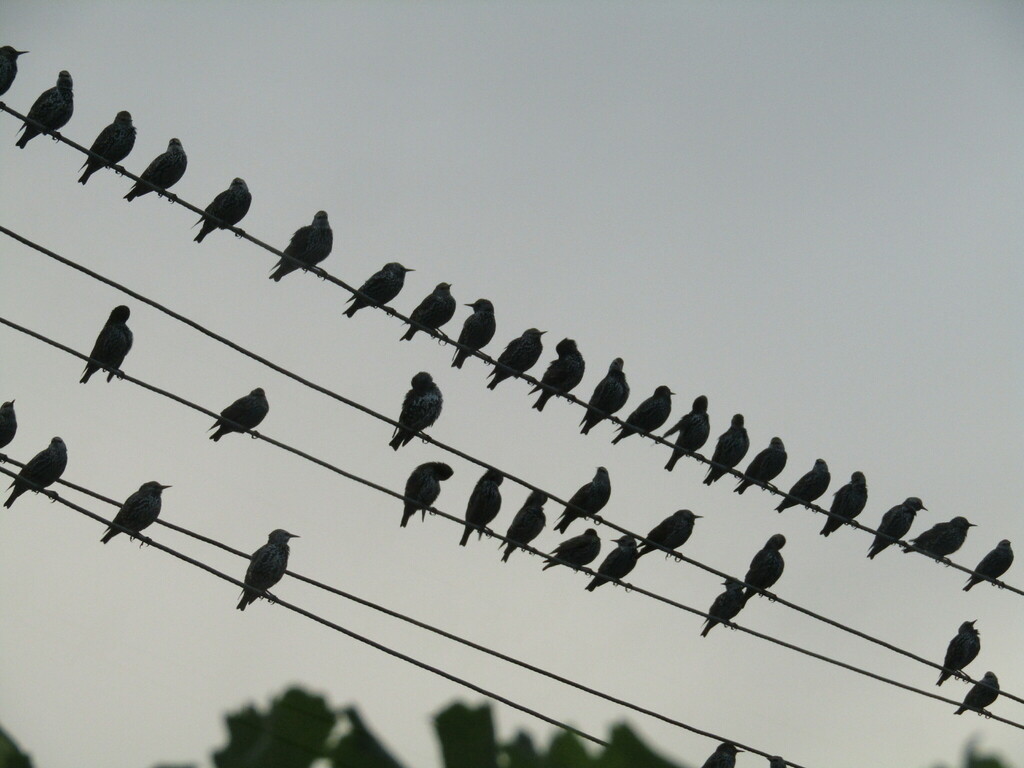
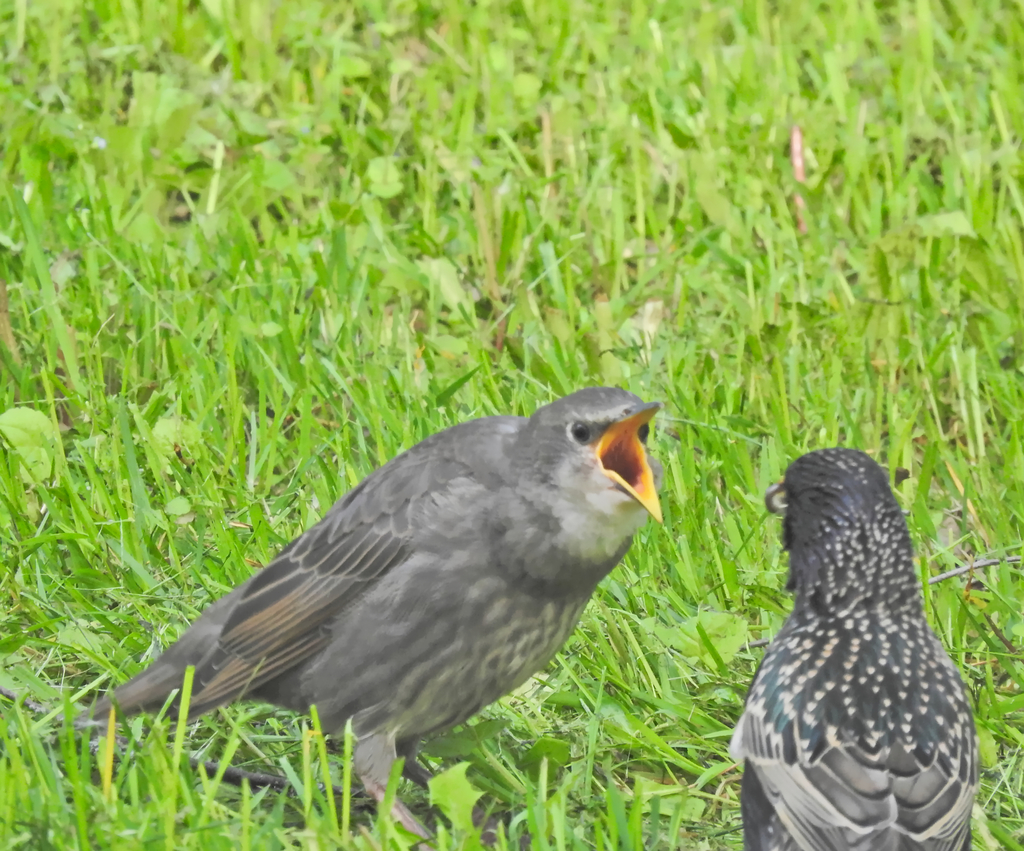
Its closest relatives
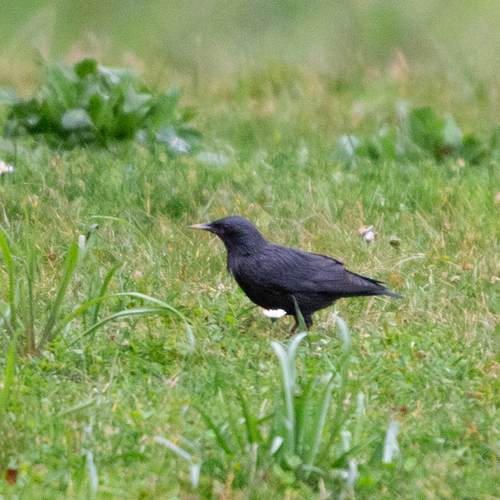
The other species of the genus Sturnus.
Seen a common starling?
Share your photo on iNaturalist. Other naturalists help confirm it, and the record goes to GBIF, where scientists use it and where the maps on this page come from.
Questions people ask
What does the common starling eat?
The common starling has been recorded eating 3,819 different kinds of animals and plants, most of them plants, insects, reptiles and amphibians. The ones recorded most often are dwarf elder, eastern red-cedar, black cherry, staghorn sumac and wood bluegrass; records include animals eaten as carrion. Source: GloBI.
What eats the common starling?
Recorded predators include cat, great spotted woodpecker, grey wolf, red fox and brown bear. Source: GloBI.
Where does the common starling live?
People have recorded it in 130 countries; the most records come from United States, Canada, United Kingdom, Australia and New Zealand. Records show where people have seen it, not its full range.
When is the common starling seen most?
In the northern hemisphere, the most records are made in May and the fewest in August. More people outdoors also means more records.
What are the common starling's closest relatives?
It shares the genus Sturnus with spotless starling.
Sources and photo credits
- GBIF · Sturnus vulgaris, 22,170,080 human observations
- GloBI · recorded interactions of Sturnus vulgaris
- Wikidata · Common starling (Q25469)
- Common starling (Sturnus vulgaris): egorbirder, CC BY 4.0
- Common starling (Sturnus vulgaris), Humboldt, Portland, OR, USA: Harley Henry, CC BY 4.0
- Common starling (Sturnus vulgaris), 4292 Dobri Dol, Bulgaria: SteveM4560, CC BY 4.0
- Common starling (Sturnus vulgaris), Skagit County, WA, USA: brentnmoran, CC BY-SA 4.0
- Common starling (Sturnus vulgaris), Pitesti, RO-AG, RO: Radu Teodoreanu, CC BY 4.0
- Common starling (Sturnus vulgaris), Vake-Saburtalo, Tbilisi, Georgia: Donsky, CC BY 4.0
- Common starling (Sturnus vulgaris), Platteville, WI 53818, USA: Daughter Dad, CC BY 4.0
- Common starling (Sturnus vulgaris), 4292 Dobri Dol, Bulgaria: SteveM4560, CC BY 4.0
- Common starling (Sturnus vulgaris), Tartu, Tartu, Estonia: Nicolás Tamargo, CC0
- Cat: chloe ⋆˚꩜。, CC BY-SA 4.0
- Great spotted woodpecker: Вячеслав Юсупов, CC BY 4.0
- Grey wolf: Andrew Simon, CC BY 4.0
- Red fox: Morten Ross, CC BY 4.0
- Brown bear: Annika Lindqvist, CC BY 4.0
- Northern raven: cello caruso-turiello, CC BY 4.0
- Eurasian jay: Helen Bovill, CC BY 4.0
- Spotless starling: euqirneto, CC BY 4.0
Records show where people have seen and shared the common starling, not its full range, and some countries and months are recorded far more than others. The food web lists interactions that studies have recorded somewhere in the world (GloBI), not everything it eats in one place.
Checked 2026-11-20.