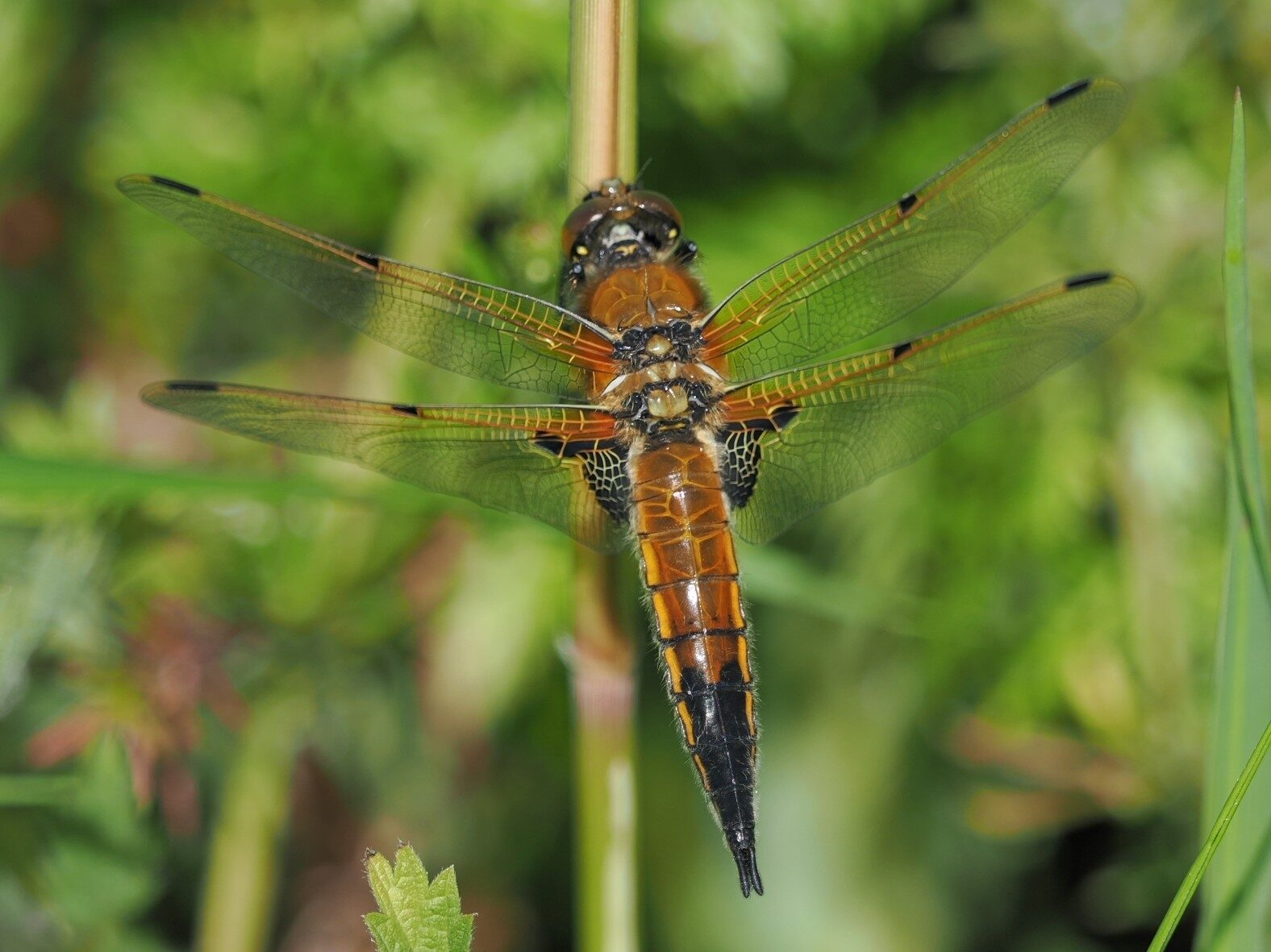
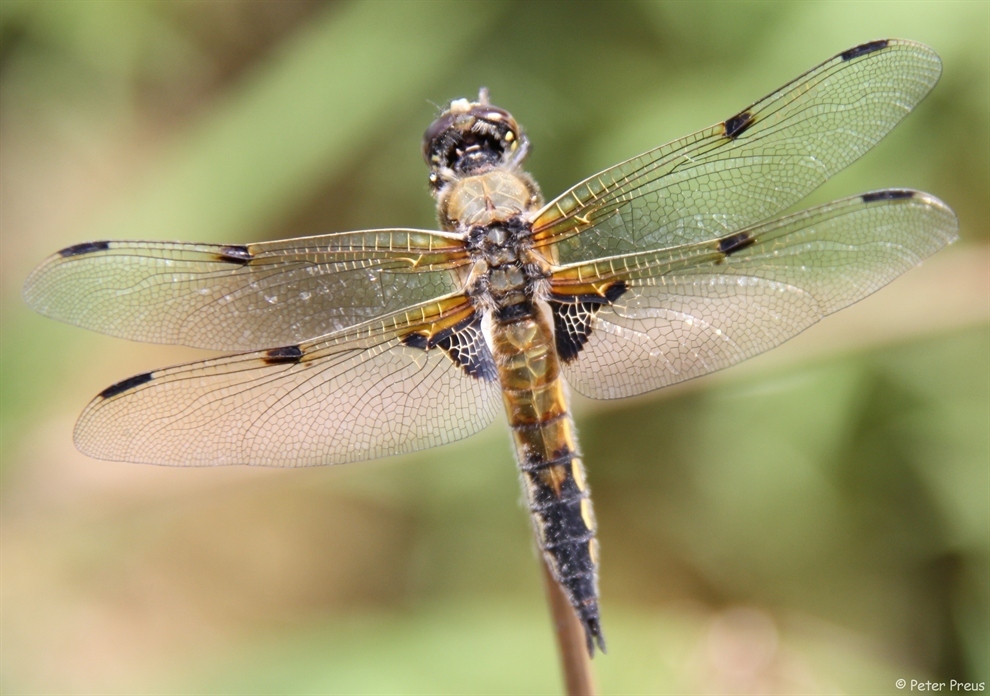
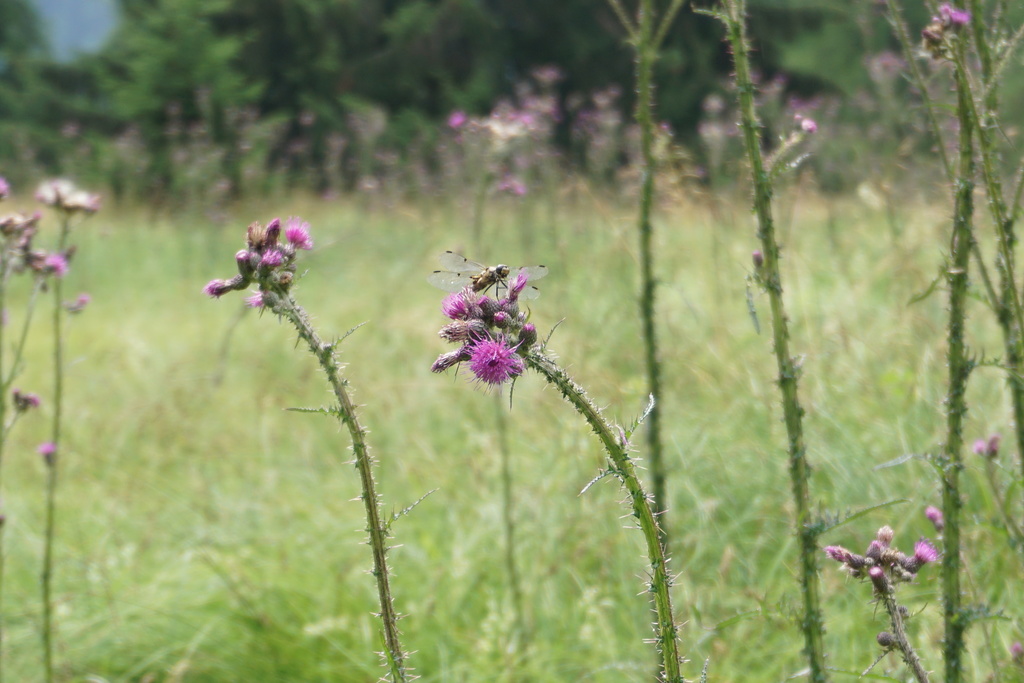
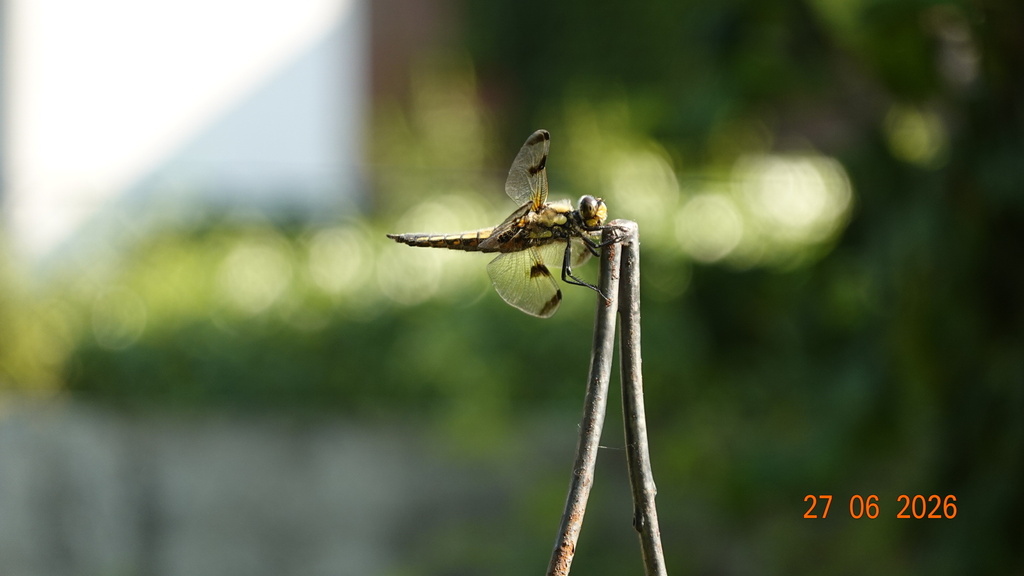
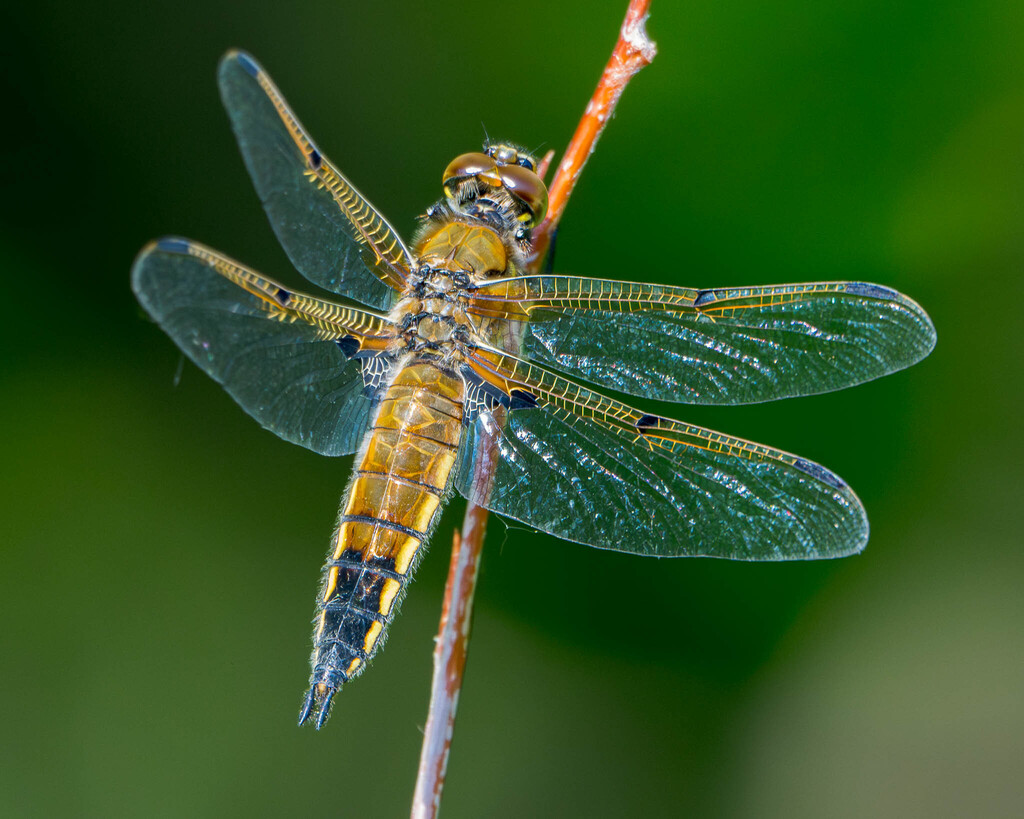
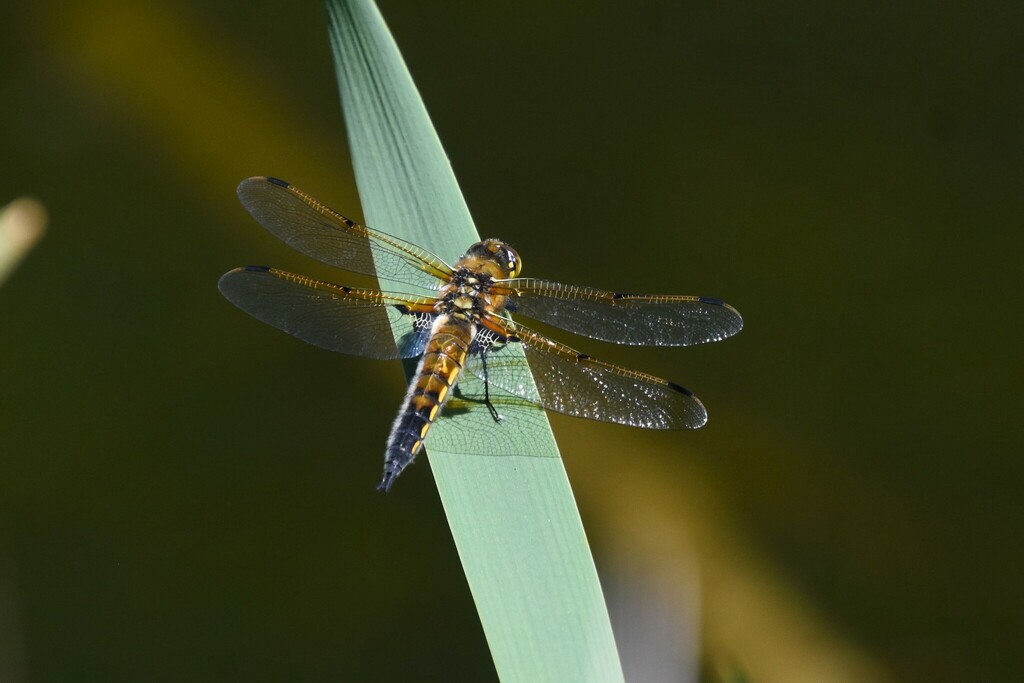
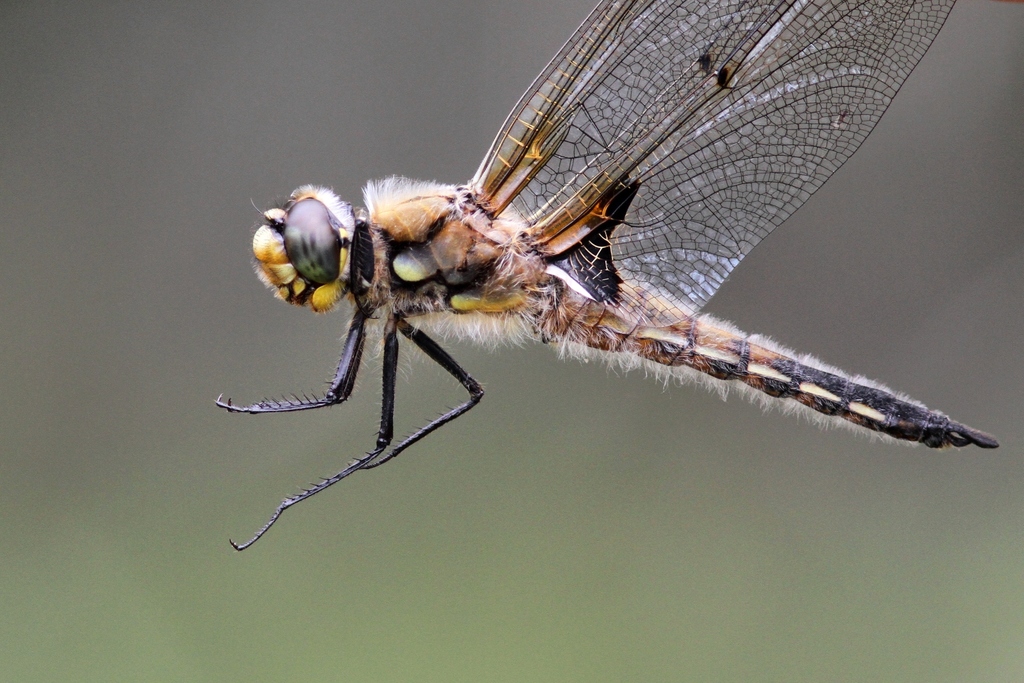
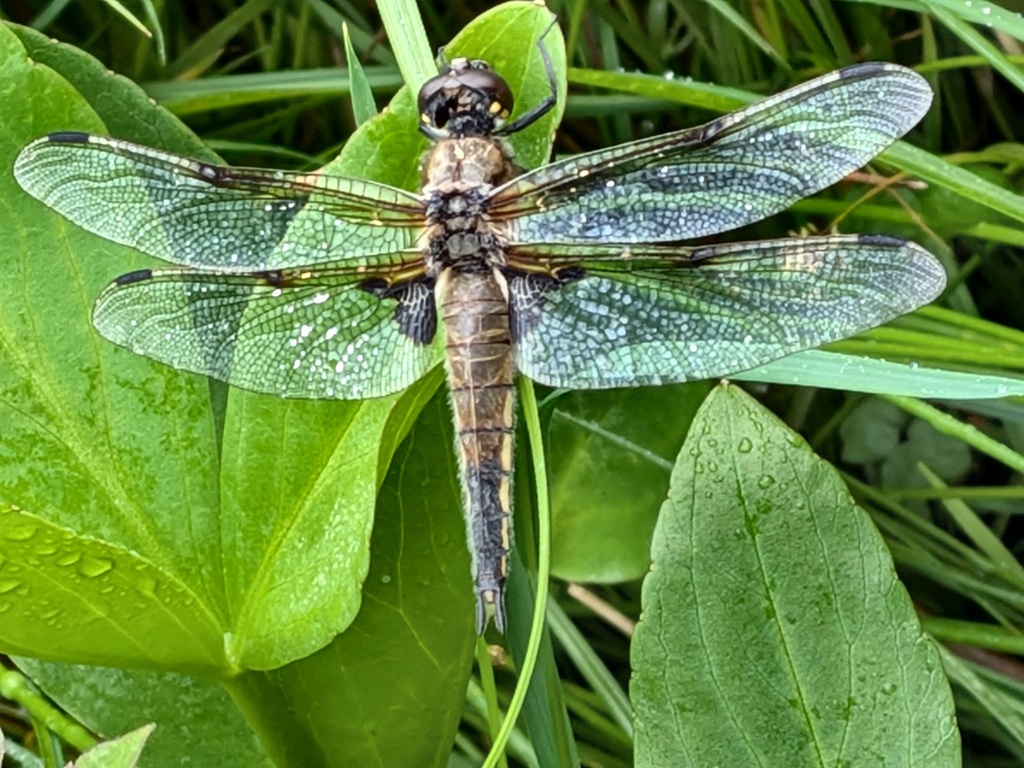
Four-spotted skimmer
Libellula quadrimaculata
- Status
- Least Concern IUCN Red List
- Eats
- heart and dart, canterbury bells and 21 more
- Where
- 51 countries
On 4Planet Atlas it is among the wildlife people record most around Astana, Bern and Munich, and 2 more of the cities we cover.
People have shared 34,641 records of the four-spotted skimmer with GBIF, from 51 countries, most of them from Canada, Russia and United States. Records collected by GloBI show it eating 23 different kinds of animals and plants, and being eaten by 11.
What the four-spotted skimmer eats, and what eats it
Studies have recorded it eating 23 kinds of animals and plants, and 11 kinds of animals eating it. Tap any of them to follow the food chain.
- Insects 19
- Plants 1
Eaten by

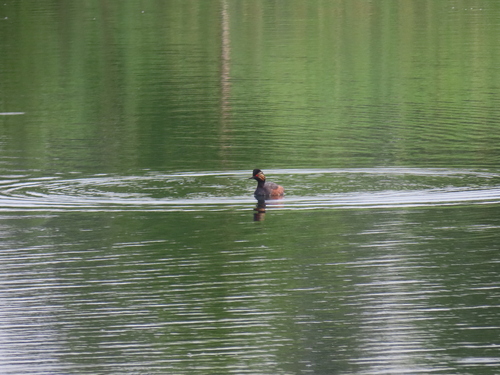
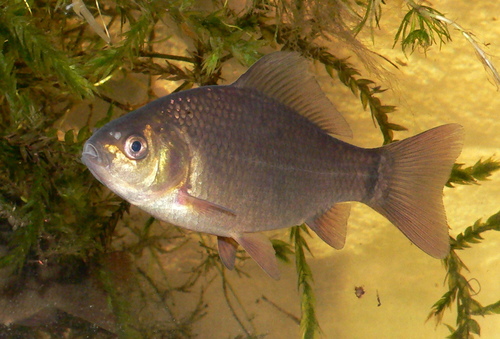
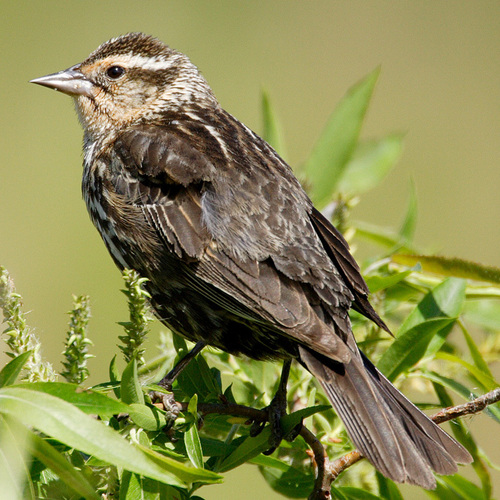
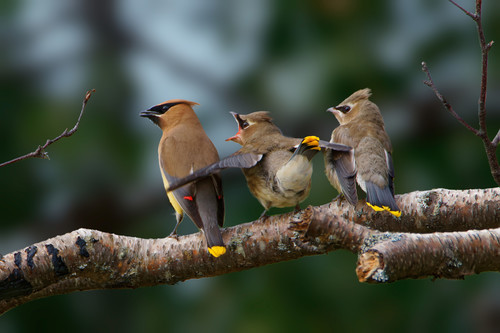 Four-spotted skimmer
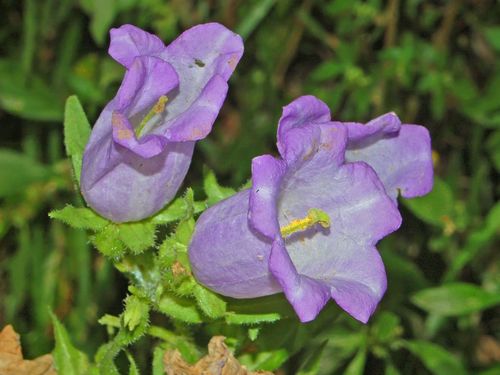
Records from studies worldwide, collected by GloBI. They include animals eaten as carrion, and they are not everything it eats in one place.
Where people see the four-spotted skimmer
People have shared 34,641 records from 51 countries.
Near a city: Astana, Bern, Munich, Novosibirsk, Vilnius.
Records show where people have seen it and shared it, not its full range. Country names open their page in Atlas.
When it is seen
Records per month in the northern hemisphere. More people outdoors also means more records.
Watch and listen
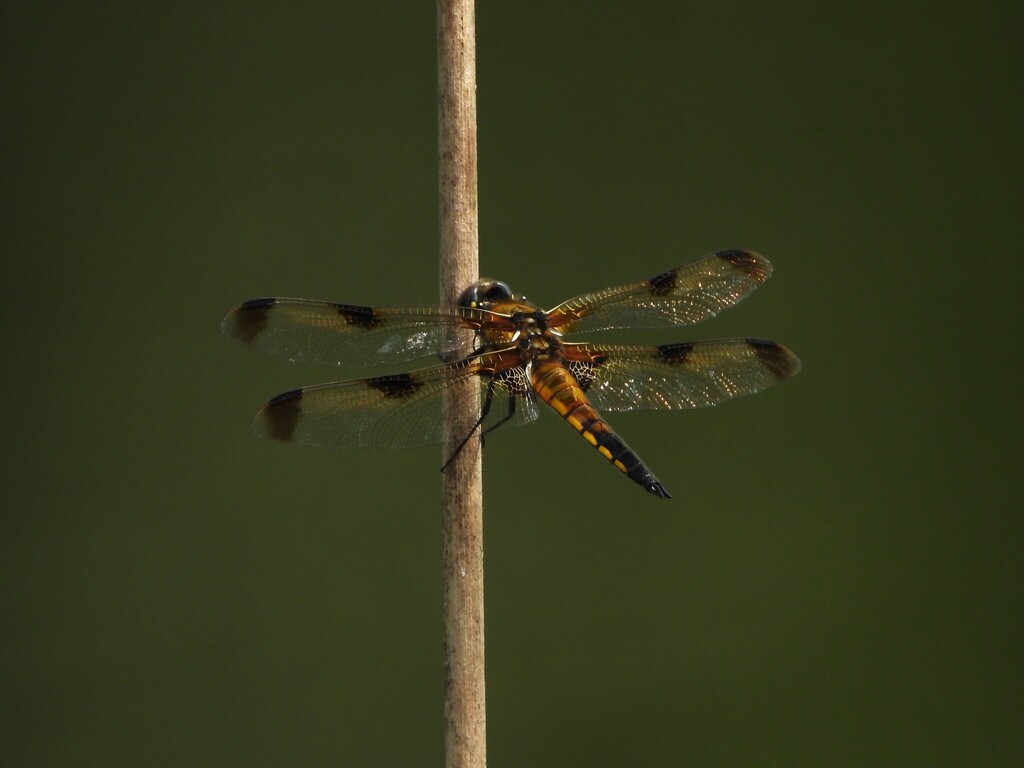
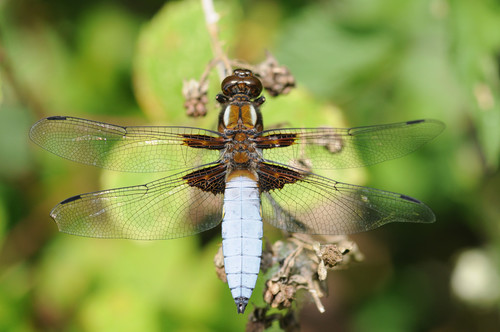
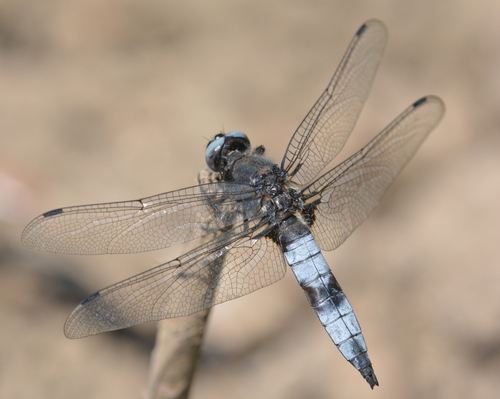
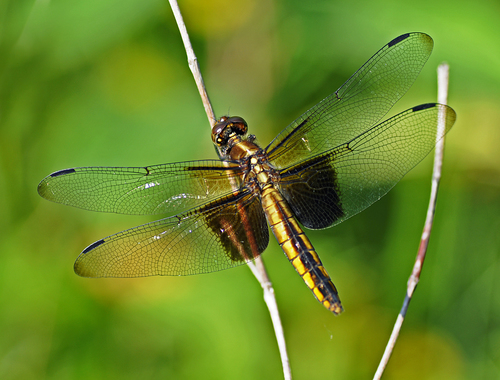
Its closest relatives
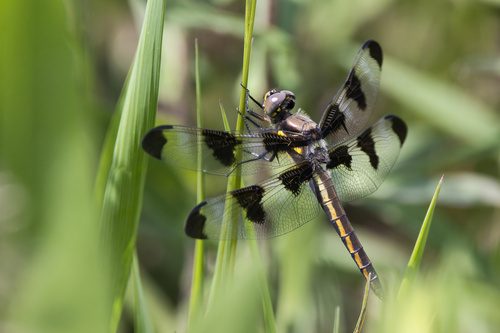
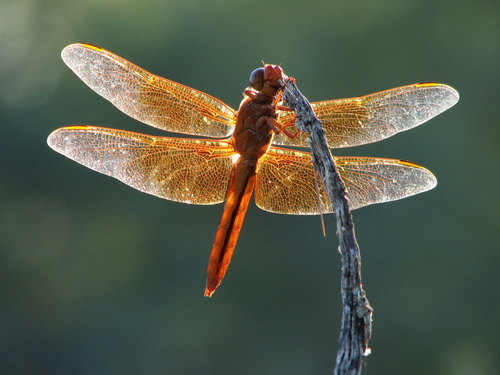
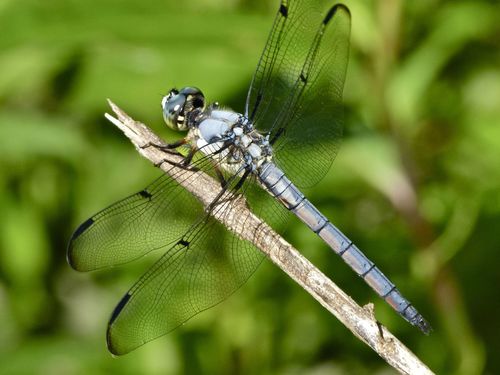
The other species of the genus Libellula.


Seen a four-spotted skimmer?
Share your photo on iNaturalist. Other naturalists help confirm it, and the record goes to GBIF, where scientists use it and where the maps on this page come from.
Put this species on your site
The card names every source and links back here.
<iframe src="https://4planetatlas.com/place/embed/species/four-spotted-skimmer" title="Four-spotted skimmer (Libellula quadrimaculata), 4PLANET Species" width="100%" height="600" style="border:0;max-width:640px" loading="lazy"></iframe>
<p><a href="https://4species.com/four-spotted-skimmer">Four-spotted skimmer on 4PLANET Species</a></p>Questions people ask
What does the four-spotted skimmer eat?
The four-spotted skimmer has been recorded eating 23 different kinds of animals and plants, most of them insects and plants. The ones recorded most often are heart and dart and canterbury bells; records include animals eaten as carrion. Source: GloBI.
What eats the four-spotted skimmer?
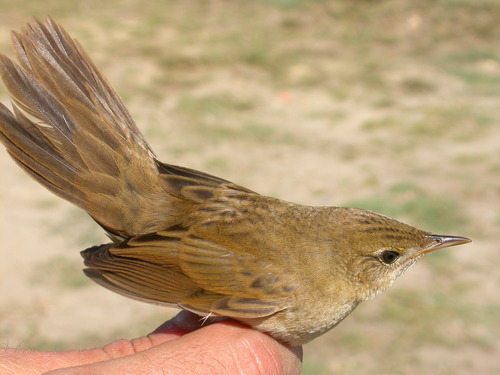
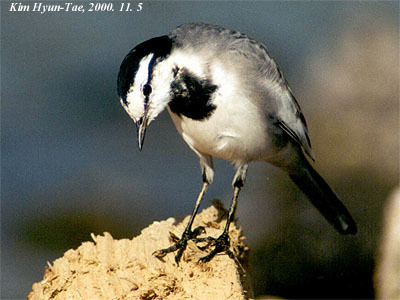
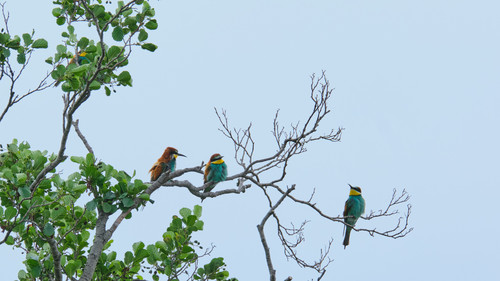
Recorded predators include eurasian hobby, common grasshopper warbler, white wagtail, european bee-eater and black-necked grebe. Source: GloBI.
Where does the four-spotted skimmer live?
People have recorded it in 51 countries; the most records come from Canada, Russia, United States, Germany and United Kingdom. Records show where people have seen it, not its full range.
When is the four-spotted skimmer seen most?
In the northern hemisphere, the most records are made in June and the fewest in November. More people outdoors also means more records.
What are the four-spotted skimmer's closest relatives?
It shares the genus Libellula with broad-bodied chaser, scarce chaser, widow skimmer, twelve-spotted skimmer and flame skimmer.
Sources and photo credits
- GBIF · Libellula quadrimaculata, 34,641 human observations
- GloBI · recorded interactions of Libellula quadrimaculata
- Wikidata · Four-spotted skimmer (Q525748)
- Four-spotted skimmer (Libellula quadrimaculata): Graham Whittaker, CC BY 4.0
- Four-spotted skimmer (Libellula quadrimaculata): Peter Preus, CC BY 4.0
- Four-spotted skimmer (Libellula quadrimaculata), Dolomites vénitiennes, Serdes di Cadore, Polentaia, BL, Italia: odole, CC BY 4.0
- Four-spotted skimmer (Libellula quadrimaculata), Nordrhein-Westfalen, DE: 2018-2026 SgobboVista. Inh.: Larissa und Sonja Sgobbo, CC BY 4.0
- Four-spotted skimmer (Libellula quadrimaculata), Fort Richmond, Winnipeg, MB, Canada: Chris O'Donoghue, CC BY 4.0
- Four-spotted skimmer (Libellula quadrimaculata), Roxos, 15896 Santiago de Compostela, La Coruña, España: Tristo, CC BY 4.0
- Four-spotted skimmer (Libellula quadrimaculata), Lac Malbaie, La Côte-de-Beaupré, QC, Canada: Maurice Raymond, CC BY 4.0
- Four-spotted skimmer (Libellula quadrimaculata), Knockaunroe, Gortlecka, BNP, Clare, Ireland: Jamie O'Neill, CC BY 4.0
- Four-spotted skimmer (Libellula quadrimaculata), Piemonte, IT: Gabriele Vaudano, CC BY 4.0
- Canterbury bells: Ettore Balocchi, CC BY 4.0
- Eurasian hobby: Ani Sarkisyan, CC BY 4.0
- Common grasshopper warbler: franciscodocampo, CC BY 4.0
- White wagtail: Kim, Hyun-tae, CC BY 4.0
- European bee-eater: Sem Khatov, CC BY 4.0
- Black-necked grebe: Дмитрий Кошелев, CC BY 4.0
- Crucian carp: User:Viridiflavus, CC BY-SA 4.0
- Red-winged blackbird: anonymous, CC BY-SA 4.0
- Cedar waxwing: Christian Back, CC BY 4.0
- Broad-bodied chaser: Thomas Bresson, CC BY 4.0
- Scarce chaser: no rights reserved, uploaded by Simon Tonge, CC0
- Widow skimmer: Rodney Campbell, CC BY 4.0
- Twelve-spotted skimmer: Lauren McLaurin, CC BY 4.0
- Flame skimmer: Katja Schulz, CC BY 4.0
- Eight-spotted skimmer: Koji Shiraiwa, CC BY 4.0
- Great blue skimmer: Steve Kerr, CC BY 4.0
- Purple skimmer: Laura Gaudette, CC BY 4.0
Records show where people have seen and shared the four-spotted skimmer, not its full range, and some countries and months are recorded far more than others. The food web lists interactions that studies have recorded somewhere in the world (GloBI), not everything it eats in one place.
Checked 2026-11-27.