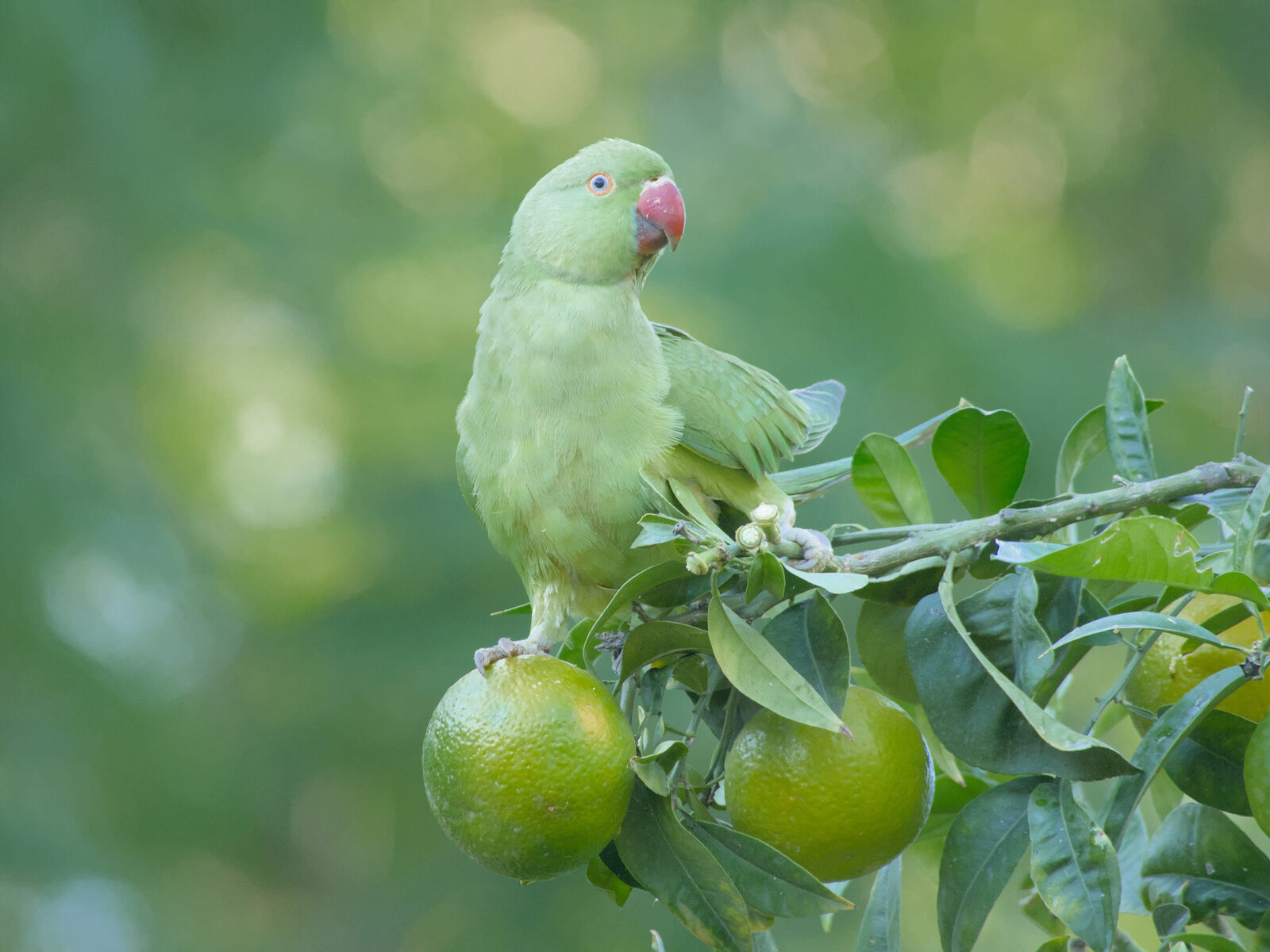
Rose-ringed parakeet
Psittacula krameri
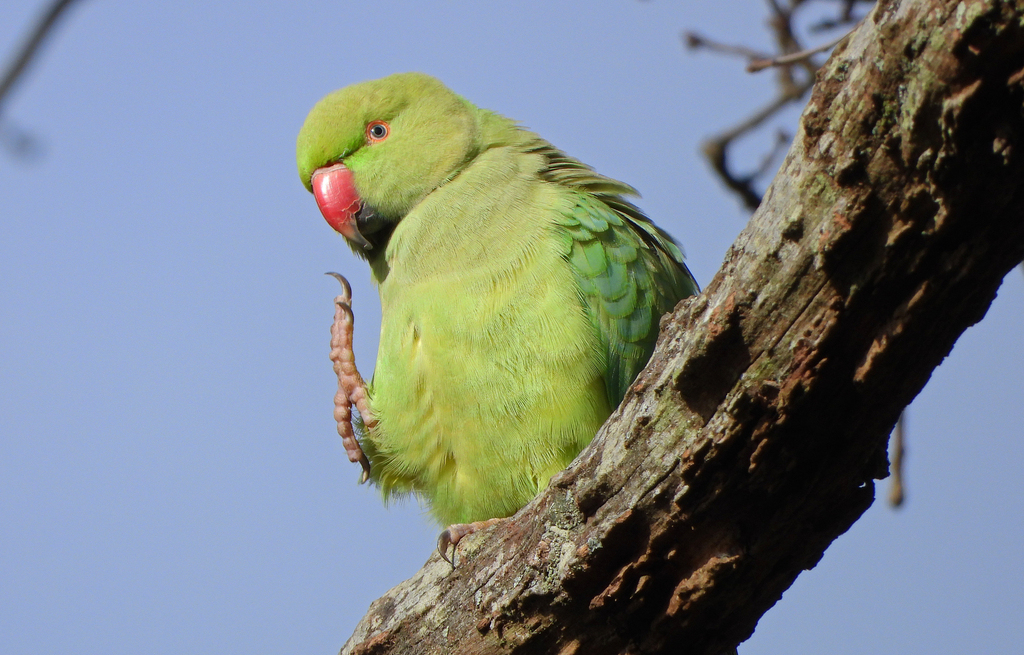
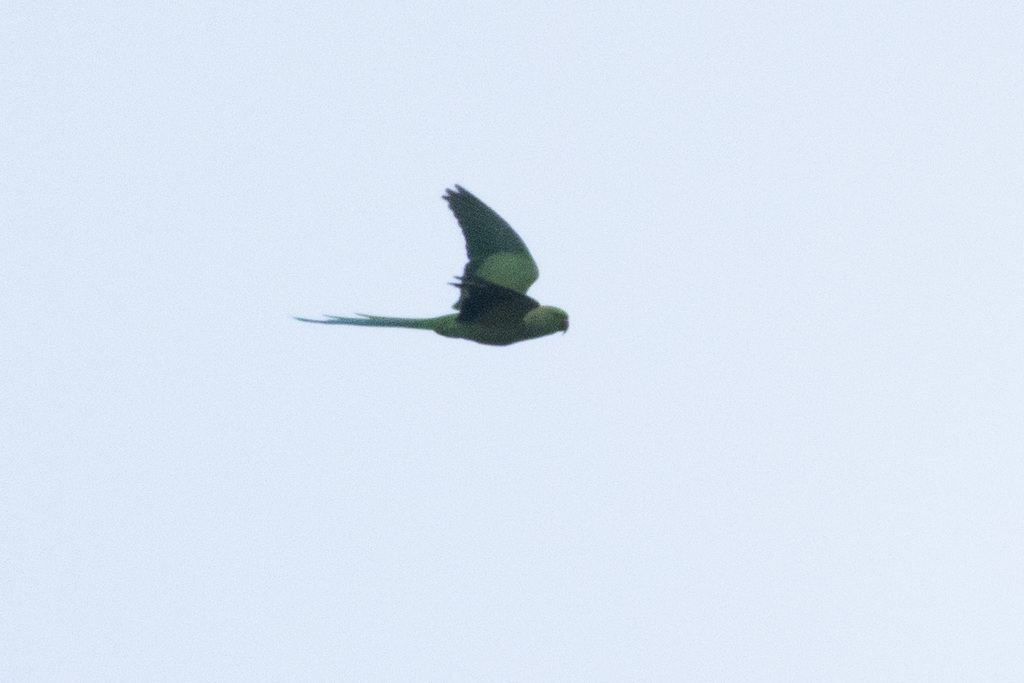
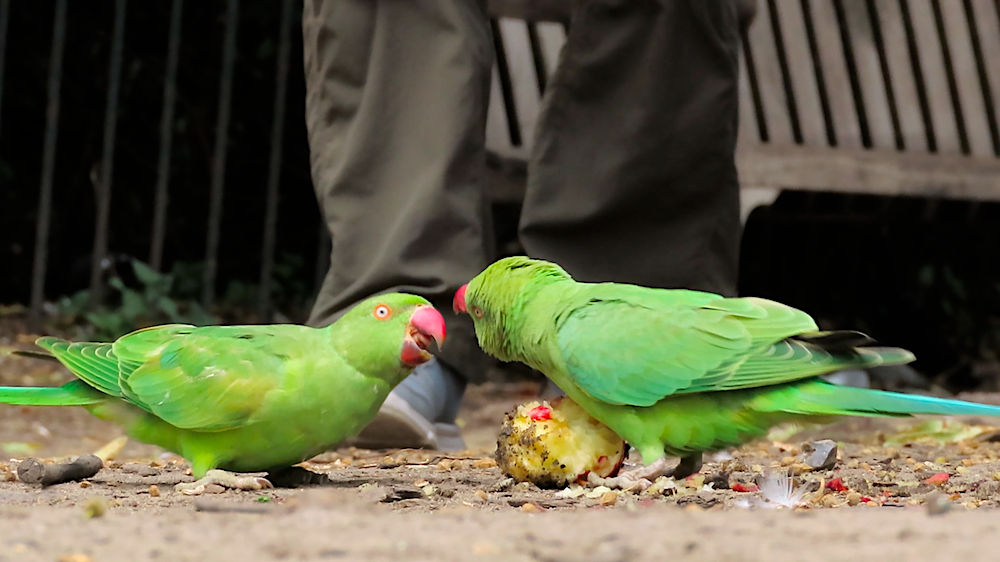
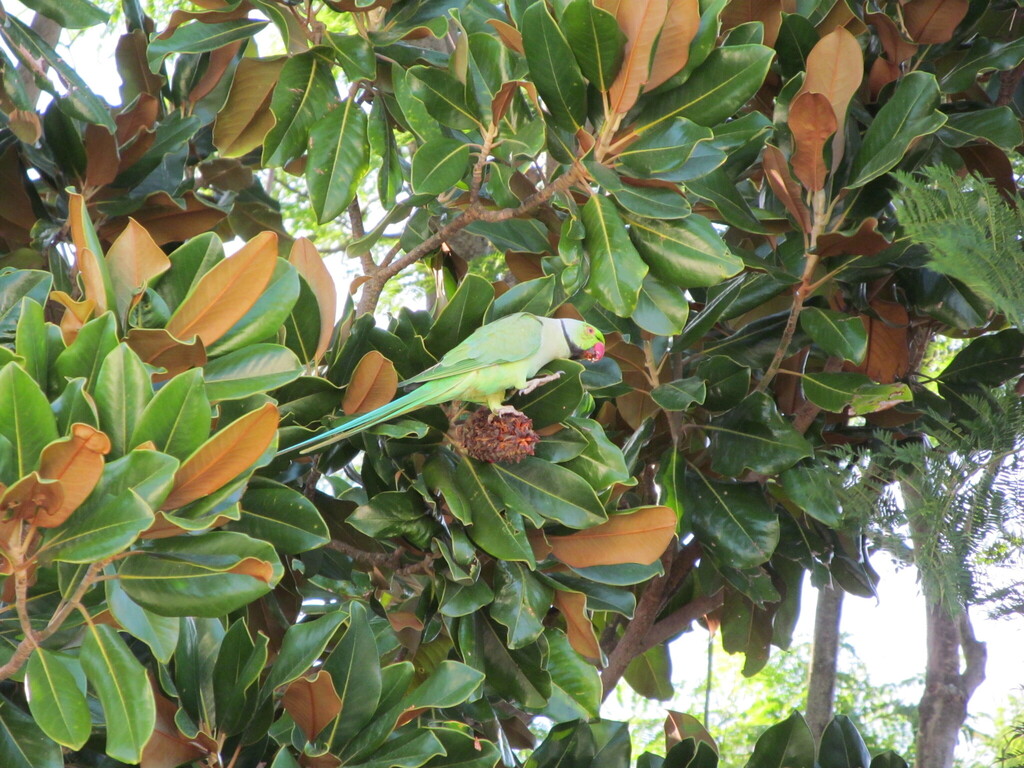
A green parrot with a long tail and red bill; escaped birds have founded noisy colonies in many European cities.
- Status
- Least Concern IUCN Red List
- Eats
- date palm, english walnut, neem and 104 more
- Where
- 132 countries
On 4Planet Atlas it is among the wildlife people record most around Accra, Algiers and Amsterdam, and 18 more of the cities we cover.
People have shared 1,576,057 records of the rose-ringed parakeet with GBIF, from 132 countries, most of them from India, United Kingdom and Israel. Records collected by GloBI show it eating 107 different kinds of animals and plants, and being eaten by 3.
What the rose-ringed parakeet eats, and what eats it
Studies have recorded it eating 107 kinds of animals and plants, and 3 kinds of animals eating it. Tap any of them to follow the food chain.
- Plants 104

 Rose-ringed parakeet


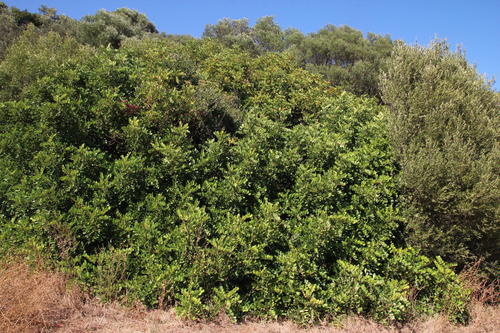
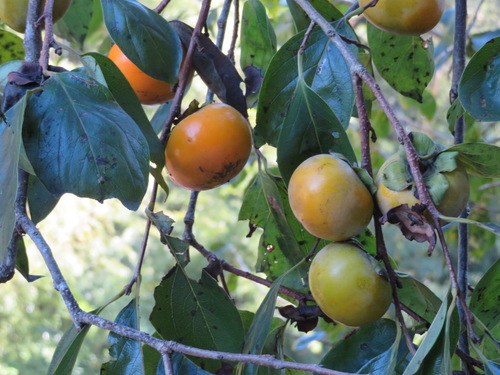

Records from studies worldwide, collected by GloBI. They include animals eaten as carrion, and they are not everything it eats in one place.
Where people see the rose-ringed parakeet
People have shared 1,576,057 records from 132 countries.
Near a city: Accra, Algiers, Amsterdam, Ankara, Athens, Baku, Bridgetown, Brussels, Bucharest, Cairo, Delhi, Lagos, Lisbon, London, Madrid, Manama, Mumbai, Paris, Pretoria, Rome, Tokyo.
Records show where people have seen it and shared it, not its full range. Country names open their page in Atlas.
When it is seen
Records per month in the northern hemisphere. More people outdoors also means more records.
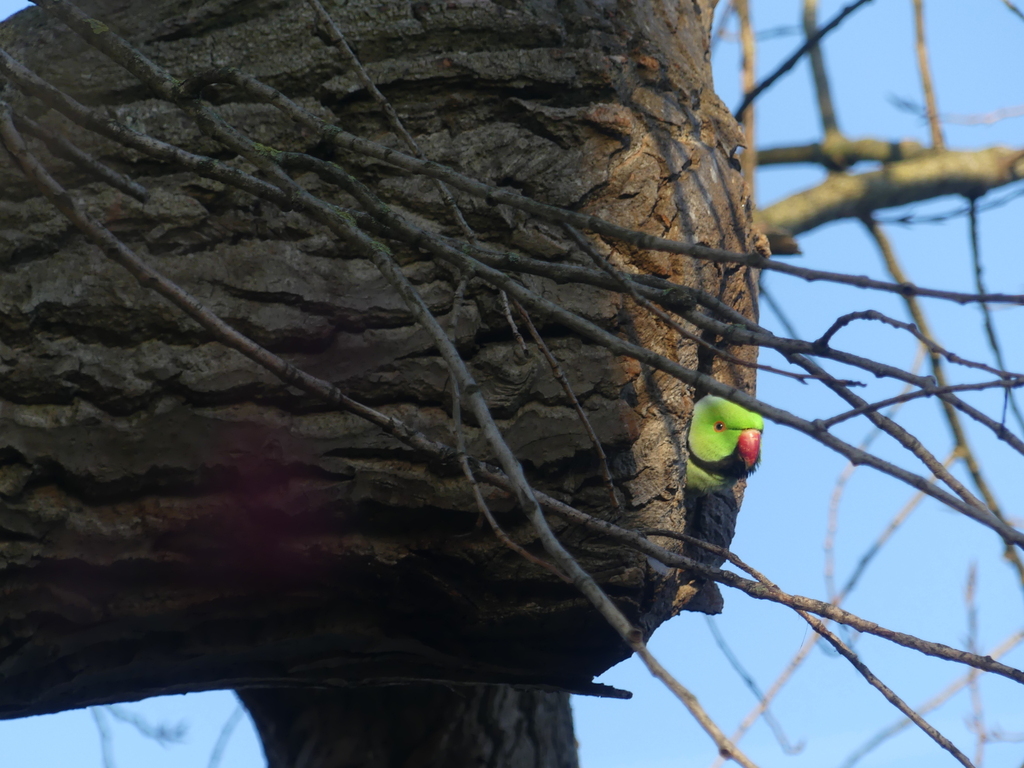
Watch and listen
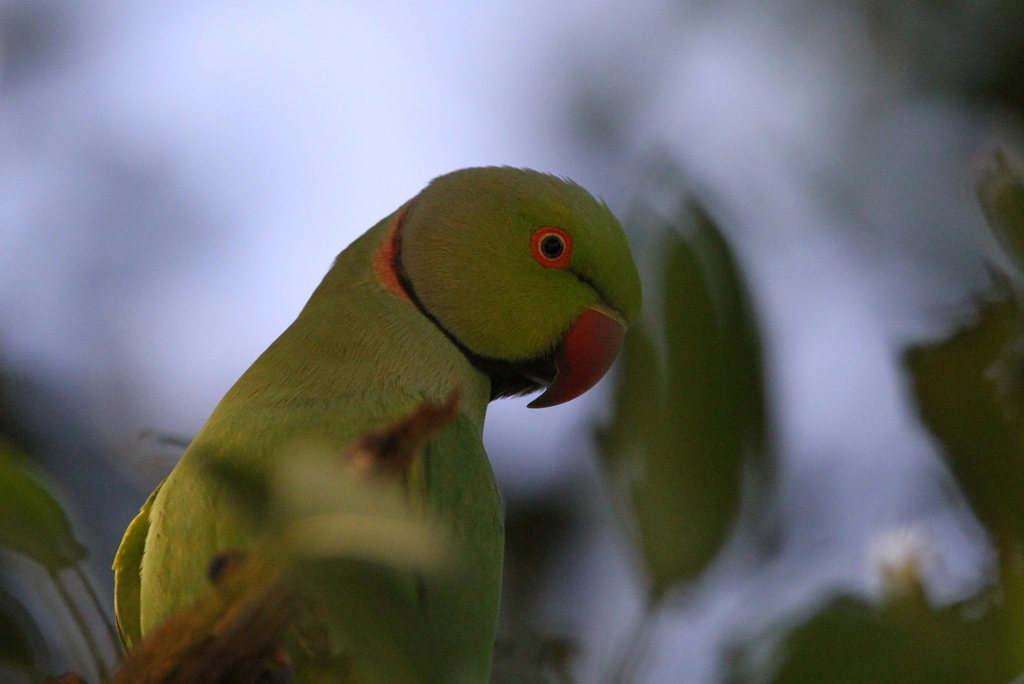
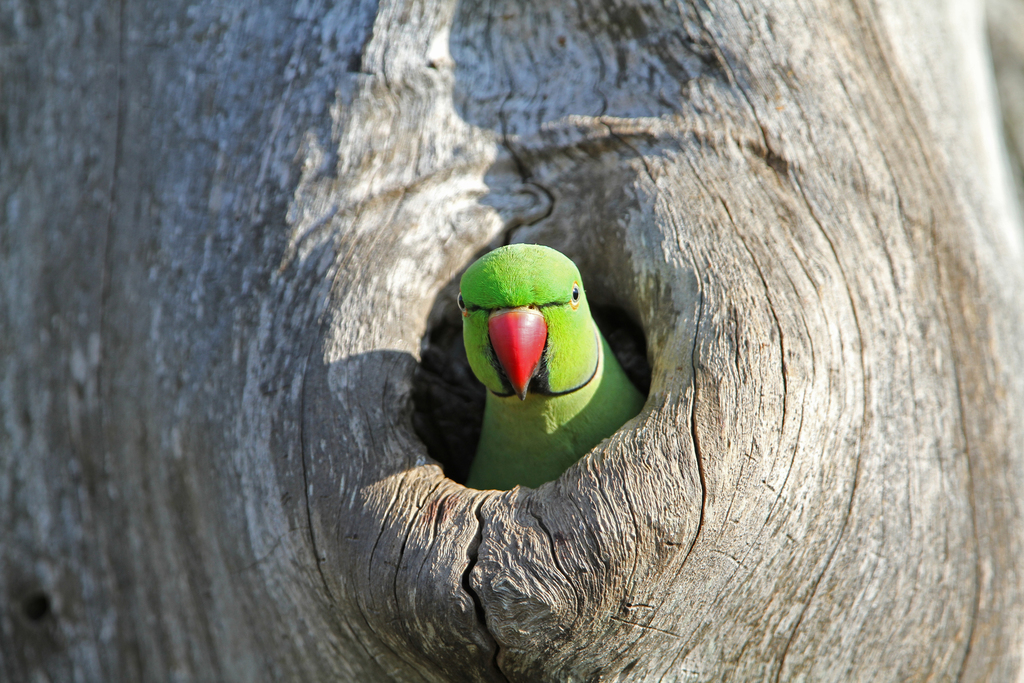
Its closest relatives
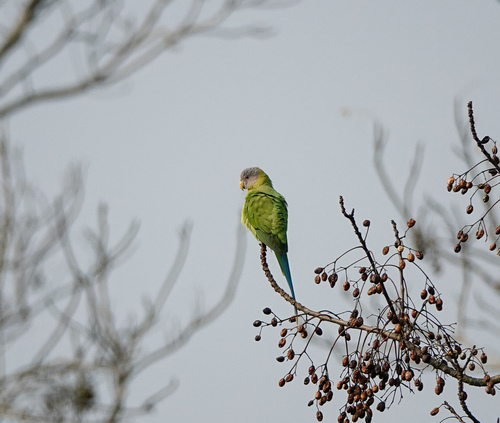
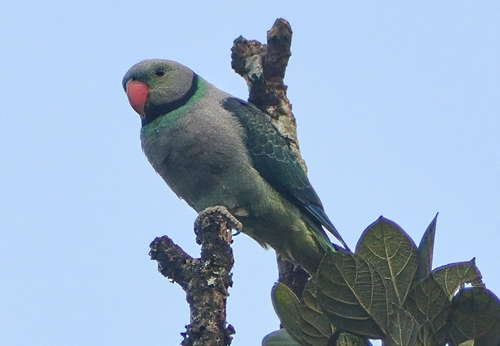
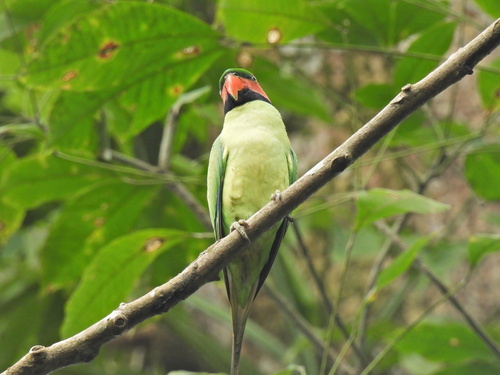
The other species of the genus Psittacula.

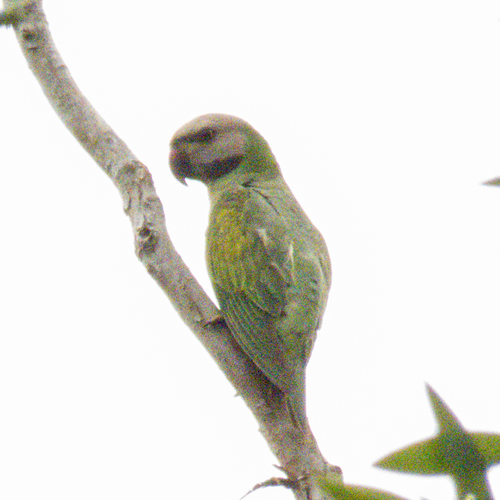
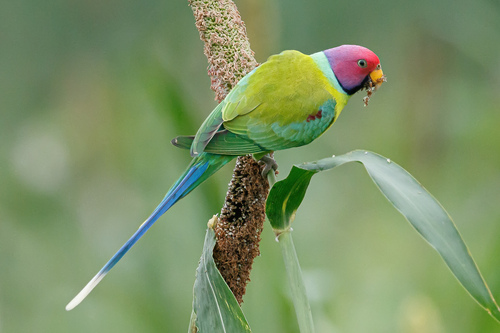

Seen a rose-ringed parakeet?
Share your photo on iNaturalist. Other naturalists help confirm it, and the record goes to GBIF, where scientists use it and where the maps on this page come from.
Questions people ask
What does the rose-ringed parakeet eat?
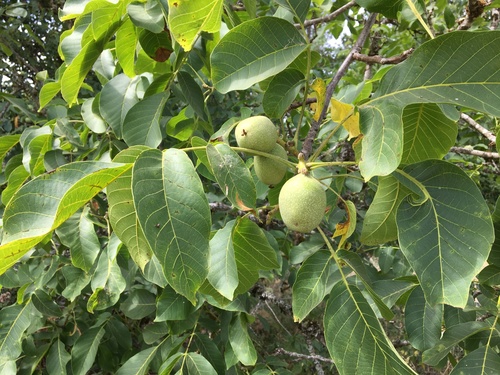
The rose-ringed parakeet has been recorded eating 107 different kinds of animals and plants, most of them plants. The ones recorded most often are date palm, english walnut, neem, common jujube and loquat; records include animals eaten as carrion. Source: GloBI.
What eats the rose-ringed parakeet?
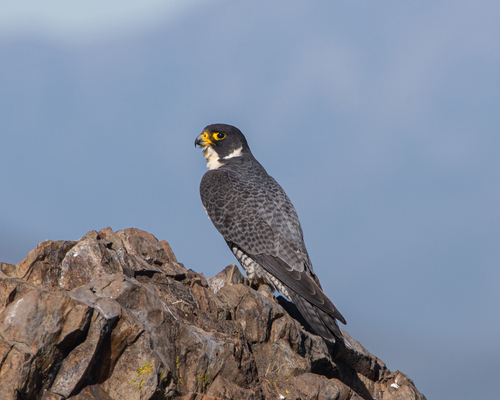
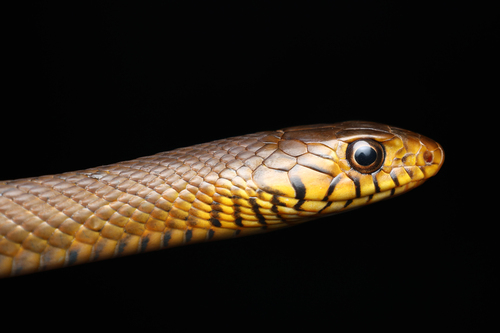
Recorded predators include peregrine falcon, eurasian sparrowhawk and oriental ratsnake. Source: GloBI.
Where does the rose-ringed parakeet live?
People have recorded it in 132 countries; the most records come from India, United Kingdom, Israel, Spain and Sri Lanka. Records show where people have seen it, not its full range.
When is the rose-ringed parakeet seen most?
In the northern hemisphere, the most records are made in February and the fewest in July. More people outdoors also means more records.
What are the rose-ringed parakeet's closest relatives?
It shares the genus Psittacula with alexandrine parakeet, red-breasted parakeet, plum-headed parakeet, blossom-headed parakeet and slaty-headed parakeet.
Sources and photo credits
- GBIF · Psittacula krameri, 1,576,057 human observations
- GloBI · recorded interactions of Psittacula krameri
- Wikidata · Rose-ringed parakeet (Q208060)
- Rose-ringed parakeet (Psittacula krameri): Cristian Hurtado Cusnir, CC BY 4.0
- Rose-ringed parakeet (Psittacula krameri), Harefield, UK: Paul Lewis, CC BY 4.0
- Rose-ringed parakeet (Psittacula krameri), Hull, UK: Owen, CC BY 4.0
- Rose-ringed parakeet (Psittacula krameri), London, UK: Florin Feneru, CC BY 4.0
- Rose-ringed parakeet (Psittacula krameri), London, UK: Ellyne Geurts, CC0
- Rose-ringed parakeet (Psittacula krameri), Coimbra, Portugal: zebedeugalinha, CC BY 4.0
- Rose-ringed parakeet (Psittacula krameri), Pearces Hill, Winterbourne, Bristol BS16 1NT, UK: Sue, CC0
- Rose-ringed parakeet (Psittacula krameri), Moneragala, Sri Lanka: Christoph Moning, CC BY 4.0
- Rose-ringed parakeet (Psittacula krameri), Hambantota, Sri Lanka: Christoph Moning, CC BY 4.0
- Date palm: Ashley Basil, CC BY 4.0
- English walnut: Ed Alverson, CC BY 4.0
- English yew: Douglas Goldman, CC BY-SA 4.0
- Carob: Tony Rebelo, CC BY-SA 4.0
- Japanese persimmon: Marco Mussita, CC BY 4.0
- Cornelian cherry: Andreas Rockstein, CC BY-SA 4.0
- Peregrine falcon: Nicolás Villaseca Merino, CC BY-SA 4.0
- Eurasian sparrowhawk: Stanislav Murashkin, CC BY 4.0
- Oriental ratsnake: Arun Kumar Thyadi, CC BY-SA 4.0
- Alexandrine parakeet: Nishant Purushottam Berde, CC BY 4.0
- Red-breasted parakeet: Gerard Chartier, CC BY 4.0
- Plum-headed parakeet: Hari K Patibanda, CC BY 4.0
- Blossom-headed parakeet: Rejoice Gassah, CC BY 4.0
- Slaty-headed parakeet: Koshy Koshy, CC BY 4.0
- Blue-winged parakeet: Tejas M, CC BY 4.0
- Long-tailed parakeet: Samuel Lee, CC BY 4.0
Records show where people have seen and shared the rose-ringed parakeet, not its full range, and some countries and months are recorded far more than others. The food web lists interactions that studies have recorded somewhere in the world (GloBI), not everything it eats in one place.
Checked 2026-11-21.