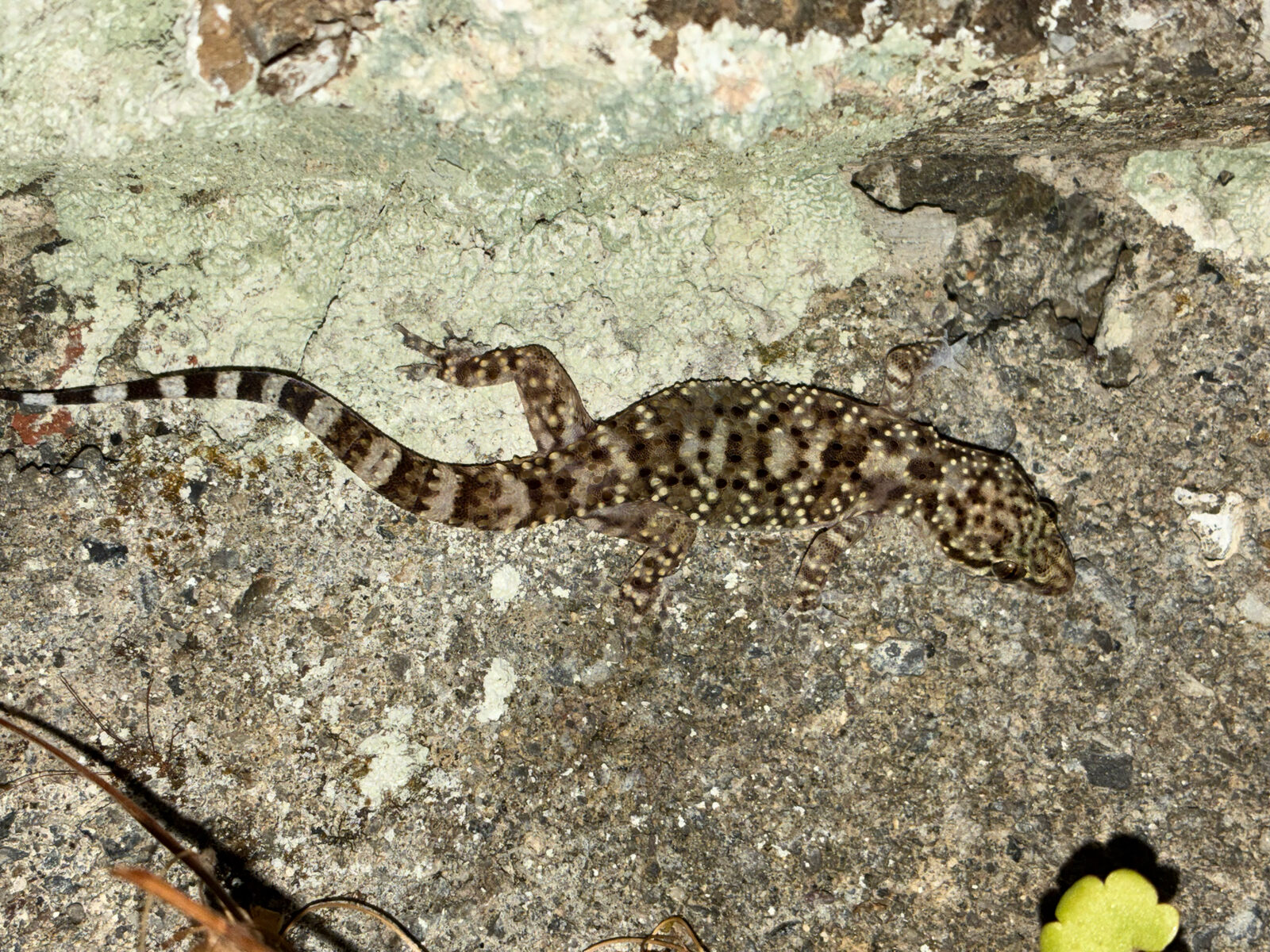
Mediterranean house gecko
Hemidactylus turcicus
- Status
- Least Concern IUCN Red List
- Eaten by
- red fox, northern raven, Eurasian magpie
- Where
- 33 countries
On 4Planet Atlas it is among the wildlife people record most around Alexandria, Antalya and Cairo, and 2 more of the cities we cover.
People have shared 42,075 records of the mediterranean house gecko with GBIF, from 33 countries, most of them from United States, Greece and Mexico. Records collected by GloBI show it eating 5 different kinds of animals and plants, and being eaten by 17.
What the Mediterranean house gecko eats, and what eats it
Studies have recorded it eating 5 kinds of animals and plants, and 17 kinds of animals eating it. Tap any of them to follow the food chain.
- Insects 5
Eaten by


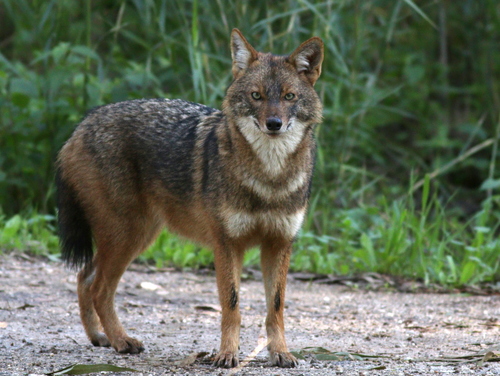
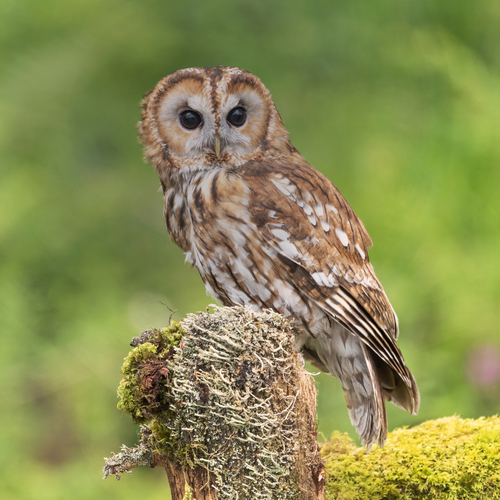
 Mediterranean house gecko
Records from studies worldwide, collected by GloBI. They include animals eaten as carrion, and they are not everything it eats in one place.
Where people see the Mediterranean house gecko
People have shared 42,075 records from 33 countries.
Near a city: Alexandria, Antalya, Cairo, Podgorica, Tirana.
Records show where people have seen it and shared it, not its full range. Country names open their page in Atlas.
When it is seen
Records per month in the northern hemisphere. More people outdoors also means more records.
Watch and listen
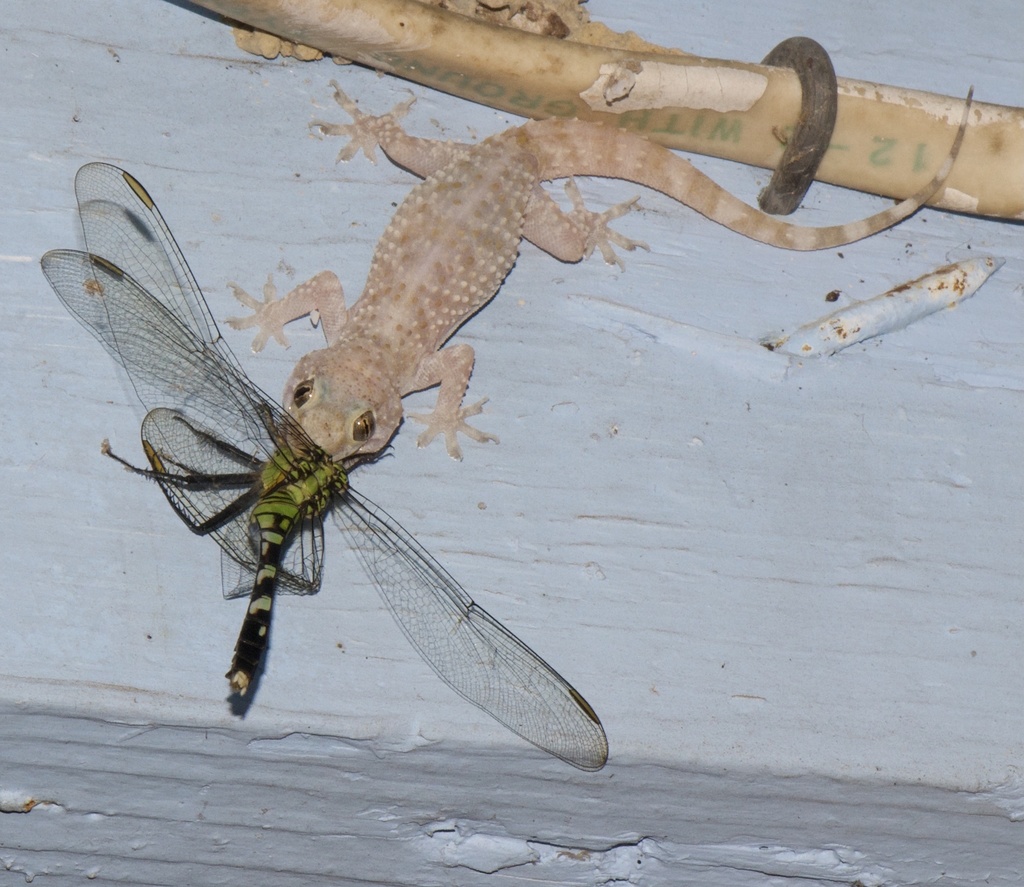
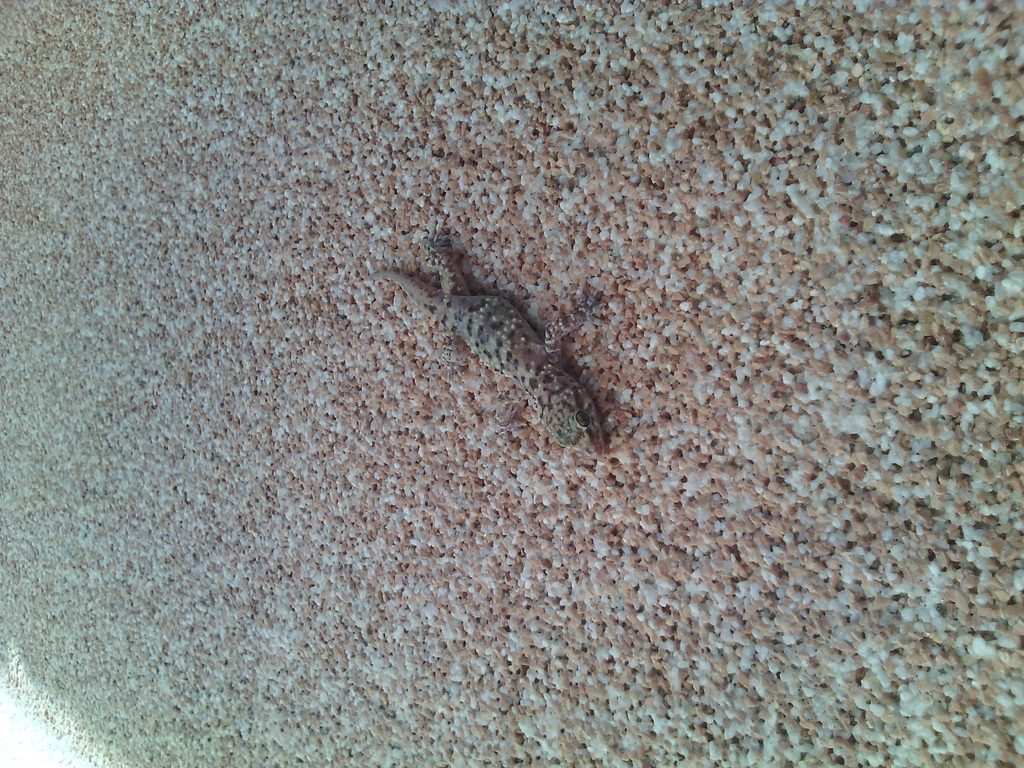
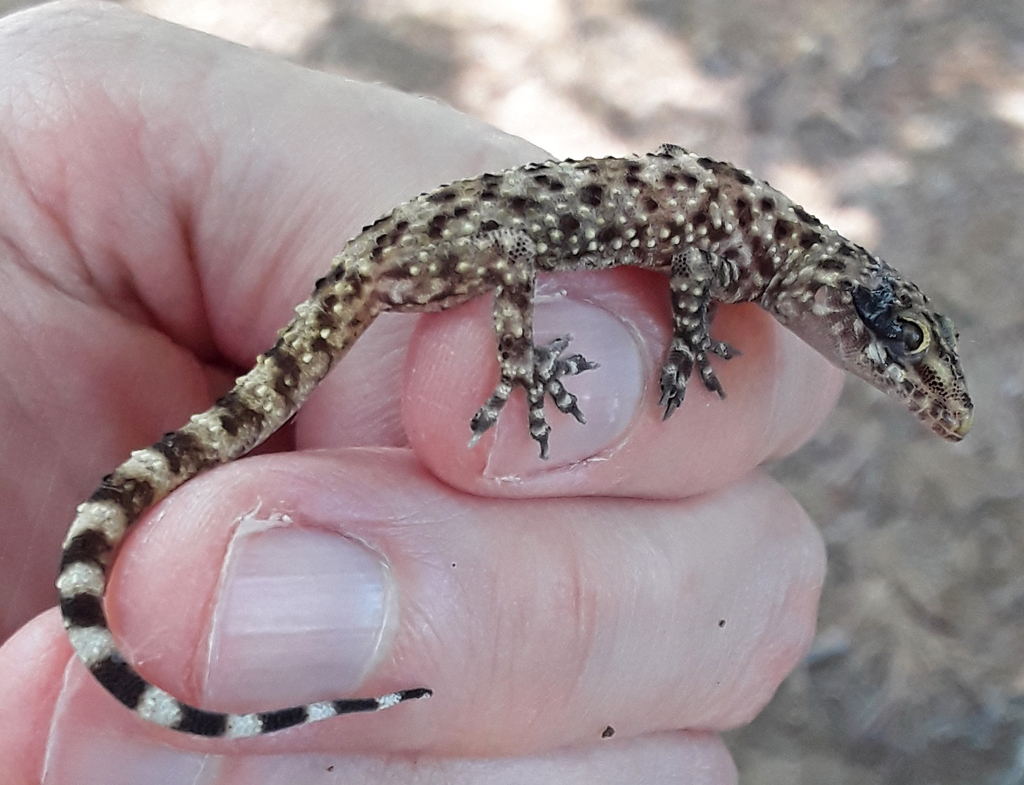
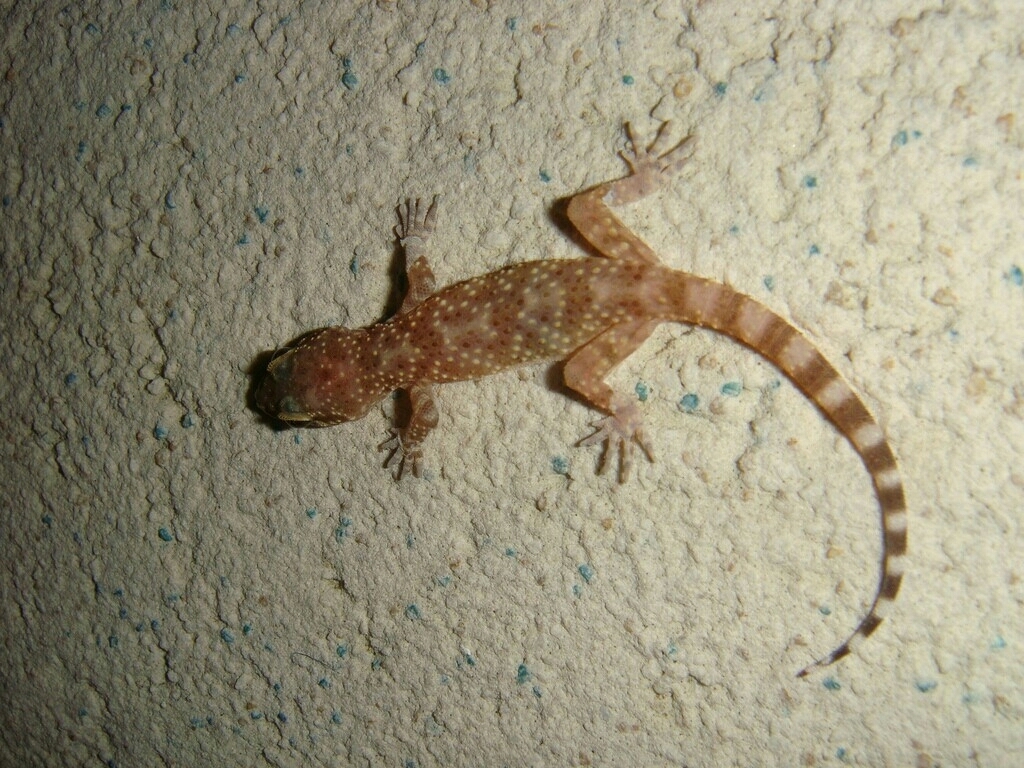
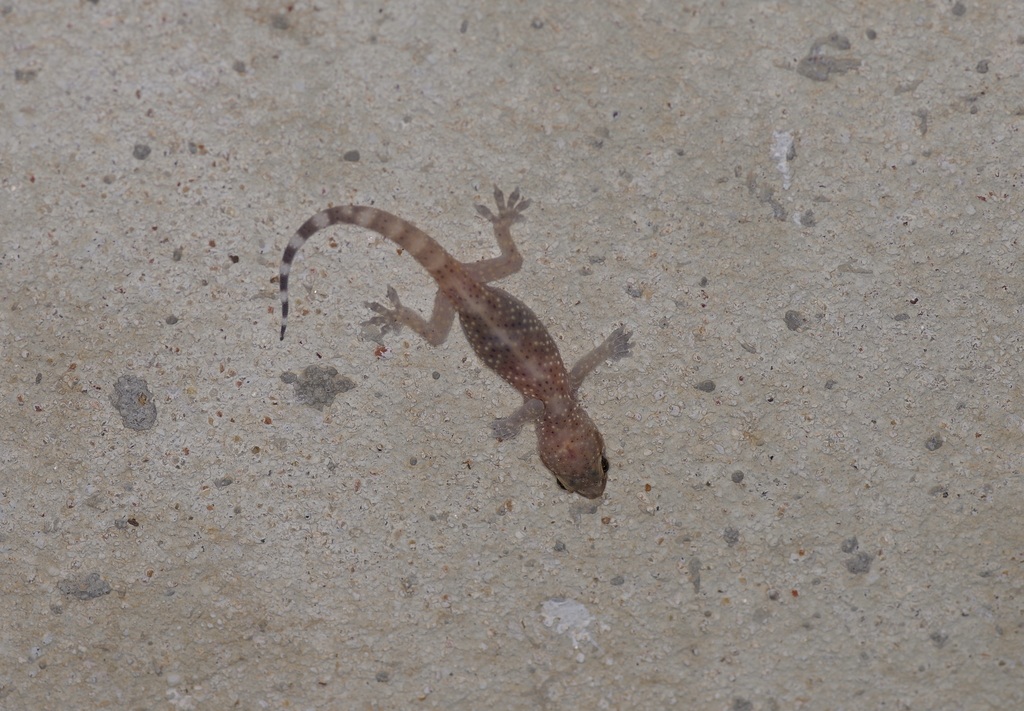
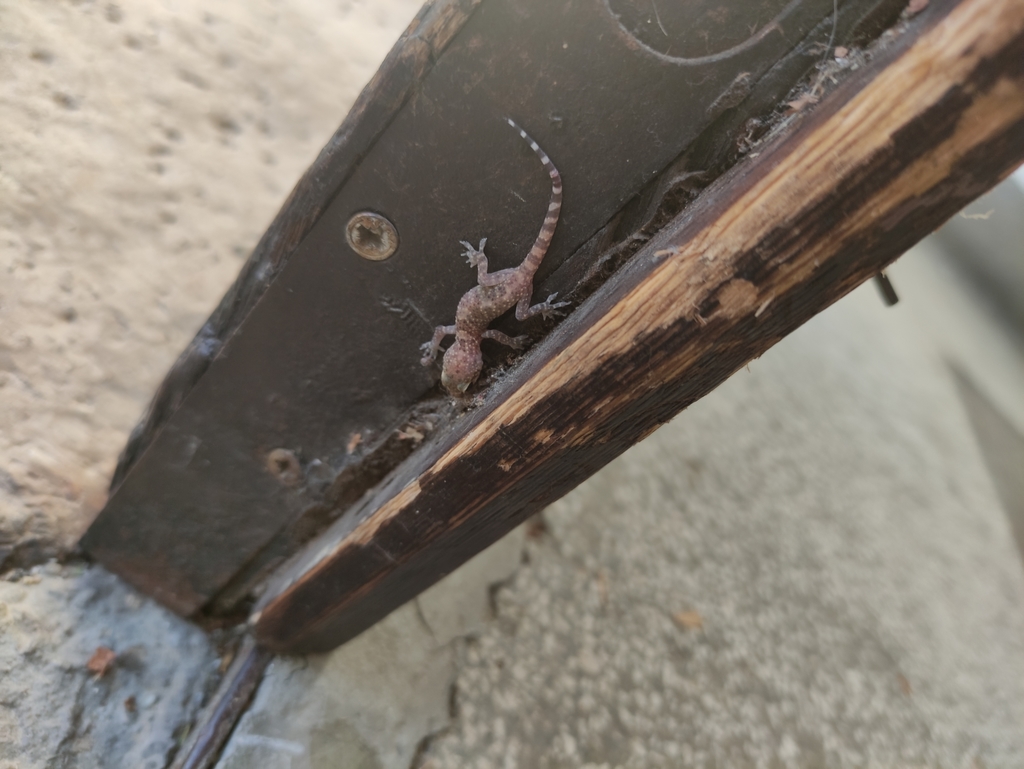
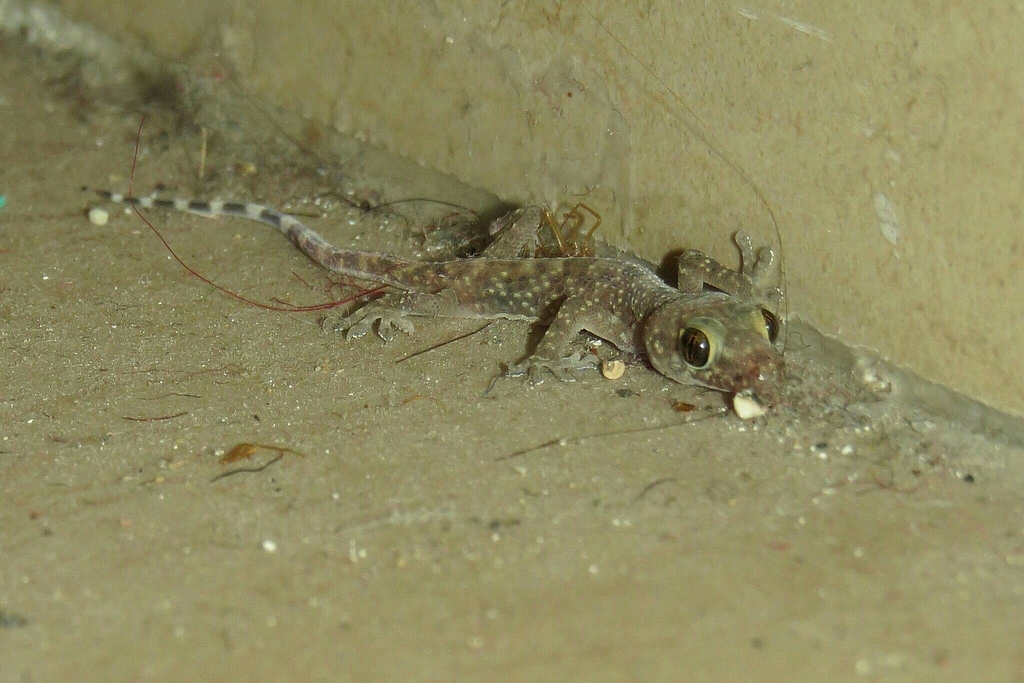
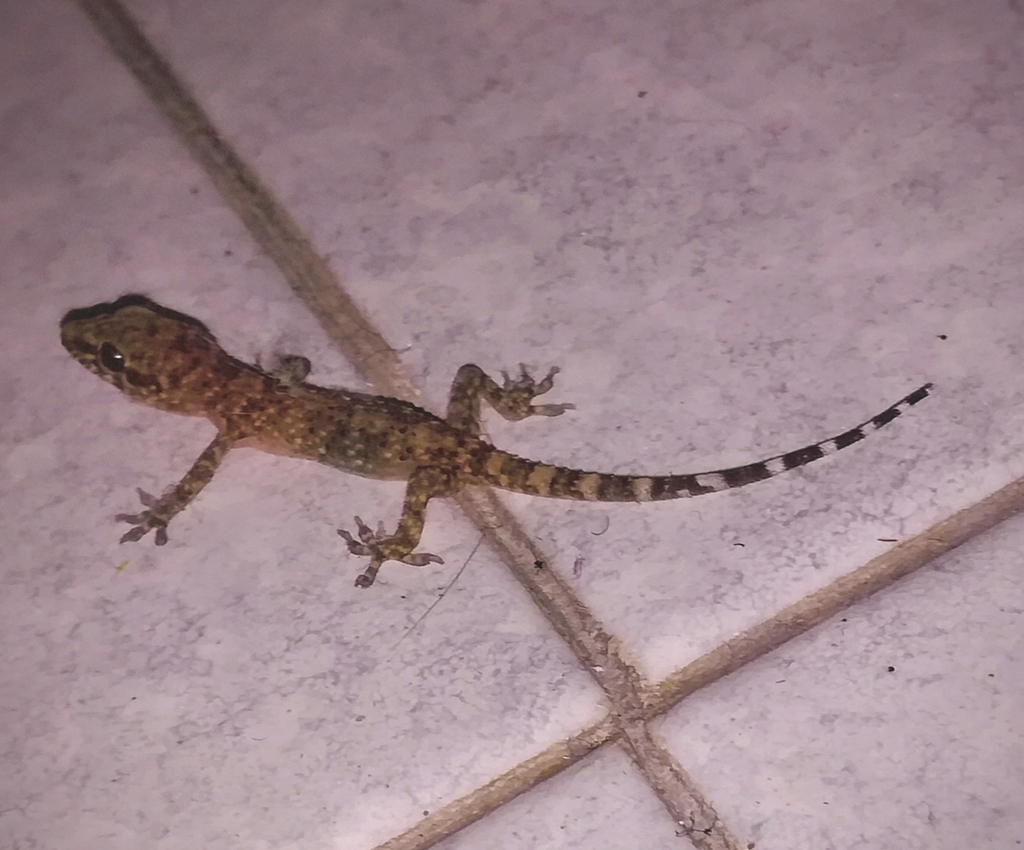
Its closest relatives
The other species of the genus Hemidactylus.
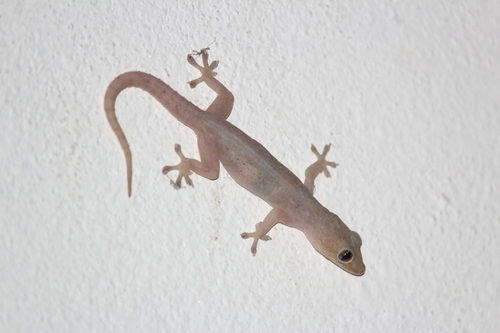
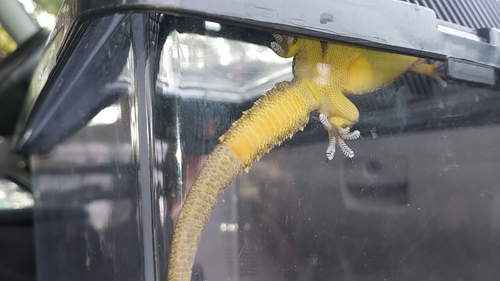
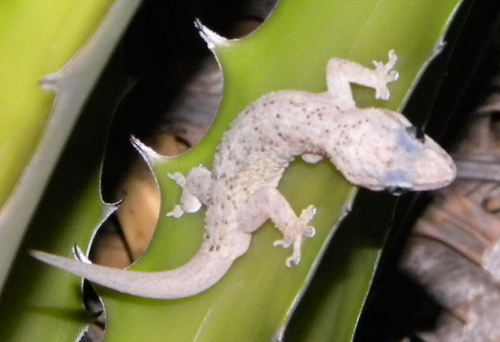


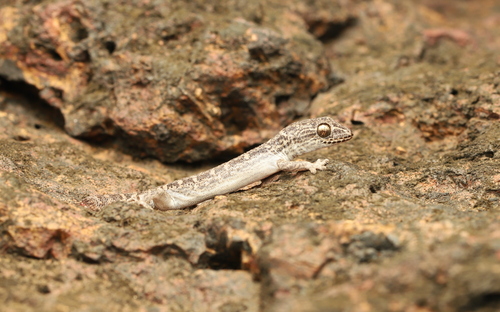
Seen a Mediterranean house gecko?
Share your photo on iNaturalist. Other naturalists help confirm it, and the record goes to GBIF, where scientists use it and where the maps on this page come from.
Put this species on your site
The card names every source and links back here.
<iframe src="https://4planetatlas.com/place/embed/species/mediterranean-house-gecko" title="Mediterranean house gecko (Hemidactylus turcicus), 4PLANET Species" width="100%" height="600" style="border:0;max-width:640px" loading="lazy"></iframe>
<p><a href="https://4species.com/mediterranean-house-gecko">Mediterranean house gecko on 4PLANET Species</a></p>Questions people ask
What does the mediterranean house gecko eat?
The mediterranean house gecko has been recorded eating 5 different kinds of animals and plants, most of them insects. The ones recorded most often are ; records include animals eaten as carrion. Source: GloBI.
What eats the mediterranean house gecko?
Recorded predators include red fox, northern raven, eurasian magpie, european wildcat and golden jackal. Source: GloBI.
Where does the mediterranean house gecko live?
People have recorded it in 33 countries; the most records come from United States, Greece, Mexico, Italy and Croatia. Records show where people have seen it, not its full range.
When is the mediterranean house gecko seen most?
In the northern hemisphere, the most records are made in September and the fewest in January. More people outdoors also means more records.
What are the mediterranean house gecko's closest relatives?
It shares the genus Hemidactylus with common house gecko, indo-pacific gecko, country leaf-toed gecko, oriental leaf-toed gecko and amaral's brazilian gecko.
Sources and photo credits
- GBIF · Hemidactylus turcicus, 42,075 human observations
- GloBI · recorded interactions of Hemidactylus turcicus
- Wikidata · Mediterranean house gecko (Q836347)
- Mediterranean house gecko (Hemidactylus turcicus): Elia Berti, CC BY 4.0
- Mediterranean house gecko (Hemidactylus turcicus), Louisiana, US: Shannon Stoner, CC BY 4.0
- Mediterranean house gecko (Hemidactylus turcicus), Okrug Gornji, Čiovo, Croatia: ivan_humljani, CC0
- Mediterranean house gecko (Hemidactylus turcicus), Augusta, GA, USA: Celeste Ray, CC BY 4.0
- Mediterranean house gecko (Hemidactylus turcicus), V.misa (C.del Latte), 60126 Torrette AN, Italia: Gianni Del Bufalo bygdb, CC BY 4.0
- Mediterranean house gecko (Hemidactylus turcicus), North Austin, Austin, TX, USA: Michelle W. (鍾偉瑋), CC BY 4.0
- Mediterranean house gecko (Hemidactylus turcicus), Zagreb, HR-GZ, HR: Tin Rožman, CC BY 4.0
- Mediterranean house gecko (Hemidactylus turcicus), Marche, IT: Gianni Del Bufalo bygdb, CC BY 4.0
- Mediterranean house gecko (Hemidactylus turcicus), V.misa (C.del Latte), 60126 Torrette AN, Italia: Gianni Del Bufalo bygdb, CC BY 4.0
- Red fox: Алина Урусова, CC BY 4.0
- Northern raven: xulescu_g, CC BY-SA 4.0
- Golden jackal: Jan Ebr & Ivana Ebrová, CC BY 4.0
- Carrion crow: no rights reserved, uploaded by Charlie Farrell, CC0
- Tawny owl: caroline legg, CC BY 4.0
- Blue rock thrush: Ani Sarkisyan, CC BY 4.0
- Common house gecko: Ricard Busquets Reverte, CC BY 4.0
- Indo-Pacific gecko: no rights reserved, uploaded by Daniel Estabrooks, CC0
- Country leaf-toed gecko: https://doi.org/10.3897/zoologia.37.e46661, CC BY 4.0
- Oriental leaf-toed gecko: Sterling Sheehy, CC BY 4.0
- Amaral's brazilian gecko: Reuber Brandão, CC BY 4.0
- Teratolepis albofasciatus: Rohit Naniwadekar, CC BY 4.0
Records show where people have seen and shared the mediterranean house gecko, not its full range, and some countries and months are recorded far more than others. The food web lists interactions that studies have recorded somewhere in the world (GloBI), not everything it eats in one place.
Checked 2026-11-27.